Yunnan is delicious, as everyone knows.
In recent years, we have passionately recommended many food destinations in Yunnan, but this year I have discovered a hidden gem of a small city that is so delicious it feels like winning the lottery... I couldn't help but come here twice in a year!
Its fame is far less than that of Xishuangbanna, Dali, and Lijiang. The city guide topics mentioned last year didn't pass because it was too niche... but in terms of deliciousness, in my heart, it even ranks as the number one in Yunnan.
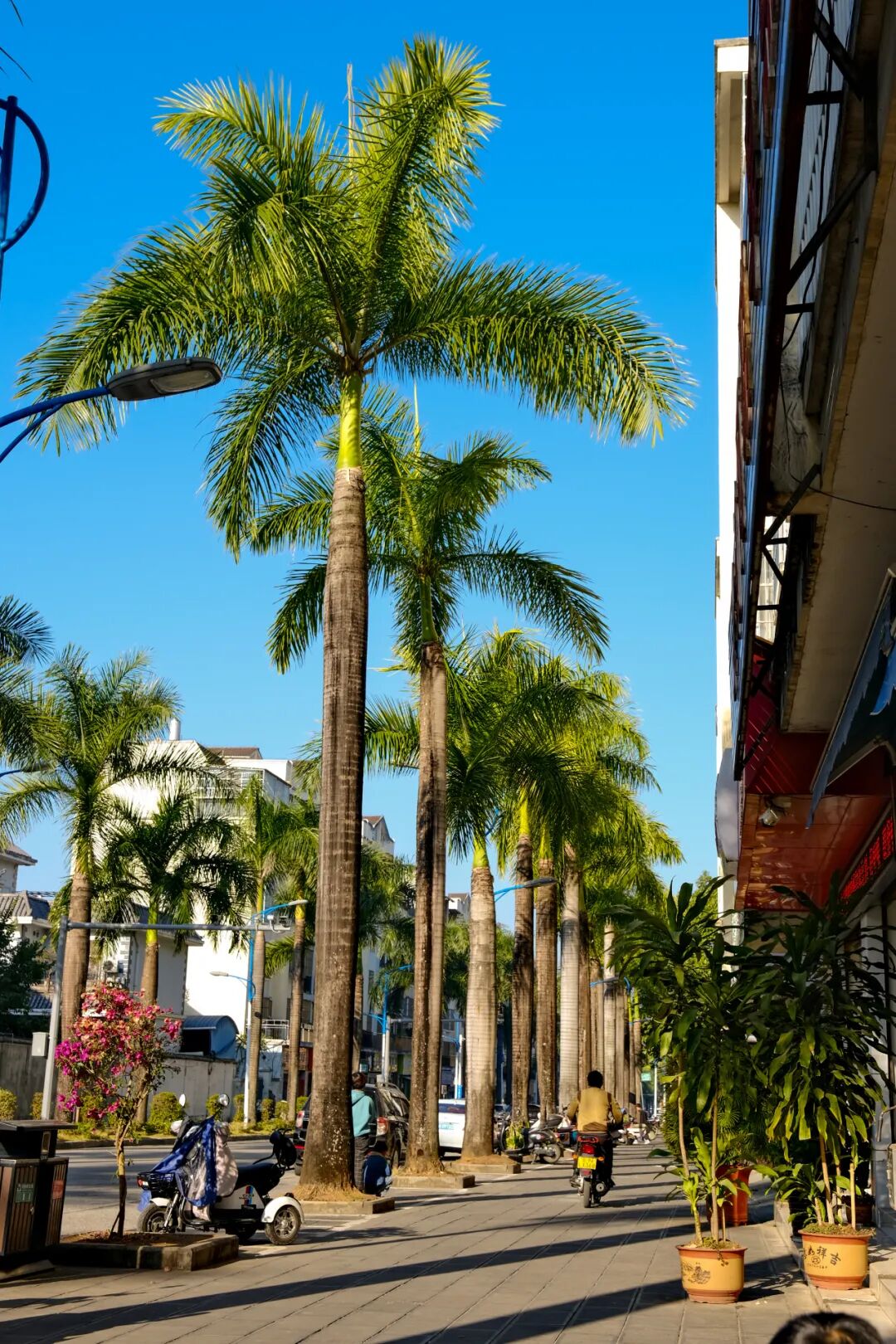

Here, you can experience many magical ingredients that haven't left Yunnan: using tree roots as seasoning, stir-frying chili with banana flowers, making dipping sauce from raw shrimp paste; the combinations are also quite creative, like stewing chicken with sour tamarind, stir-frying beef with green mango, and mixing rice noodles with meat sauce in your palm.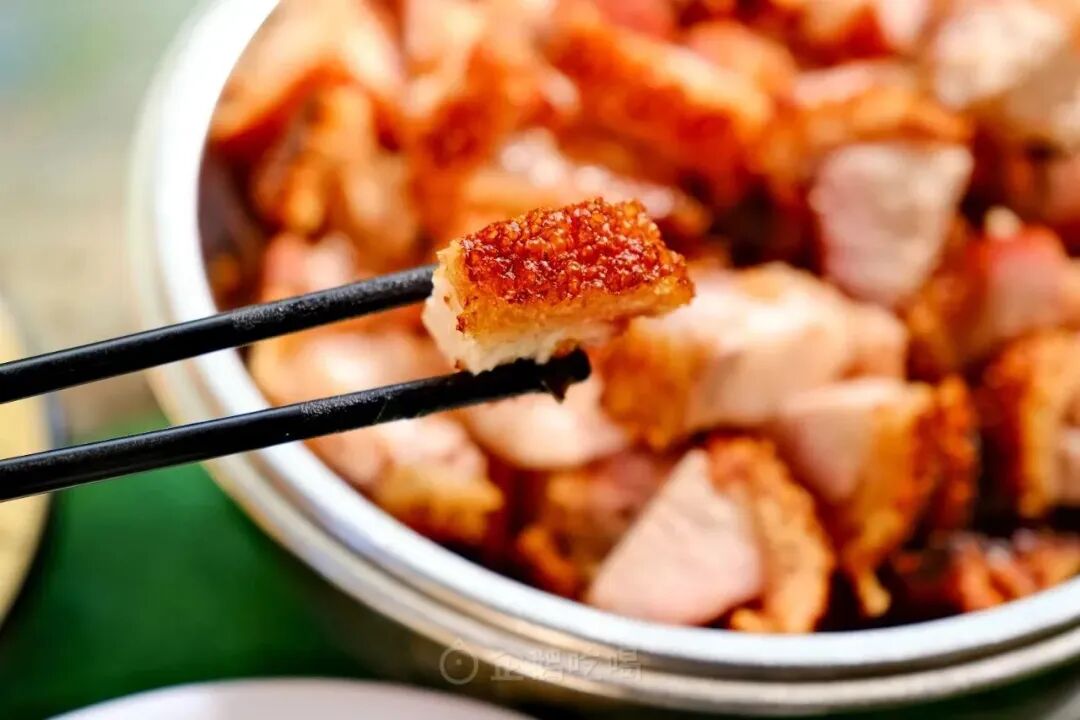
This place is the small border city of Mangshi, which has countless rice products, barbecues, snacks, wild vegetables, and fruits... It features the unique characteristics of ethnic minorities such as the Dai, Jingpo, and Achang, and because it is close to Myanmar, it blends exotic flavors, creating a unique flavor universe. Even many locals in Yunnan believe that Mangshi is undoubtedly the food city. The city that has been mentioned the most in "Flavor Origin: Yunnan" is this one—
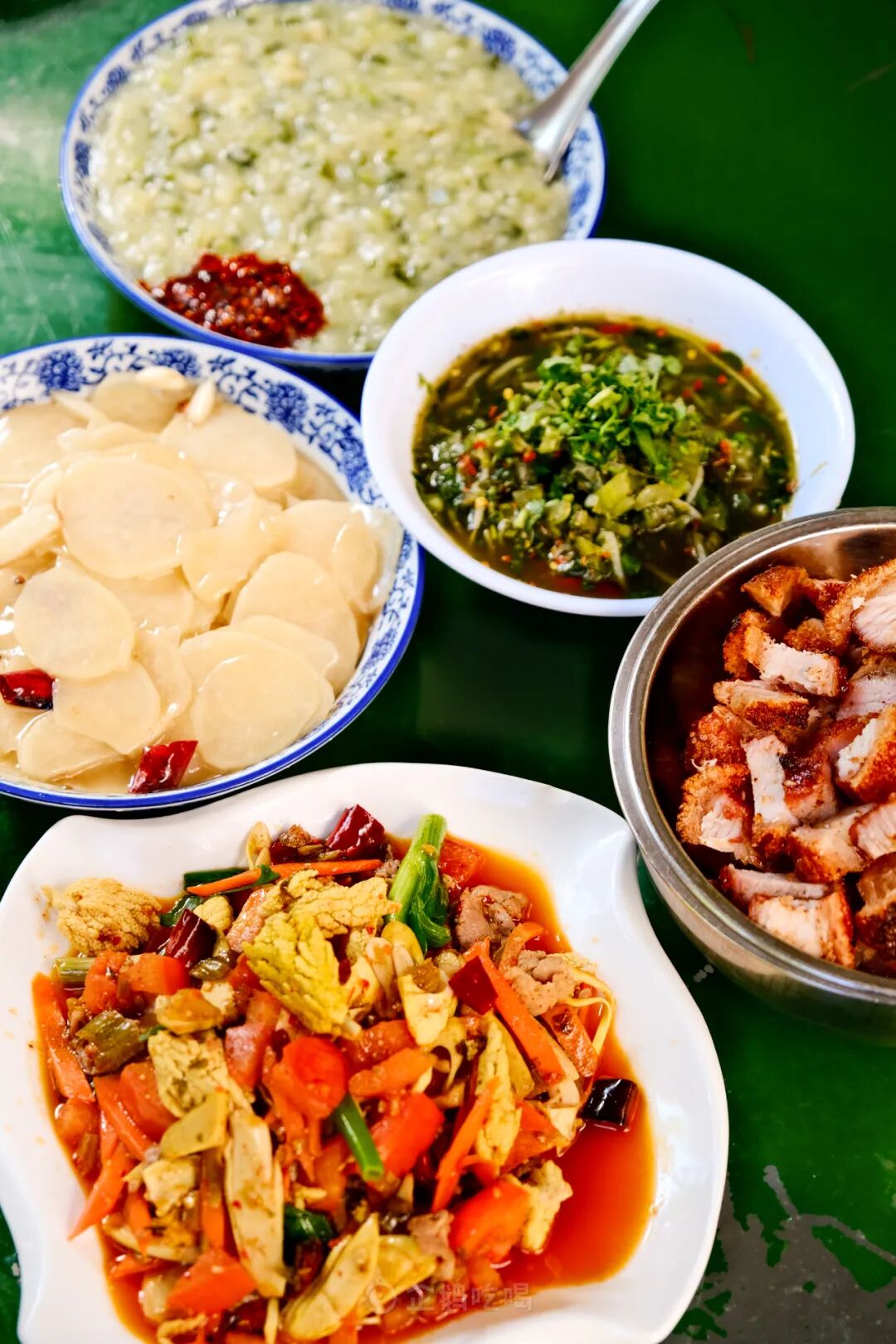
Today, let’s take a look at this small niche destination in Yunnan that can achieve legendary status through its food—Mangshi, and see how appetizing and delicious it can be!
PS: Because there is too much content to recommend, the article is a bit long, so you can save it to read slowly. If you want a list of shops, you can scroll to the end to save it with one click.
Hidden Kingdom of Rice Products Super Rich Rice Noodles 01 Rice Noodles Mangshi produces rice and loves to eat rice. The mornings and late nights of Mangshi people are spent in the steam of rice noodles. Don’t underestimate this bowl; from the ingredients, broth to toppings and seasonings, it is actually very meticulous. The seasoning magic of Mangshi people is vividly displayed in various rice noodles.
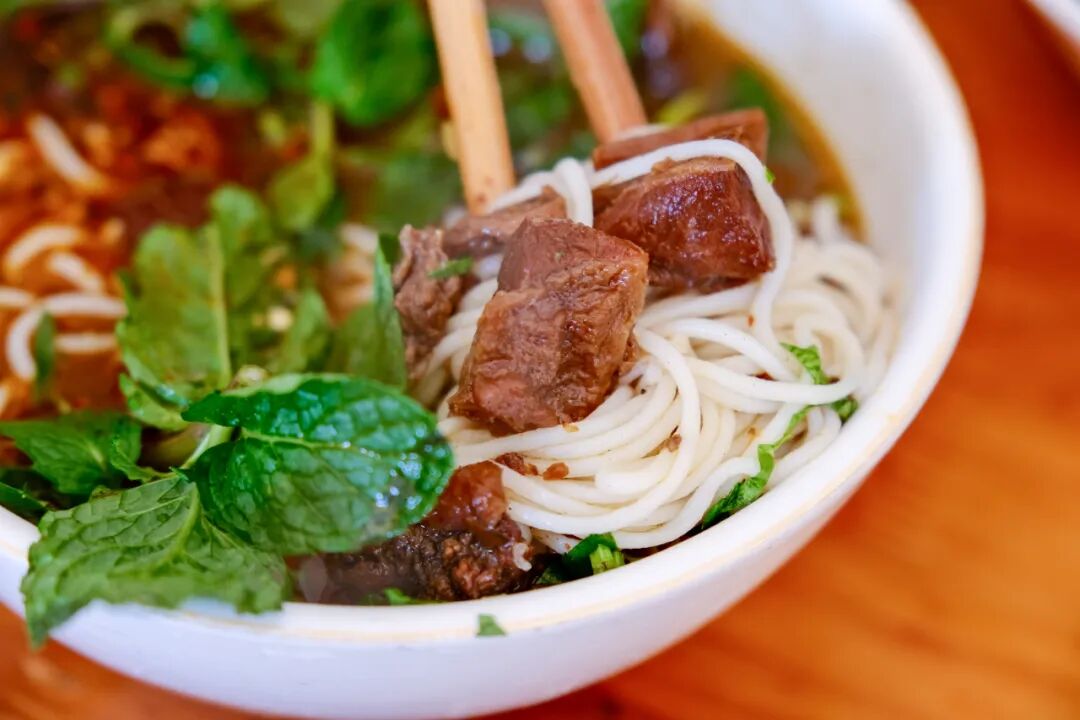
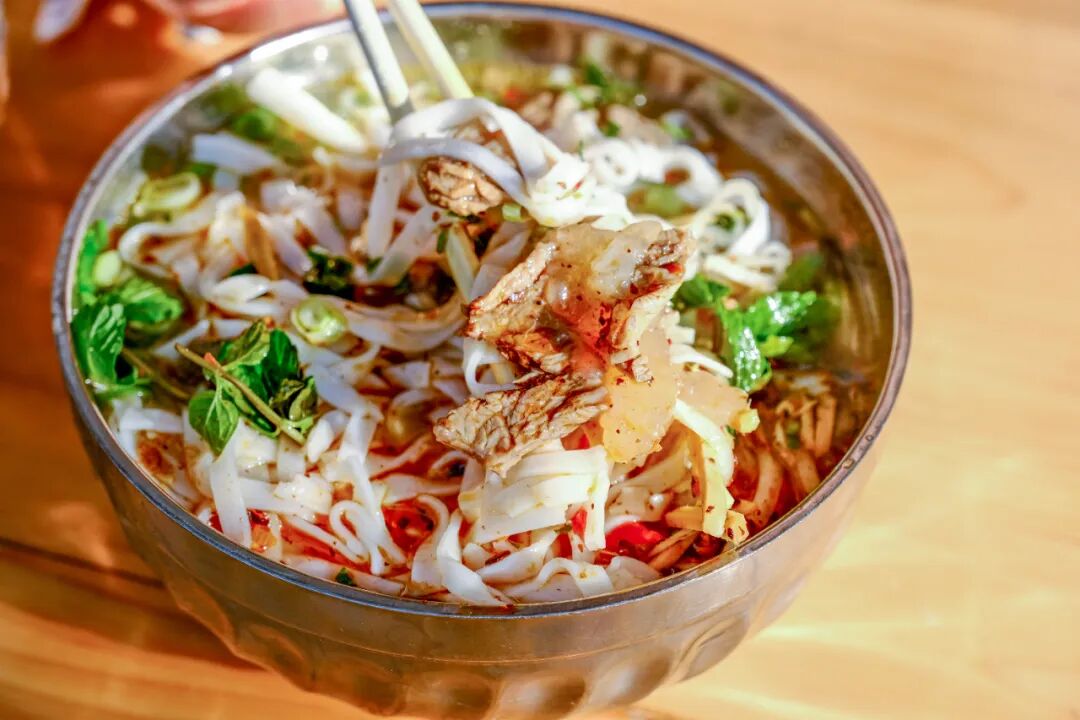
The most representative is this bowl of clear soup beef rice noodles.
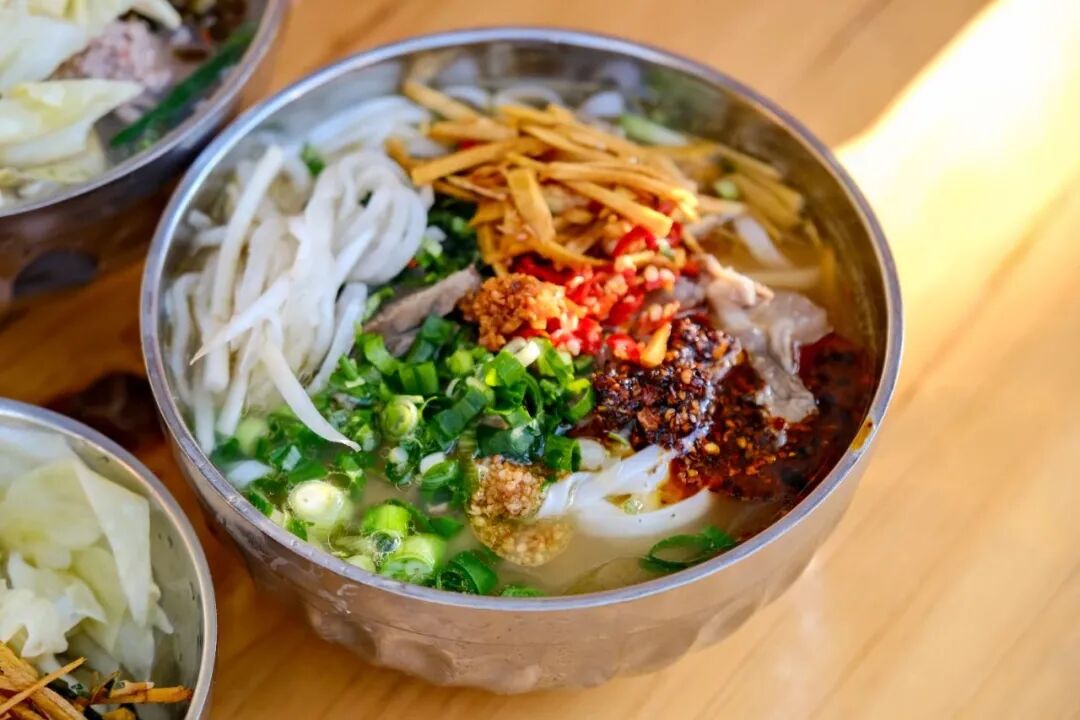
There are many choices of rice noodles, with differences in shape and texture: the thin and narrow dry rice noodles are chewy, while the flat and wide fresh rice noodles are softer and more fragrant (if it’s your first bowl in Mangshi, it’s still recommended to try the fresh rice noodles first).
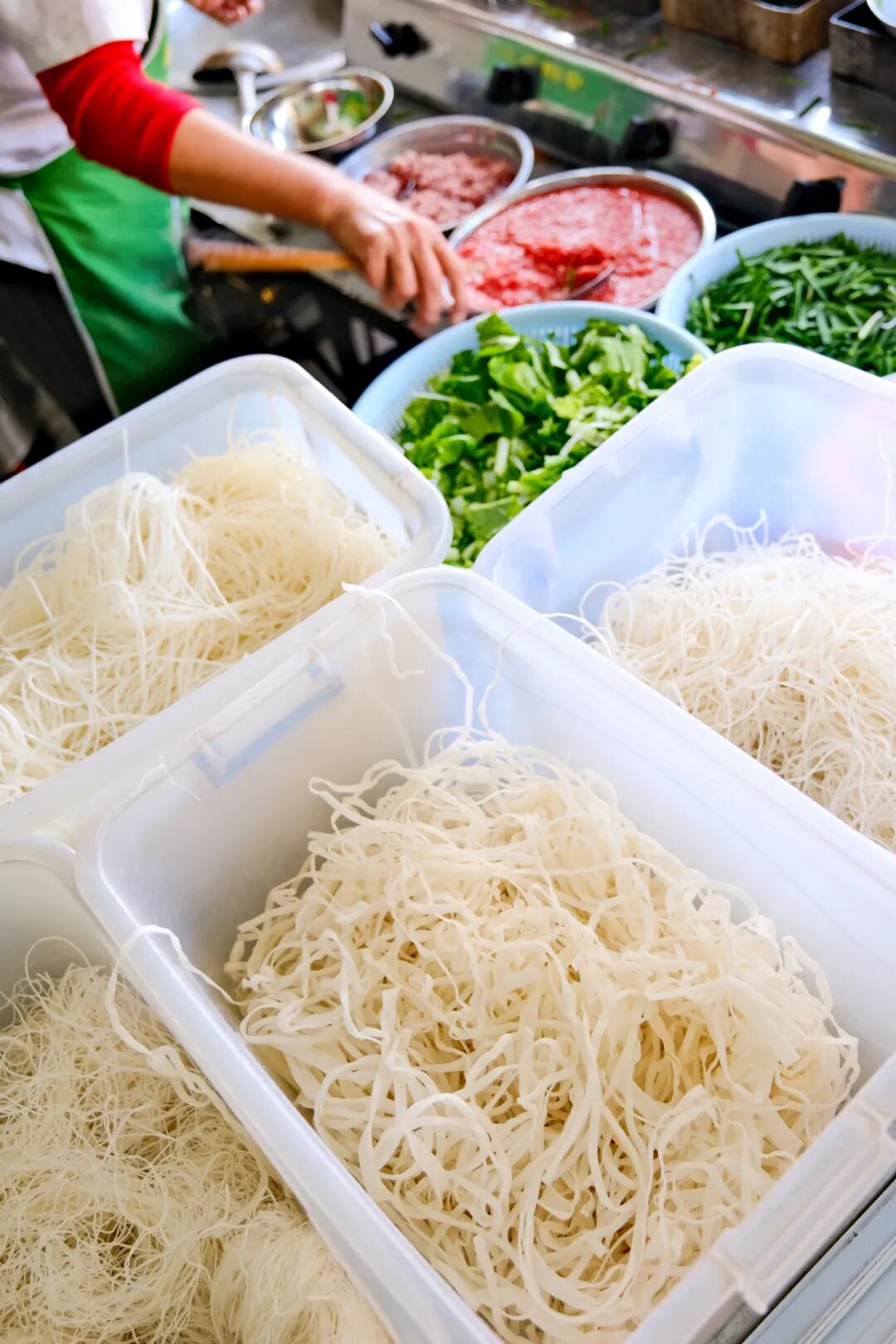
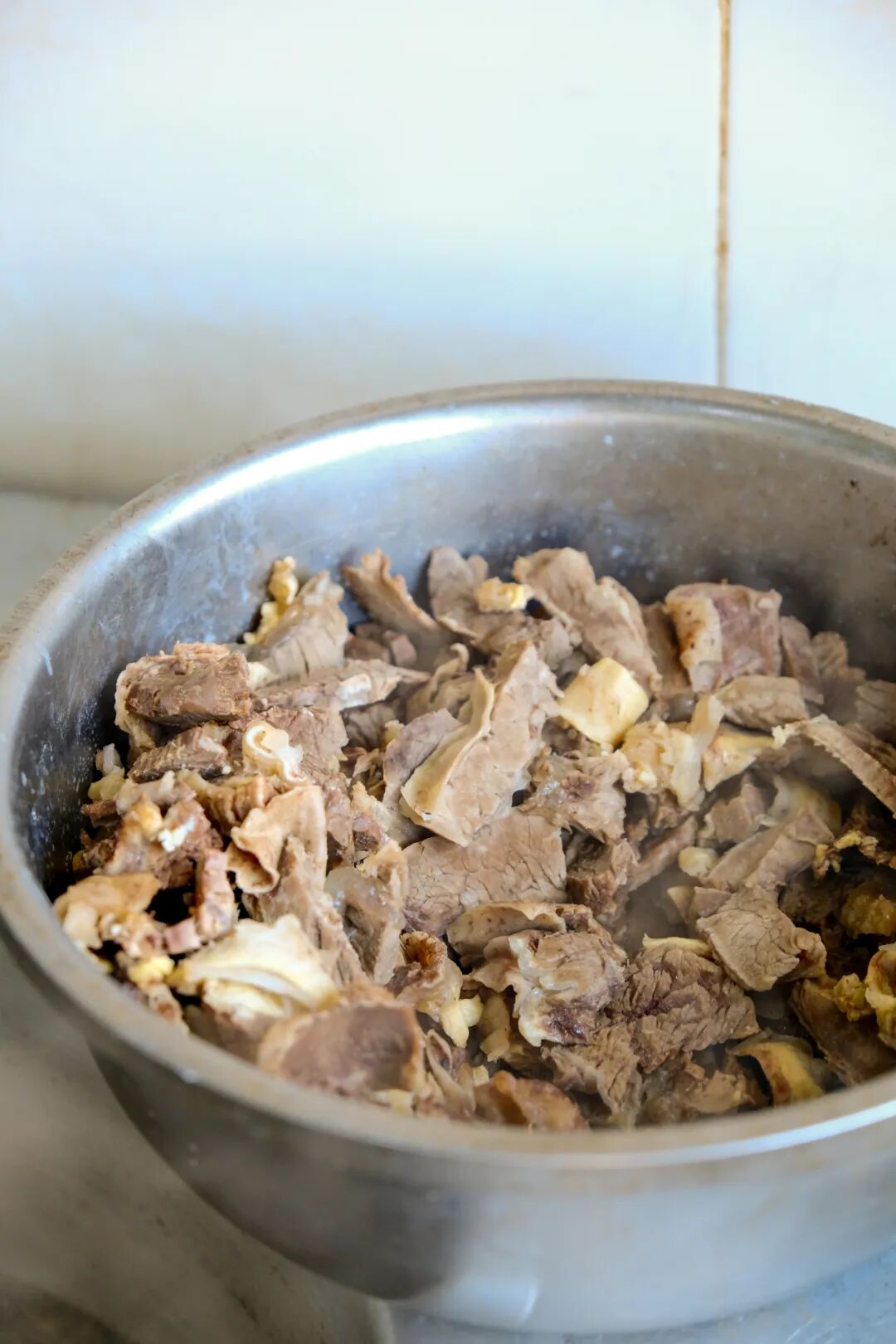
Although rice noodles originated from Tengchong, the breakfast shop owner told me that the rice produced in Mangshi is better, so the rice noodles made here are also tastier. After the rice noodles are cooked, they are added to pure beef and broth made from beef bones, which is fresh and rich, instantly awakening the taste buds that have been asleep all night. The beef is also generously served. Not only is the portion large, but it also includes high-quality cuts with skin and tendons, or thick and tender beef shank, making it very enjoyable to eat.
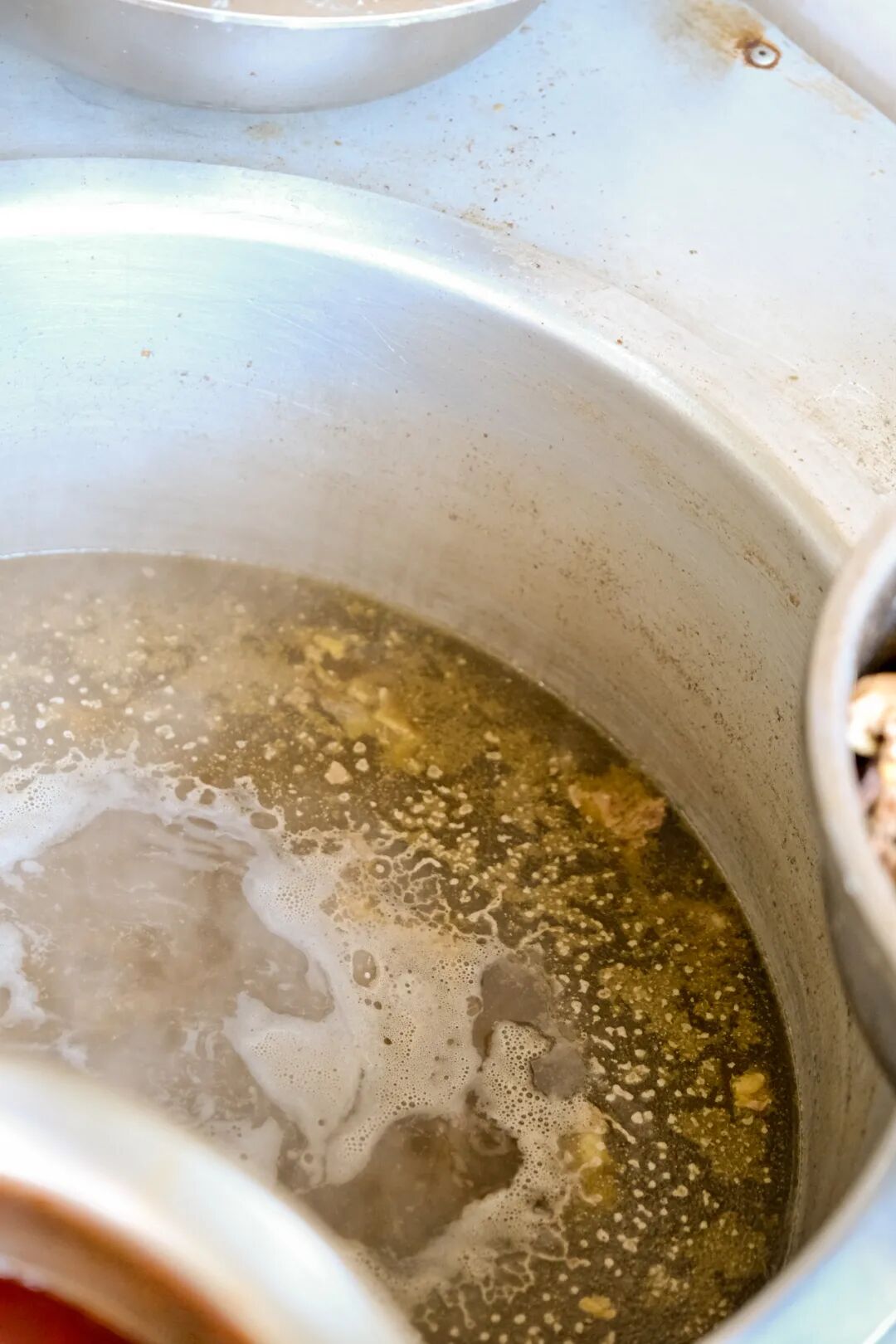
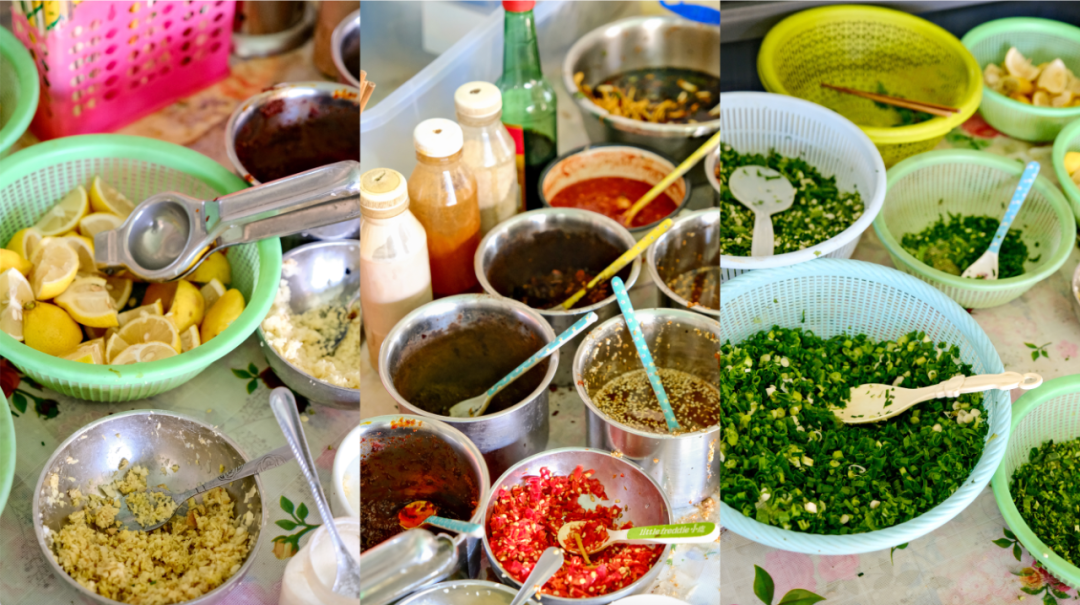
The area around Mangshi and Ruili is adjacent to Myanmar, and there is a live cattle trading market between China and Myanmar, so the beef is fresh and of good quality. The essence of rice noodle breakfast is the topping station, with nearly 20 kinds of toppings lined up by category, including herbs (aromatic willow, mint, cilantro, green onions), chili (small chili, hot pepper, chili sauce), fruits (small green tangerines, lemons), seasonings (soy sauce, vinegar, sesame oil, garlic oil, onion oil, etc.), and pickles (shredded radish, pickled cabbage, sour papaya shreds), etc. When I went for the first time, I was completely dumbfounded, wanting to add this and that, looking like someone who had never seen the world 😂.
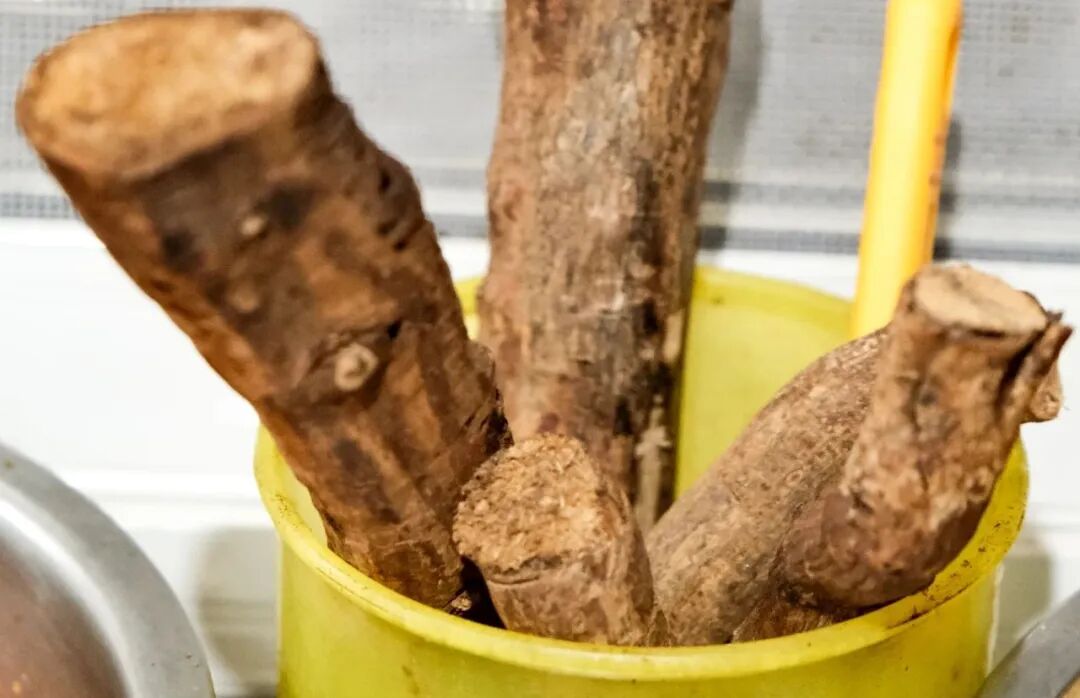
The most impressive is this thing that looks like wood, called mountain pepper root (mountain pepper is also called wood ginger). It really is a tree root, and it is surprisingly used as a seasoning! Locals skillfully use a knife to shave it, and the mountain pepper root turns into shavings that fall into the bowl, giving off a refreshing and spicy mountain aroma~
With so many seasonings, even if everyone orders the same clear soup rice noodles, the flavors will vary greatly, which is very interesting. My personal favorite combination is to squeeze two small green tangerines to increase acidity and citrus aroma, add soul aromatic willow and mint for herbal notes, a spoonful of mountain pepper chili sauce for spiciness, and a plate of pickles to cleanse the palate. One bowl down, and it only costs about 10 yuan. You Mangshi people are too happy!
The seemingly ordinary fresh meat rice noodles are also delicious.
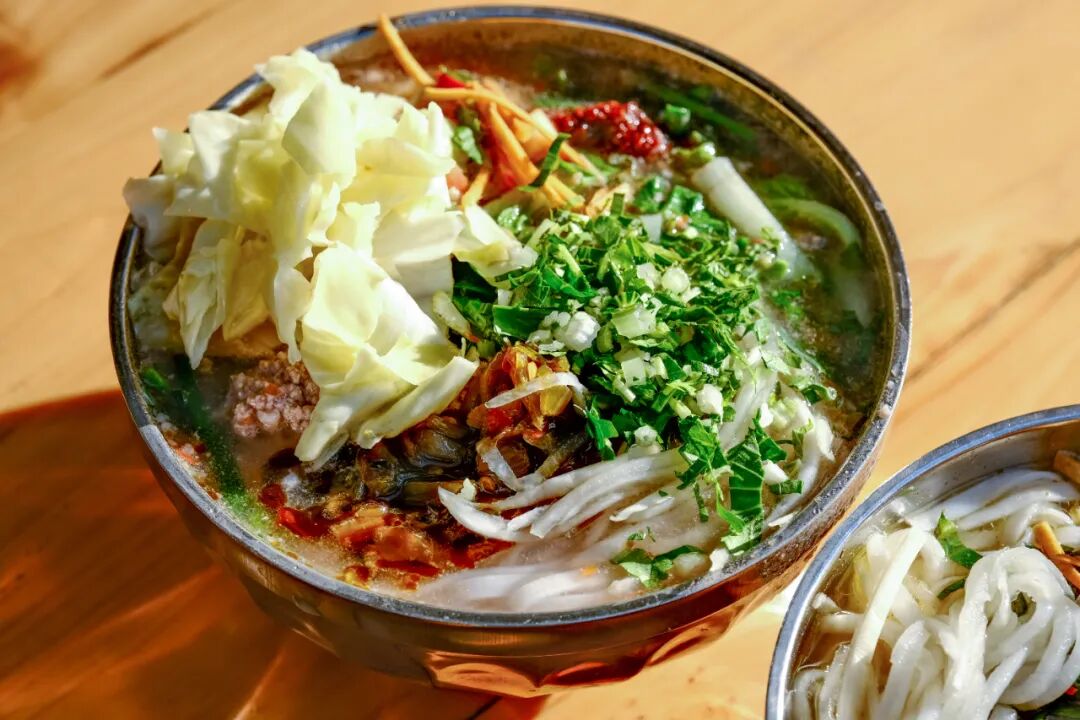
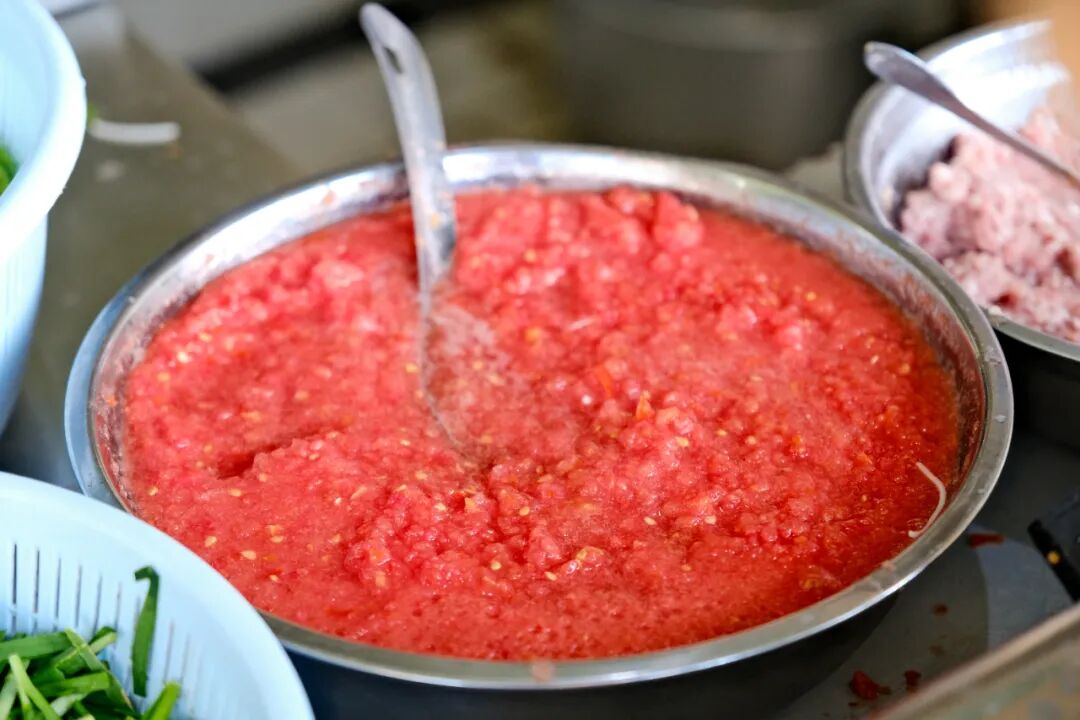
They are directly cooked in the original beef broth, with the highlight being the addition of tomatoes, which are mashed into fine tomato puree. Just a few spoonfuls make the broth full of light and bright sour sweetness. Plus a few spoonfuls of fresh meat, it creates another style of complex deliciousness.
The most special is this bowl of sour beef breakfast. The broth is made from sour papaya (a type of rose family papaya, not the same fruit as red heart papaya) and is added with marinade, giving it a deep color and not bland at all. It is sour enough to stimulate the appetite but not overwhelming; it has a rich yet refreshing fruit acidity, which can be quite shocking for first-time eaters!
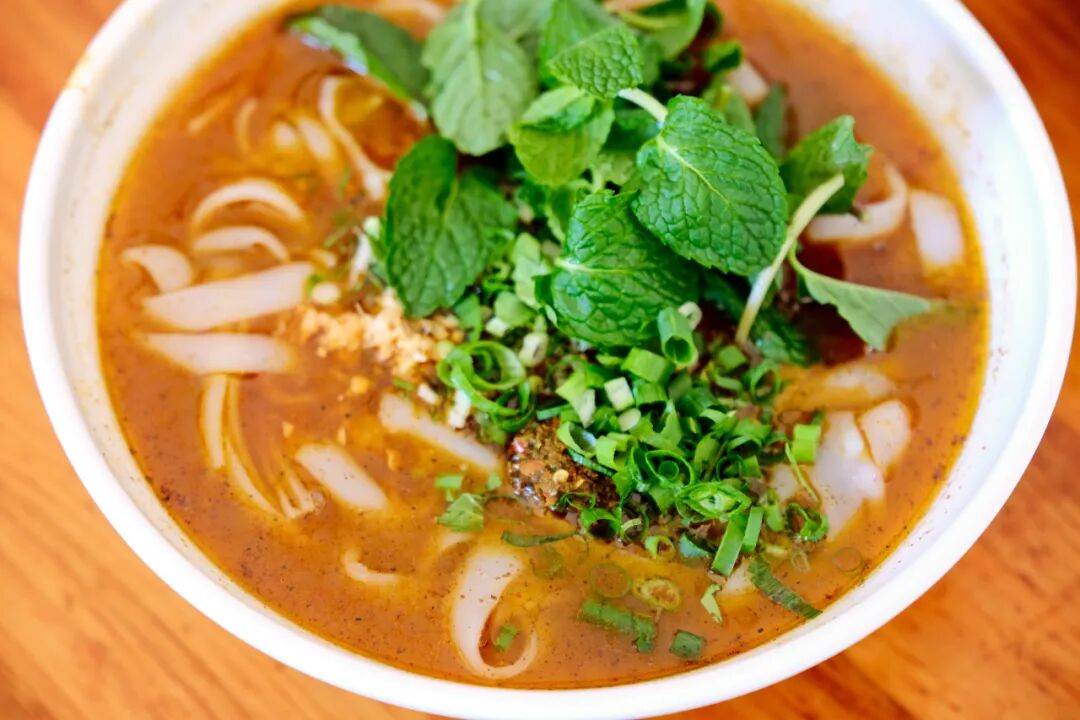
However, the Mangshi people understand the balance of sour and sweet. The toppings here are also beef, but in small pieces that have been marinated, which may be a bit sweet on their own, but harmonize well with the sour papaya broth.
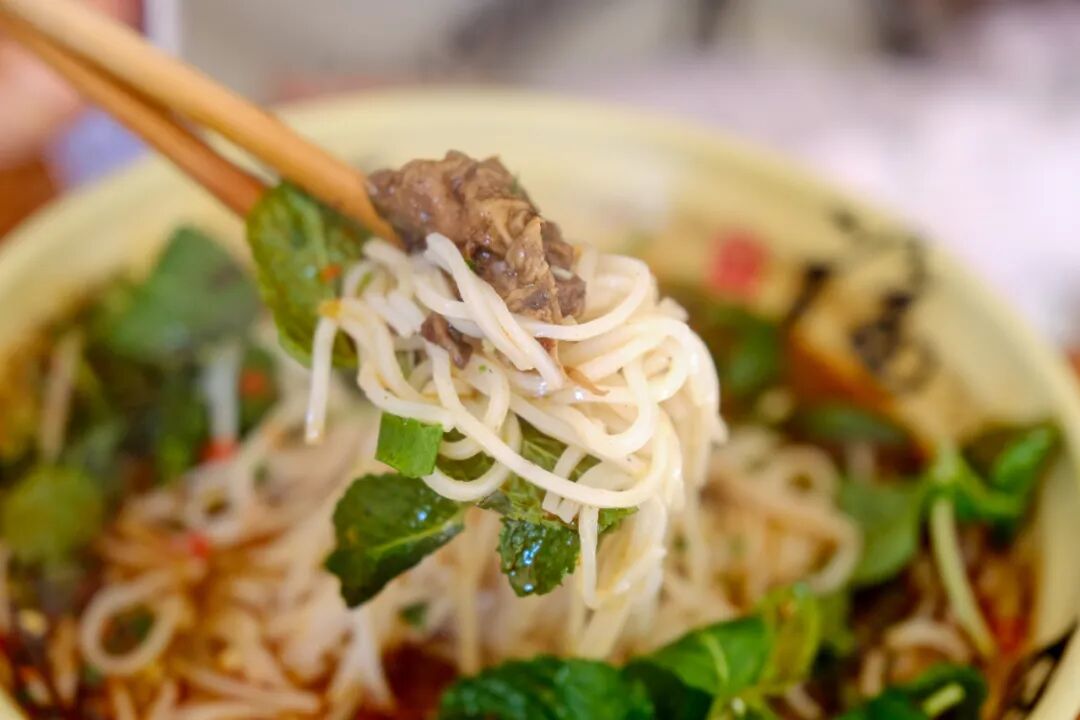
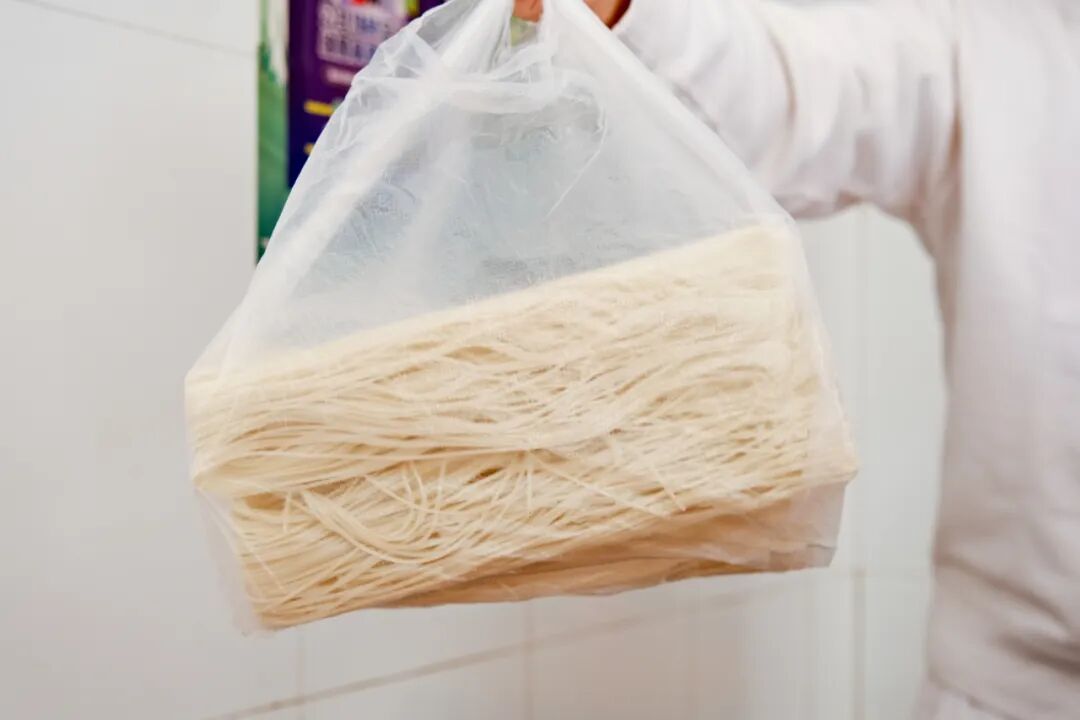
Besides rice noodles, Mangshi also has rice vermicelli, which comes in two thicknesses and is smoother and more elastic compared to rice noodles. A friend who was with me even packed some to take back to Hong Kong 😂.
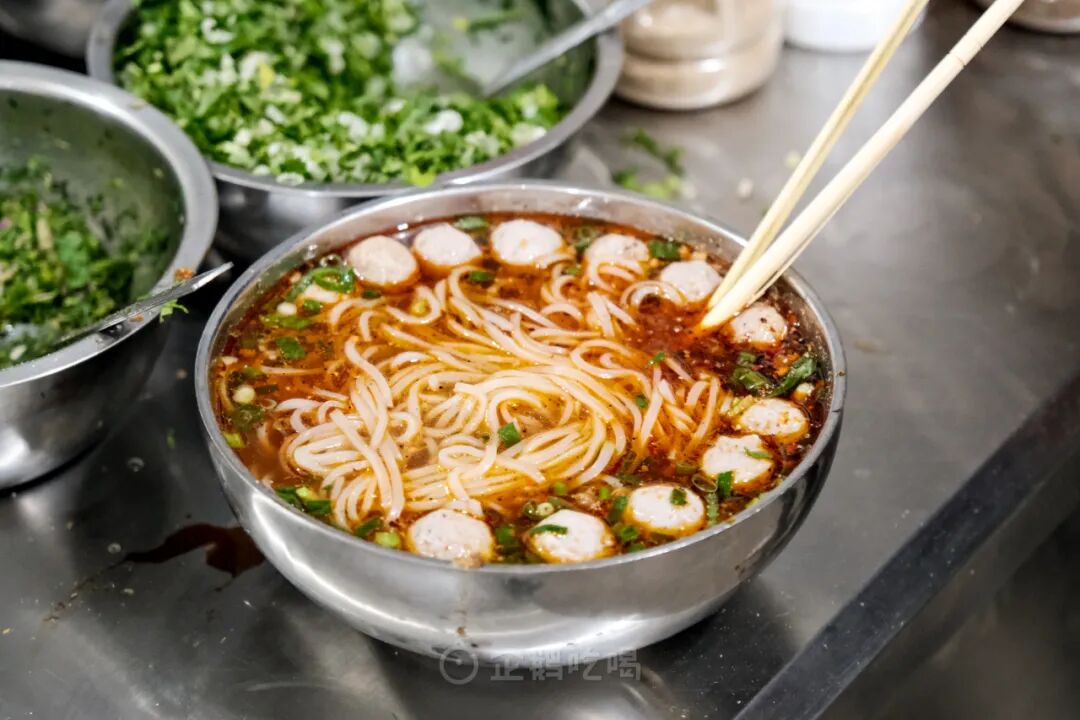
If it’s a late-night snack, many people choose the more filling round meat rice noodles. The meat is ground into a pink paste, formed into balls, and cooked in clear soup, bouncy and juicy, reminiscent of the hand-made beef balls from Chaoshan.
02 Sapi Mangshi has a hot climate, and for lunch or dinner, locals often eat a type of cold rice noodle called Sapi from the Dai ethnic group. Simply put, it’s dipping sauce + rice noodles + side dishes (this is my favorite; I once earned the nickname Zhang Sapi for eating three bowls alone and packing some for a late-night snack).
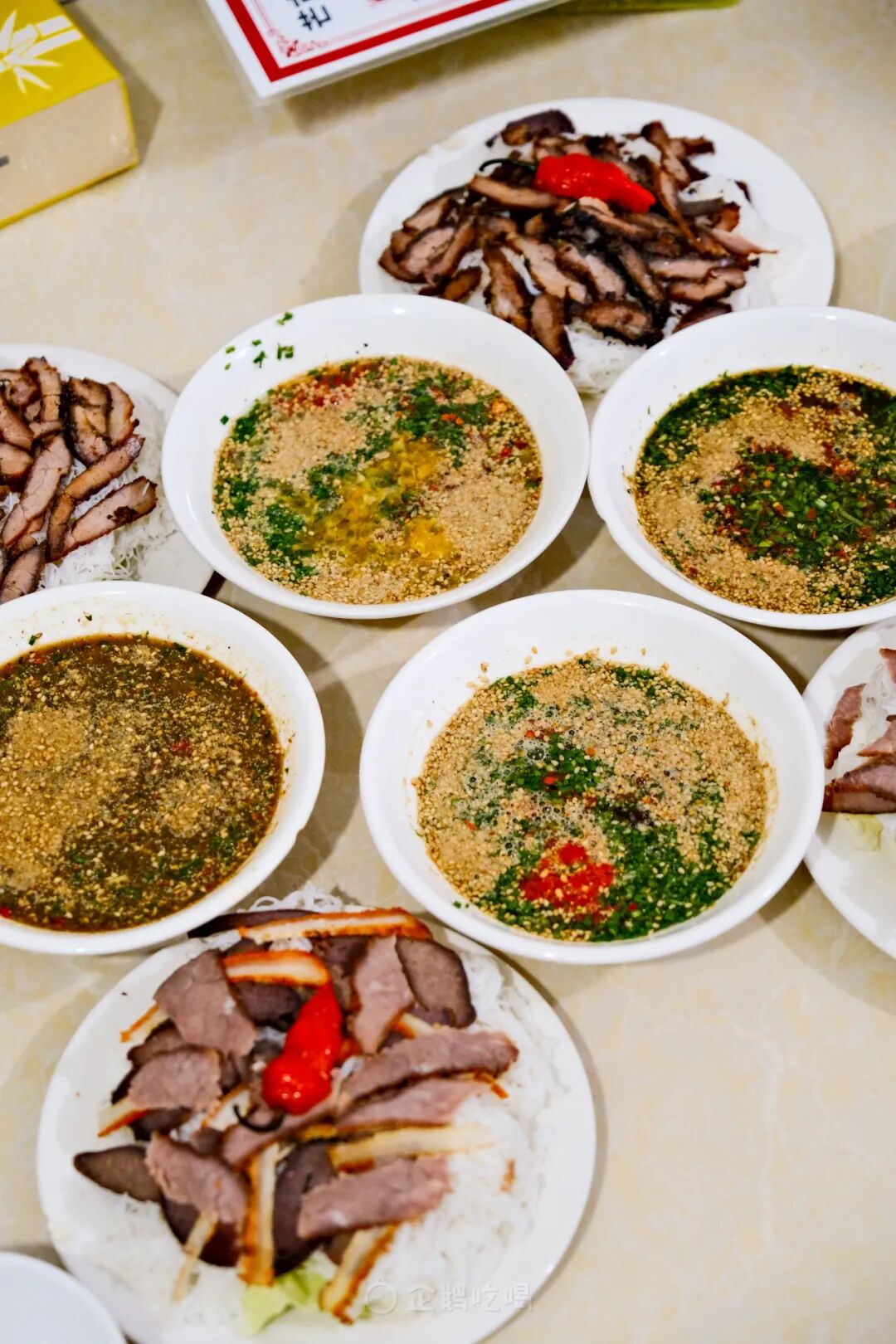
Sapi is a Dai word, where 'sa' means mix and 'pi' means bitter sausage water. This bowl of dipping sauce is the soul of Sapi and condenses the essence of Mangshi people's seasoning! The main ingredients are cilantro (the prickly wide-leaved cilantro, which has a refreshing taste that ordinary cilantro lacks), aromatic willow leaves, wild chives (very fragrant, more pungent than regular chives), and various chopped herbs, paired with minced dried meat, chili, salt, and MSG, etc.
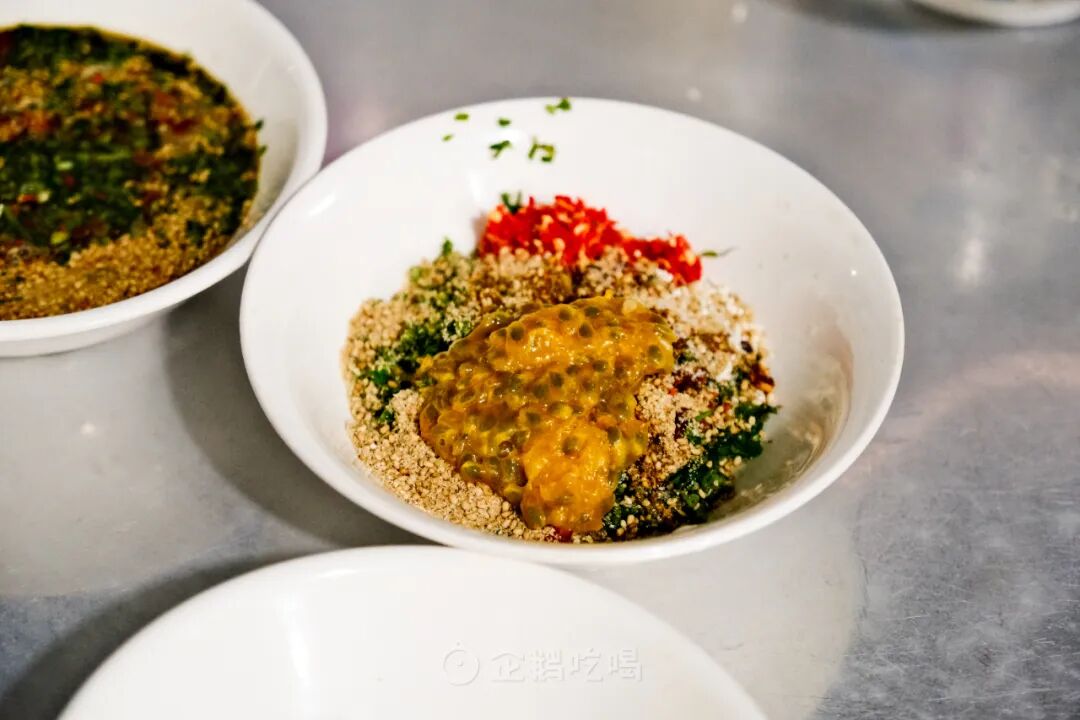
The key point is that depending on the flavor of the side ingredients, Sapi can be roughly divided into sour Sapi and bitter Sapi. Newcomers are advised to start with sour Sapi, whose core side ingredient is the local old variety of lemon, freshly squeezed into the dipping sauce and mixed with clear water, making it refreshing and sour, with a strong fruity flavor and rich herbal taste~
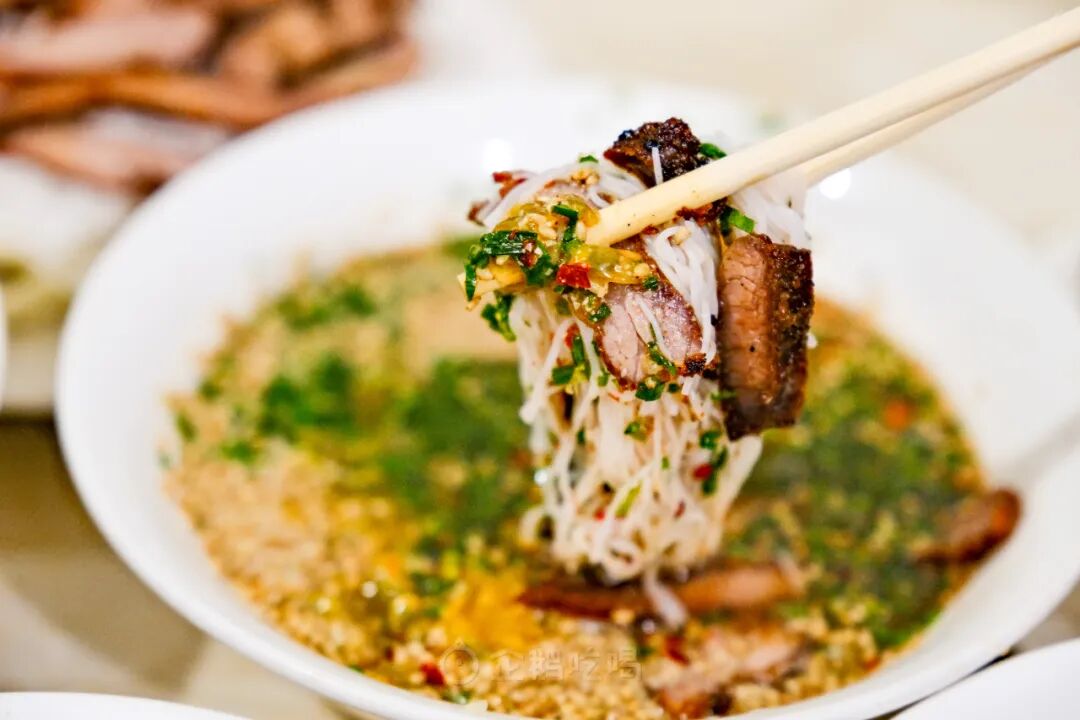
Depending on the season, sour Sapi also has different varieties like goat milk fruit Sapi, passion fruit Sapi, and olive Sapi, with similar preparation methods. Goat milk fruit tastes a bit sweet like tender cherries; passion fruit has an explosive aroma; olive is actually oil olive (Mangshi people refer to oil olive as olive or Yunnan olive, not the kind from Chaoshan), which is sour and a bit sweet, making it a very special experience.
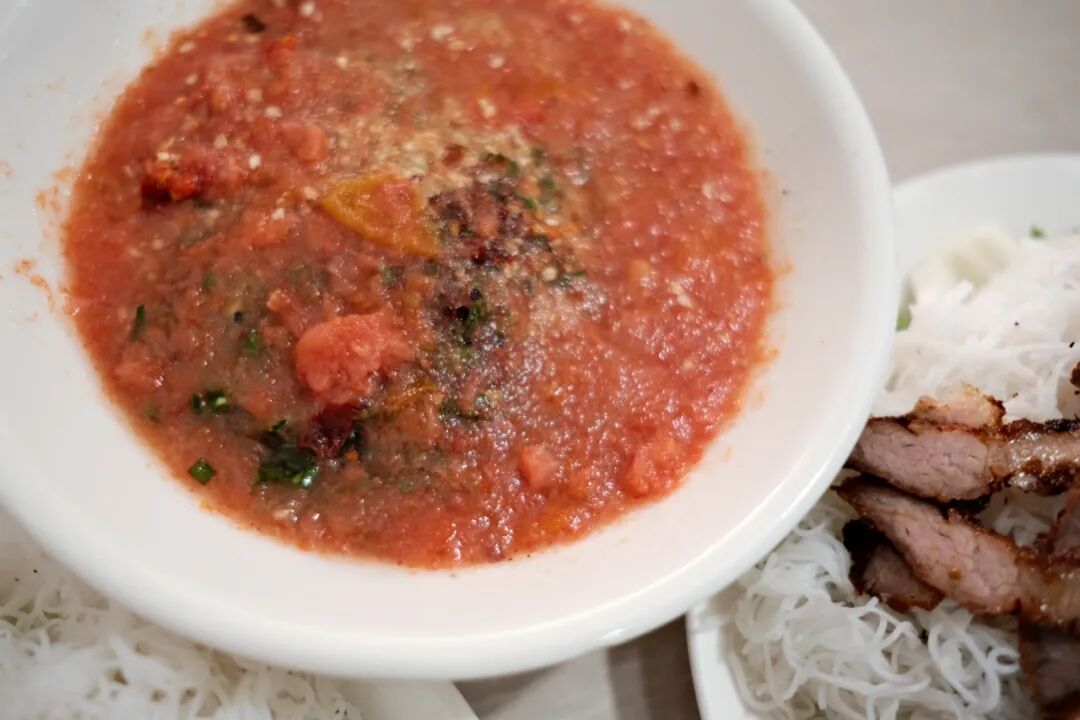
The bitter Sapi is more local and has more Dai flavor; those who love it adore it, while those who don’t may not be able to eat it at all. It’s called bitter Sapi because it’s made with bitter sausage water from boiled beef intestines, giving it a magical bitter and cool sensation, but the aftertaste reveals a hint of herbal fragrance (I personally find it delicious, but my friends couldn’t accept it; it’s not because it has a strange taste, but because it’s bitter 😂).
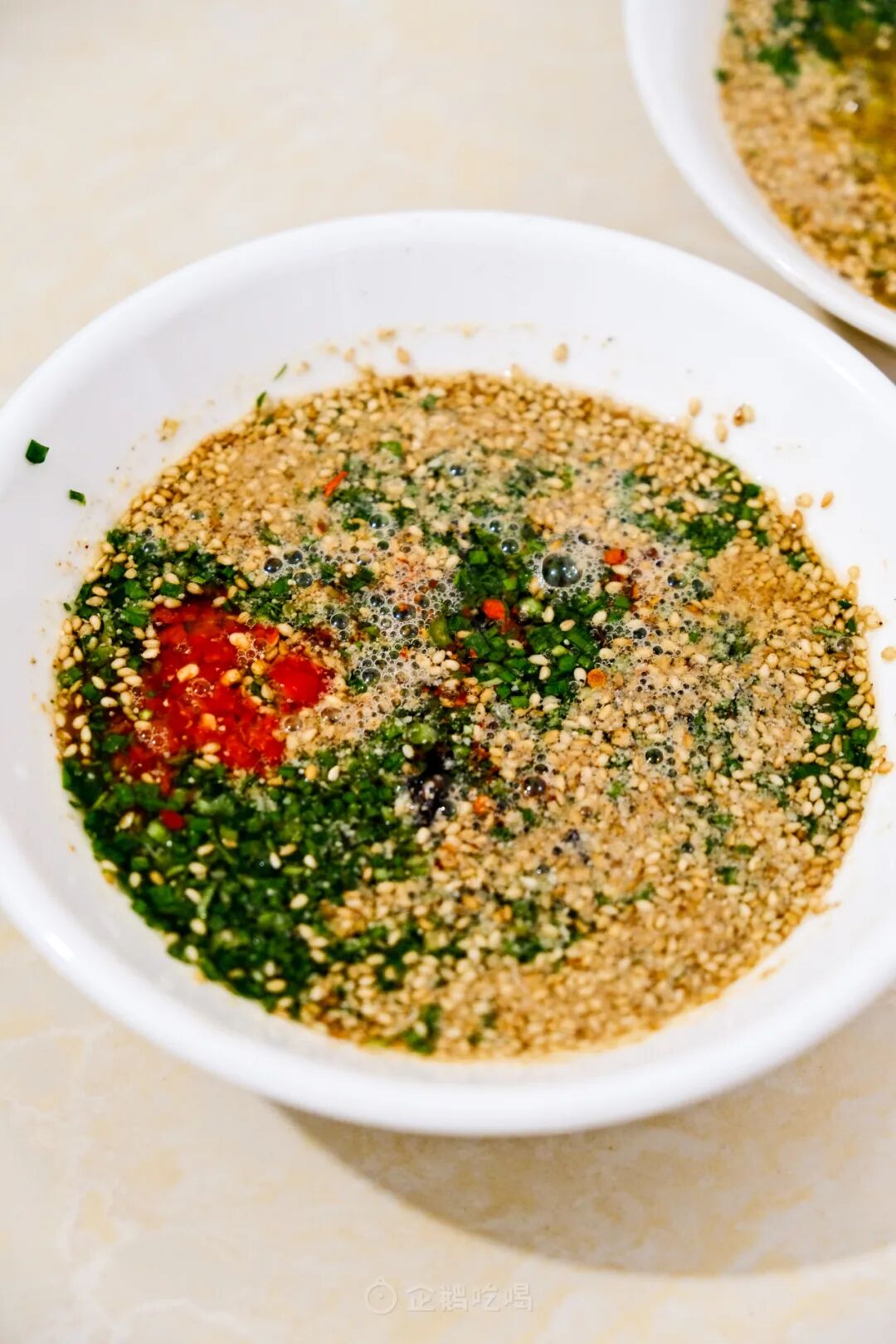
The most local way to make it is raw bitter Sapi, which uses raw beef and bitter sausage water to create a sticky dipping sauce. It doesn’t taste very bitter; instead, it has a wild and spicy flavor (but I don’t recommend everyone to eat it; first, the taste is a bit peculiar, and second, eating raw meat has risks). For those who dare to eat bitter Sapi, I recommend trying cooked bitter Sapi or eggplant Sapi, which are not as intense. The former is made with cooked beef, while the latter adds roasted and mashed eggplant, giving it a unique charcoal aroma.
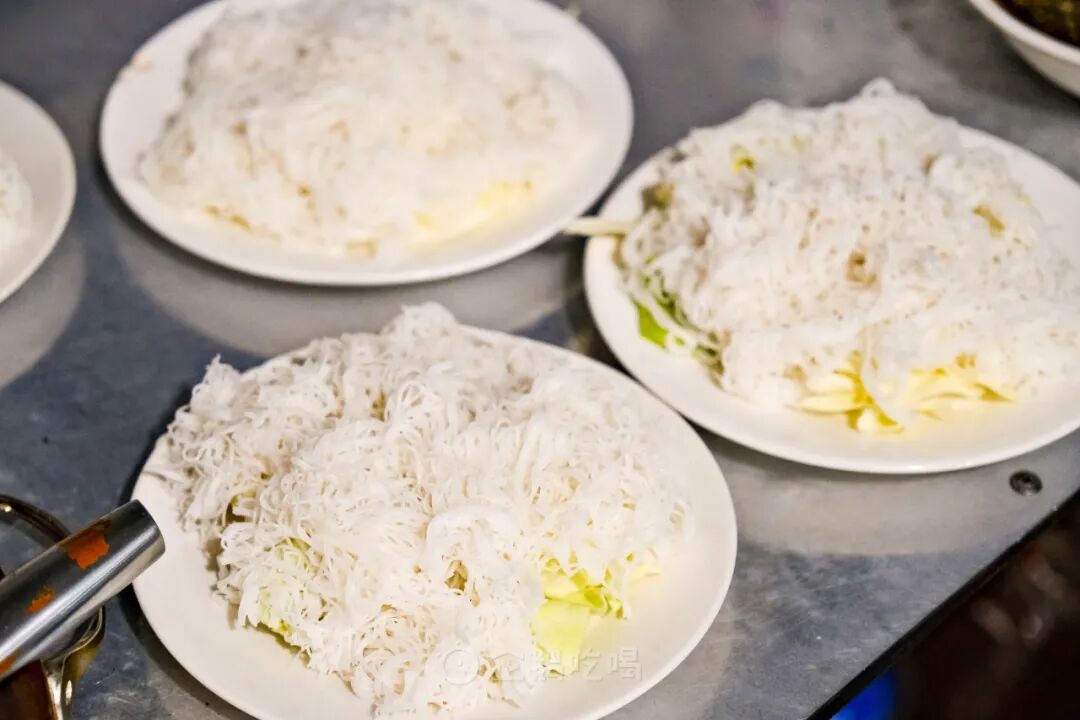
The rice noodles served with Sapi are specially made and cannot be kept overnight. Although they look thin and soft, they are actually very fluffy, and you can clearly feel the springy texture when picking them up.
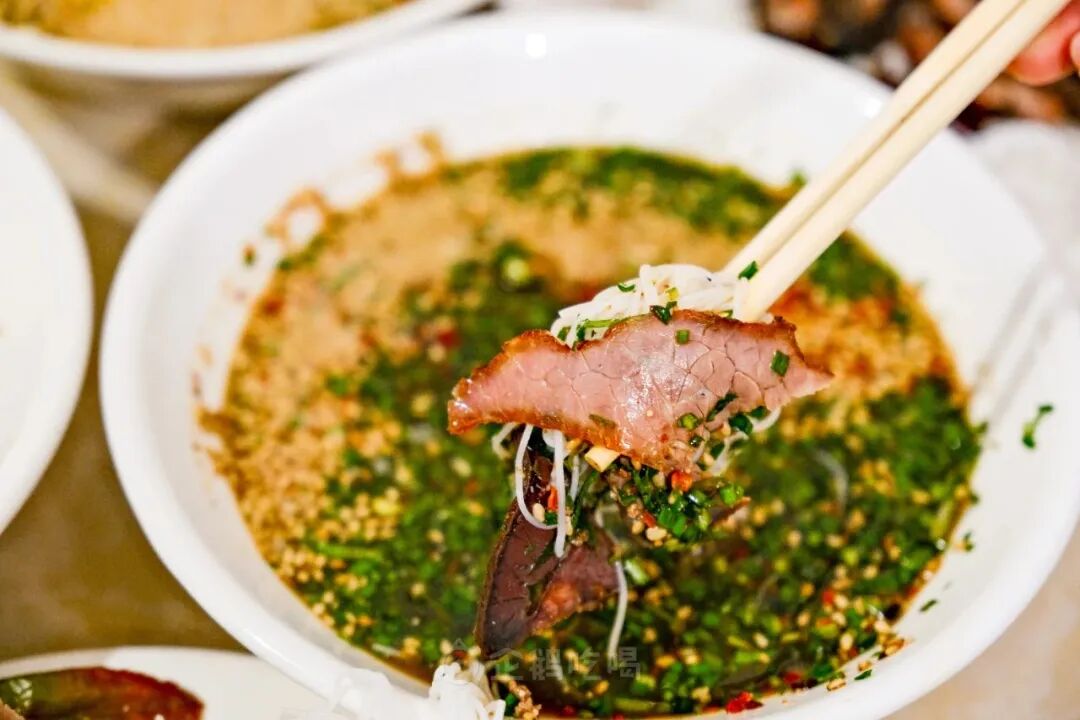
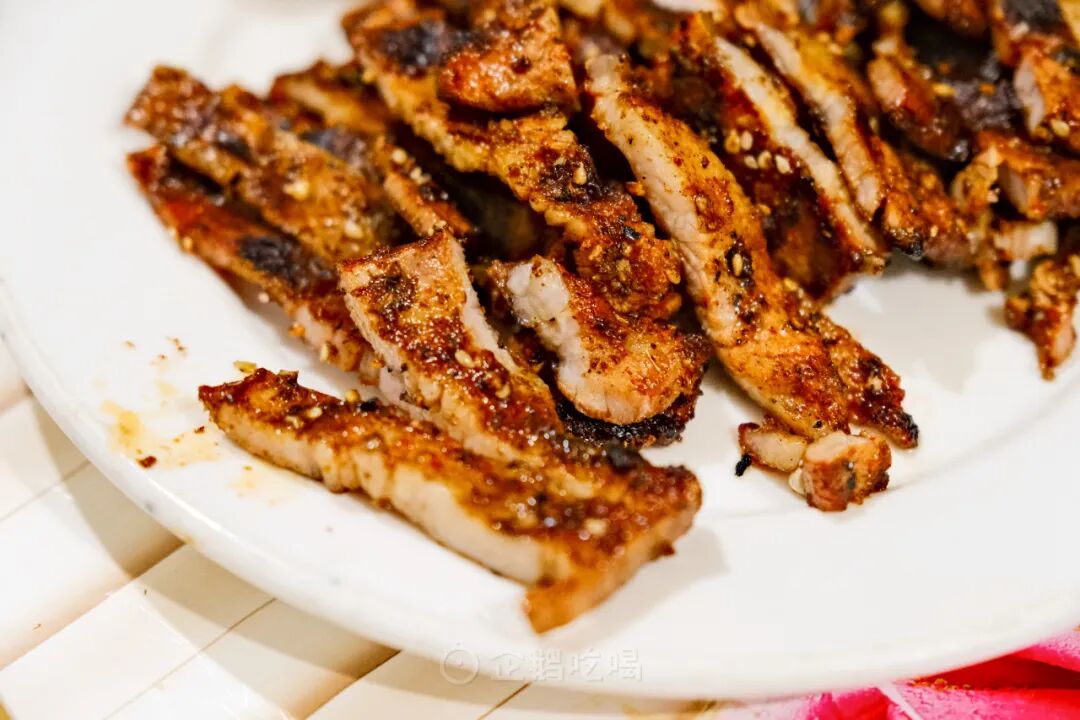
The side dishes are mostly pickled cabbage and shepherd's purse, along with a lot of charcoal-grilled meat. The lighter-flavored sour Sapi is usually paired with grilled pork belly, which is grilled to a sauce color and brushed with secret sauce, slightly sweet with honey, and has a rich charcoal aroma. The heavier-flavored bitter Sapi is usually paired with grilled beef liver, marinated beef slices, and beef tripe, which have a slightly wild offal aroma that can overpower the unique flavor of bitter sausage water.
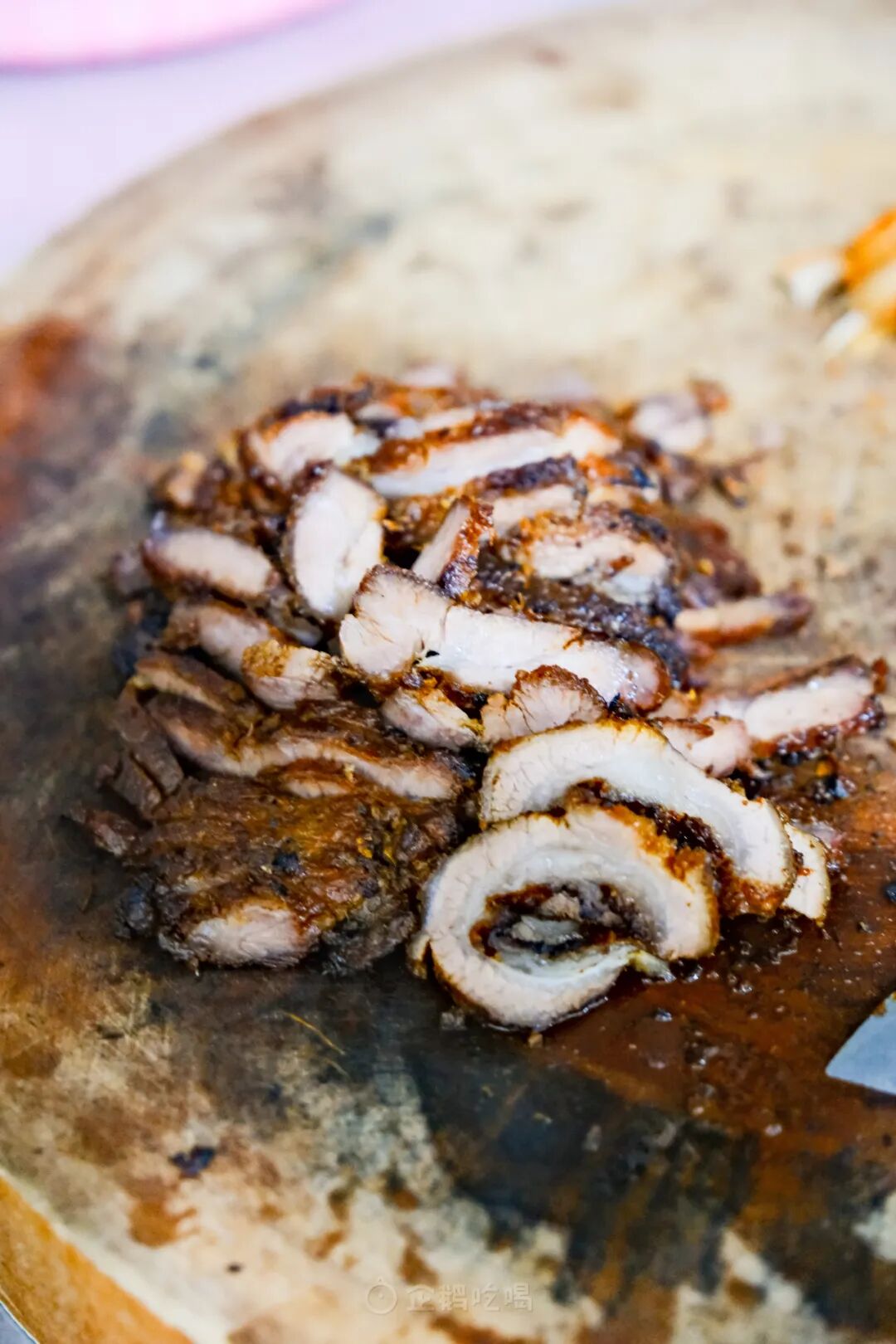
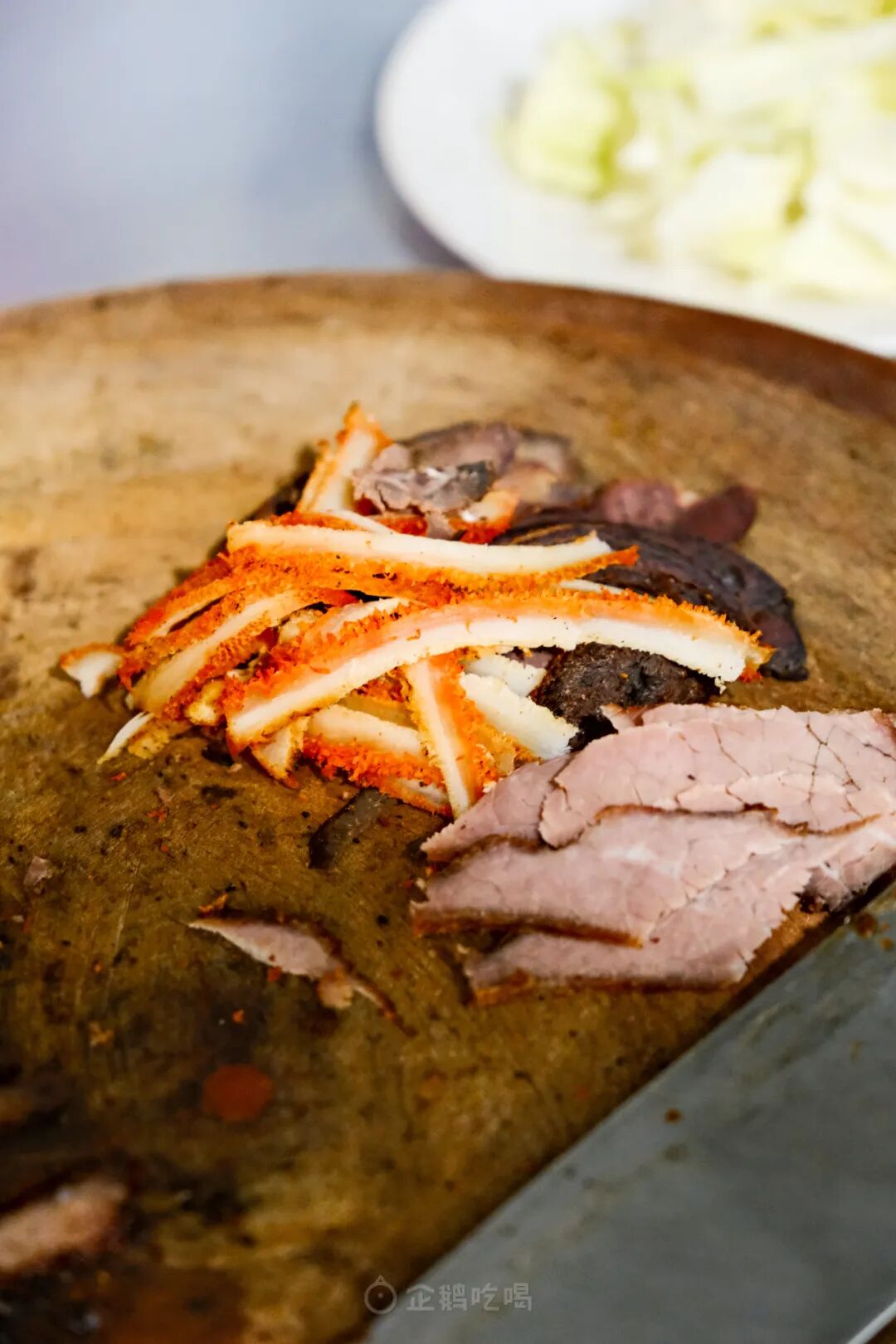
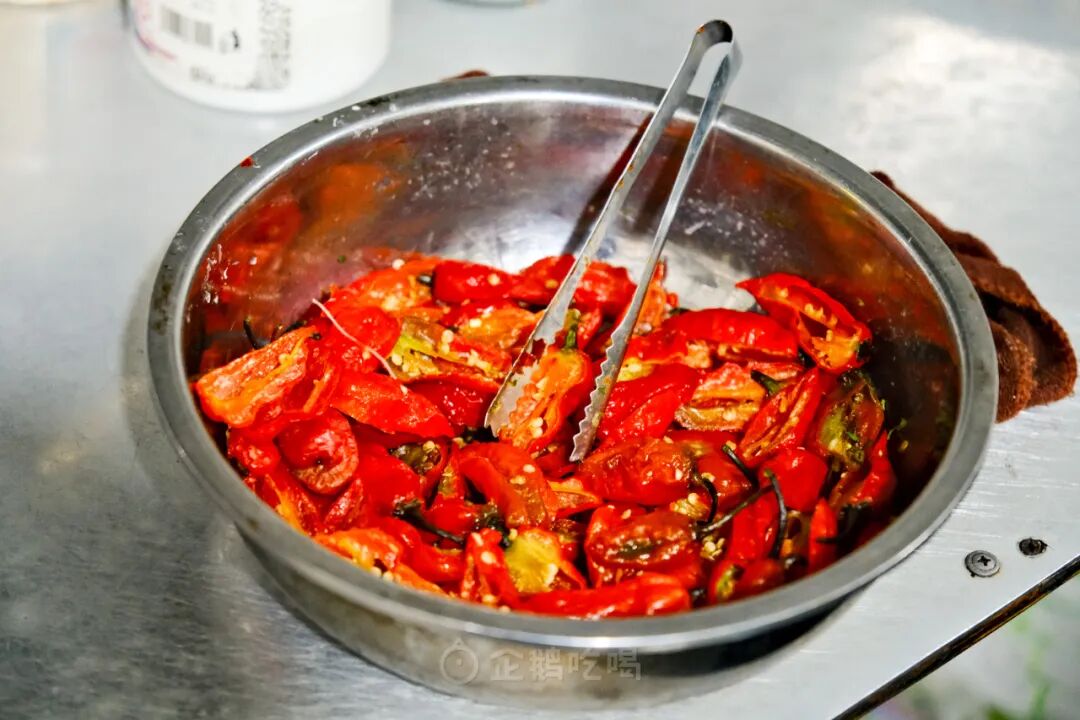
Before eating Sapi, first dip the chili on the rice noodles into the dipping sauce a few times. This is a unique dipping chili from Mangshi, with very high spiciness and a concentrated fruity aroma. Friends who can eat spicy food must add it, as it enhances the flavor of the entire dipping sauce!
The originally fluffy rice noodles become soft and smooth after being dipped in the sauce, with a sticky yet chewy texture, and various fresh, charcoal, meat, and fruity aromas flood into your mouth. Whether it’s the wonderful texture or the complex flavors, it’s a unique experience in rice noodles.Not only sour Sapi and bitter Sapi, in Mangshi, everything can be Sapi. For example, there’s “oil chili Sapi” made with oil chili, “fish Sapi” made with raw fish spine, “pork Sapi” made with pork and roasted skin, and “bee Sapi” made with fried bees, etc. But only this bowl of shrimp Sapi is one I recommend everyone to come and try; it’s a novel method that will leave a lasting impression!
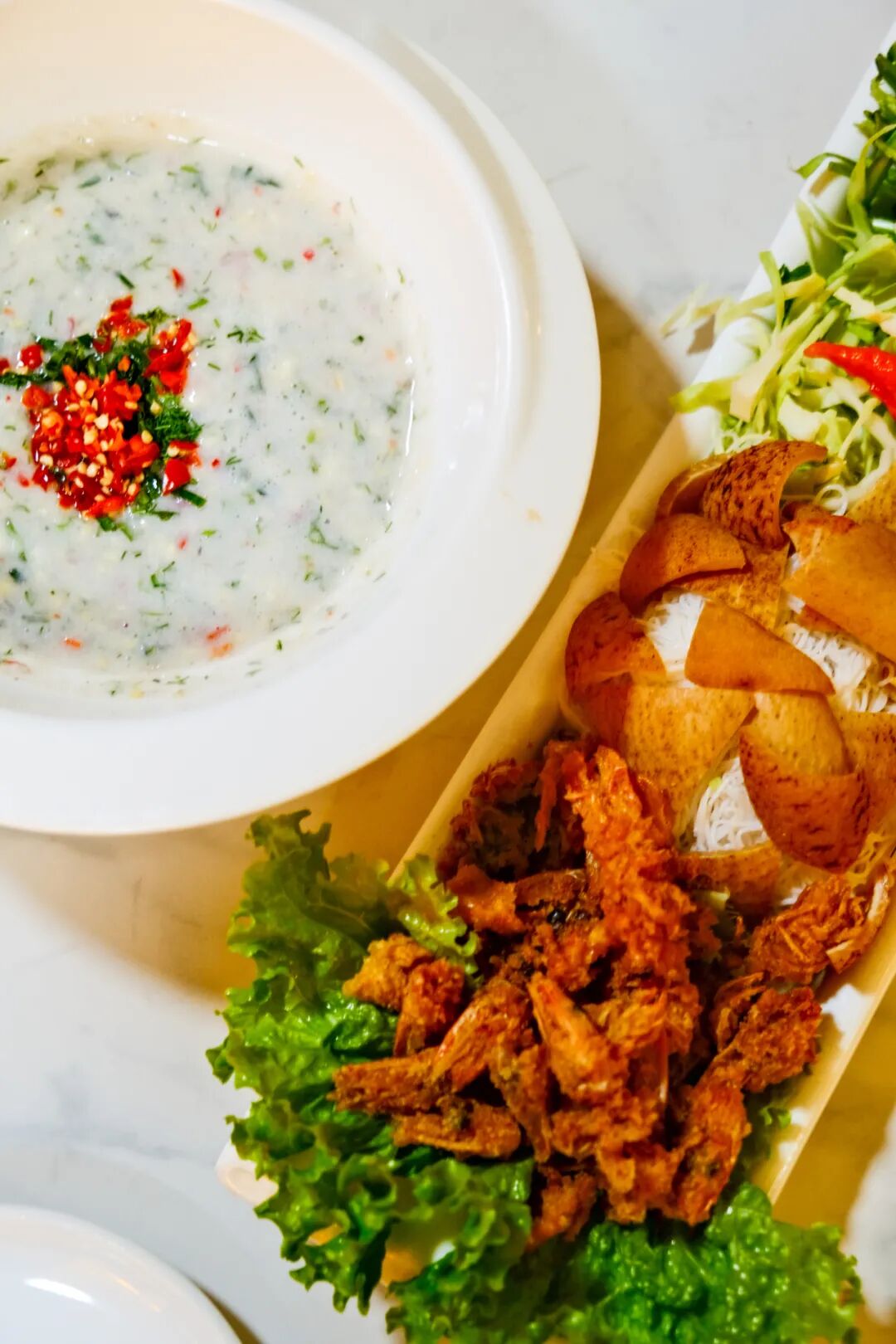
Fresh live shrimp are mashed into shrimp paste, seasoned with lemon juice, fennel, chili, etc., creating a bowl of pure “shrimp dipping sauce.” The seasoning is not heavy-handed; it simply uses light fruit acidity and herbal aroma to enhance the natural sweetness of the shrimp, which is a different style from other regions’ raw marinated dishes~
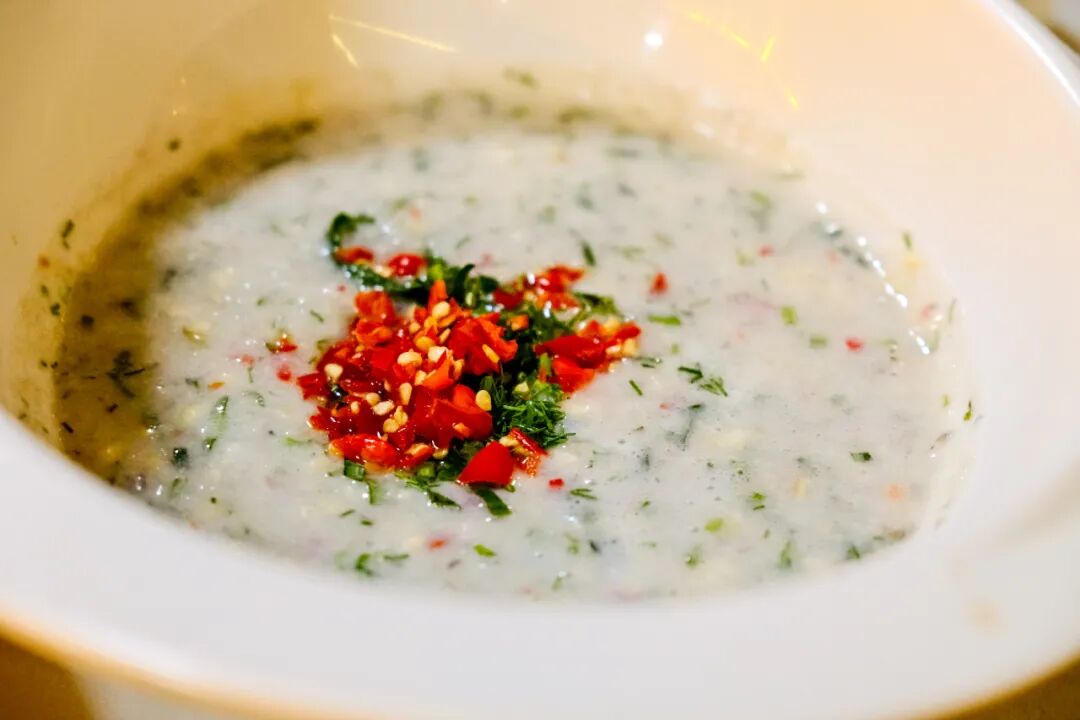
What’s even more amazing is that the chef will fry the shrimp heads until crispy, and you can use them to dip into the fresh shrimp dipping sauce, which is particularly addictive!
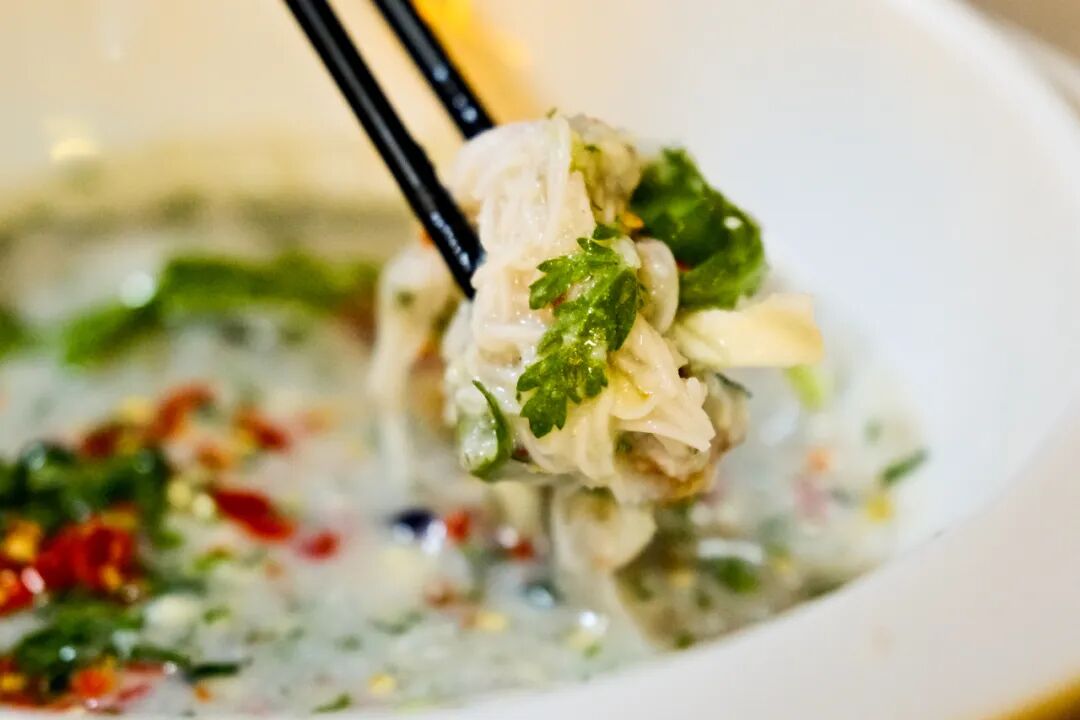
Perhaps the shrimp never expected that one day humans would use their heads to dip into their bodies 🤦… 03 Hand-Pulled Rice Noodles Also a type of cold rice noodle, the Achang people’s hand-pulled rice noodles have a completely different style. First, the presentation is different: a set of hand-pulled rice noodles includes a bowl of meat sauce, a plate of rice noodles, two types of chili, a plate of cold mixed herbs, a plate of vegetables, a pot of sour soup, a bowl of radish soup, and a bowl of tofu soup. The luxuriousness is even more impressive than bridge-crossing rice noodles.
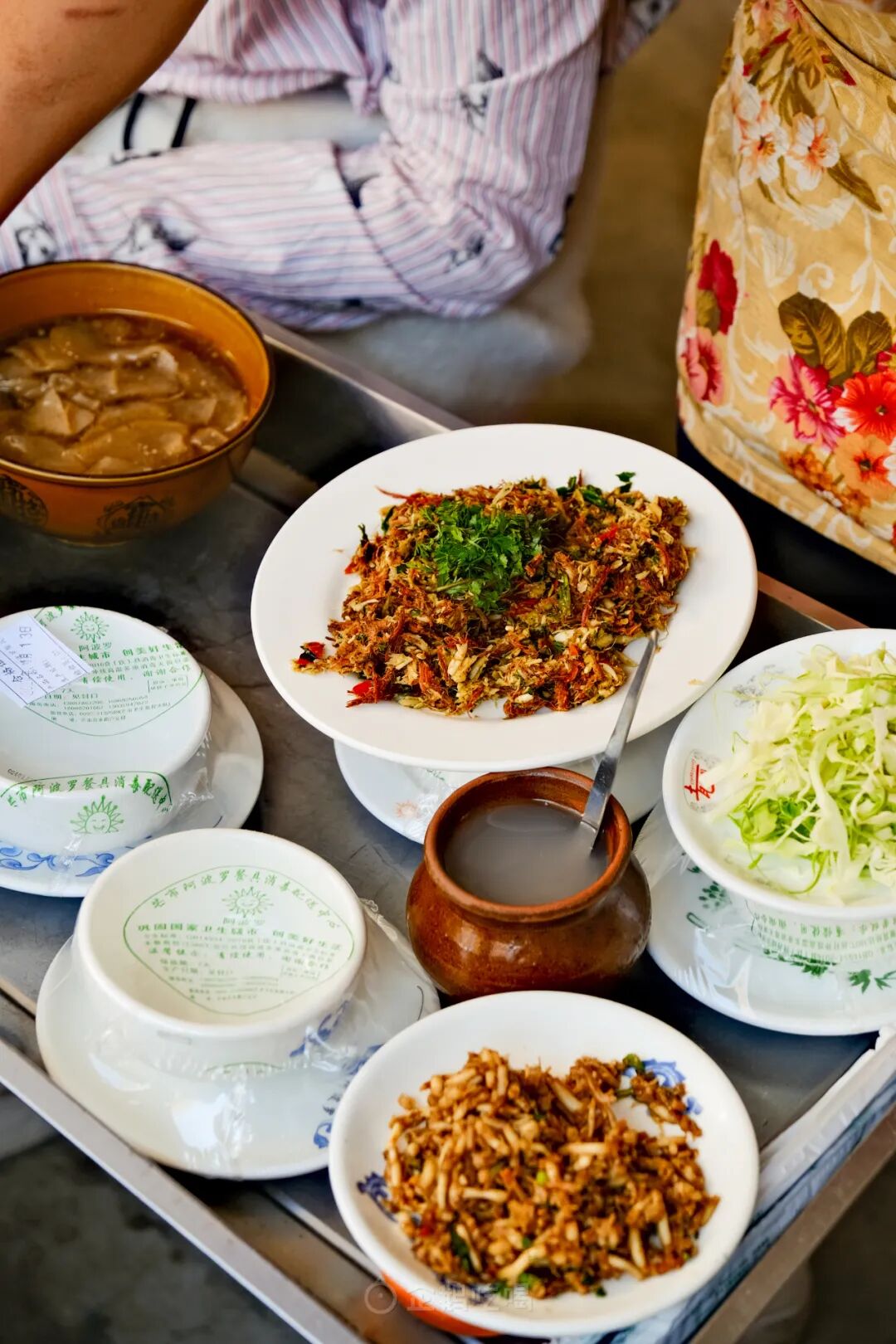
Secondly, there are specific eating methods: according to the Achang people’s traditional way of eating, the rice noodles must be picked up with chopsticks, placed in the palm, topped with meat sauce and side dishes, and drizzled with a spoonful of sour soup, then sent into the mouth. It is said that “hand-pulling” is a method that originated from ancient soldiers who lacked bowls and chopsticks (now disposable gloves are used), and while I can’t say it enhances the flavor, it certainly adds to the ritual.
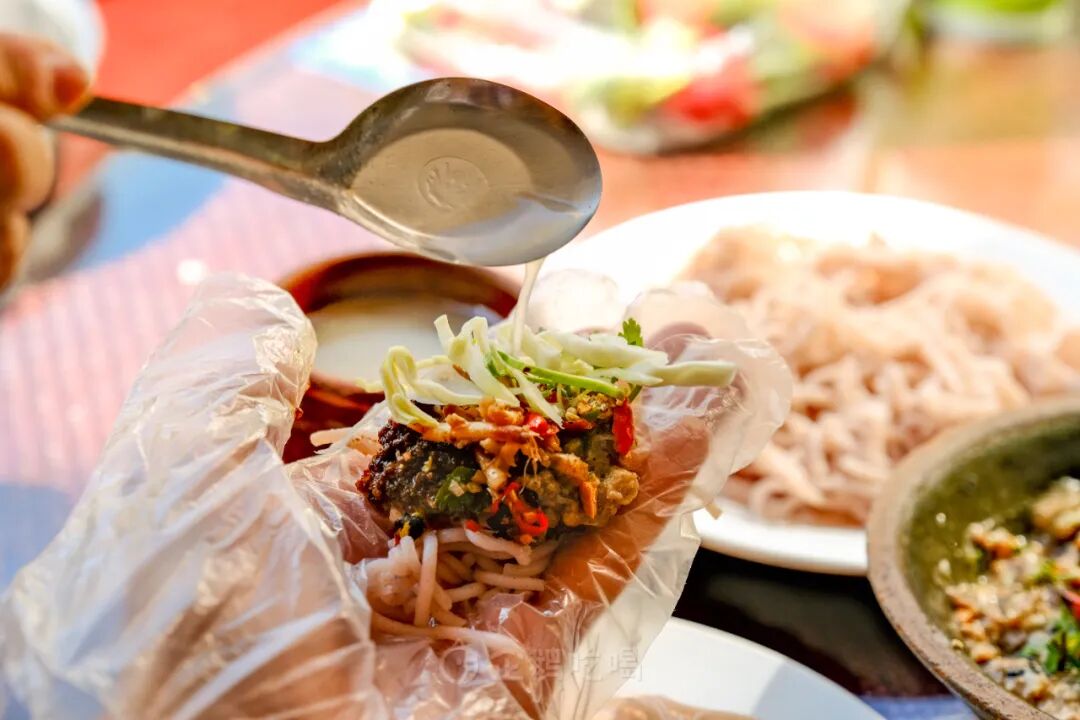
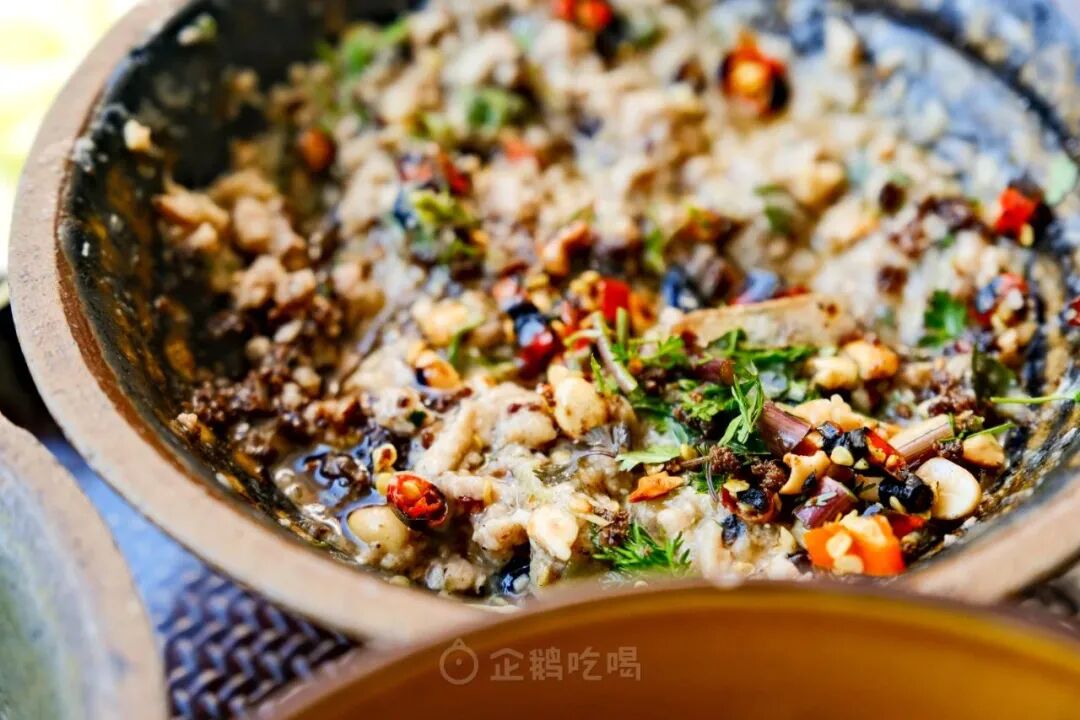
Now let’s talk about how delicious this set of rice noodles is. The most special part is that bowl of meat sauce, slightly thick and rich in oil, with both meat aroma and a combination of herbs and chili, creating a rich layer of flavor. There are various meat options, and my favorite is pigeon meat—the pigeon meat is shredded into fine strands and sprinkled on top of the meat sauce, giving it an extremely crispy texture and a distinct poultry freshness.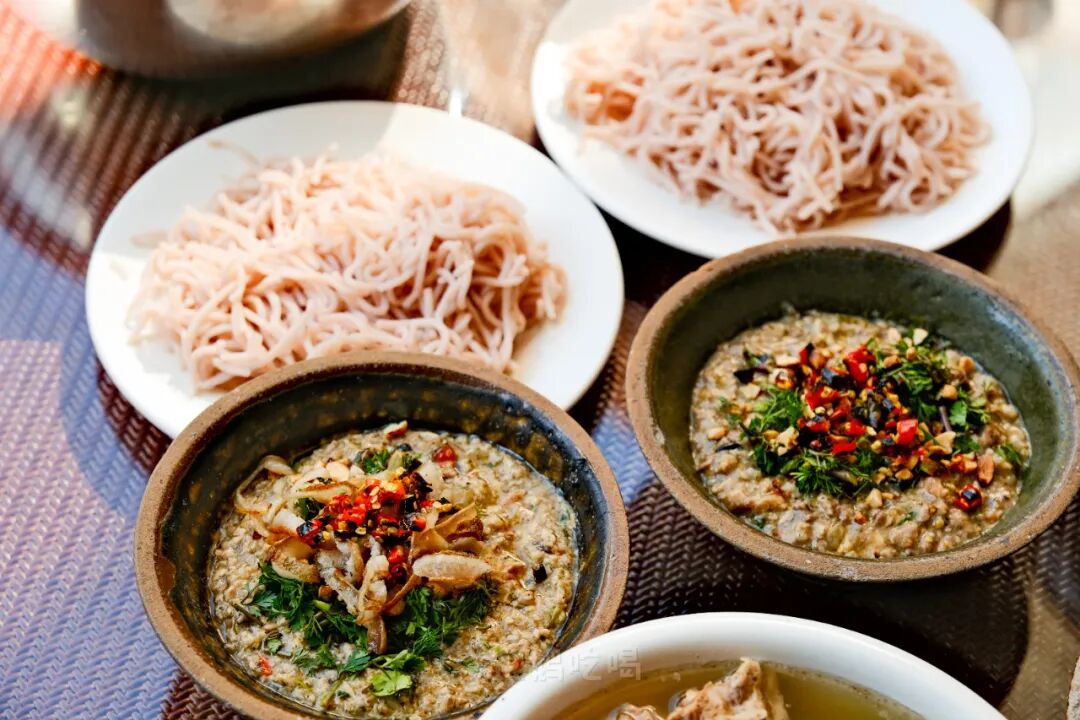 The meat sauce itself is also not simple; it requires roasting the skin of the meat until it drips oil, mixing it with chopped meat, pig liver, and other seasonings, then adding aromatic willow leaves, charcoal-roasted spicy peppers, cilantro, crushed peanuts, and so on. You can imagine how fragrant it is?!
 The white sour soup is also magical; tasting it alone is sour, but when drizzled over the rice noodles with meat sauce, it becomes incredibly harmonious, with a hint of sour freshness gradually spreading. I asked the owner, and it turns out it’s made from fermented radish leaves, which explains its freshness!
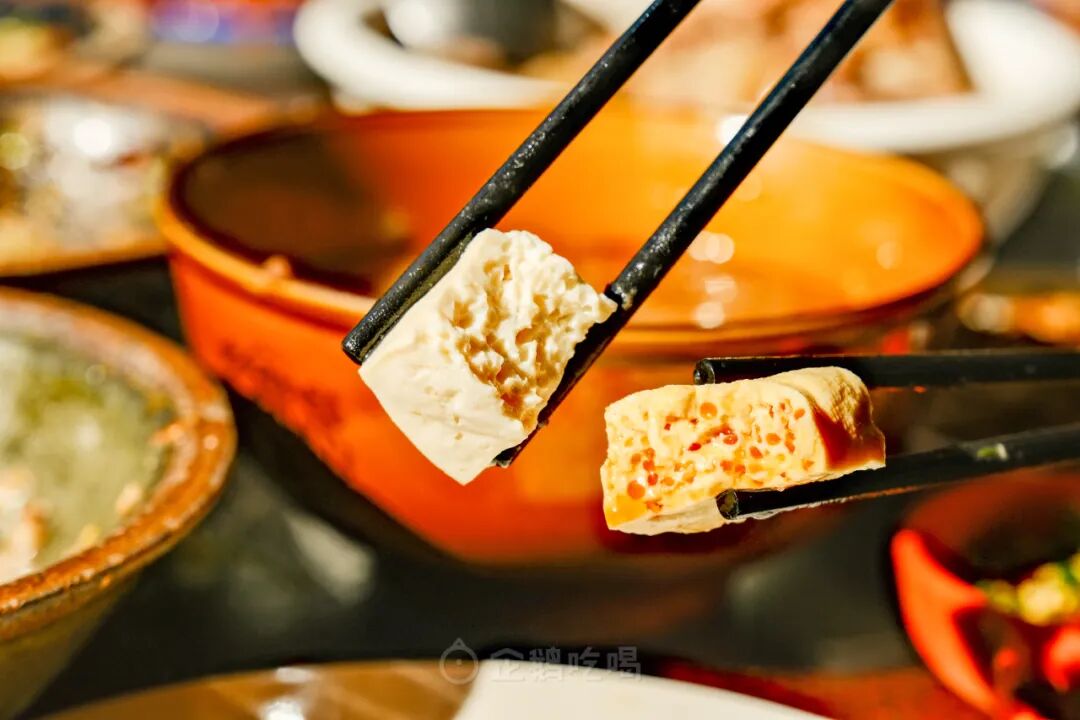 Other side dishes also have their own intricacies. For example, the rice noodles are made from purple-red rice unique to Dehong Prefecture, and it is said that the water used is special, so the finished product is fragrant, smooth, and soft, not sticky or clumping. The tofu in the tofu soup has rich pores that can absorb the broth, with a strong bean aroma, giving it a meaty texture.
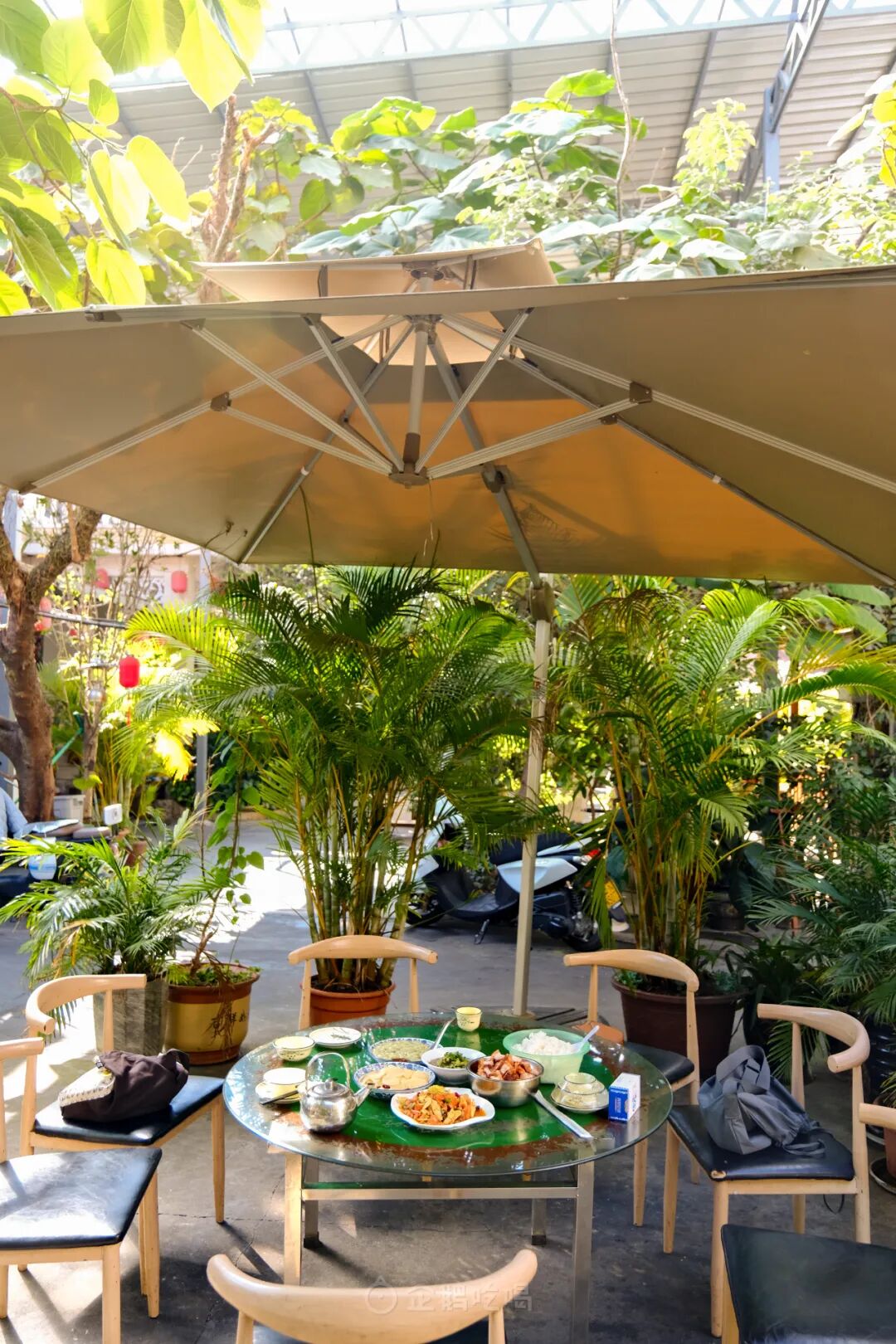
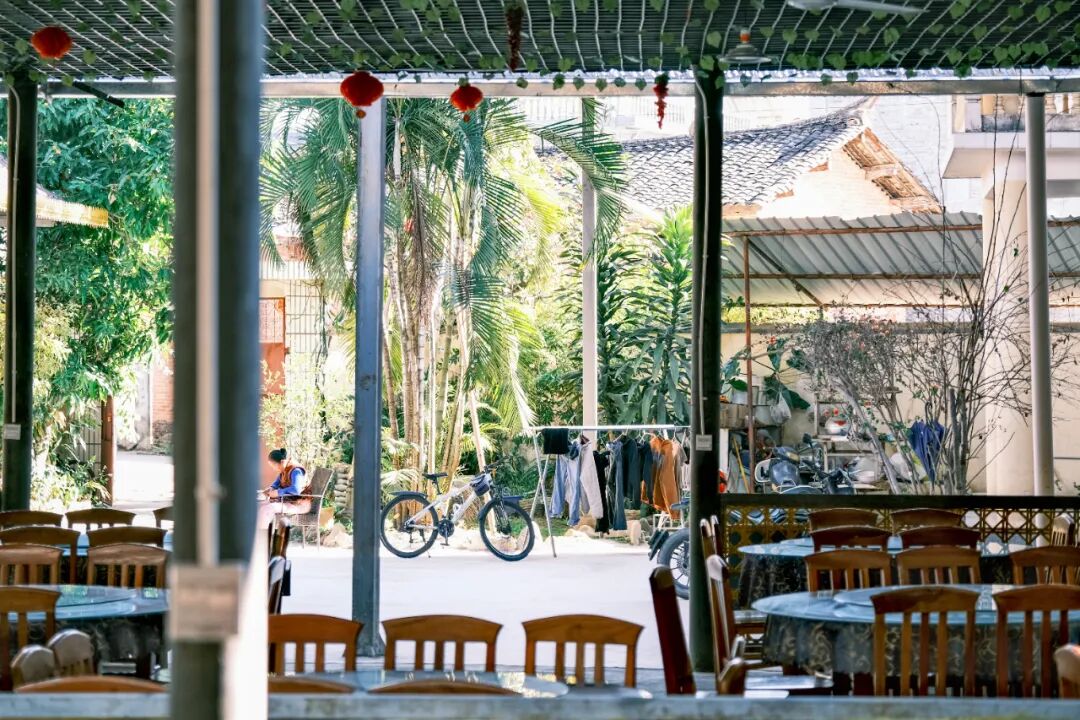
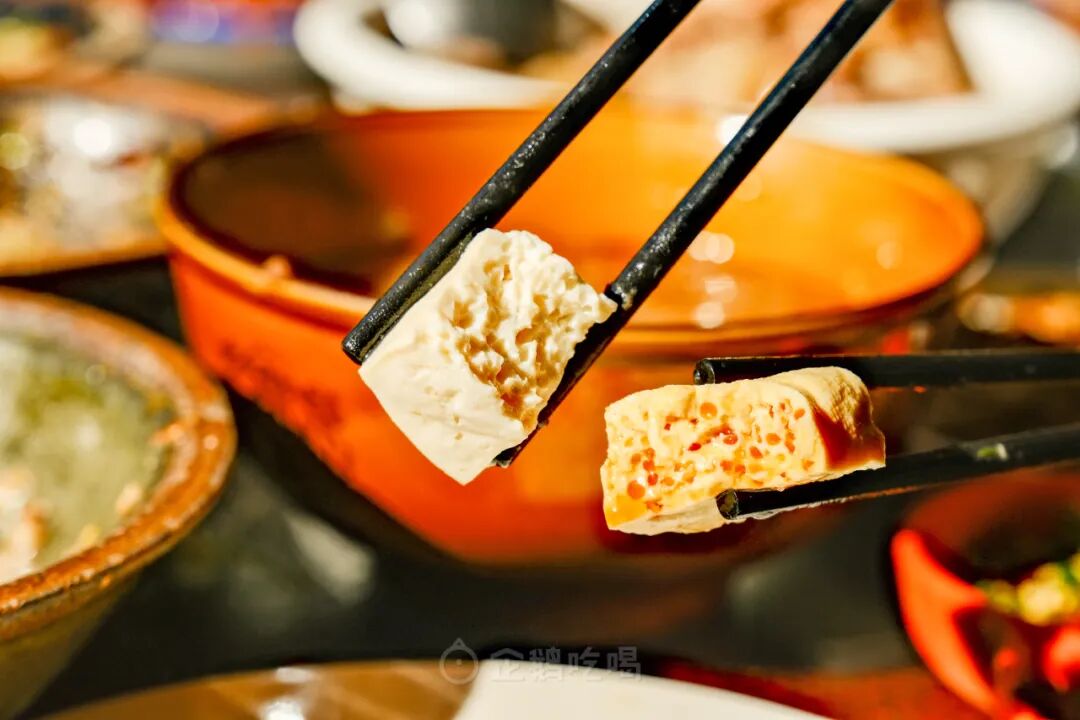 After discussing the most unique types of rice noodles, let’s take a look at the various main dishes in Mangshi👇 Creative Ingredients and Seasonings Every Restaurant is a Wild Vegetable Museum Eating in Mangshi, let’s not even talk about the dishes; the environment and experience are truly wonderful. Most restaurants here are set up like farmhouses, with several rooms and a small open courtyard filled with greenery, creating a comfortable and pleasant vacation atmosphere. Slightly further from the city center, the nearby suburbs even play the role of a manor owner, with Dai villages, small bridges, and flowing water, leisurely and carefree~
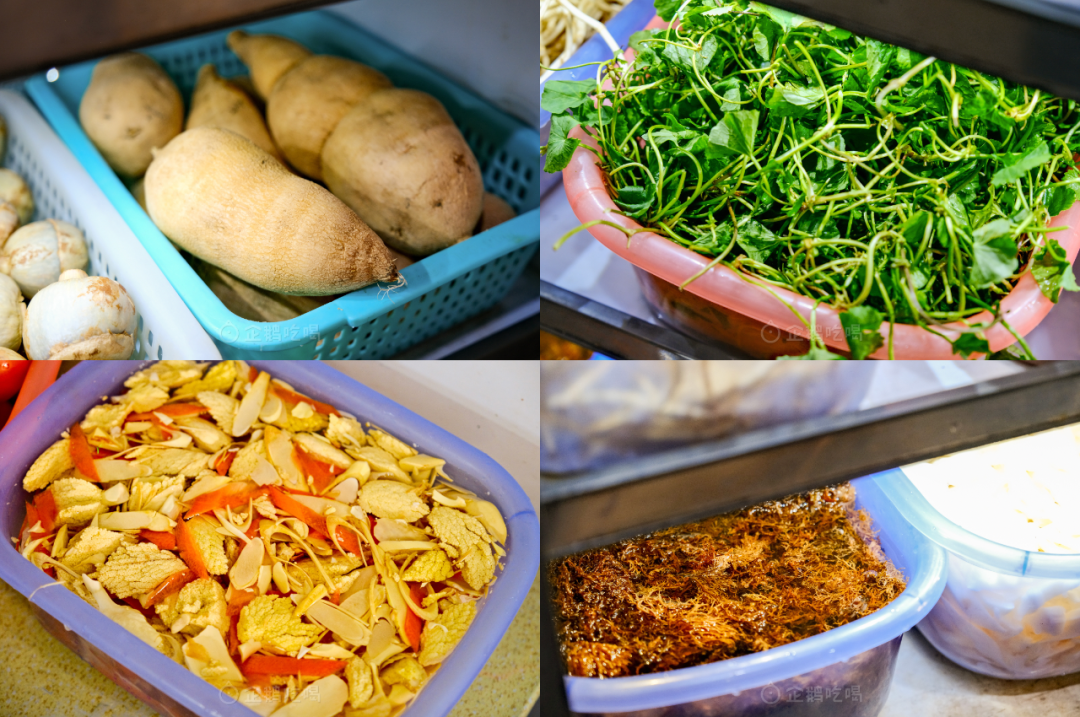
 Most restaurants do not have menus; you choose ingredients by looking. The refrigerator resembles a mini plant museum, filled with all sorts of wild vegetables whose names you can’t even pronounce; ordering is like a big adventure, with surprises, unexpected finds, and even “dangers”! Looking at the pictures below, can you guess what each dish is?
 Some shops are super cute; you don’t need to write by hand; whatever dish you order, the staff will pick a bit of the corresponding ingredients and put them on a plate👇.
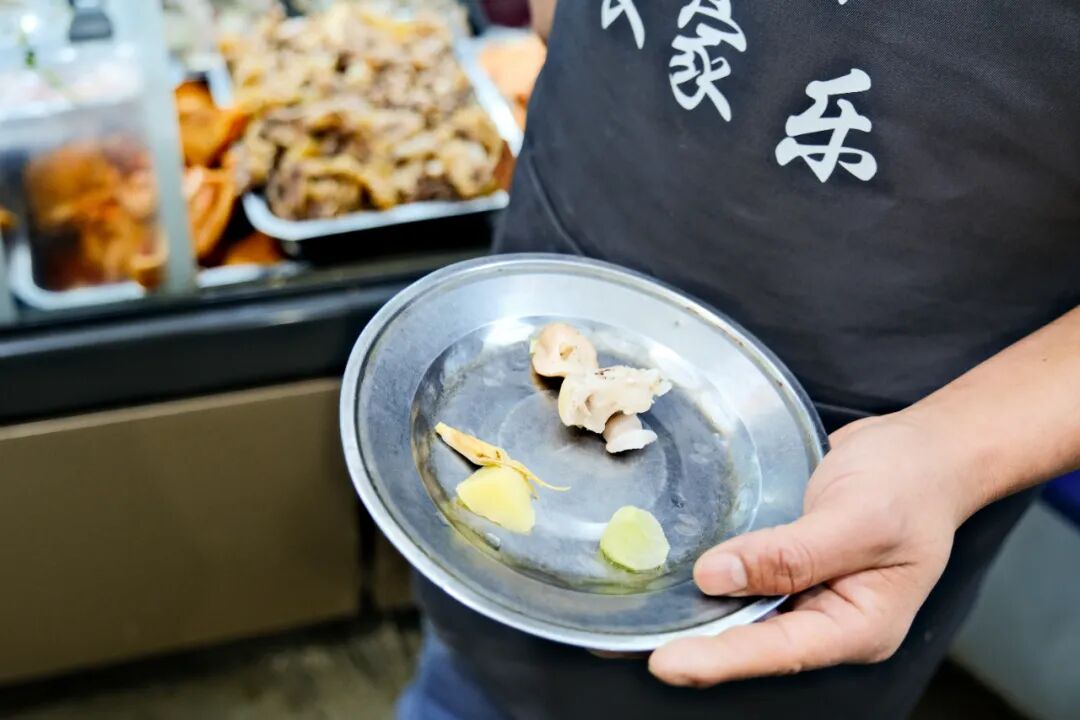 After choosing the ingredients, the staff will directly arrange the corresponding cooking methods for you. Depending on the cooking method, Mangshi dishes can be roughly divided into frying (roasting), pounding, mixing, boiling (calling), and stir-frying. It may seem ordinary, but the Mangshi people’s ability to combine various herbs and seasonings is truly remarkable, turning the mundane into the extraordinary, definitely a master in the food world!
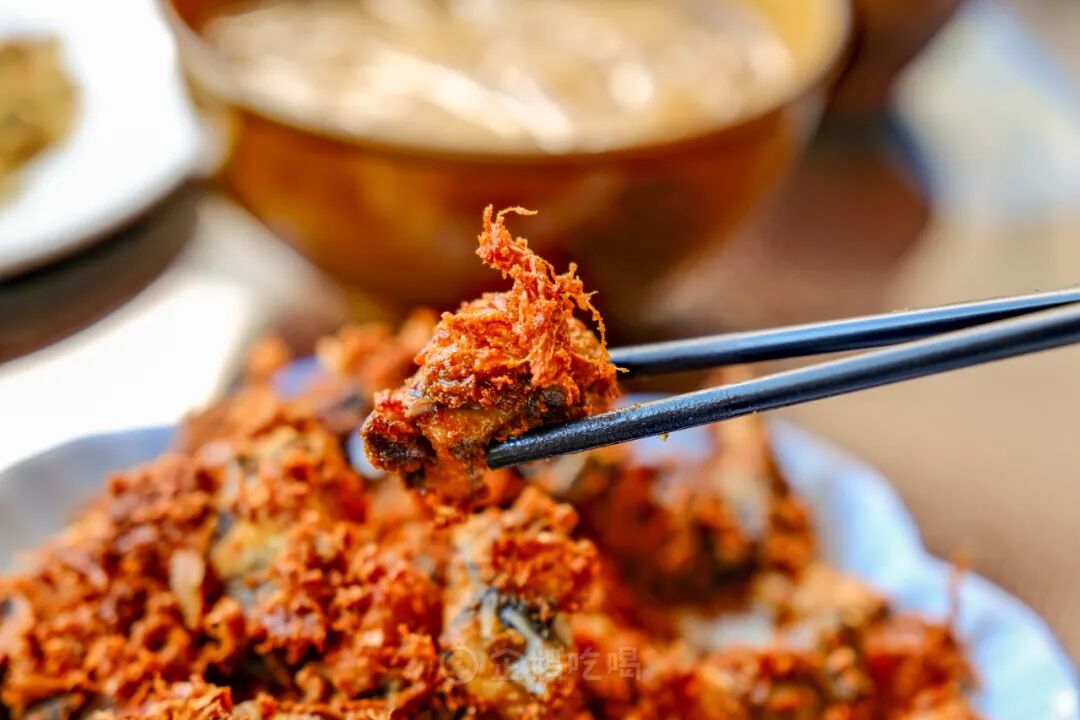
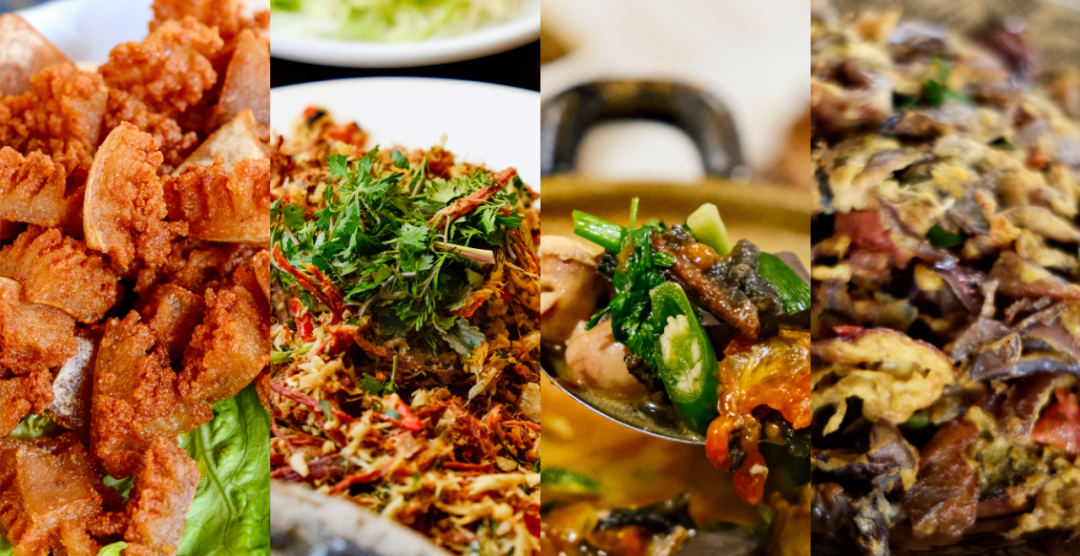 For example, frying, you must try these three: fried chicken bones, fried ribs, and fried pork skin. Fried chicken bones are the most surprising; its partner is ginger shreds and mountain pepper. The chicken bones, stripped of meat, are casually chopped into pieces, coated with a lot of ginger shreds and mountain pepper shavings, and fried together without any specific method. The chicken bones are golden and crispy, while the ginger shreds are crispy and soft, and as you chew, the spicy aroma of mountain pepper slowly rises, firmly capturing your taste buds, making you unable to stop eating.
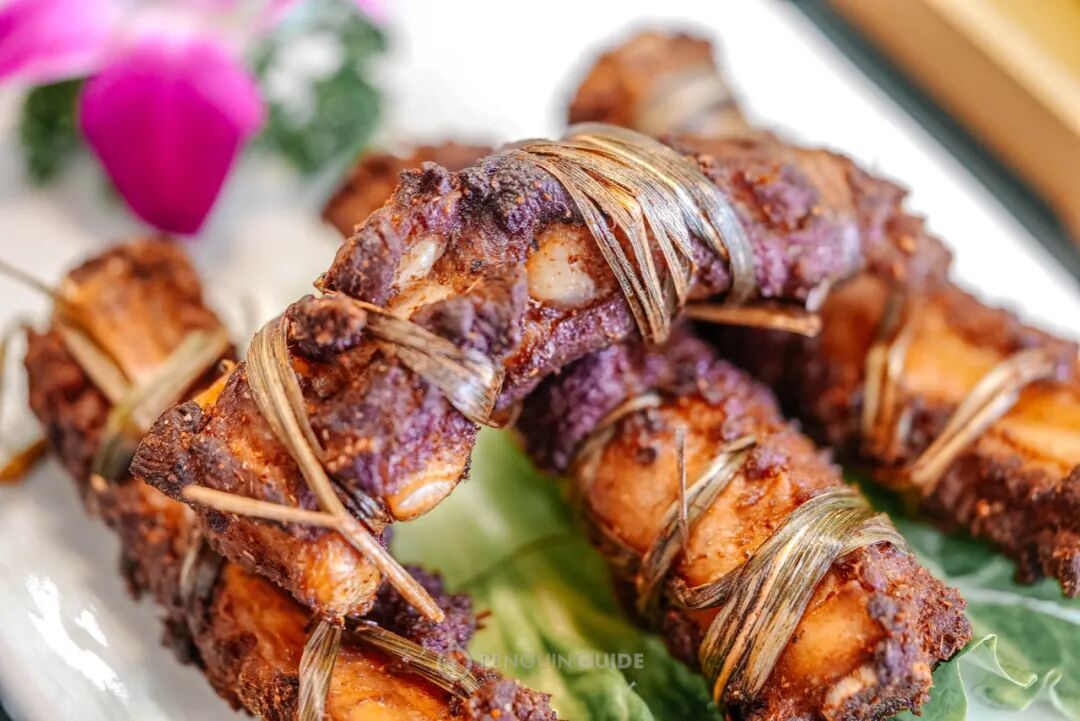
 Fried ribs are paired with lemongrass; each rib is wrapped in a full circle of lemongrass and marinated to absorb the flavor. Dried lemongrass can withstand high-temperature frying, and although it’s not as strong as fresh, its fragrance will gradually seep into the ribs. Biting down releases a burst of meat aroma, accompanied by the lingering fragrance of lemongrass.
 Fried pork skin is paired with pickled vegetable paste, a local specialty byproduct of water-pickled vegetables, with a sticky texture and a fresh rice aroma and sourness. The pork skin retains some fat, and after scoring it with a cross pattern, it is fried over high heat, resulting in a crispy exterior and a chewy interior, with the fat melting in your mouth, and when eaten with pickled vegetable paste, it highlights the flavor while alleviating greasiness.
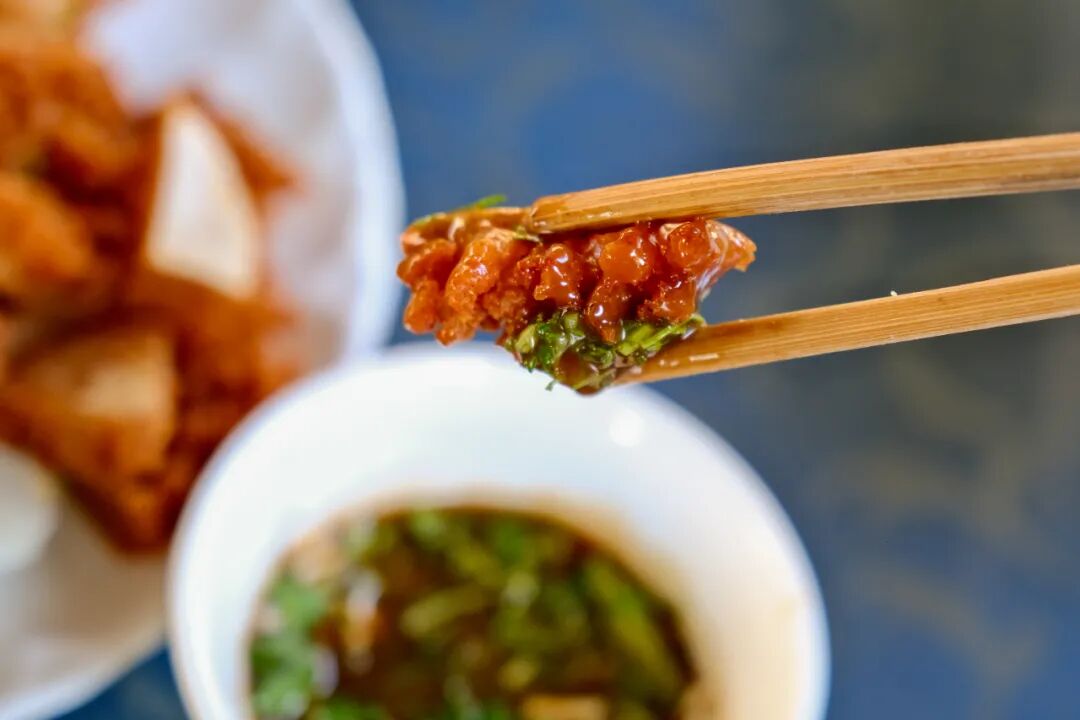 Dehong’s dry pickled vegetables use glutinous rice flour in their preparation, cleaned, pounded, and coated with steamed glutinous rice flour for fermentation, then dried, soaked, boiled, and dried again, with the remaining juice boiled down to make pickled vegetable paste. More advanced than frying is roasting. You must try roasted pig, a specialty of Yingjiang County near Mangshi, which is not inferior to Cantonese roasted suckling pig. If it weren’t for the pictures not capturing sound, I would really want you to hear how crispy the pig skin is when the chef scrapes the skin and chops the meat; the sound is crisp and pleasant, and you can tell it’s definitely delicious!
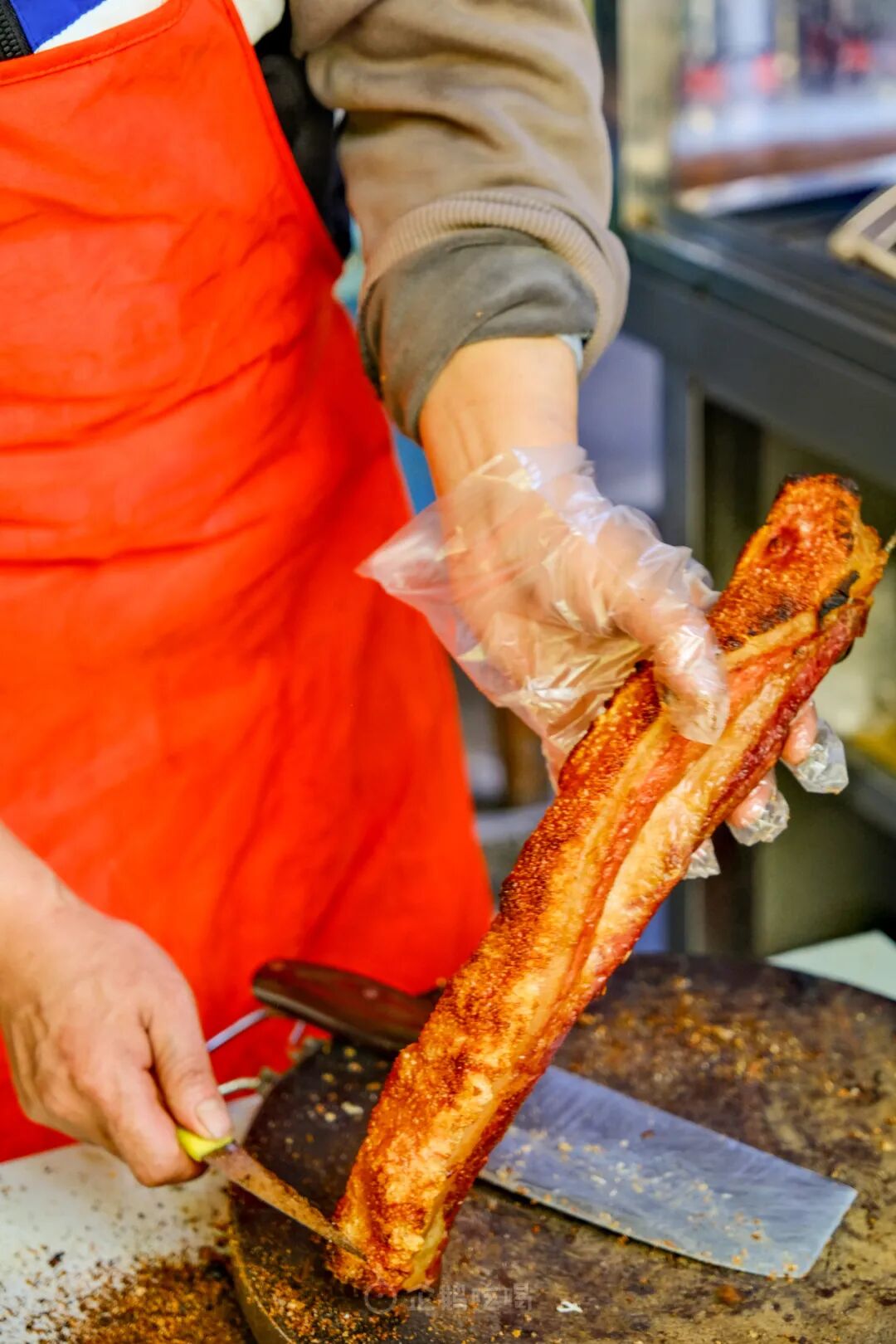 Roasted pig is freshly roasted every morning, and the roasting method is very special: a mixture of ash and saltwater is made into a thin mud, smeared on the pig skin, hung up, and placed in a large iron oven to roast, turning it frequently. After it dries, the mud is peeled off and scraped clean. The pig skin roasted this way is incredibly crispy even when cooled down!
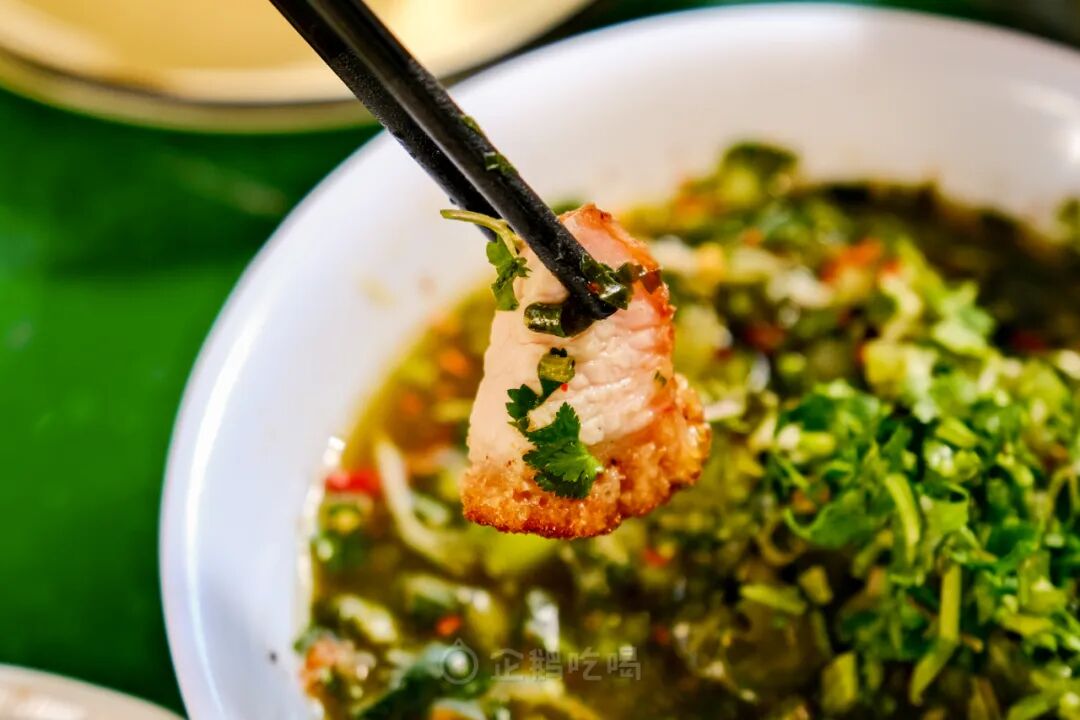
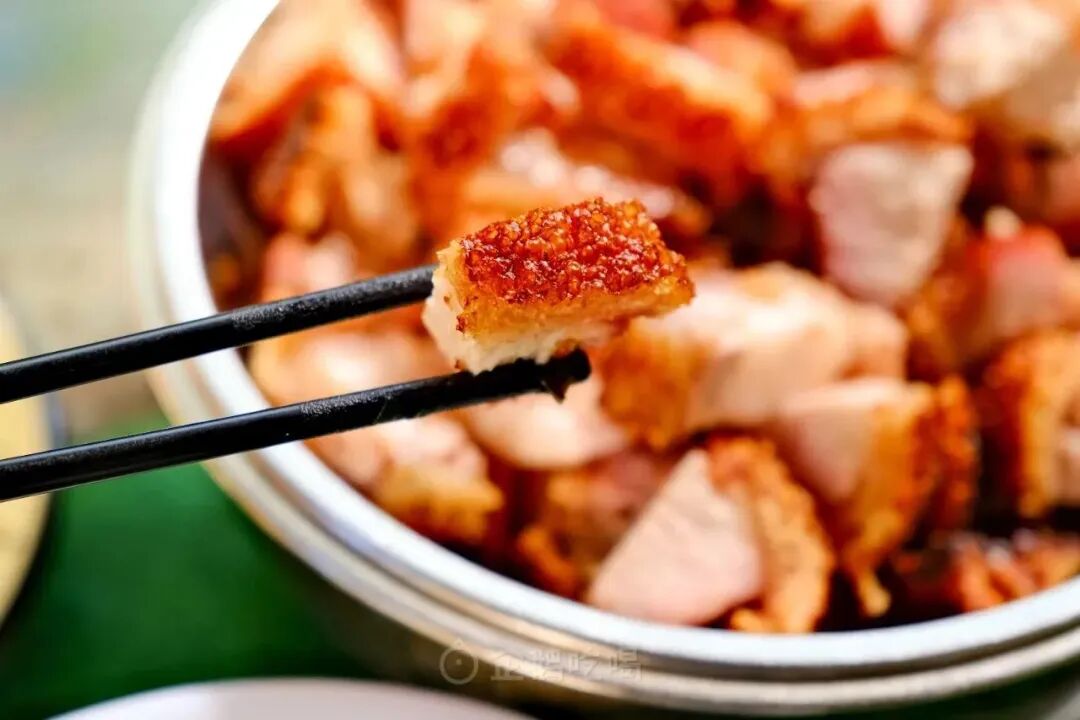 The pigs used for roasted pig are all small pigs raised by the Dai people, with incredibly tender meat, creating a wonderful contrast with the crispy skin. Paired with pickled vegetable paste, folded ear roots, cilantro, and small chili to make dipping sauce, it tastes similar to fried pork skin but with a different charm~
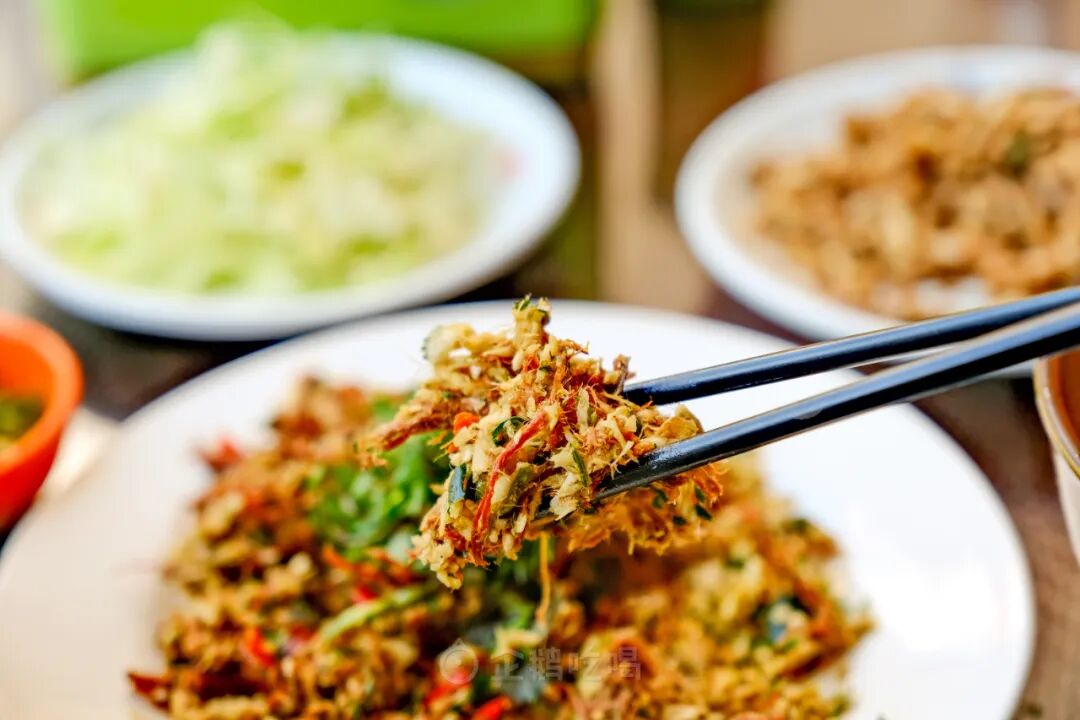
 Now let’s talk about pounding; this should be a classic impression many people have of Dai cuisine. Besides the most common pounded chicken feet, I recommend you try pounded dried beef and old milk potatoes. Dried beef is a common ingredient in Yunnan, made from marinated, air-dried, and fried beef hind legs, which is chewy, durable, and has a concentrated flavor. The Mangshi people like to pound it with mountain pepper, small chili, aromatic willow leaves, and various seasonings, turning the originally firm dried beef into shreds that absorb the flavors of the seasonings, spicy and perfect for drinking (especially paired with the high-alcohol homemade grain liquor that Mangshi people love).
 Many people may not know that Mangshi’s famous dish, old milk potatoes, is also pounded. Compared to mashing, pounding gives the potato puree a texture similar to “meat filling,” making it not only dense but also bouncy.
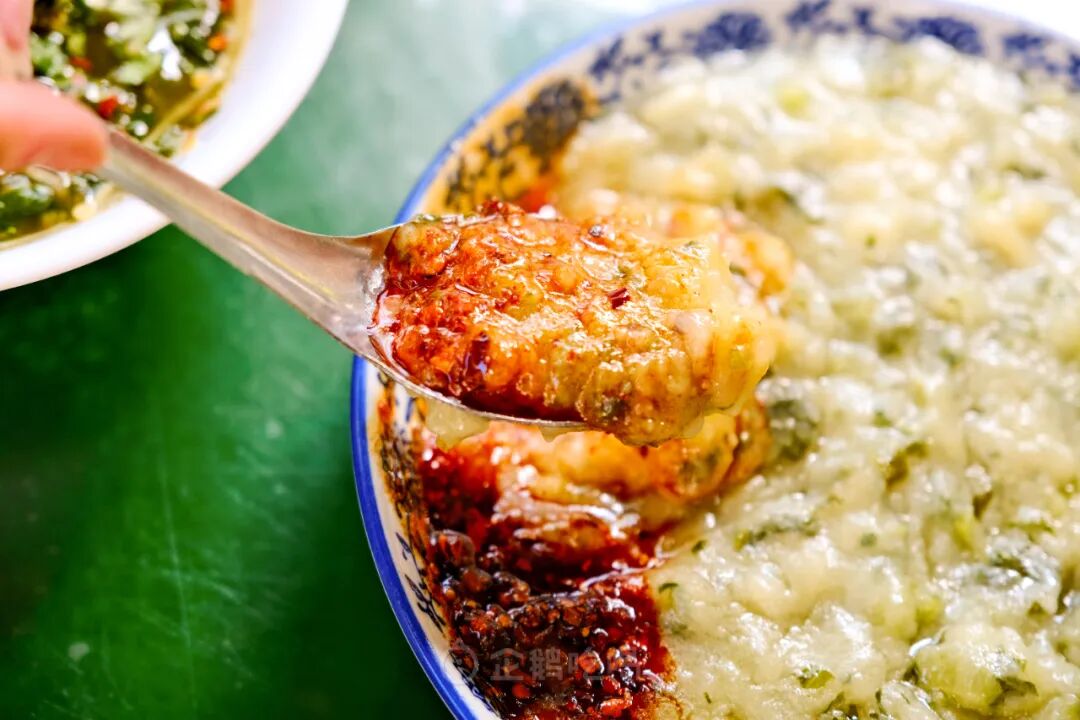
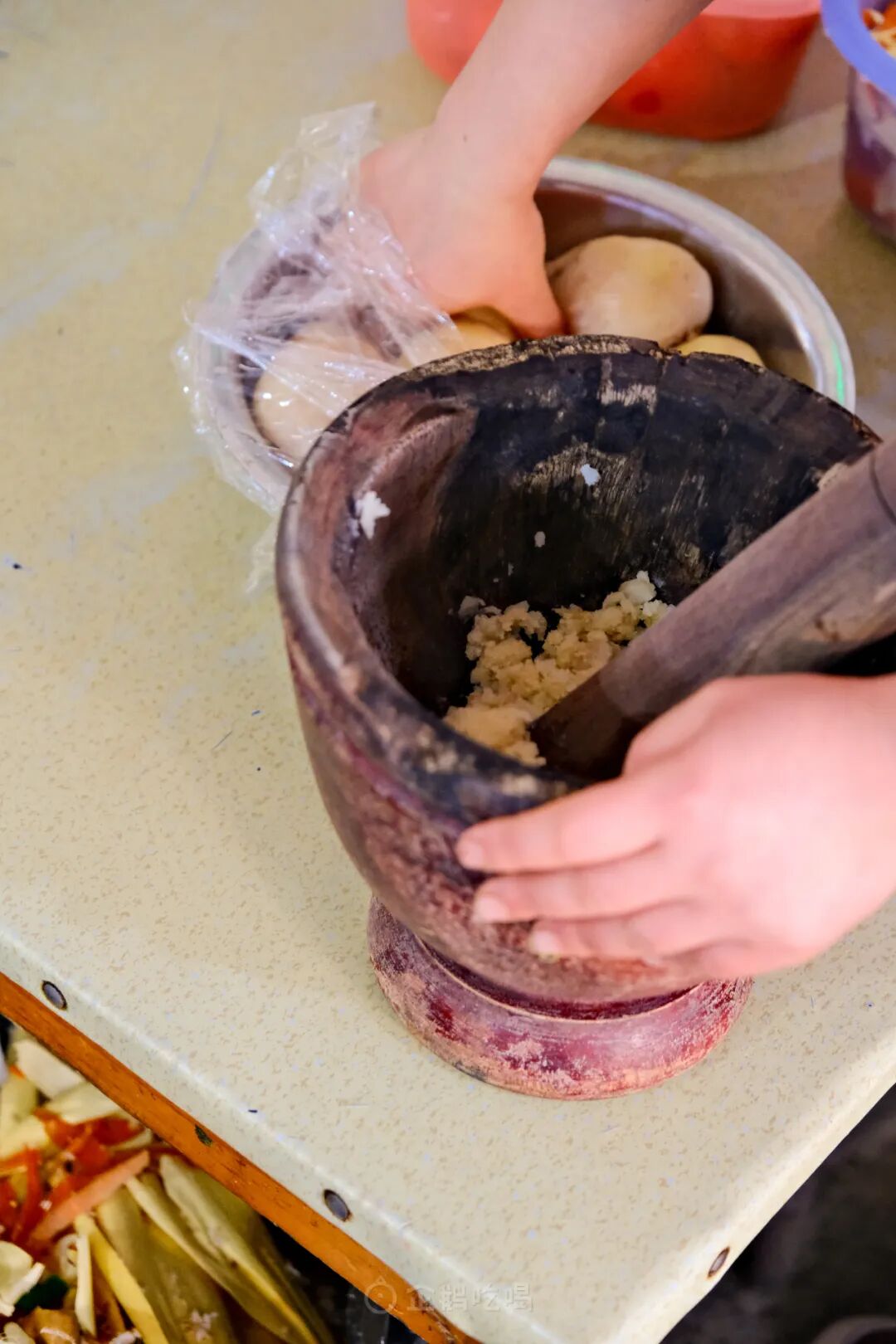 The pounded potatoes, when stir-fried, must be added with sour and crunchy water pickles, and after being drizzled with a spoonful of oil chili, no one can resist mixing it with rice, even if it’s carbs + carbs!
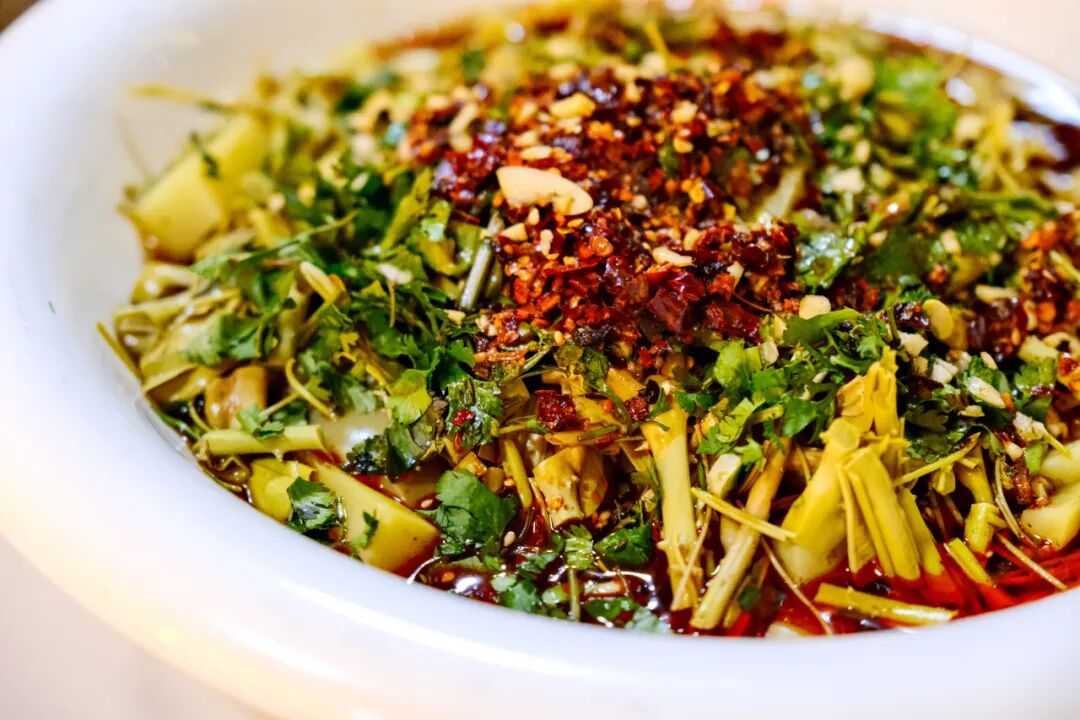
 Mixed dishes, like pounded dishes, are also cold dishes that emerged due to Mangshi’s hot climate. The seasoning approach is quite similar, focusing on refreshing and appetizing, with a balance of sour and spicy. Interestingly, the ingredients, like this dish “Mangshi Pad,” I would call “Yunnan Natto.”
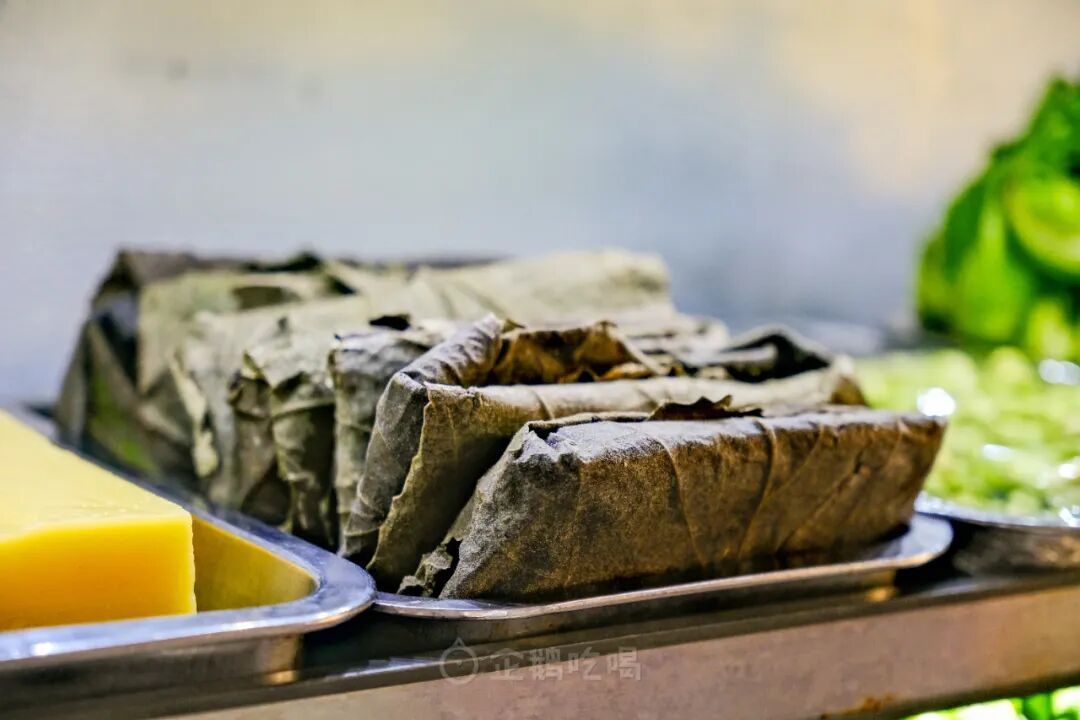 It is a Dai specialty fermented soybean paste made by fermenting yellow soybeans in banana leaves or wild loquat leaves, resulting in a honey-yellow product that can be pulled into strands, resembling natto, but has no unpleasant odor when smelled. The Dai people mix it with mountain pepper, small chili, cilantro, and a lot of ginger shreds to make a cold dish, which has a delicate texture and a special salty and fresh flavor from fermentation, not dark at all.
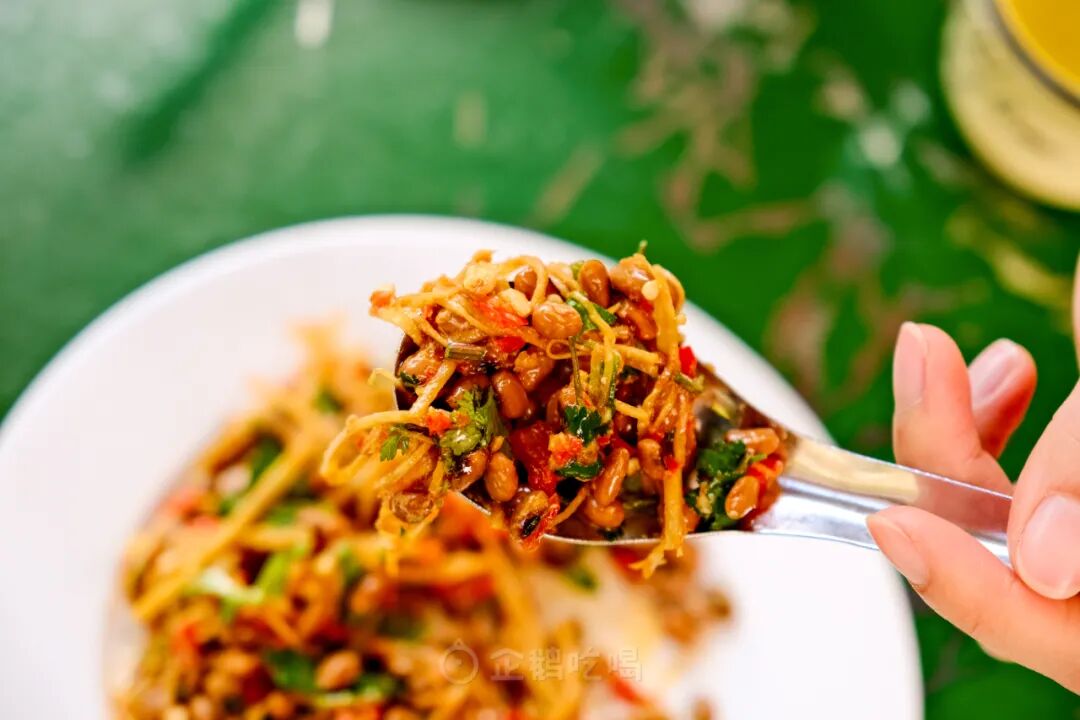 Other ingredients like tree flowers, vegetable roots, and bamboo shoots can also be mixed cold, giving off a refreshing aroma and a sense of wildness.
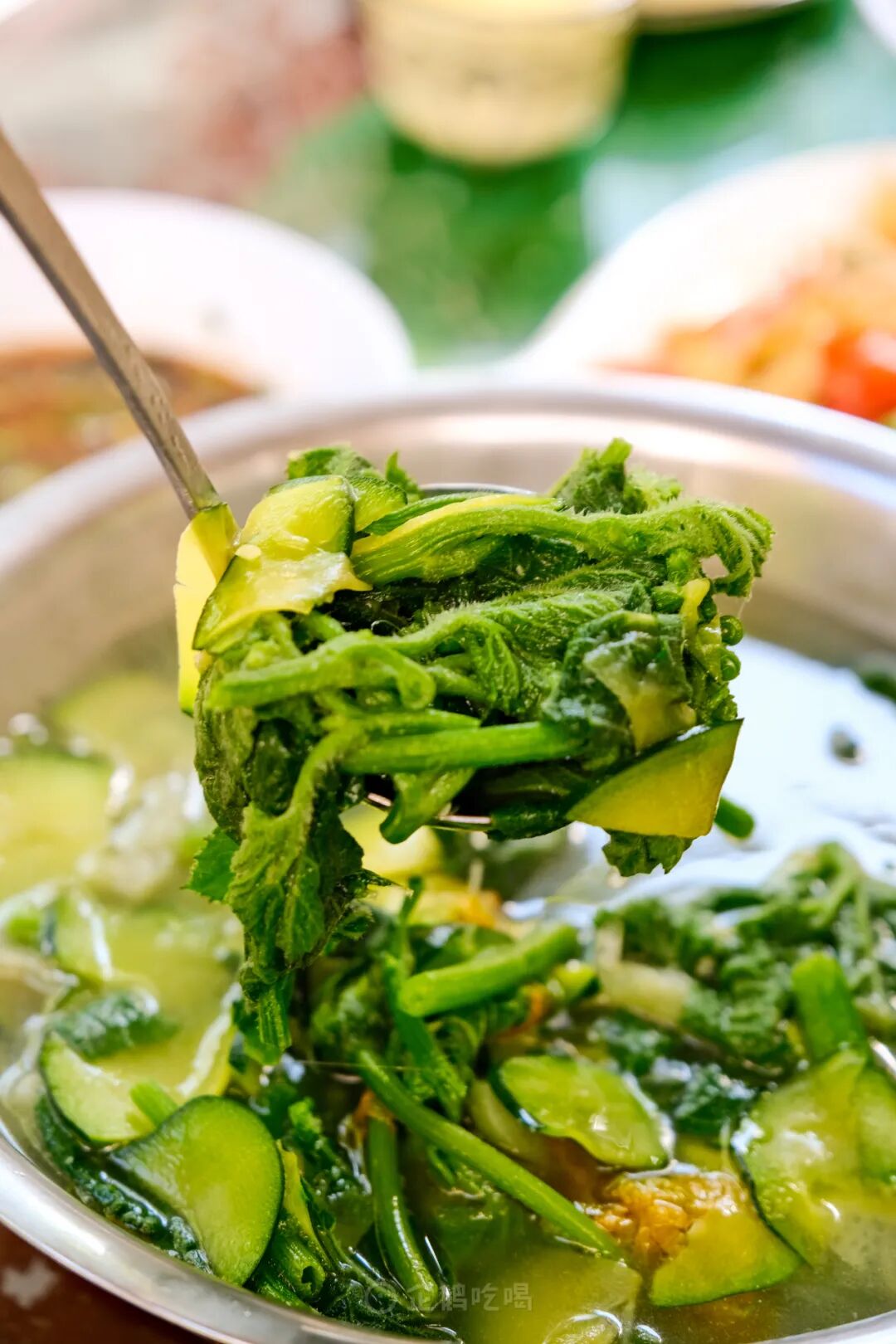
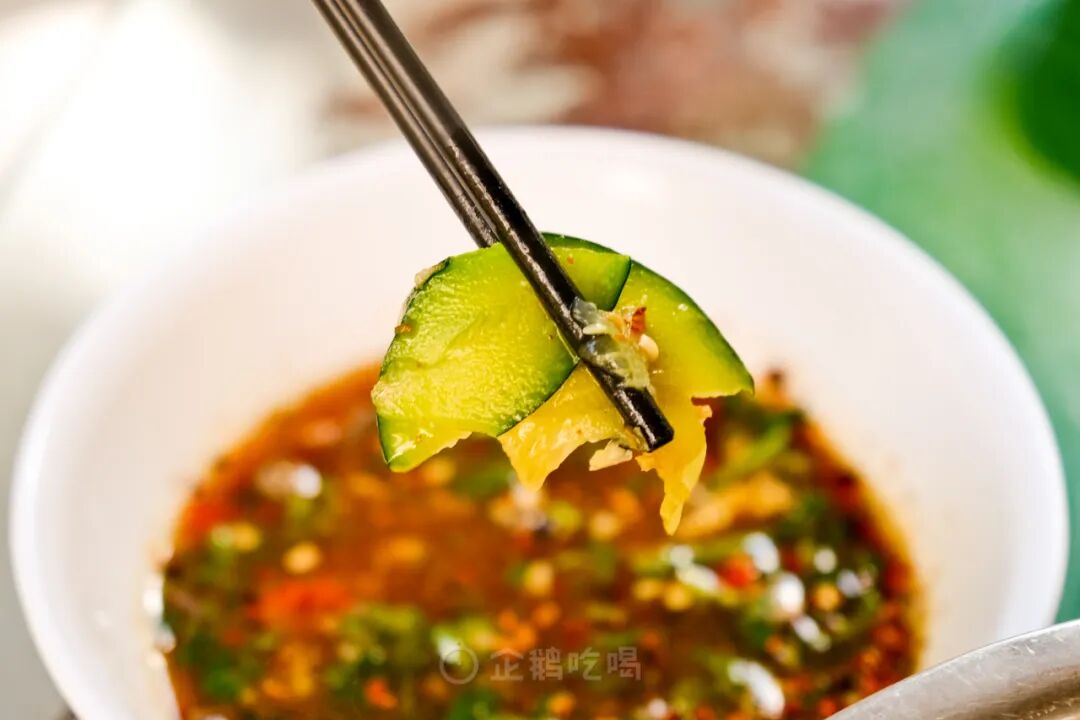
 Mangshi’s boiled dishes have two extremes: either intensely sour, such as using tomatoes, sour papaya, or sour tamarind to pair with chicken, fish, beef, or pork, which is rich and appetizing; or extremely light, such as using bottle gourd sprouts, pea shoots, ginger stems, etc., to boil a pot of pure vegan broth, adding nothing, just the original flavor. They also have a common point: they will be served with dipping sauce!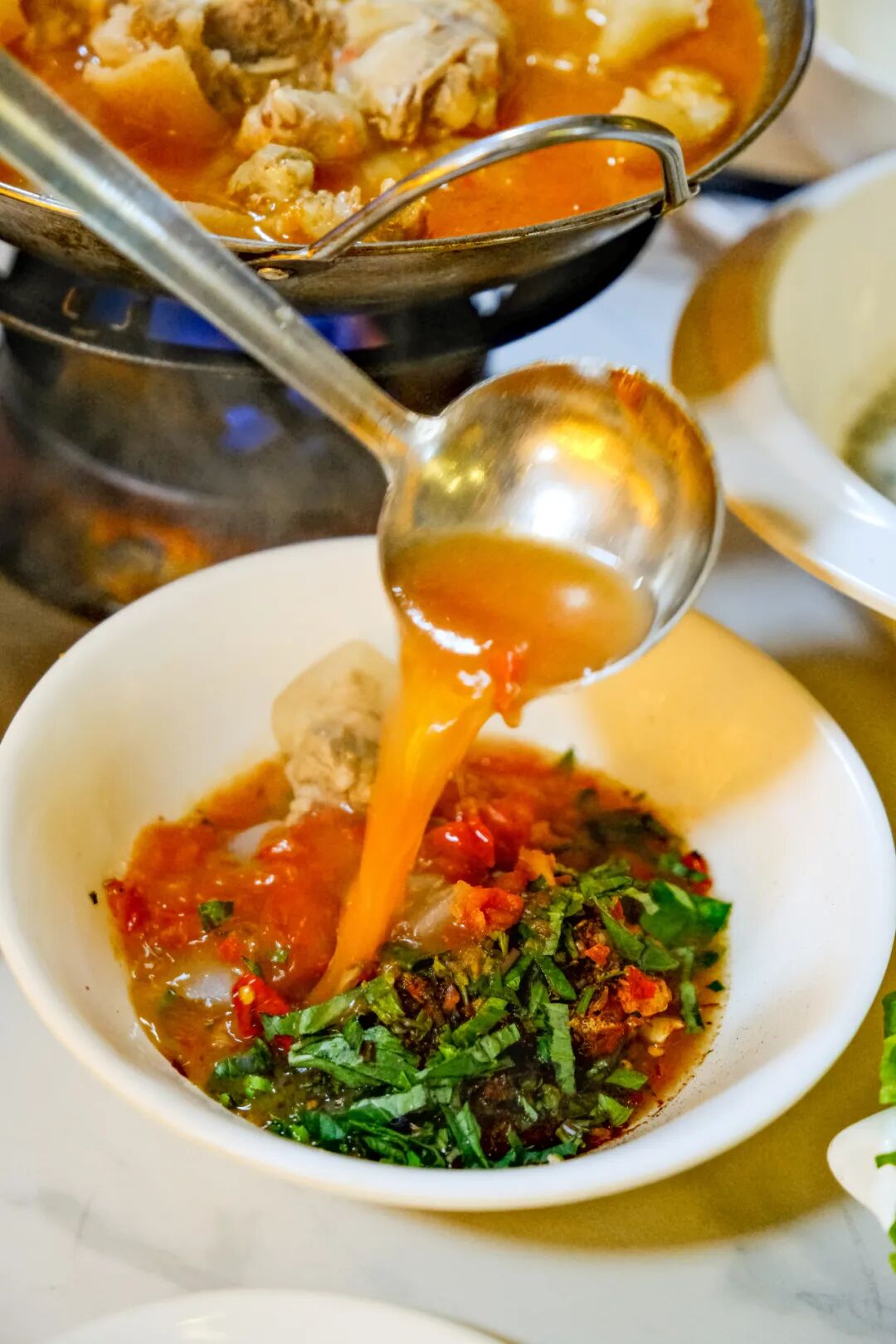
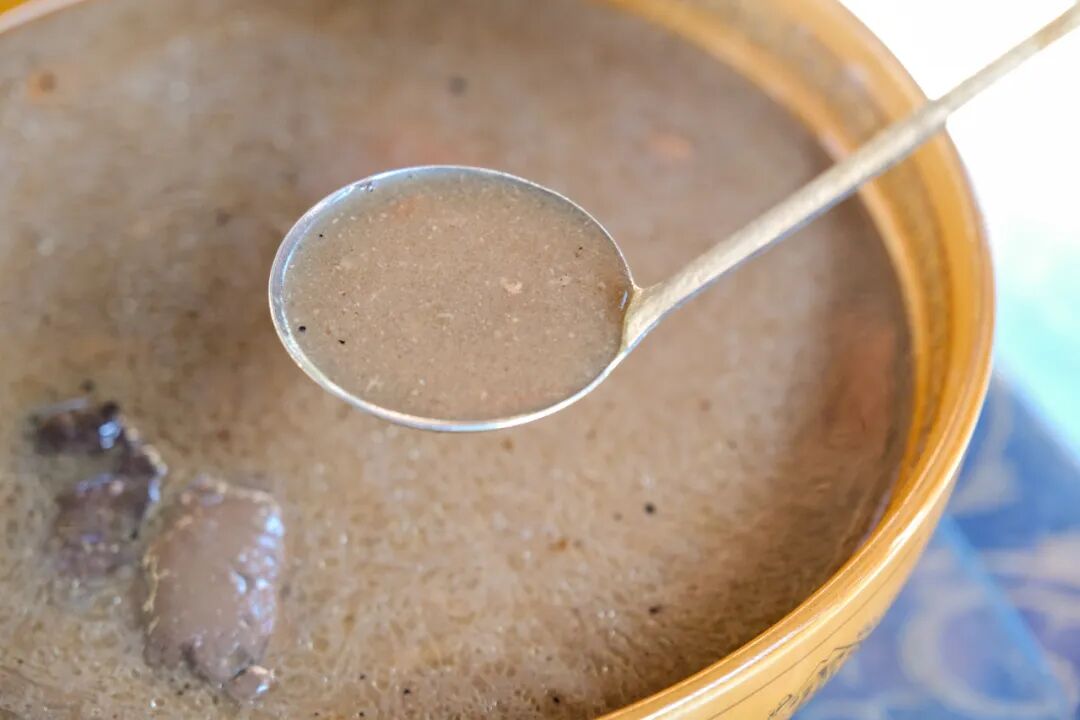
 The most impressive and most unique to Mangshi is this pot of sour tamarind chicken.
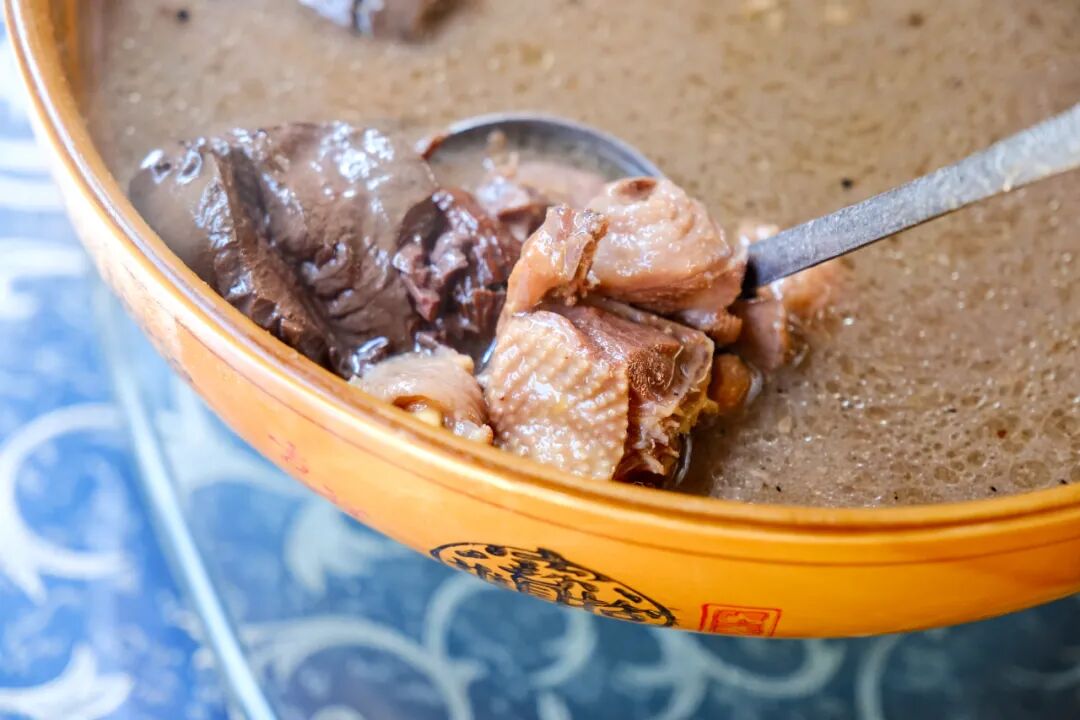 The sour tamarind fruit is mashed into juice and boiled with freshly killed native chicken, adding chicken blood and star anise, served like a big pot of hot cocoa. It looks dark, but drinking it is a deep, sweet, and sour delight. The sour tamarind naturally has a concentrated fruit flavor like dried fruit, which is all dissolved into the chicken soup, combined with the freshness of chicken blood and the sweetness of star anise, creating a balanced flavor.
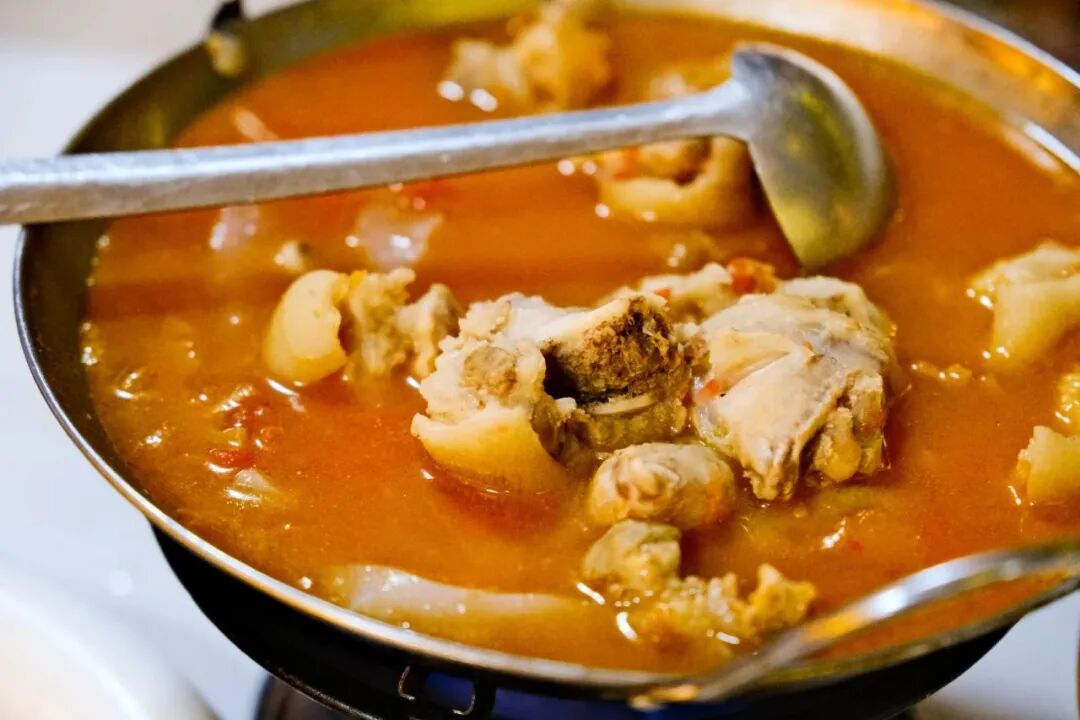
 The combination of sour papaya and tomatoes is much fresher. Sour papaya is a type of rose family papaya native to China, completely different from red heart black-seeded papaya, with a texture like an apple and a strong sour taste, but also a precious aroma similar to essential oil (the surface of sour papaya looks a bit like fragrant pear, sticky to the touch, and smells very fragrant).
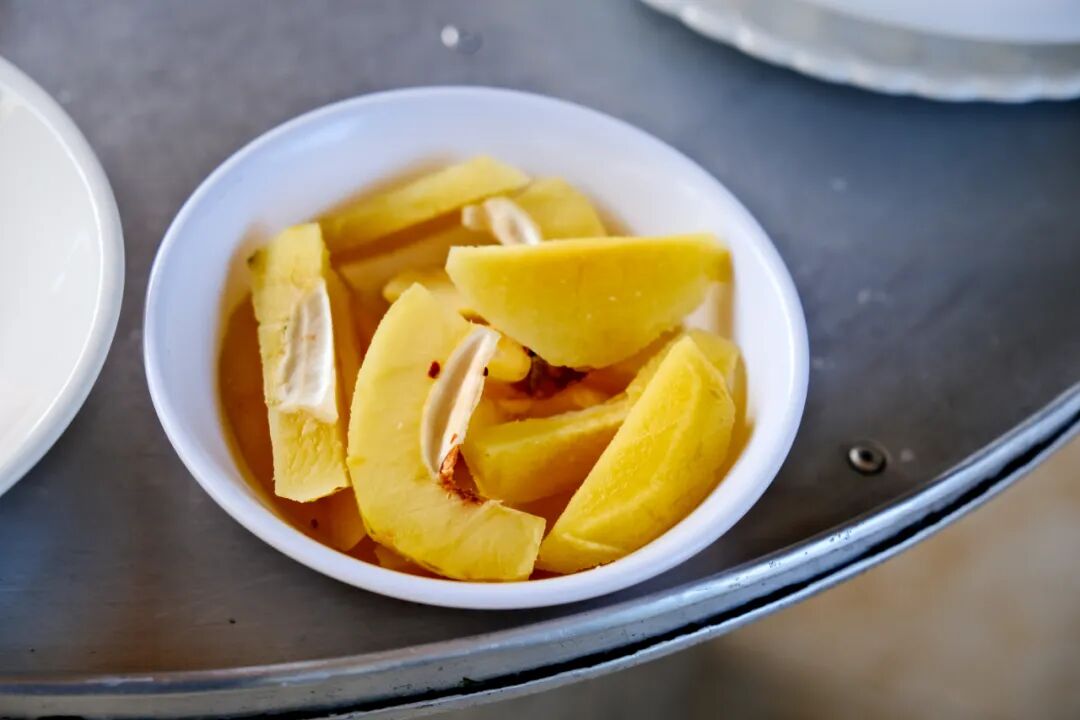 You can dip it in white sugar or chili powder to eat directly, but boiling it into soup maximizes its advantages: the sourness becomes milder the longer it’s cooked, and the soup flavor becomes rich, making even fatty pig trotters much fresher.
 Pure vegan soup is just two words: fresh and sweet. Mangshi is not short of vegetables; besides wild vegetables, locals love various gourds and gourd sprouts, such as loofah, ginger stem gourd, and small sparrow gourd. After cooking, drizzle some oil and MSG, and it tastes like the natural fresh sweetness of the vegetables, and when dipped in spicy dipping sauce, it offers another flavor.
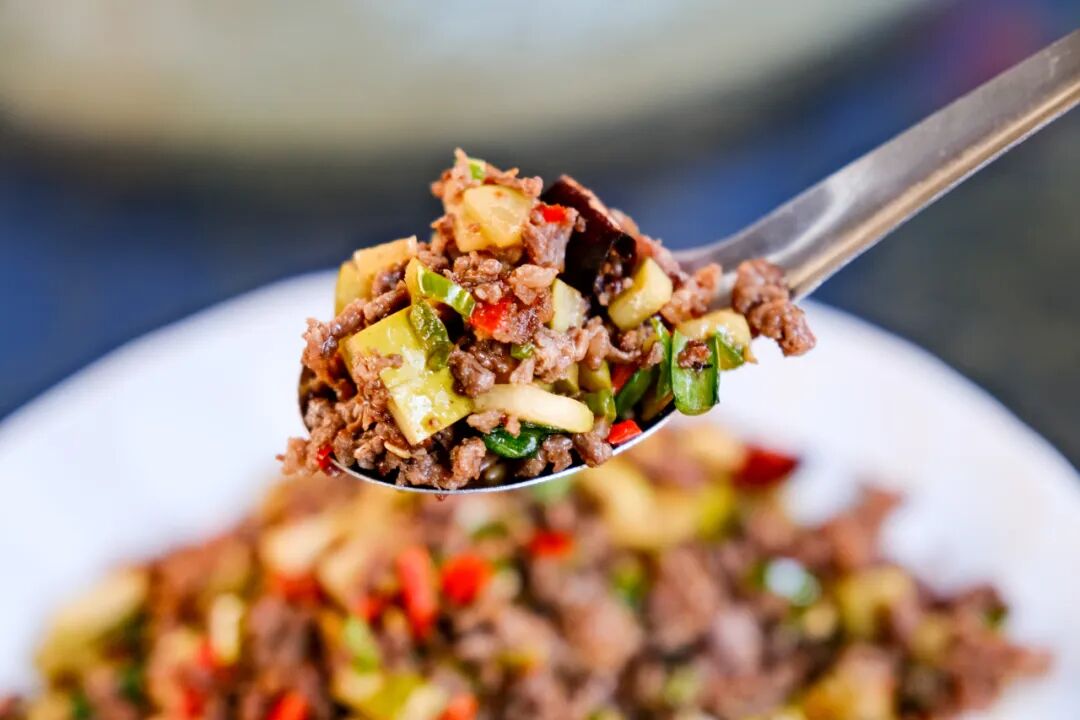
 Finally, let’s talk about stir-fried dishes; Mangshi’s stir-fried dishes don’t focus too much on fire skills or flavor types, but the ingredients are special, and the combinations are interesting. Here, you can always get some brand new taste experiences: for example, this plate of mango stir-fried beef, with the green mango being sour and crunchy, naturally bringing tropical aromas to the otherwise ordinary minced beef.
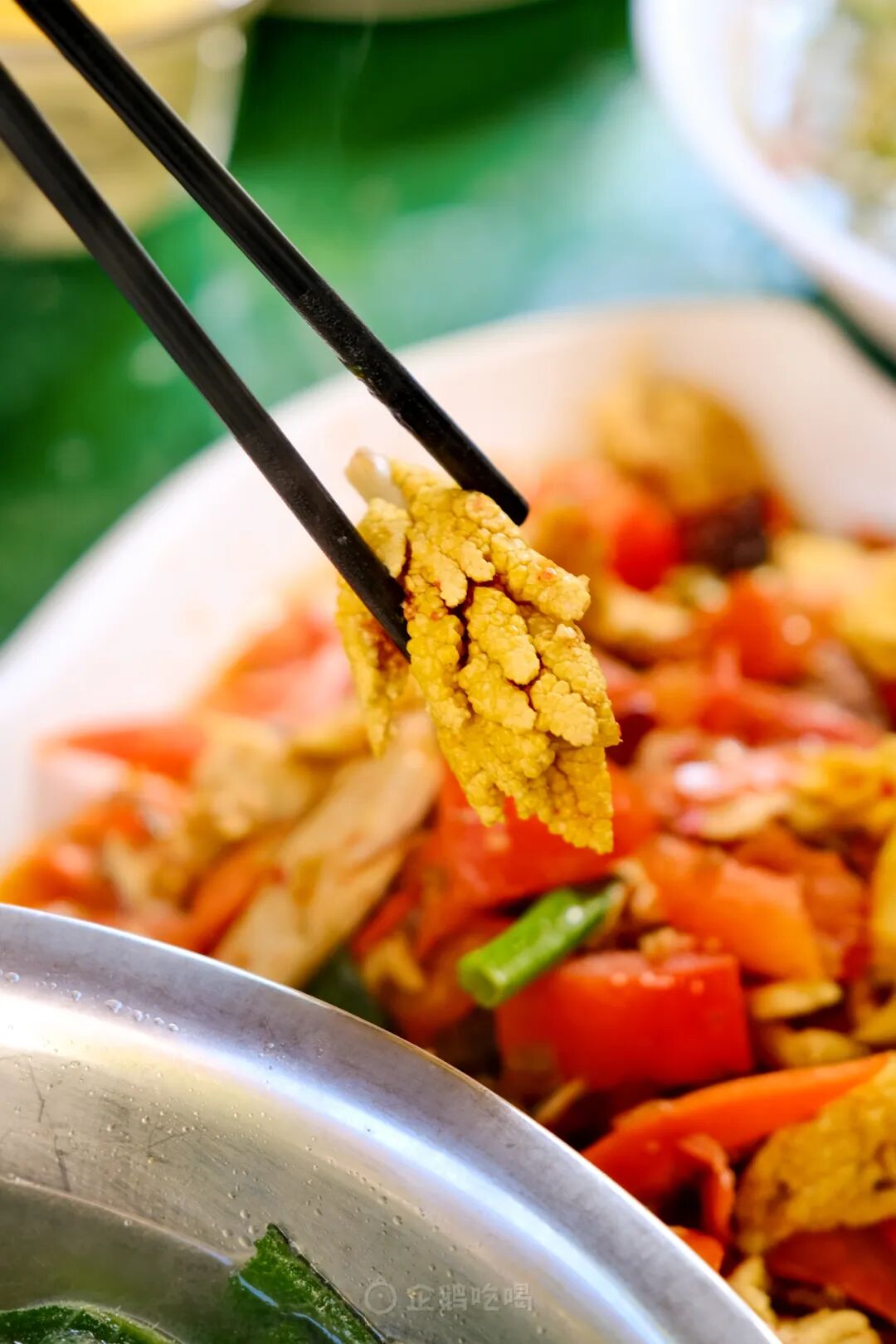
 The ingredients are even more interesting. Palm buds, which are the flower buds of palm trees, have a fragrant bitter taste, and eating them is like a mix of bamboo shoots and brown rice.
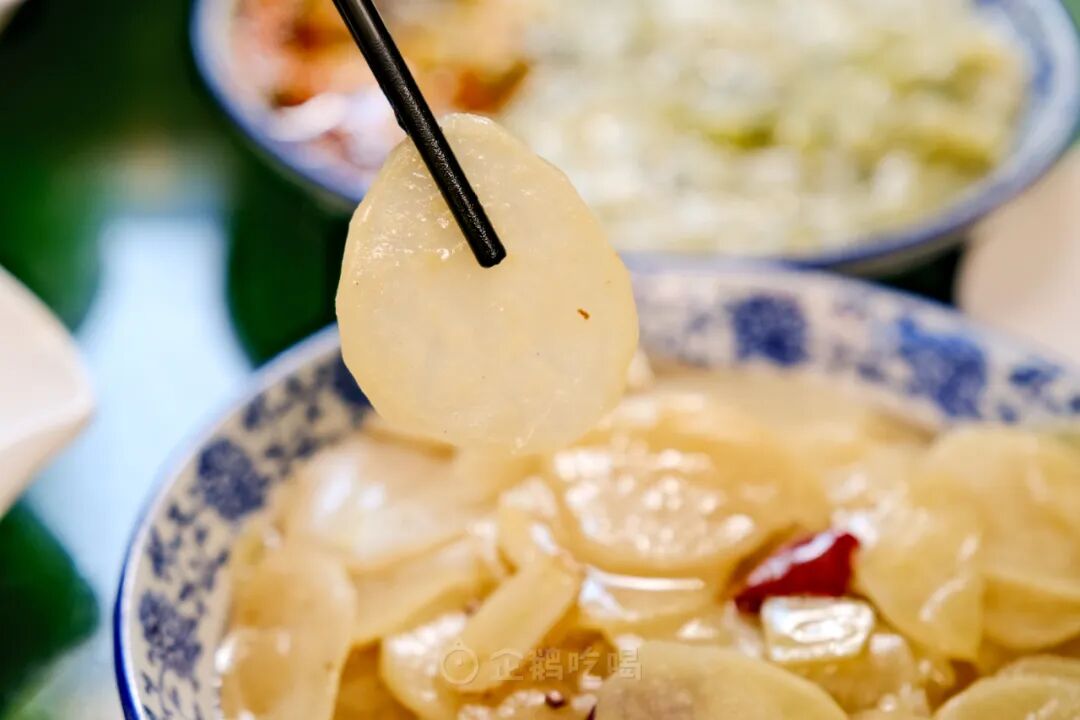
 This plate is loofah roots, with a texture that jumps between crunchy, sticky, and smooth, oscillating between the two.
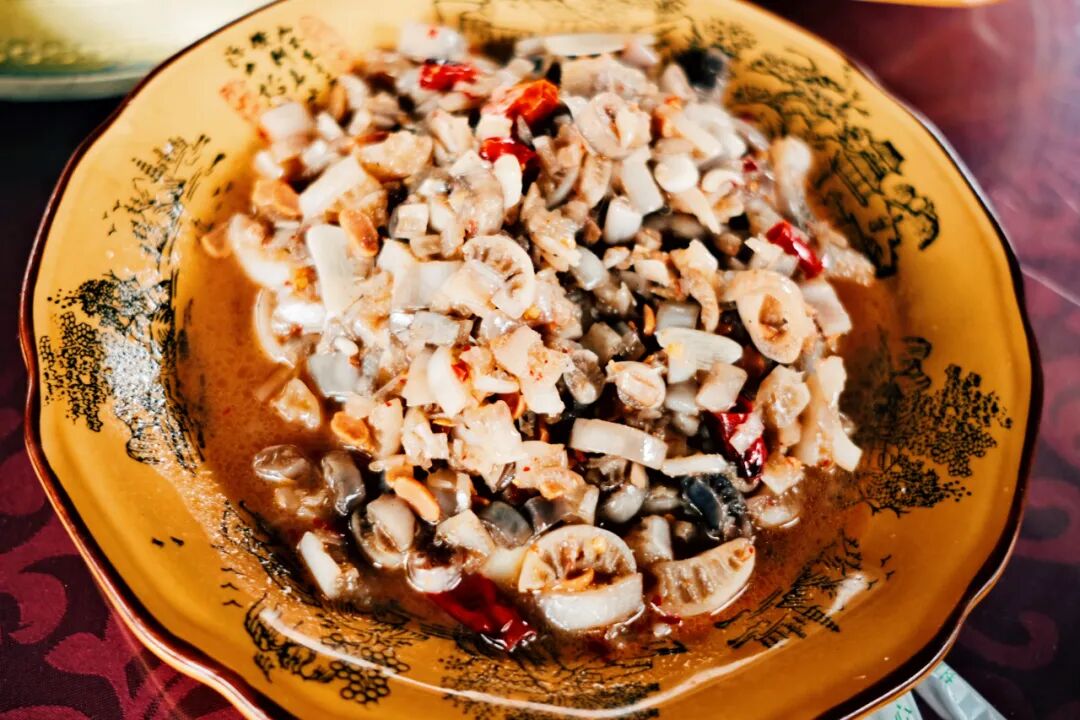
 This plate is palm hearts, cut into sections and stir-fried with chili, crunchy and sweet, very similar to the tenderest lotus root tips.
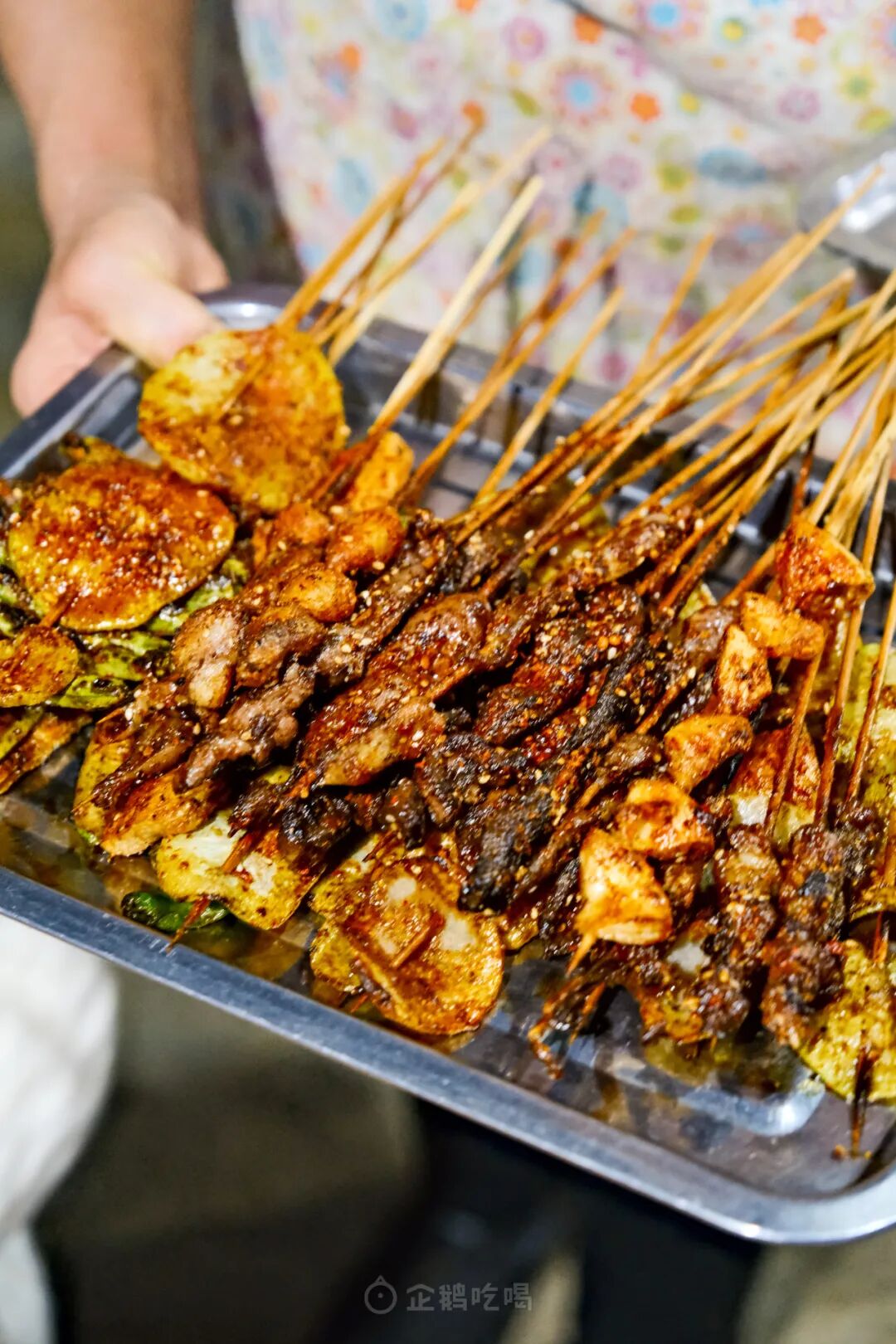
 There are many peculiar ingredients, dishes from other ethnic groups (like Jingpo chicken porridge, cold chicken), and niche methods (like hand-grabbed rice), which you can explore for yourself~ Mangshi’s Night Eating Barbecue Around Low Tables Most areas in Yunnan love barbecue, and Mangshi is no exception. Every nightfall, the streets are filled with the aroma of barbecue. Here, the barbecue is all charcoal-grilled, with the essence lying in the detailed cuts of ingredients and various dipping sauces.
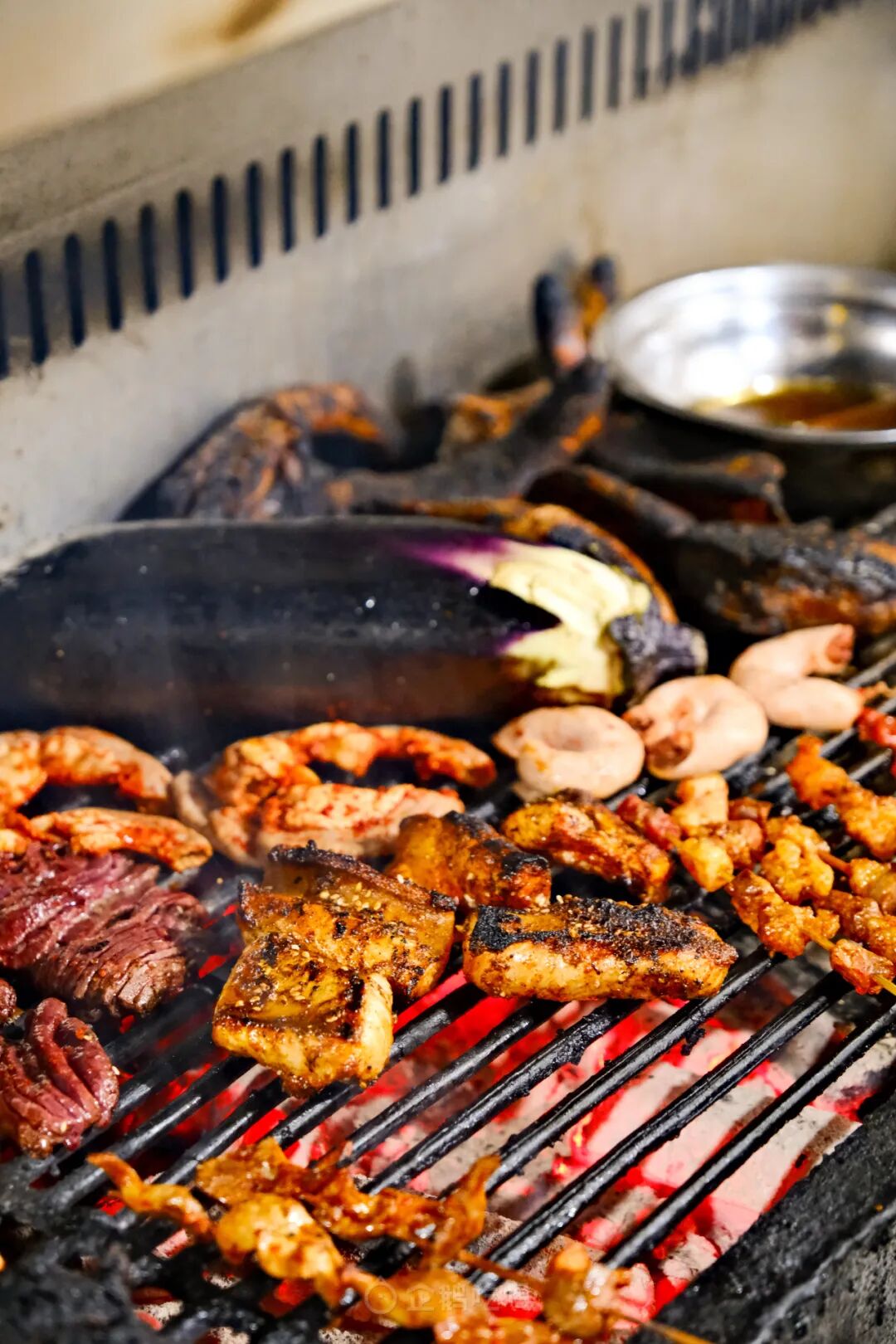 Pig tails seem to be the locals’ true love, basically a plate on every table, and some shops even use it as their shop name. The “live meat” from the tail section must be delicious! The pig tails in Mangshi are first placed on charcoal, roasted until the skin turns golden, and even the surface becomes a layer of blackened crust.
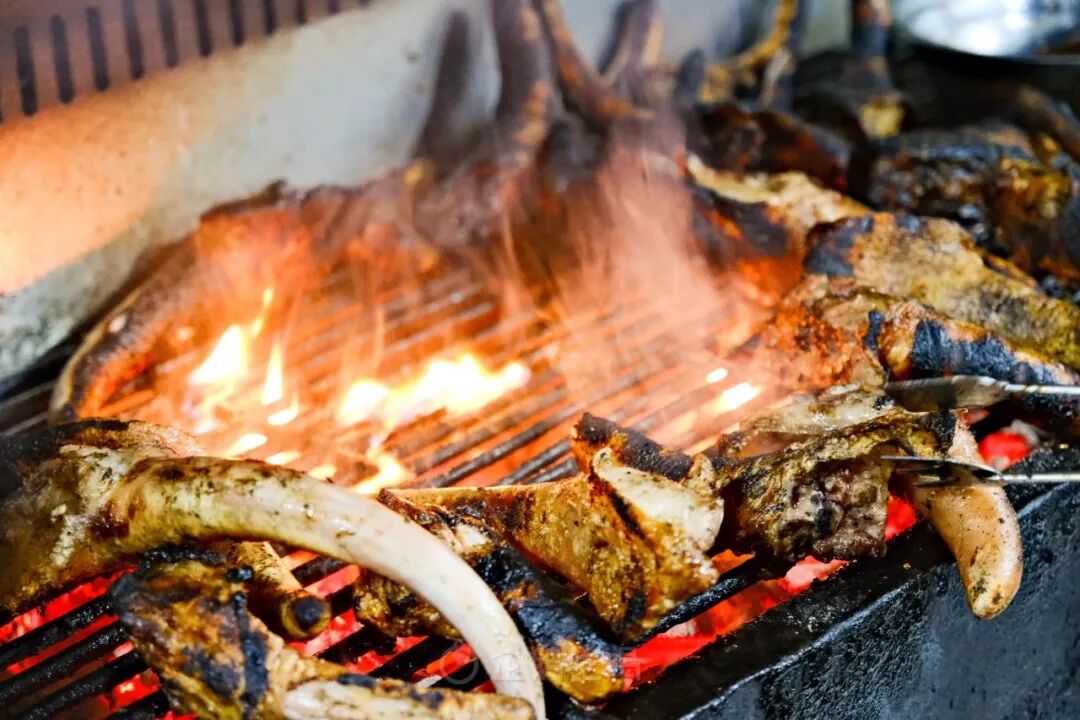 After scraping it clean, it reveals a beautiful yellow pig tail. This not only removes the odor of the pig skin but also forces out some fat with high heat, resulting in a crispy shell, and the meat close to the bone has a bit of gelatinous texture. Dipped in fresh chili soy sauce, it’s perfect for drinking.
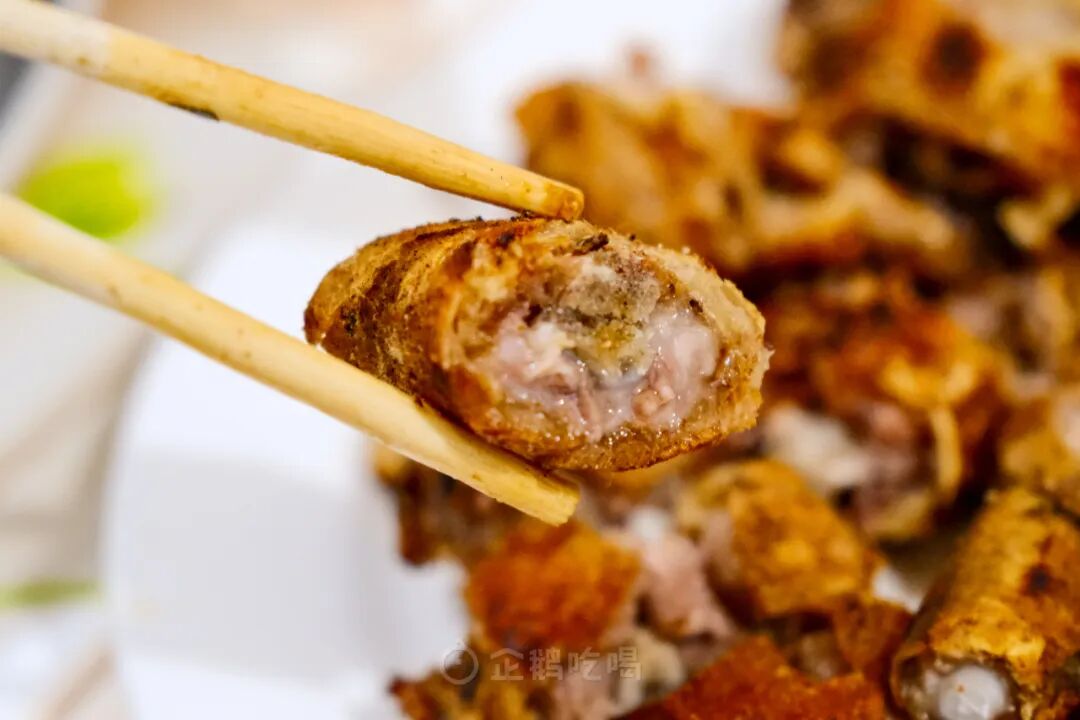 Pork belly is also a specialty of Mangshi barbecue; the fattier the meat, the better it pairs with charcoal, which everyone understands. The pork belly is marinated before grilling and sprinkled with a lot of spice powder while grilling, resulting in a double impact of meat texture and fat!
 Offal is also delicious; I recommend a few magical niche cuts: children’s intestines, which are the fallopian tubes, have no fat and a crisp texture; beef tripe, which is different from all the beef tripe I’ve eaten before, is small and tender, with a delightful crunch; lianjin, which is the spleen, has more airiness and less powderiness than pig liver, with a wild flavor.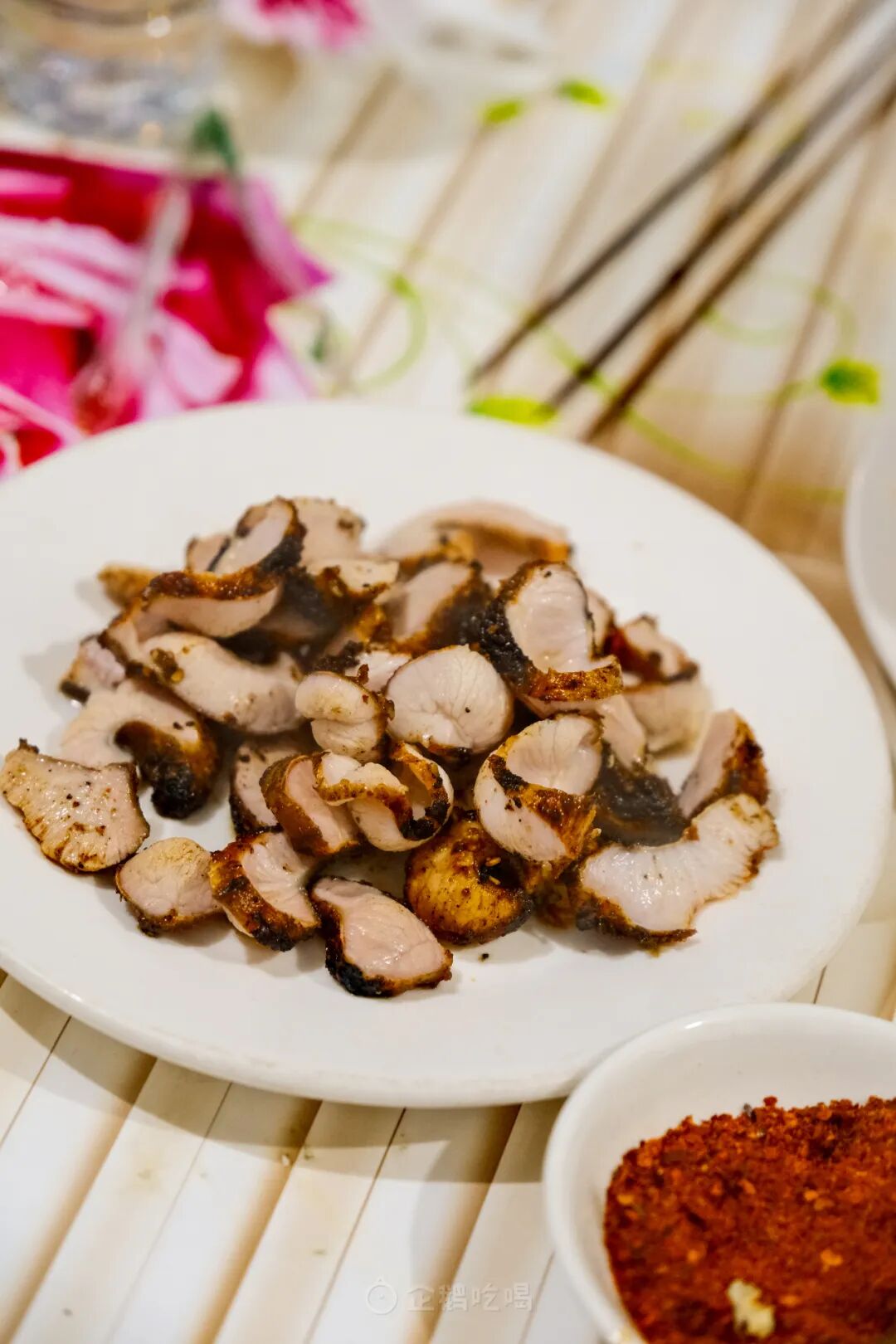
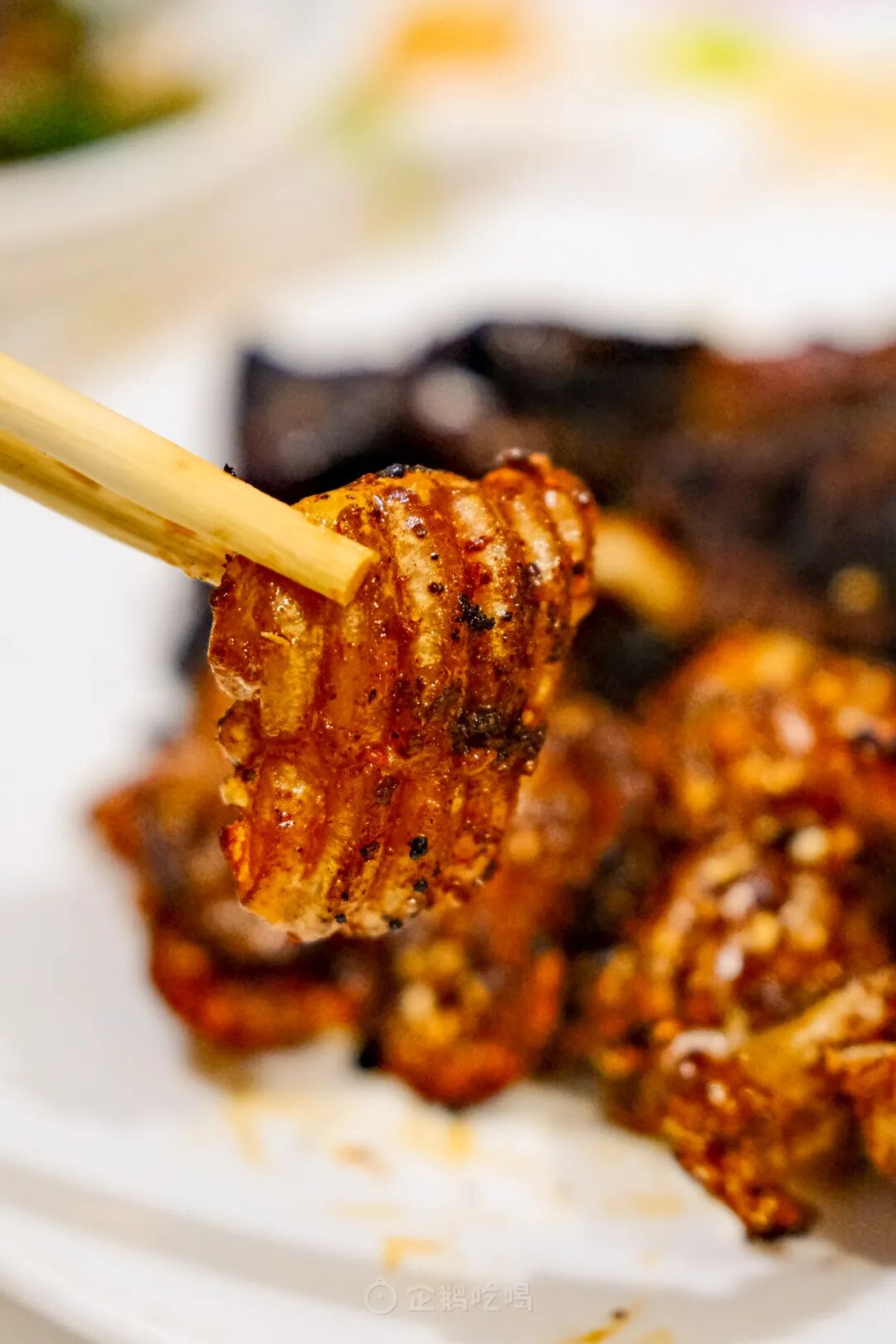 These can be paired with dipping sauces made from chili and white vinegar, or with pickled vegetable paste, which is sour and refreshing.
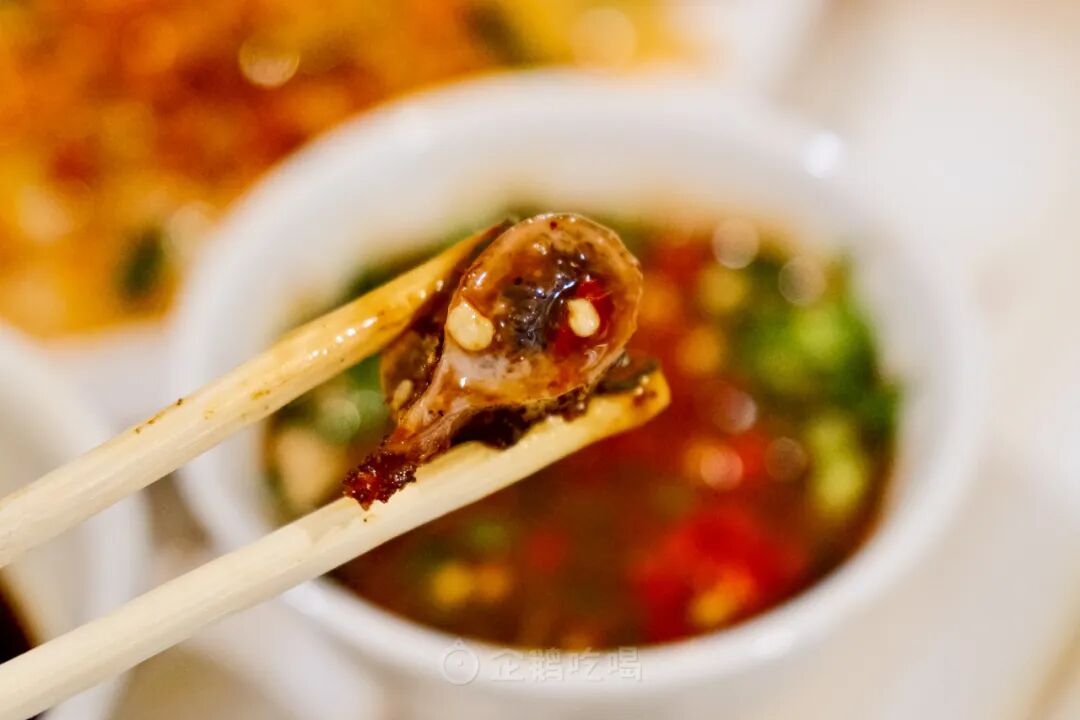 No matter where I eat barbecue, I always order grilled eggplant; currently, only the ones from Pu'er and Mangshi have left a deep impression on me.
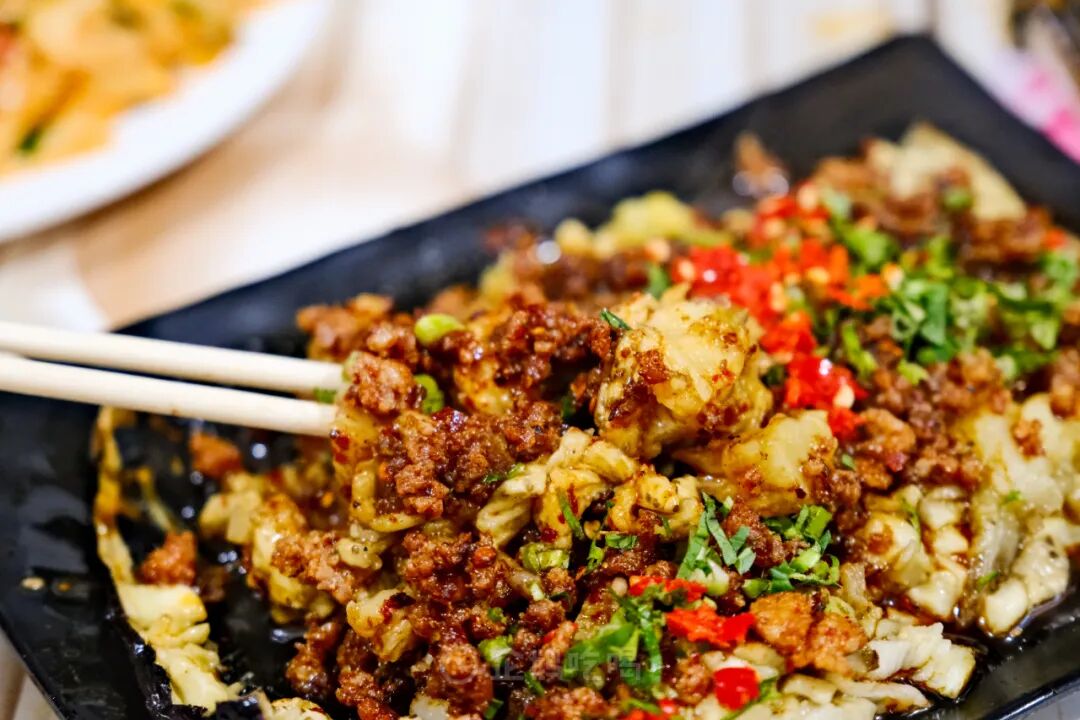
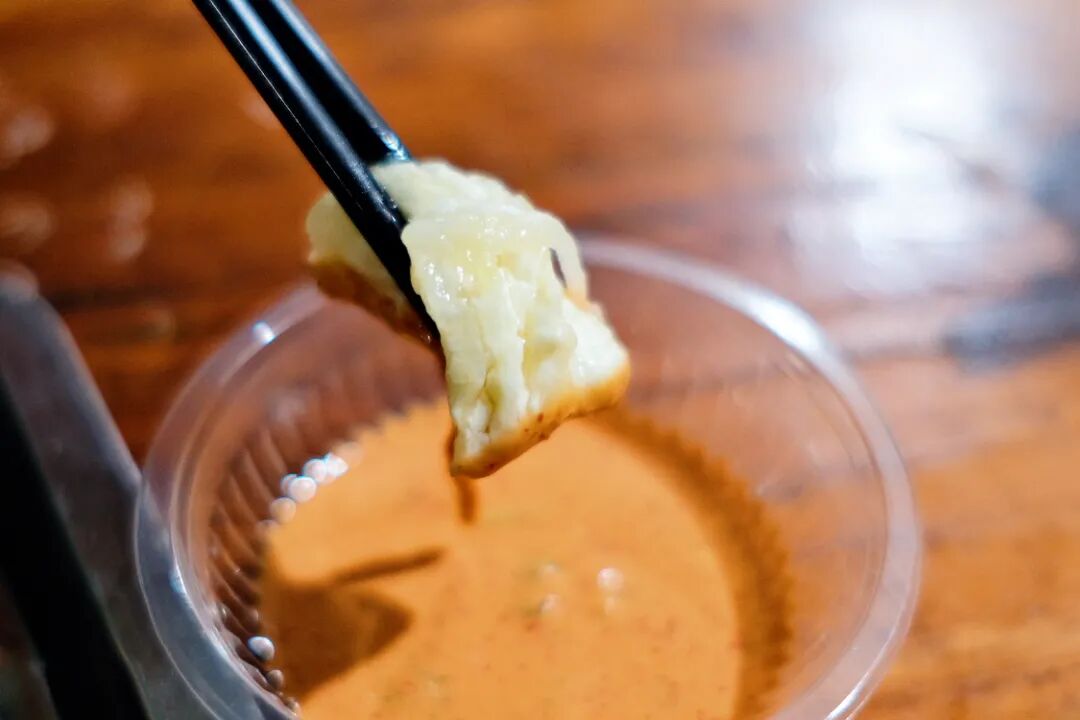 The picture shows the grilled eggplant from Pu'er, which is very tender and juicy without any seasoning! The grilled eggplant from Mangshi is thick in texture, perfectly cooked, and the topping is interesting: it’s topped with a lot of oil-fried minced meat, then a large spoonful of freshly chopped chili, and a generous sprinkle of cilantro. Who can resist this? It’s so fragrant that I can’t help but quickly devour it with tears in my eyes.
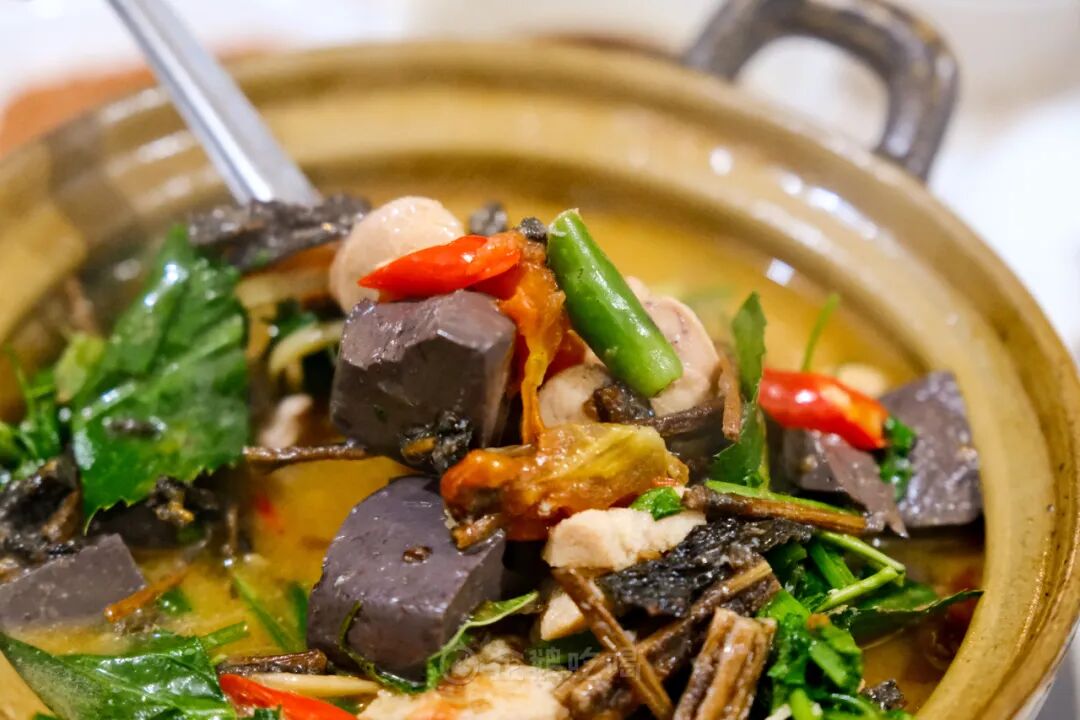
 Mangshi’s barbecue shops also serve some boiled and stir-fried dishes. I love this bowl of sour pickled vegetable boiled chicken and chicken blood, which is fresh and has a texture as dense as freshly made tofu, bursting with juice when bitten.
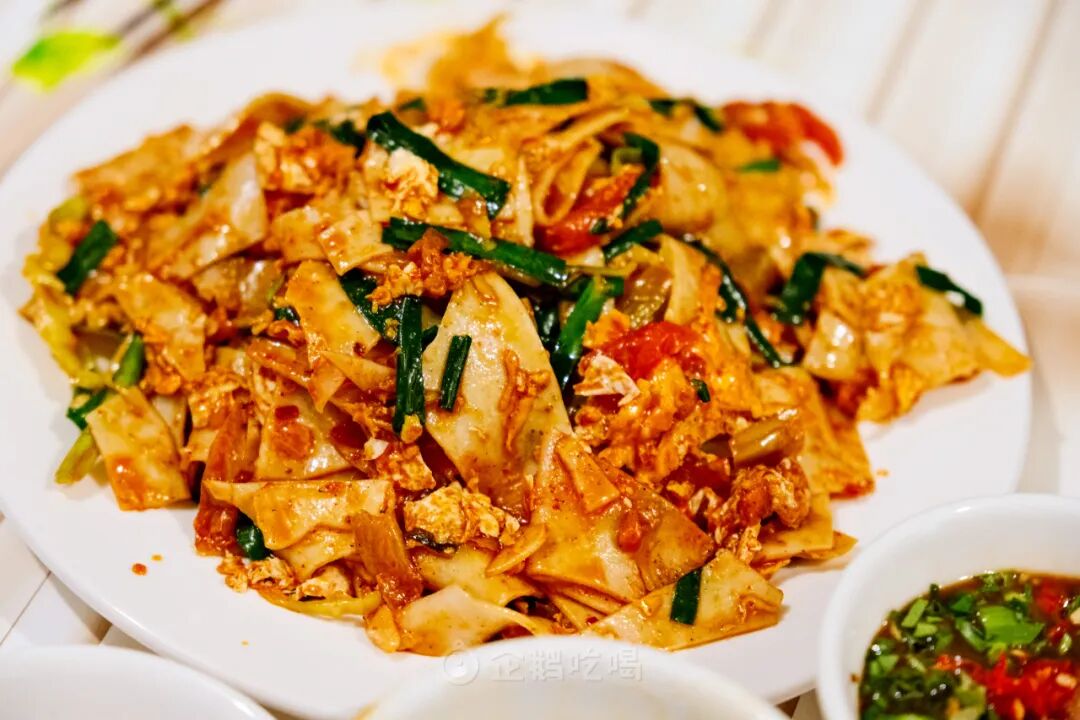
 I also enjoy finishing with a plate of stir-fried rice noodles, which has a different style from Tengchong’s. The texture is softer, and the seasoning includes local pickled vegetables, making it sour and spicy, with a fragrant egg and rice aroma.
 If you go to the Good Hope Cape to watch the sunset, you will pass a village called Mangxing. This village is very magical; almost every shop serves small skewers, and they are all one yuan per skewer.
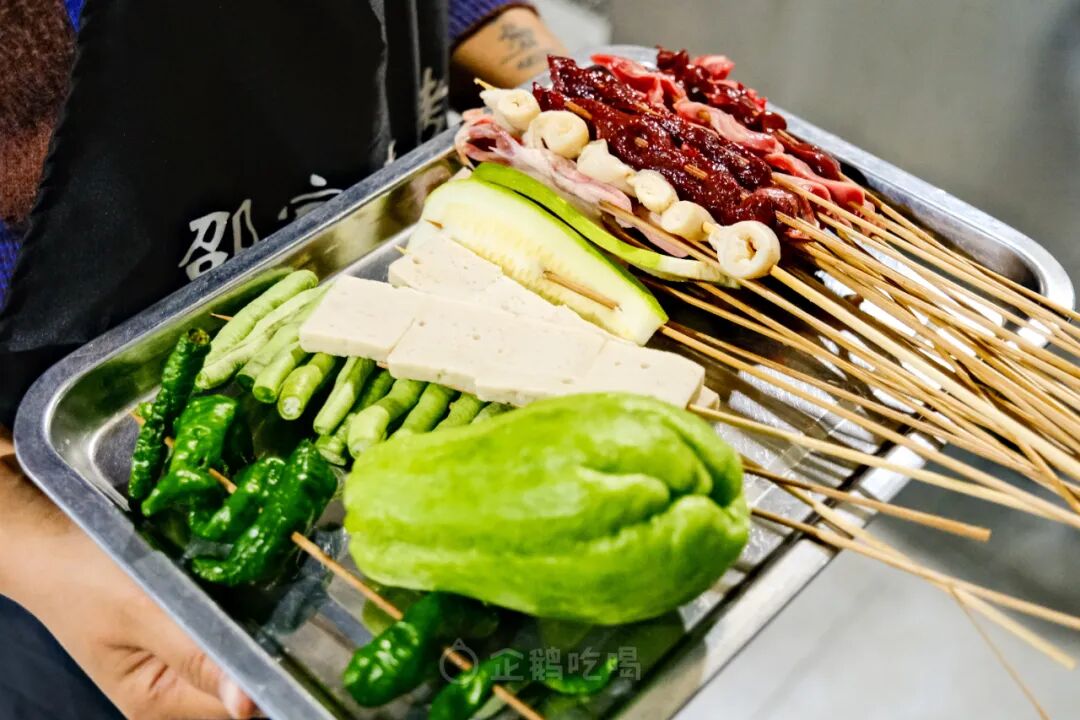 The grilled items are similar to those in the city’s barbecue shops, but the seasoning is heavier, and basically, no dipping sauce is needed. After watching the sunset, you can stop by for a taste, which is also a very novel experience!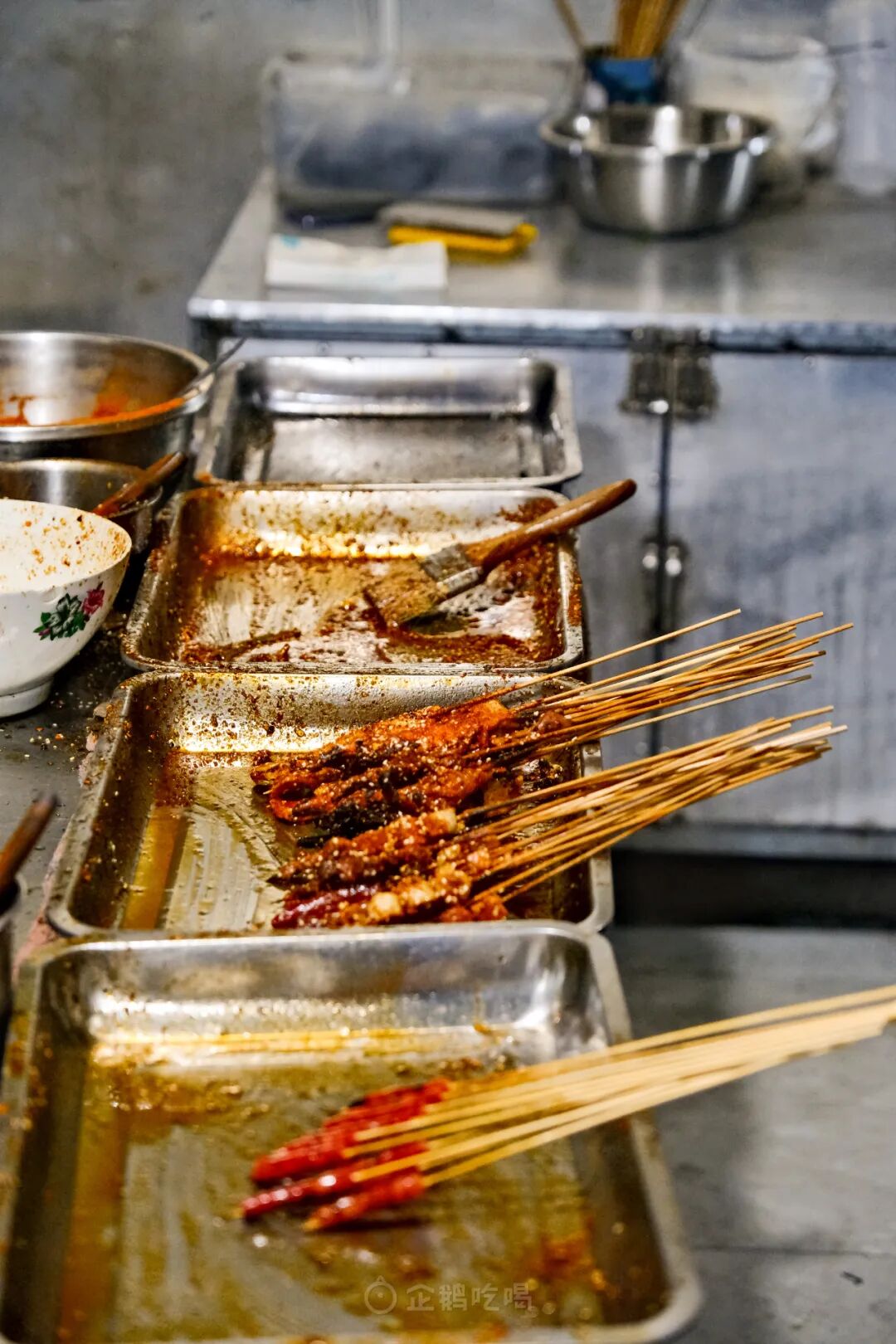
 Finally, let’s talk about snacks and markets and places to stroll and have fun Although Mangshi’s cuisine is “vividly colorful,” it doesn’t have overly heavy rice and flour carbs, so after a main meal, you can still save some appetite for some special snacks. The most popular is shuaiba, a type of fried pancake that came from Myanmar, which is essentially a fried egg pancake + a lot of condensed milk—simple, sinful, but delicious.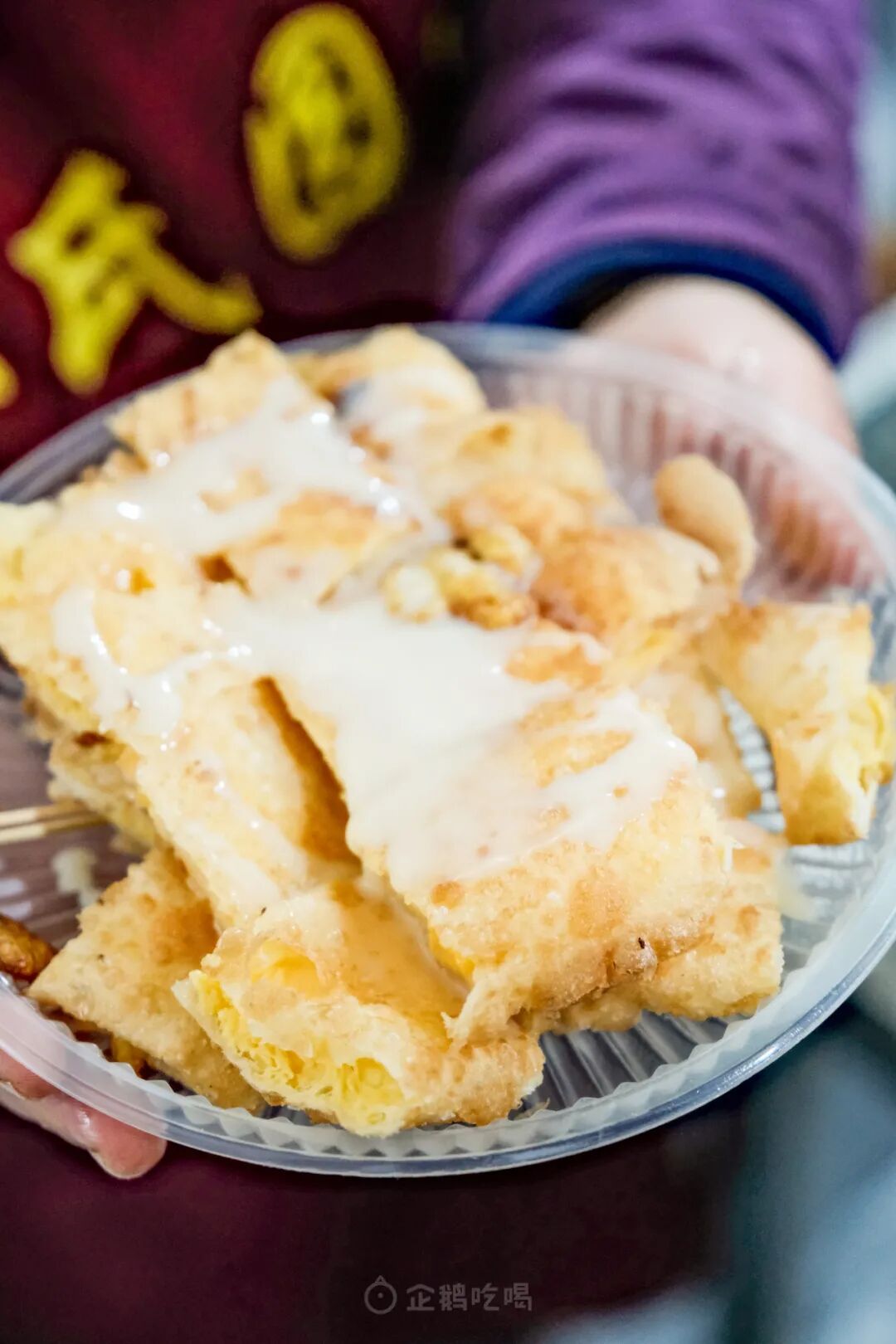
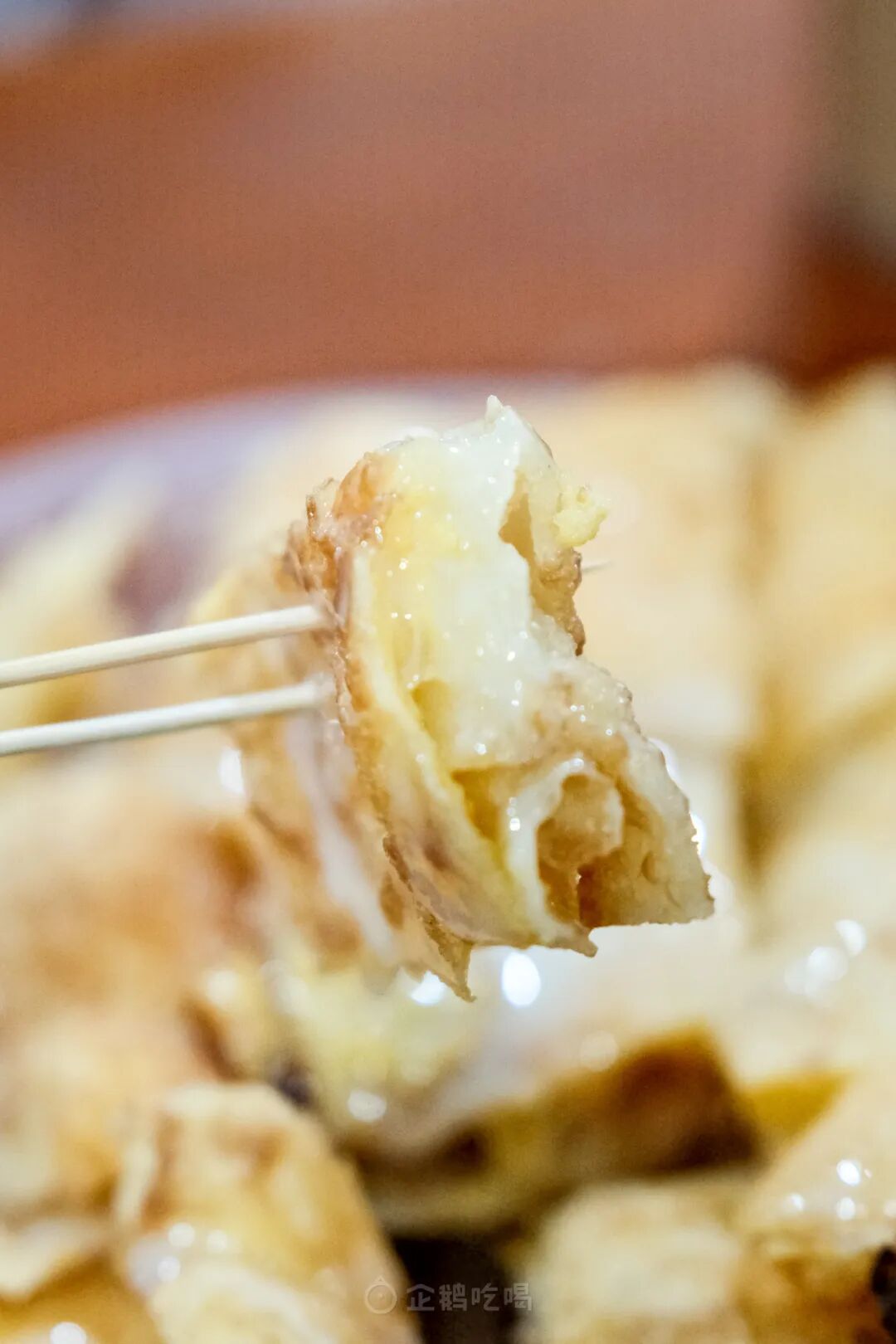 The key to shuaiba is “shua” (to whip); under the premise of mastering the strength, the more times you whip, the stronger the dough’s extensibility, and the thinner and crispier the fried pancake will be. It must be eaten hot!
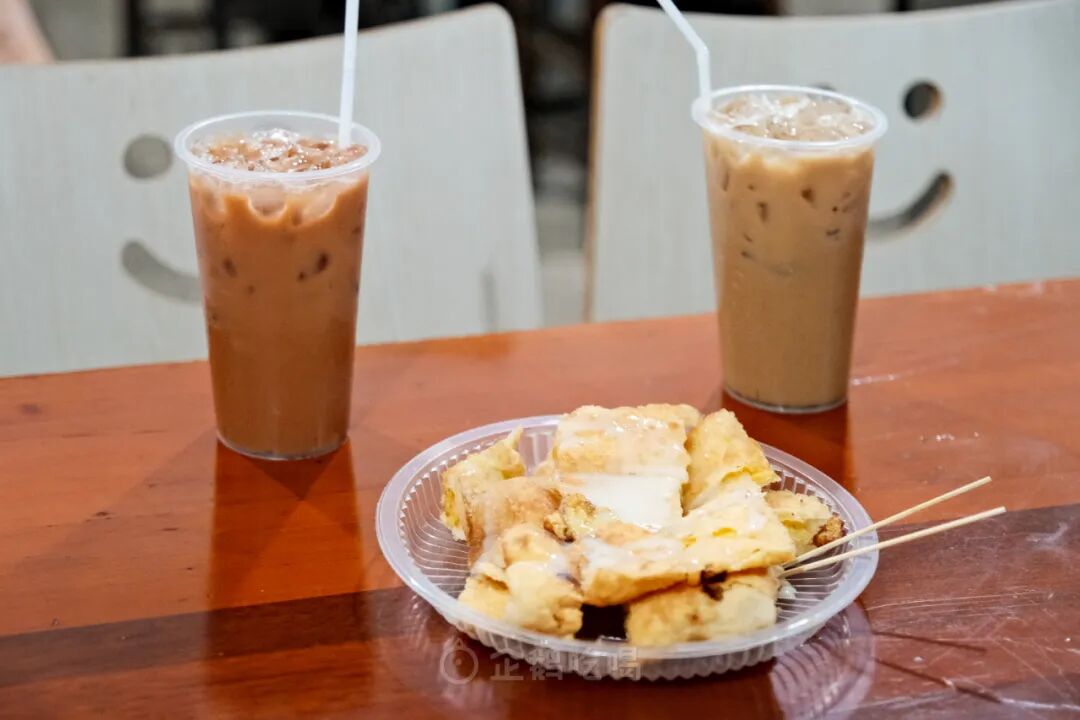
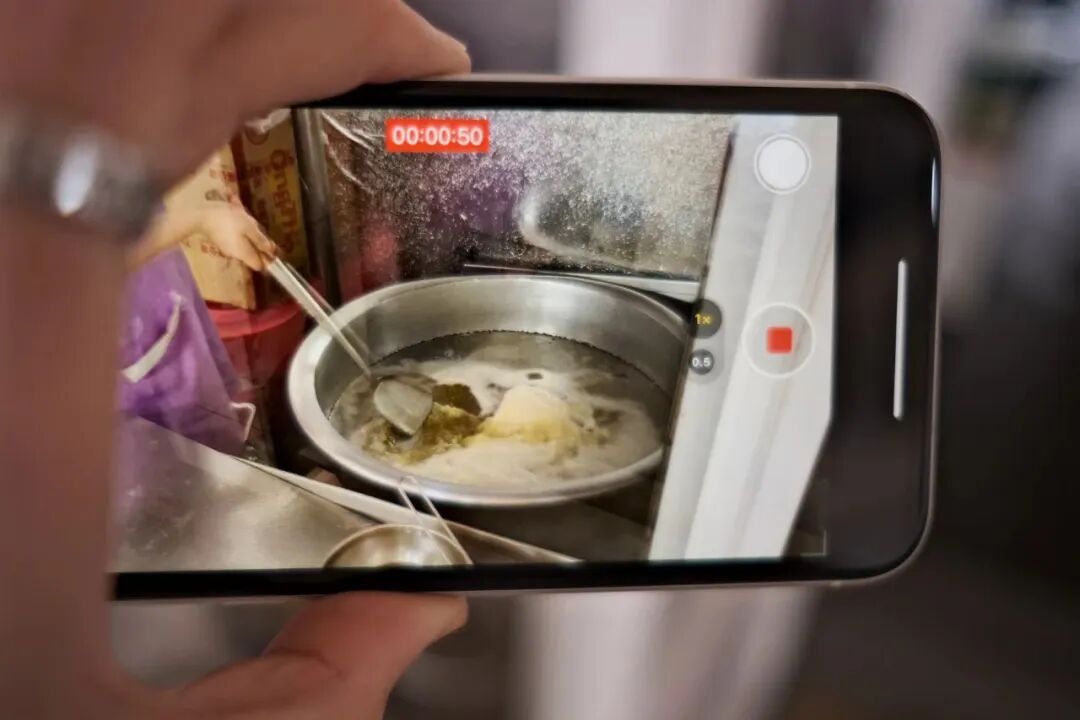 Shuaiba is a trendy snack, but I personally think it’s worth a try. On the other hand, some trendy snack collection shops that sell rice balls, pickled vegetable paste potatoes, hand-grabbed rice, and pounded chicken feet don’t need to take up too much stomach space, as many restaurants will have them, and they are made better. Pairing it with a cup of iced coffee or iced milk tea is also in the Myanmar style. Coffee powder or milk powder is directly placed in the condensed milk can, adding a few spoonfuls of a deadly amount of condensed milk, and then mixed with water or tea, creating a rich old-fashioned taste~
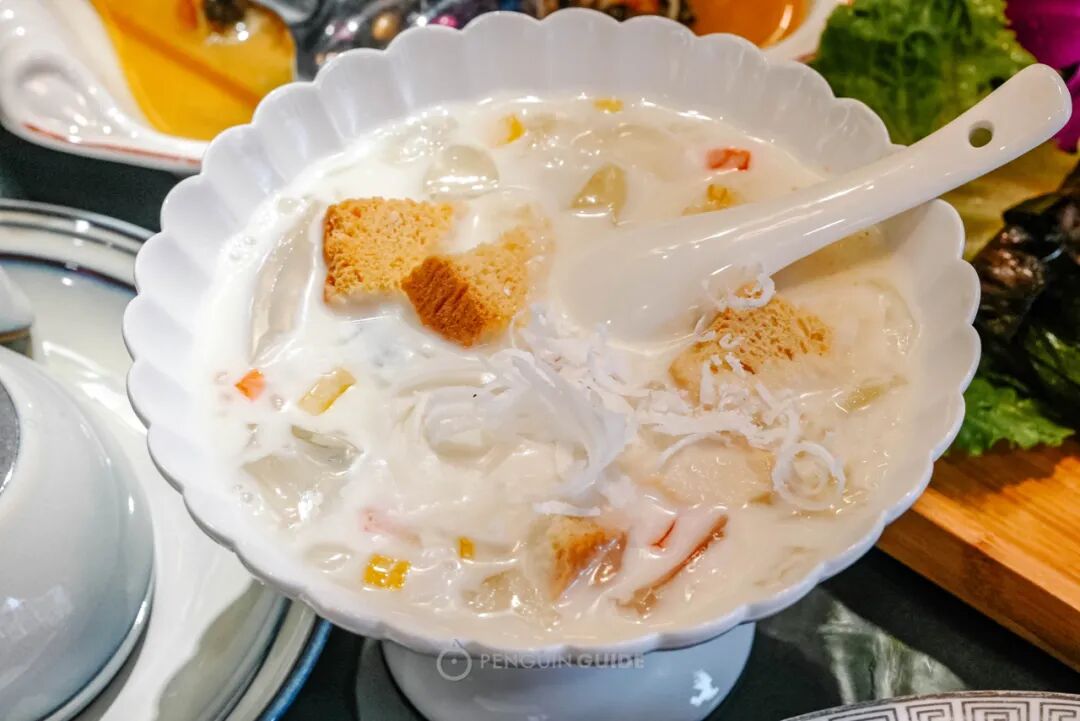
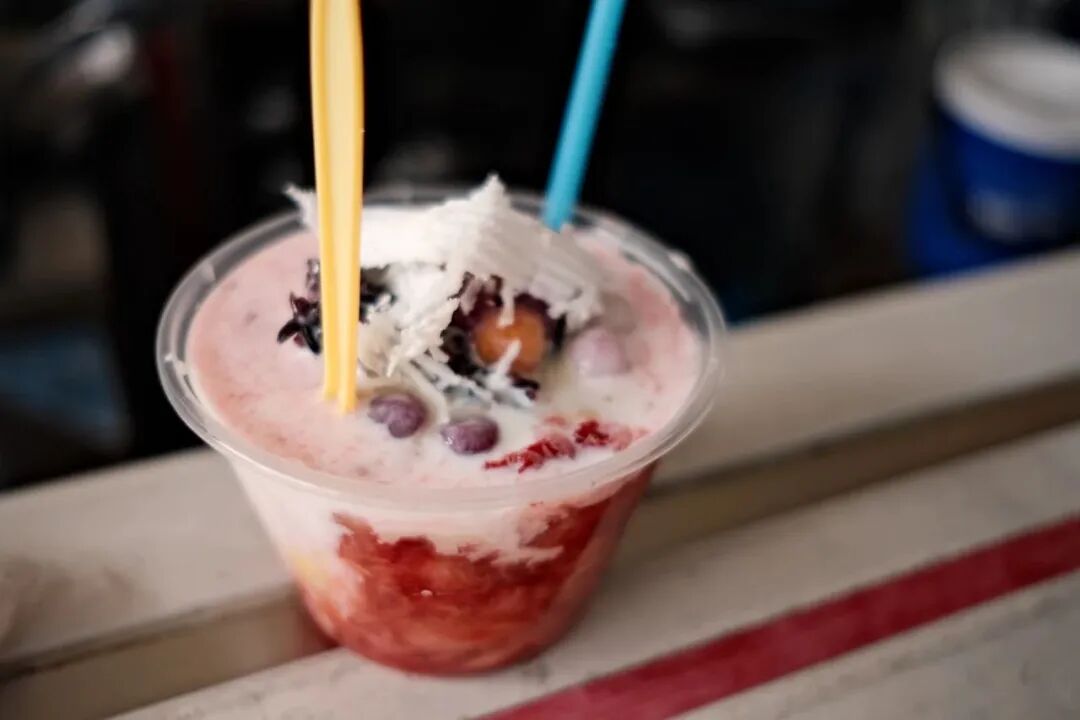
 You can also eat pauluda, which is also a Myanmar-style dessert, with a similarly deadly amount of condensed milk. But fortunately, it has a variety of ingredients, including fried fluffy sweet bread chunks, coconut shavings and coconut milk, purple rice, and sago, making it rich in texture, cool and refreshing, and not too sweet.
 However, compared to Myanmar-style desserts, I recommend you go to local cold drink shops to buy juices, milkshakes, and fruit jams. Mangshi produces a lot of fruits, and the juices are particularly fresh and rich, especially tropical fruits like mango, passion fruit, and avocado, which you really can’t find elsewhere for just over ten yuan!
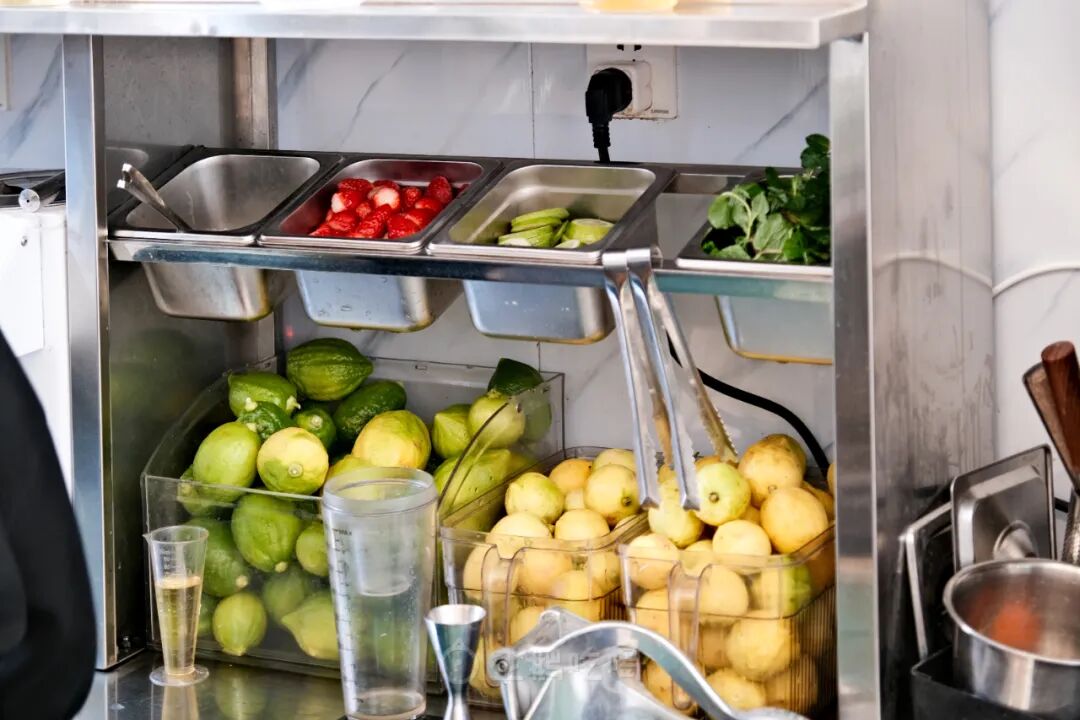 What’s particularly special is the fruit jams; some shops use strawberries, mangoes, or wild waxberry to make jams, marinating them with sugar, and then adding condensed milk or cream. The texture is thick, and the flavor is very concentrated, which can be mixed with milk or yogurt, creating a magical experience~
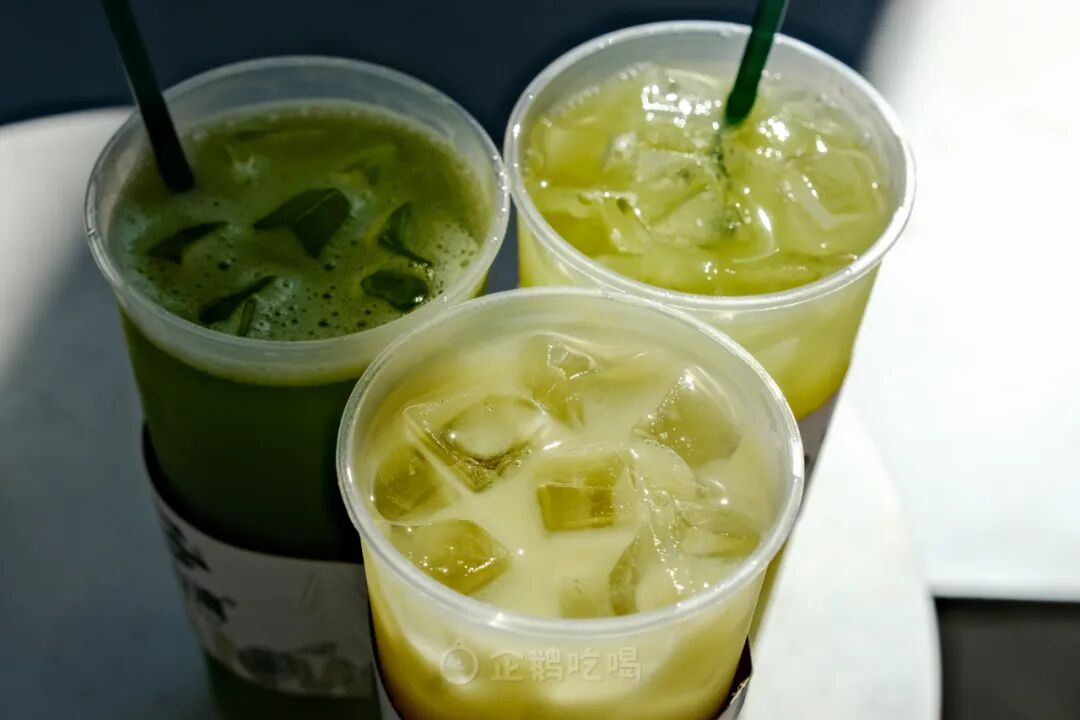
 The following few cups are exclusive to Mangshi; after leaving, you won’t be able to drink them again, namely: olive tea, Keli juice, and sour papaya oolong. The first sip will definitely make you grimace.
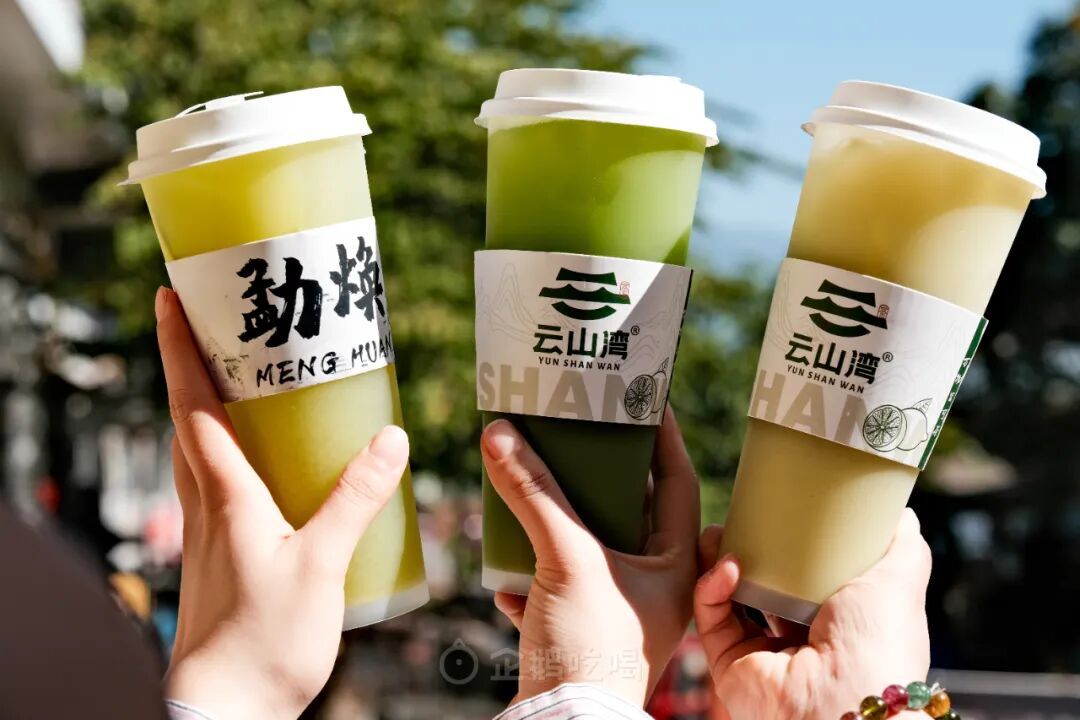 Olive refers to oil olive (Mangshi people call oil olive or Yunnan olive, not the kind from Chaoshan), which has a pleasant sweetness after being sour; sour papaya is purely sour but has a good aroma; Keli is a local specialty wild fruit from Mangshi, with a slightly bitter taste, offering a magical herbal coolness, akin to Cantonese herbal tea, and also has a hint of sweetness. I can only say, brave souls, please drink👇.
 After eating and drinking to your heart's content, what are the good places to stroll in Mangshi? The Golden Pagoda can be visited, known as the first hollow pagoda in Asia. According to locals, the Golden Pagoda was originally in the outskirts of the village and was rebuilt and consecrated about ten years ago after being damaged; it indeed looks quite magnificent. The silver pagoda in the distance was built later, shining silver, with a cool color, suitable for taking photos.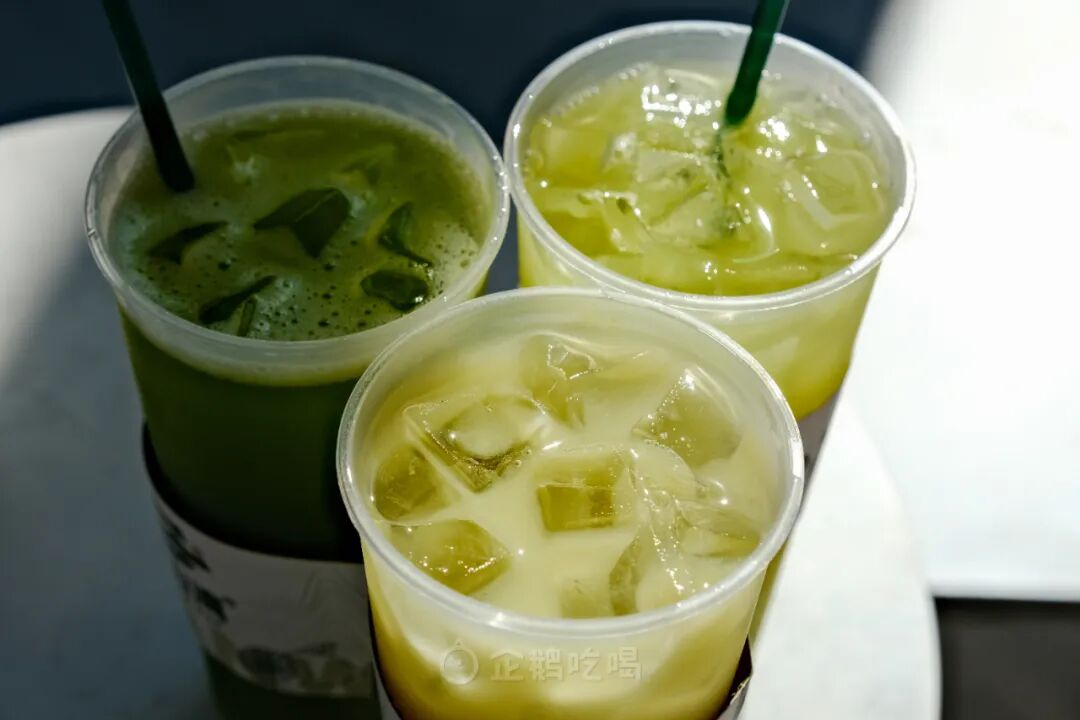
 After wandering down the mountain, you can go to a café at the foot of the mountain for a cup of coffee. Although the taste is average, the shop is beautiful and cozy, a place where you can relax.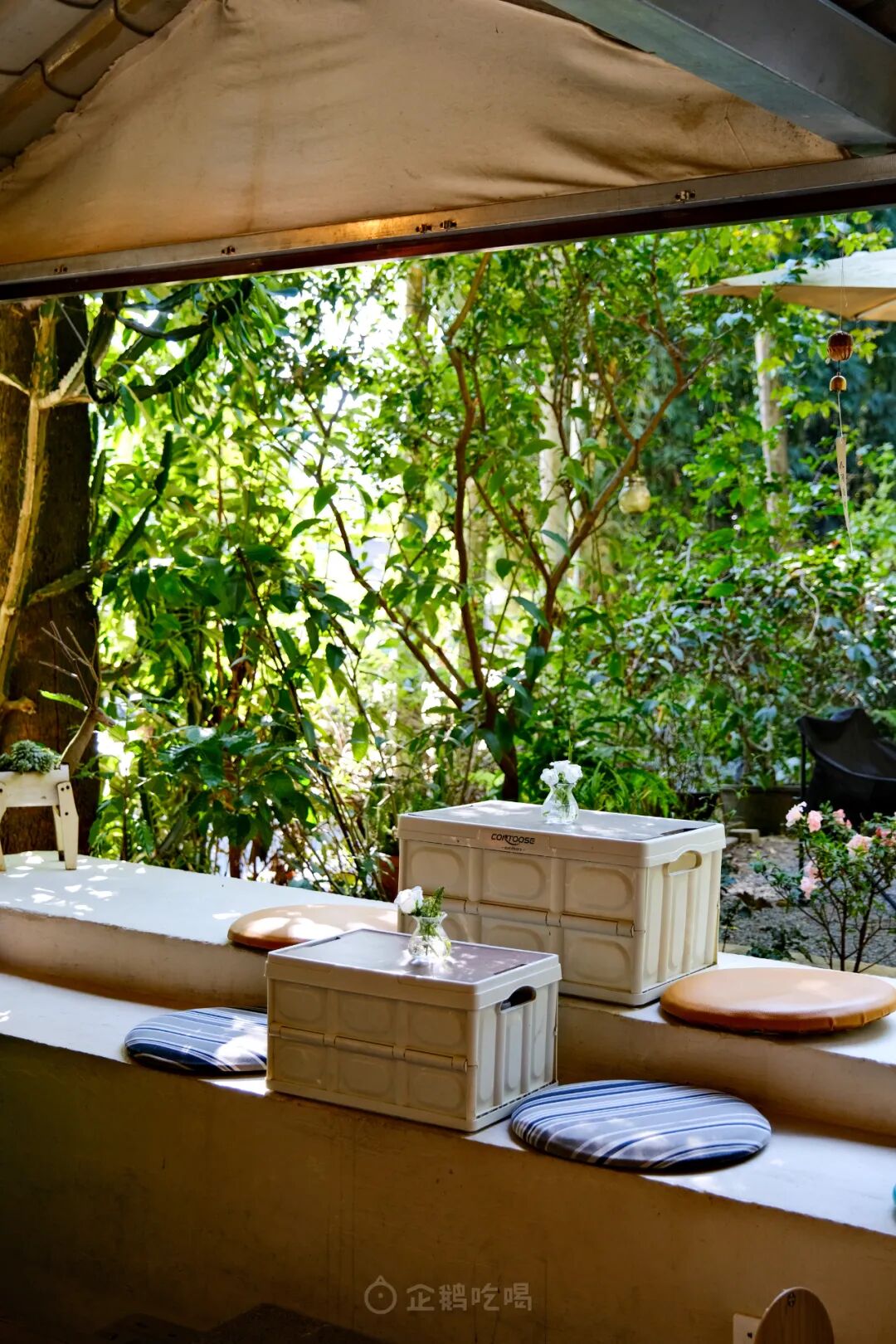
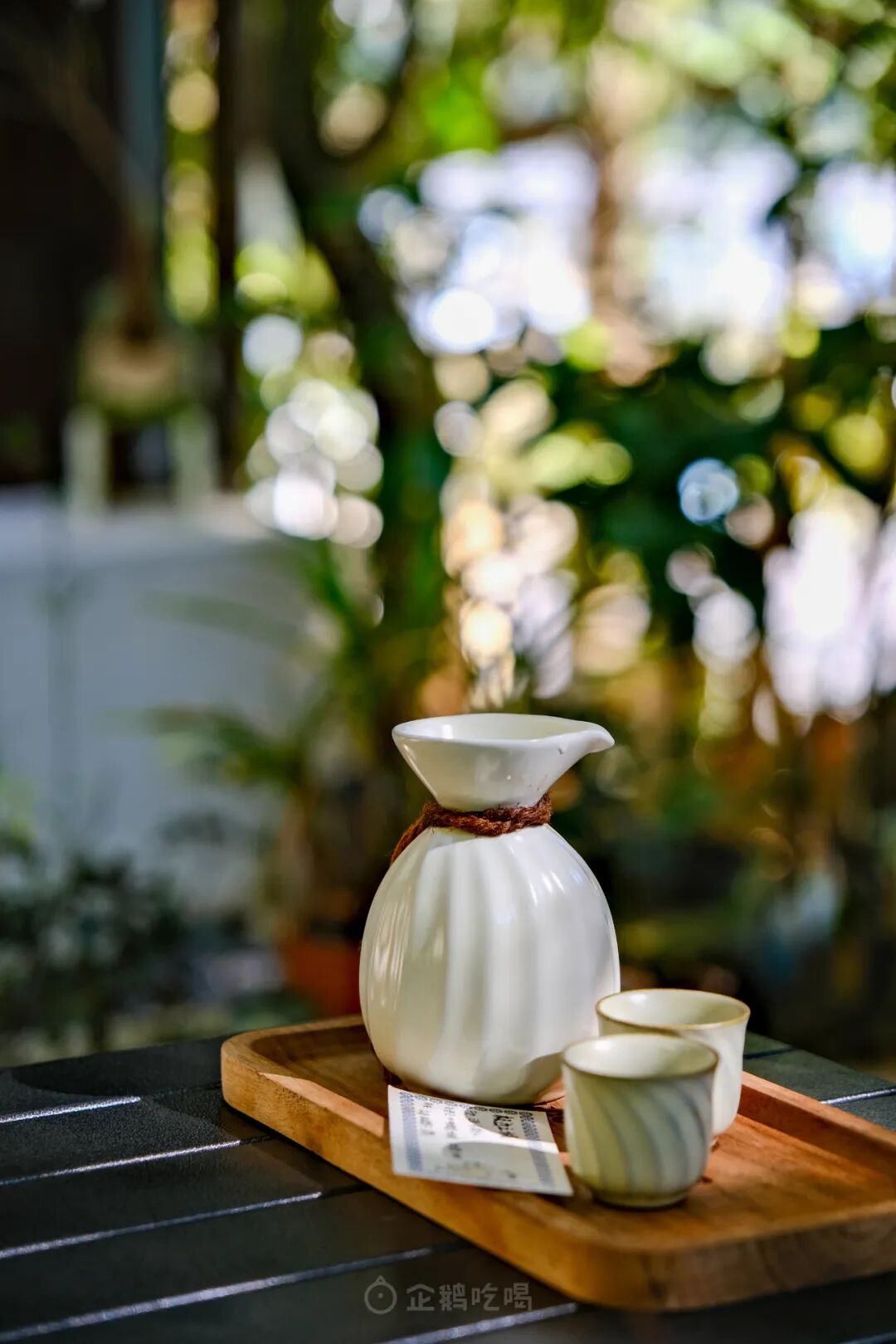 This season, you can also go to strawberry fields to pick strawberries (which lasts until May), just at the foot of the mountain, where you can see the Golden Pagoda in the distance. The strawberry fields here are all grown outdoors, collectively called “fragrant strawberries,” with both traditional red varieties and light pink varieties. When you arrive at the strawberry-filled orchard, the agricultural genes of Chinese people will awaken immediately; seeing one ruby-red strawberry after another, who can resist?!
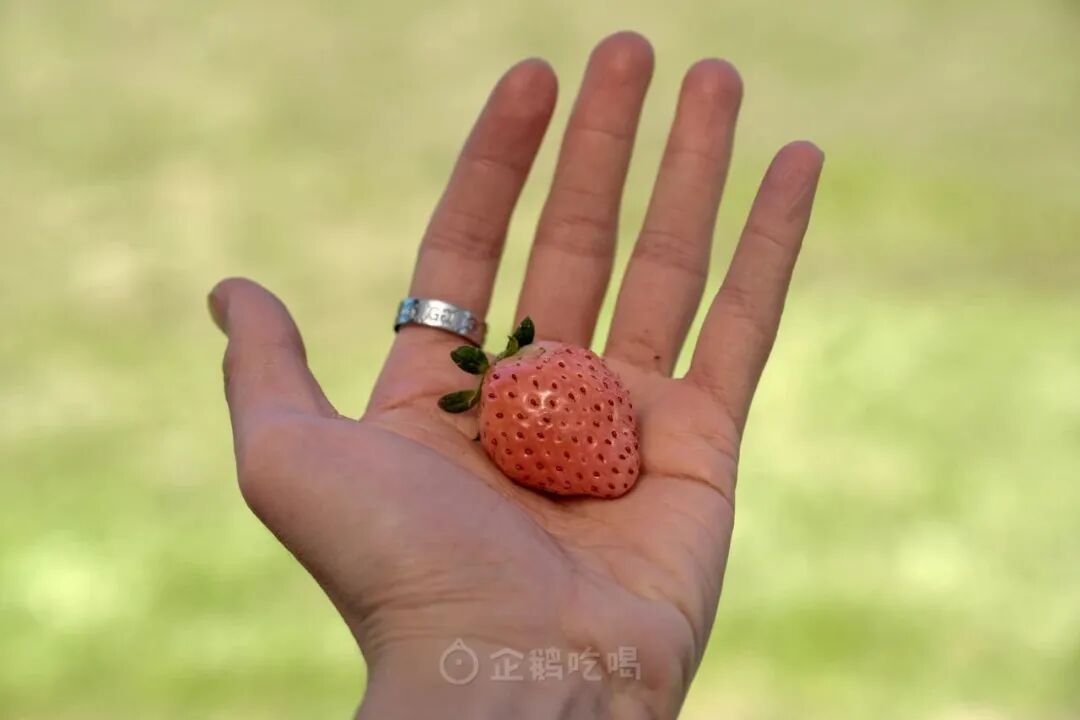
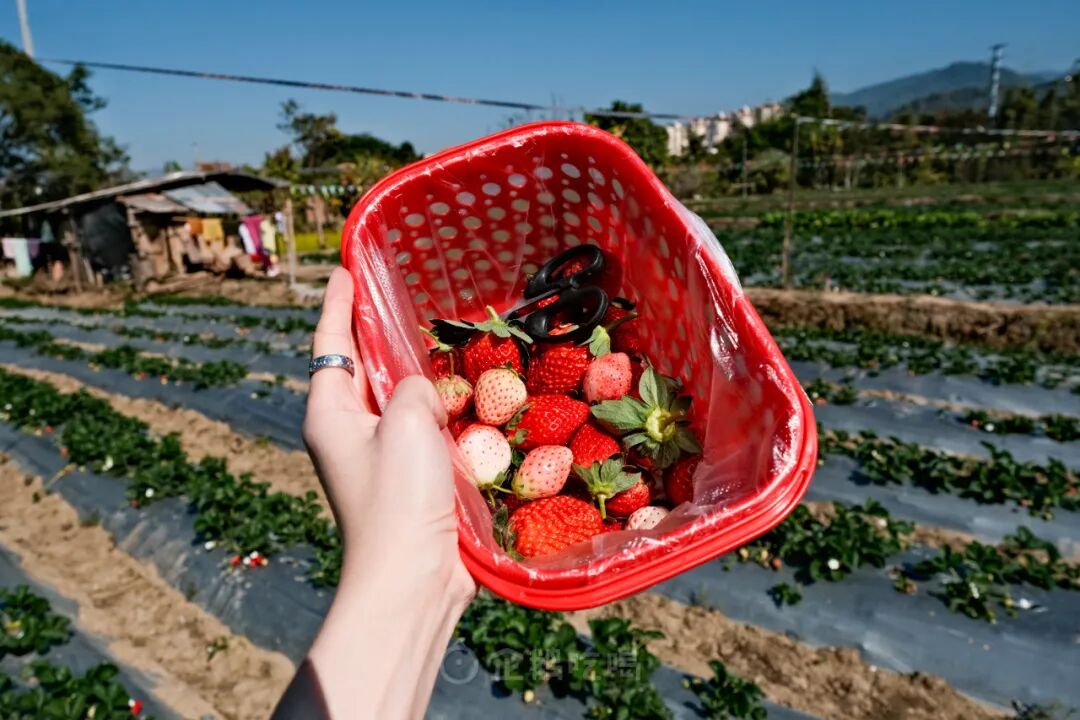 Freshly picked strawberries are fragrant, and just leaving them there can fill the entire room with sweet strawberry aroma. Especially the pink strawberries have a vanilla cream-like fragrance, and they are soft and juicy when eaten.
 The city of Mangshi is not large; if you have time, I recommend visiting two surrounding villages. One is called Shangjingkan, which retains the traditional Dai village style. Following the small paths of the village up the mountain, you will see lush orange trees, tomato fields, and babbling streams. Halfway up the mountain, there is a huge banyan tree, standing alone like a forest, which is very captivating, and a few peacocks are raised nearby.
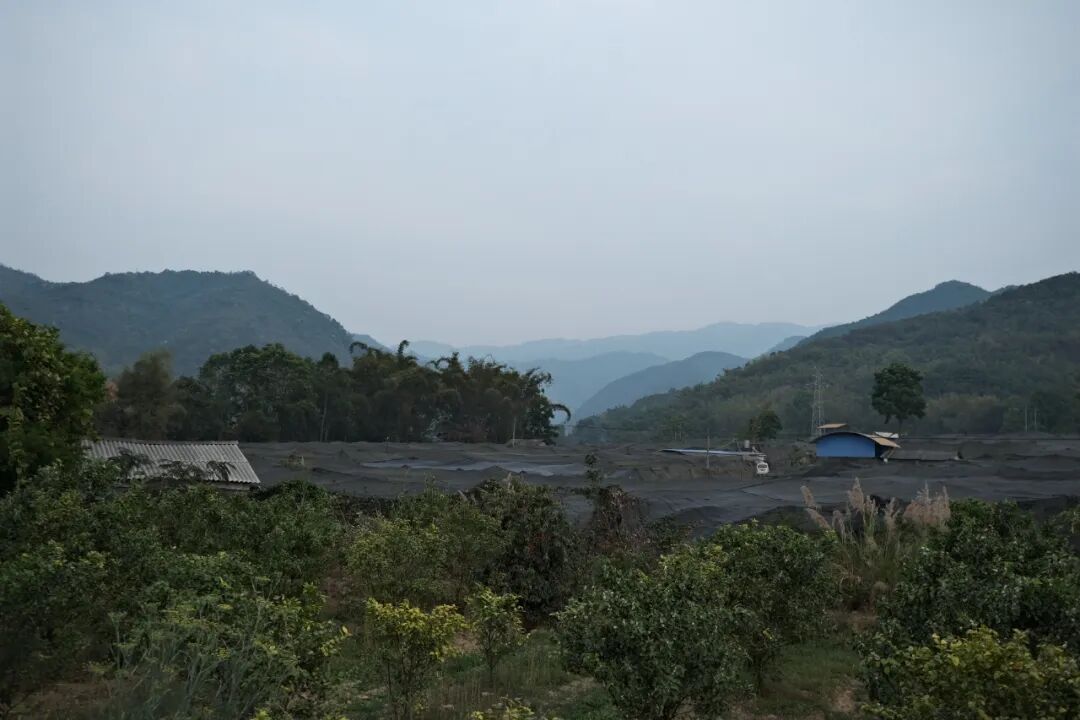 The other is called Good Hope Cape, located between Mangxing and Huixian Village, where you can see the most beautiful sunset in the city.
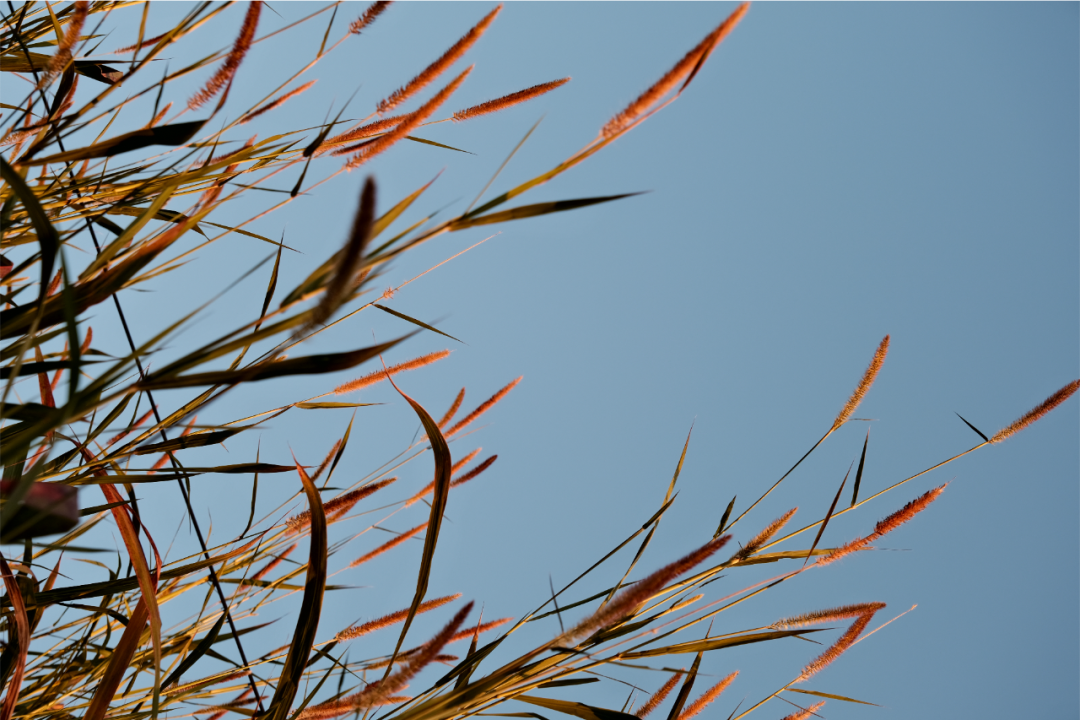
 Now it’s January, and the winter cherry blossoms have fully bloomed, with the golden reeds on the hillside swaying in the wind, like flowing waves of gold in the sunset glow.
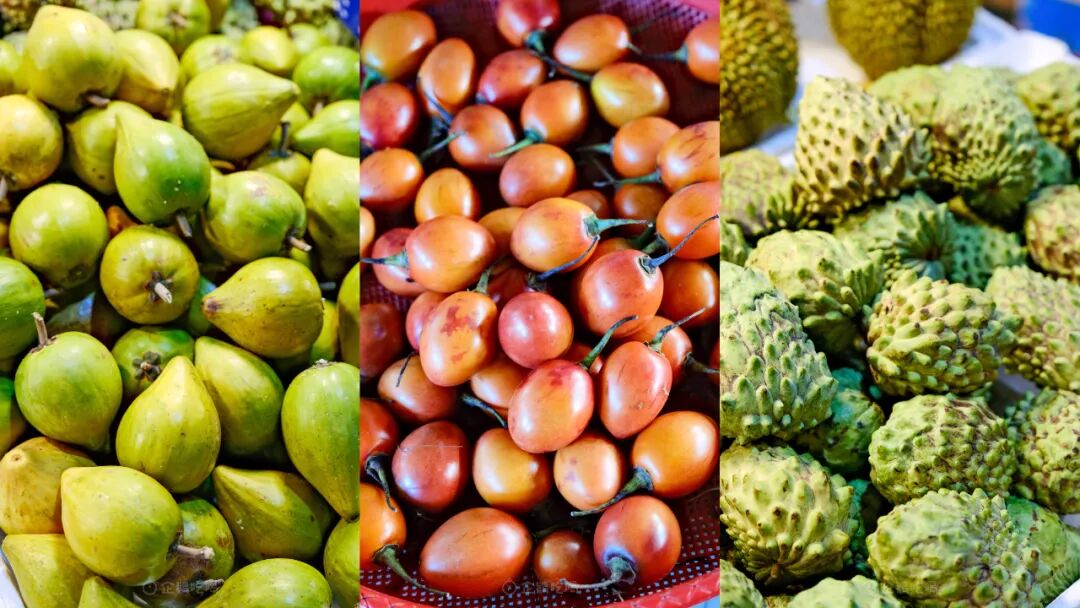
 Before heading back, I recommend everyone to visit the largest market in the city, Hongli Market. The fruits are super fresh, with custard apples at 13 yuan per pound, and the local blueberries are large, crispy, and sweet.
 The vegetables are also very fresh; I specifically bought bottle gourd sprouts, ginger stem gourds, pea shoots, and bitter vegetables when I went home.
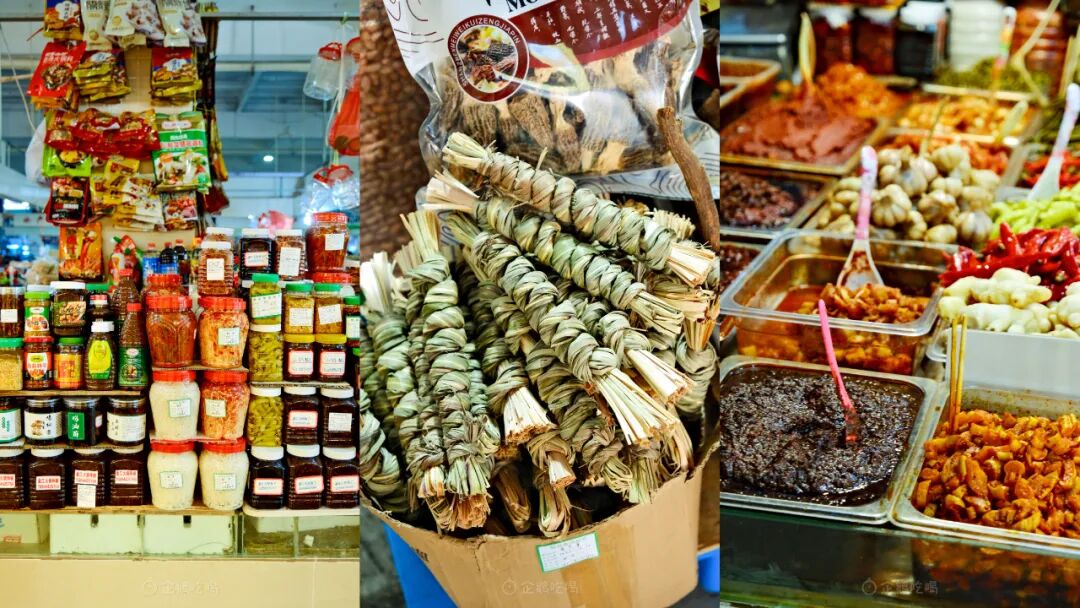
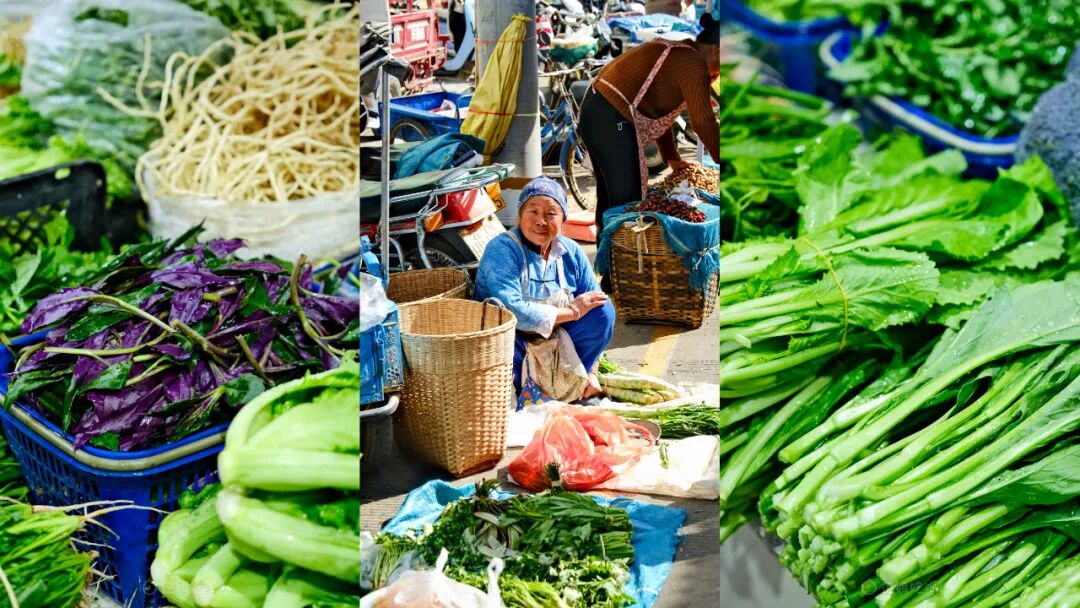 The seasonings and dried goods are very complete, including pickled vegetable paste, spicy chili dipping sauce, mountain pepper root, lemongrass sticks, etc., which you can take back.
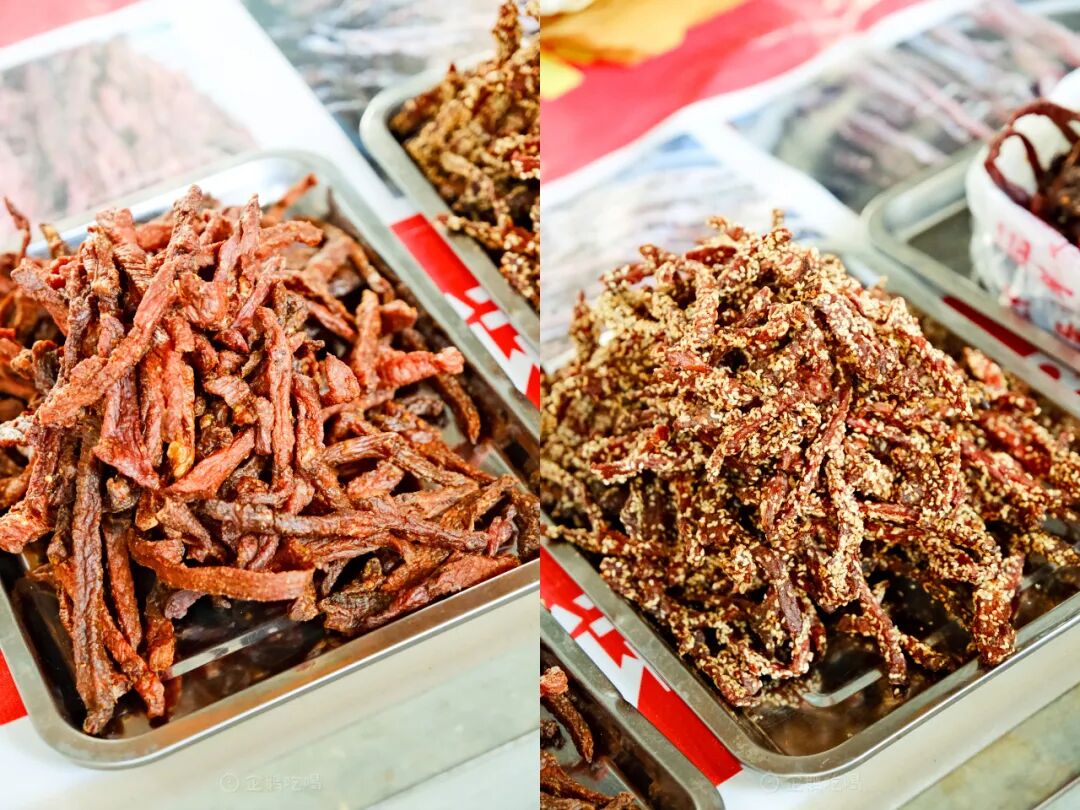
 If you want to buy souvenirs, I recommend this dried beef, which is thin and crispy, not hard to chew, with the best flavors being mountain pepper and spicy dipping sauce, which are the most characteristic of Mangshi. This shop can be purchased online, and their sour tamarind cake is also very delicious (add the boss’s WeChat: gml1986520).
 Oh, and here are a few small travel tips👇.
- Mangshi’s Bingwu Road has a “market day” every five days, where surrounding ethnic minorities come down to the city to set up stalls, which is very lively.
- The water-splashing festival in Mangshi is from April 13 to April 15 every year.
- There are many mango and jackfruit trees along the roads in Mangshi. When jackfruit ripens in summer, the government will uniformly harvest it and distribute it to children, the elderly, and tourists in Mangshi Square, while adults can exchange it for cigarette butts (promoting environmental protection).
- Mangshi has an airport, and the city is not large, making it very convenient to travel by taxi.
Mangshi, in Dai language, is called “Menghuan,” meaning “City of Dawn,” the place where the sun rises. The sky here is always blue, the trees are always green, and life is always peaceful and leisurely, with people being warm and hospitable, and their hearts calm and serene. After getting used to the fresh and flavorful rice noodles, the sour and complex Sapi; unlocking the bizarre wild vegetables and creative combinations; and falling in love with the charcoal aroma of late-night barbecue stalls, this is a border city that you will never forget after visiting, bringing you good appetite, good mood, and good comfort~