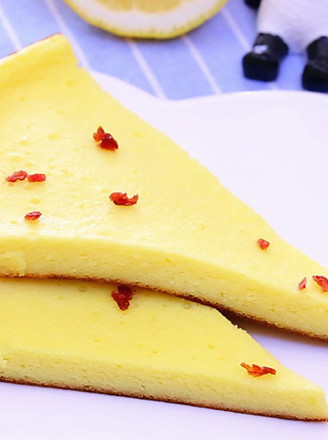
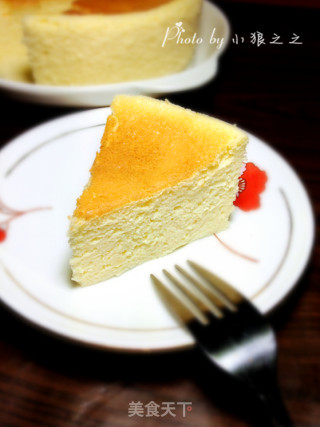
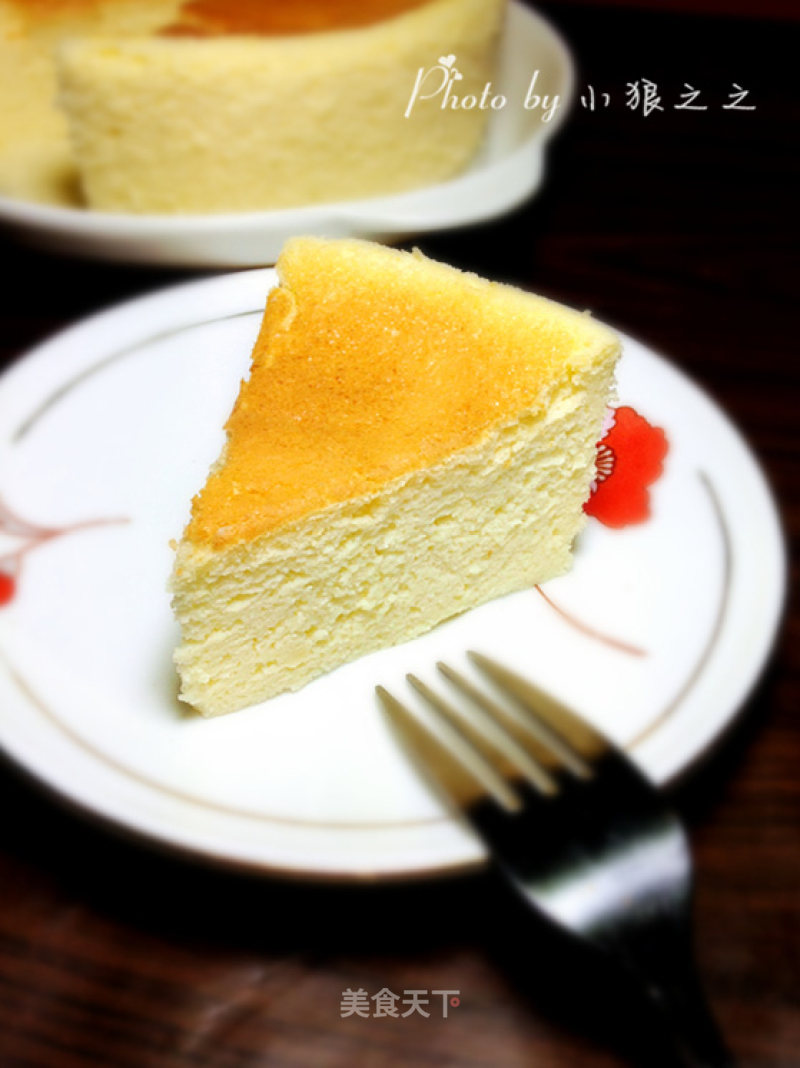
Melt in Your Mouth-light Cheesecake
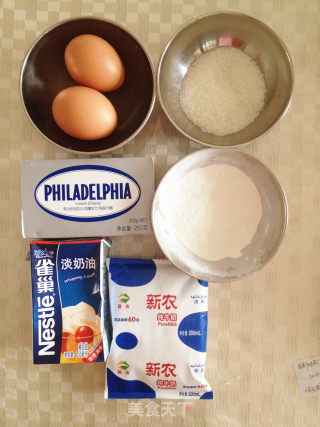
1. Prepare raw materials;
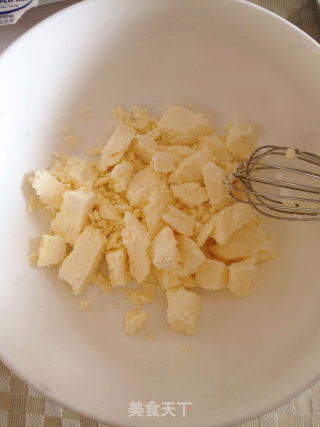
2. Cut cream cheese into small pieces and place in a large clean basin;
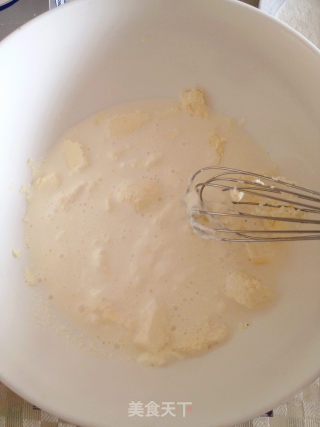
3. Add milk and whipped cream;
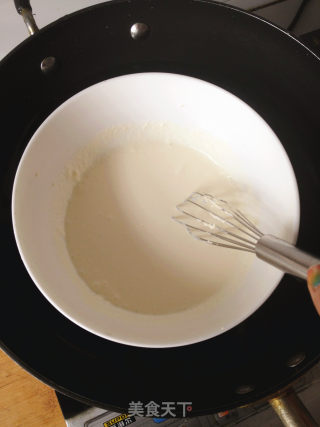
4. Insulate water softens, mix finely to creamy;
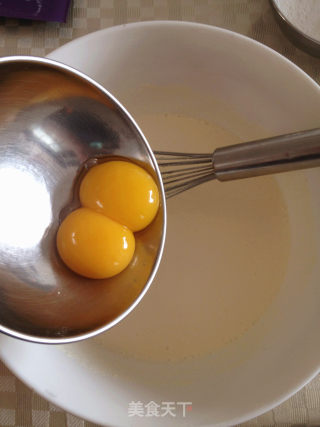
5. Add egg yolks in portions and mix well with a manual whisk.
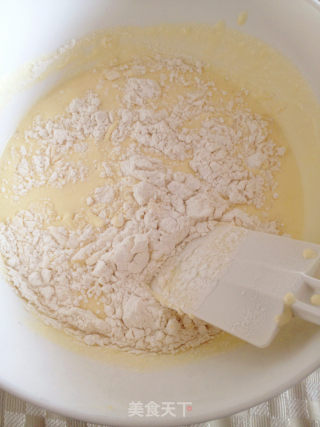
6. Sift in low-gluten flour;
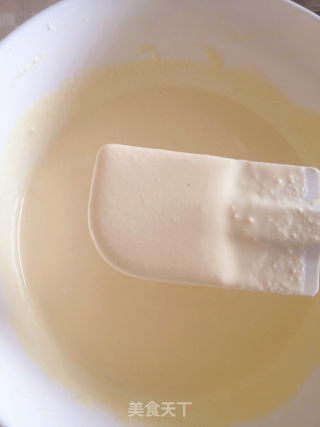
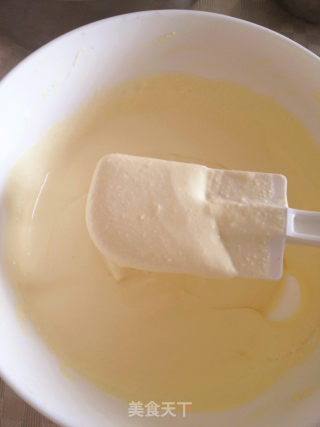
7. Use a rubber spatula to mix well, until the flour and cheese paste are completely mixed until there are no flour particles. (At this time, put the mixed cheese paste in the refrigerator until it thickens before proceeding to the next step.)
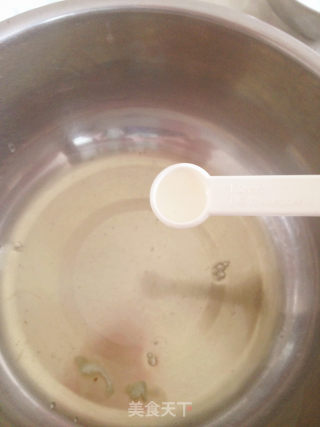
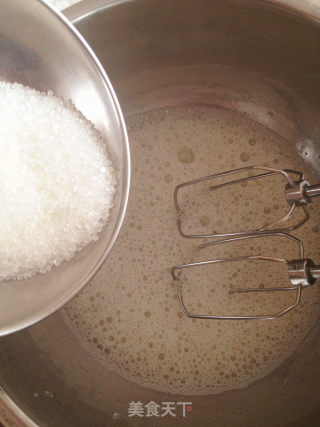
8. A few drops of white vinegar in the egg white;
9. When it reaches the shape of a fish-eye bubble at low speed, pour one-third of the sugar.
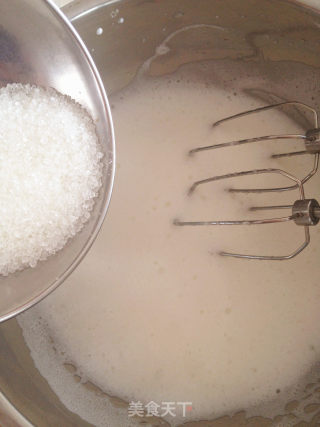
10. Turn the whisk to gear 3 (medium speed) and continue to beat. After about 1 minute, the bubbles become fine and the volume expands to twice the original size. Lift the egg head, the egg liquid can not stick to the egg head, it is watery, add one-third of the sugar.
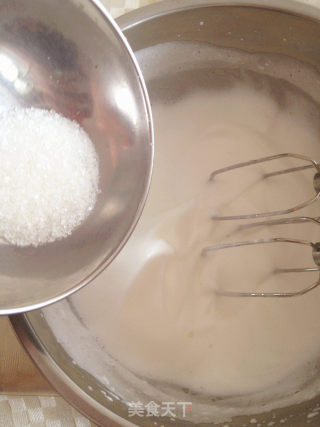
11. Turn on the 3rd gear and continue whipping. After about 1 minute, the bubbles become more delicate and have some slight lines. Then add one third of the sugar.
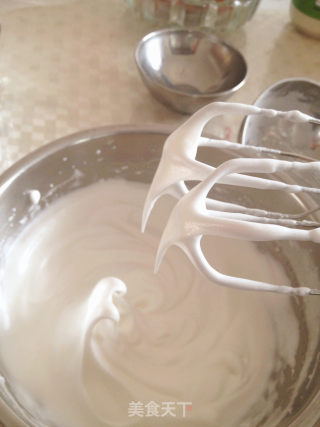
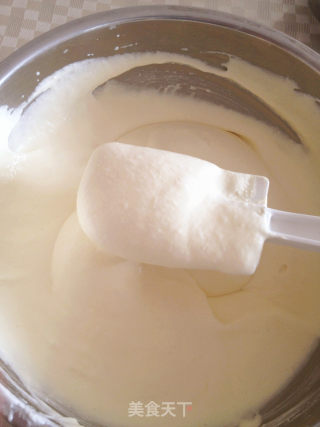
12. Continue beating at 3 levels until the egg beater is lifted, the egg whites in the basin cannot stand, and the egg liquid on the egg beater is sagging. At this time, it is called eight distribution, also called wet foaming. This kind of protein is suitable for light cheesecake.
13. Take the cheese paste out of the refrigerator. The cheese paste should be thicker at this time.
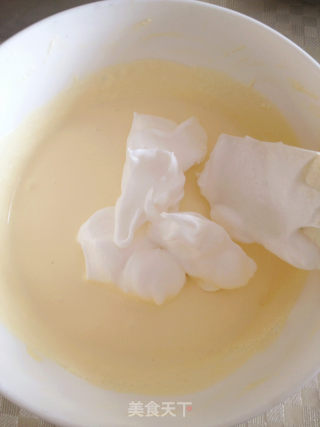
14. Take 1∕3 egg whites into the cheese paste, and stir the egg whites and cheese paste evenly with a rubber spatula. (Stir up from the bottom, never stir in a circular motion, otherwise the eggs will defoam badly, causing the cake to shrink or fail to puff)
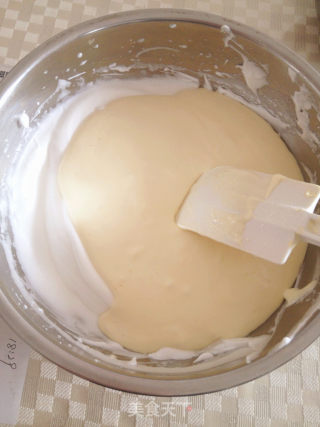
15. Pour all the well-mixed cheese paste back into the egg white bowl.
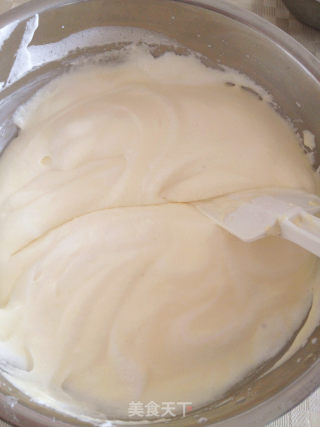
16. Continue to use a rubber spatula to mix the egg whites and cheese paste evenly, being careful not to stir in circular motions. (Preheat the oven to 150 degrees at this time)
17. The mixed cake batter should be very thick and delicate. If it is too thin or there are many small bubbles, the cake will definitely fail;
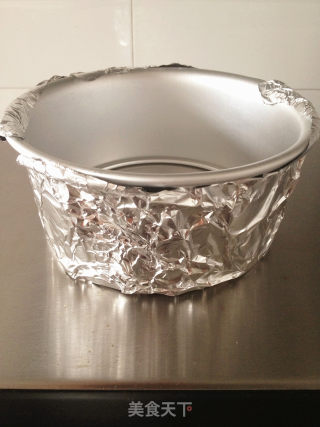
18. If it is a live bottom cake mold, you need to wrap the bottom with tin foil to prevent water from entering during the next step of water bath baking.
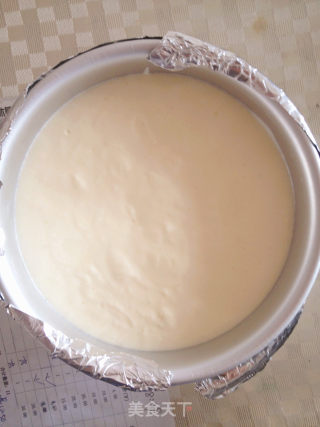
19. Put a layer of butter on the inner wall of the mold, and cover the bottom with greased paper, pour the cake batter into the mold, vigorously shake it a few times, and shake out bubbles.
20. Fill the bakeware with half of the hot water, put the mold in the bakeware, to the penultimate level of the oven, 140 degrees for 60-70 minutes. Until the skin is evenly colored and the cake is completely solidified, it can be out of the oven. The freshly baked cake is relatively fragile. After it is naturally cooled, it is moved to the refrigerator for 4-6 hours, demoulded and cut into pieces for consumption.

Tips: 1. The frozen cheese is not easy to stir evenly, and it needs to be heated and softened by insulating water before it is easy to stir.
2. The egg white of the light cheesecake is not easy to over-spend, otherwise it will expand and crack during baking, and the taste will be rough.
3. The cheese paste must have a thick consistency so that it can be easily mixed with the egg whites, otherwise the egg whites will easily defoam.
4. Water bath method: In order to keep the cheese cake moist and delicate, the water-proof baking method is often used. You can also insert a baking tray in the bottom layer, filled with cold water, insert a baking net in the penultimate layer, and place the cake mold, but always keep water in the baking tray during the baking process.
5. The baked cake does not need to be inverted, and the taste is completely different from ordinary chiffon cake.

 Buy on JD
 Buy on Amazon