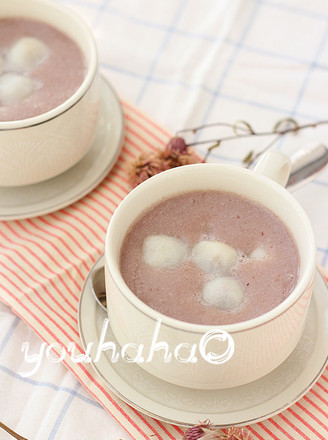
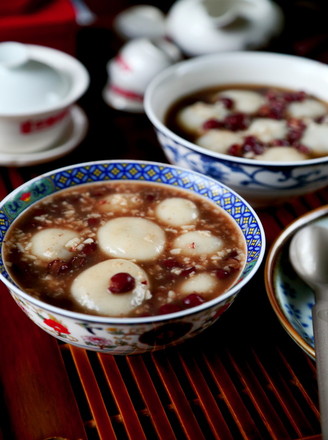
Acacia Red Bean Paste
1. Wash the red beans and soak them in clean water for 12 hours
2. Put the soaked red beans in an electric pressure cooker and add the soaking water. Lay out the beans and insert your index finger into the surface of the beans so that the water covers one knuckle of your finger.
3. Put the lid on the pot, press the button of the bean / tendon
4. Prepare 200g brown sugar
5. Put the brown sugar in the food processor and grind it
6. Brown sugar after grinding
7. Pour out the cooked red beans
8. Use a strainer to remove the red beans and put them in the sieve
9. Crush the red beans with a shovel, the red bean paste will be filtered out of the sieve
10. Red bean paste after sieving
11. Take 3 pieces of cage cloth, soak it with water, stack them together, and put the bean paste into the cage cloth
12. Squeeze the cage cloth hard to squeeze out the water in the bean paste
13. Put the squeezed red bean paste into the container for use
14. Add 10g of butter to a flat-bottomed non-stick pan and melt on low heat
15. Put the red bean paste in a saucepan and stir constantly with a wooden spatula to make the butter and bean paste fully blend
16. Add 1/3 of the brown sugar and continue to fry until the brown sugar and bean paste are fully integrated
17. Add another 10g of butter and continue to stir fry. Add the remaining brown sugar in two batches
18. After all the brown sugar is added, the color of the bean paste will become darker. At this time, there is still more water, so continue to stir and fry
19. Stir-fry until there is resistance to stirring, and the bean paste forms into a dough. Then turn off the heat in a non-stick pan.
20. Put the red bean paste out and let cool, the sweet and delicate red bean paste is made


Tips: 1. Soak the red beans in advance to reduce the cooking time
2. Brown sugar contains a lot of impurities and is easy to agglomerate. I broke it with a cooking machine in advance to facilitate the melting of the brown sugar and reduce the impact of impurity agglomeration on the taste of bean paste.
3. If a delicate taste is required, the red beans must be sieved. If you don’t require it, you can skip this step
4. 3 pieces of cage cloth are used to reduce the loss of bean paste. I use 3 pieces of cage cloth. There is almost no bean paste in the squeezed water.
5. When frying bean paste, corn oil, lard, etc. can also be used, but I prefer butter. The bean paste made has a milky flavor
6. Do not stir-fry the moisture too dry before serving, because the bean paste still has residual heat, and the moisture will continue to evaporate after serving, which will affect the taste of the bean paste
7. In the process of frying, be sure to use a low fire and stir constantly, otherwise it will paste the pot
8. Bean paste can be frozen if you can't finish it at a time, and take it out when you use it
9. Don’t throw away the remaining soup and red bean skin. Add some honey or add some when cooking porridge. It’s good to eat with yogurt.


 Buy on JD
 Buy on Amazon