
Homemade Spicy Cabbage
by Celery
Favorite
Difficulty
Easy
Time
48h
Serving
3
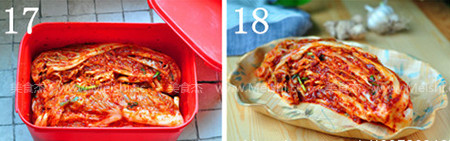
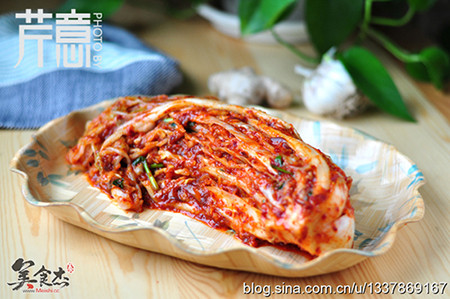
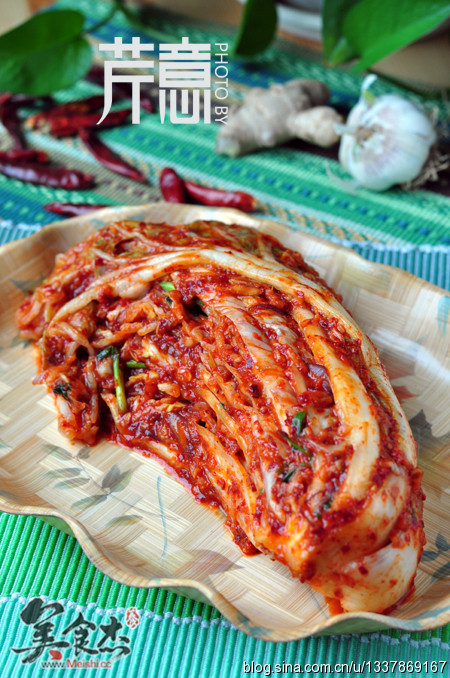
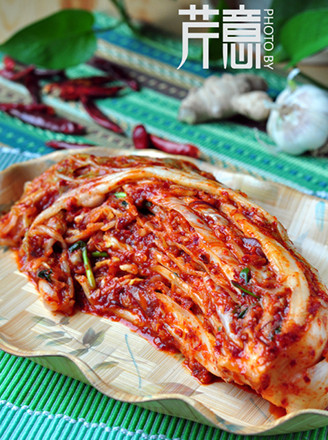
The so-called "Hundred dishes are not as good as cabbage"! Nowadays, it is the season when a large number of northern Chinese cabbage is on the market. It is cheap and delicious! Change the way to eat the ever-eaten cabbage and pickle a pot of red spicy cabbage. It is like a fire in winter, the red fire is warm, and the meal is spicy!
The reason why spicy cabbage is reluctant to label it "Korean" is because it is not an exclusive "Korean food", but a specialty of the Korean ethnic group. Nowadays, most people call it "Korean Spicy Cabbage", probably because they know it and like it through Korean dramas. In fact, even without the introduction of Korean dramas, in northeastern my country and even in any areas where Korean compatriots live, it is a traditional food that every family knows and can make. ——Agree with what I said, raise your hand!
My understanding is that since every family knows how to cook and every family makes, it is definitely not a difficult food to make. There will be a few special seasonings. Fortunately, with sufficient materials and advanced logistics, there are almost no things that you can't buy. If you want to make them at home, it shouldn't be difficult. ——The hard part is whether to make up your mind and do it!
Finding a reliable recipe is the key to whether spicy cabbage is good or not! It seems that Korean compatriots also have different seasonings and practices, and each has its own characteristics in taste; "Hundred One Hundred" on the Internet , A variety of recipes and methods are different, but they are also similar; the subtle differences in the materials determine the small and distinctive flavors. The process of finding a formula has become a process of understanding and experiencing for yourself.
Starting from our own reality, starting from the degree of availability of materials, the most important thing is to appreciate the taste from the material, and to ponder the process from the perception. Finally, I decided to use the recipe of Sun Zhuzhu, a veteran blogger in the food blogging world—easy materials, simple methods, and mellow taste! Most of the condiments are our daily use; only fish sauce, Korean chili powder and Korean shrimp paste are more unique.
Among my existing ingredients, fish sauce and Korean chili powder are available, but Korean shrimp paste is the only thing I have. According to teacher Sun Zhuzhu’s tips, substituting small shrimp skins with light salt water, the effect is also excellent! Others are slightly modified according to our sweeter taste. Friends who are interested and love to eat, you can give it a try.