The Most Affinity Chinese Cabbage--quick Cold Salad
1.
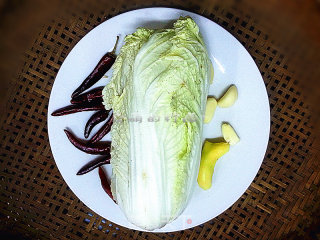
When making pickled Chinese cabbage, don't choose too big one. The middle-sized Chinese cabbage is just crispy and tender. Too big Chinese cabbage; the outer leaves will peel off and discard too much as they are old, causing waste. The leaves of Chinese cabbage that are too small are too tender, so it is difficult to control the time when pickling them. The ones that are easy to pickle are too soft and don't have a crispy texture. Rinse the whole Chinese cabbage and prepare the whole dried red pepper and ginger for later use.
2.
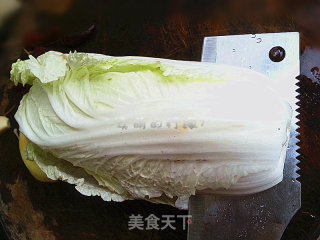
The rinsed Chinese cabbage is spread flat on the cutting board, and cut from the middle of the Chinese cabbage with a sharp kitchen knife.
3.
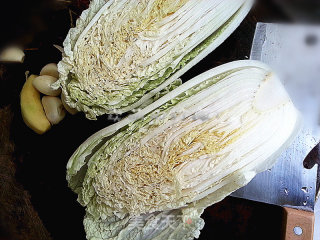
The Chinese cabbage cut from the middle is placed on a cutting board for later use.
4.
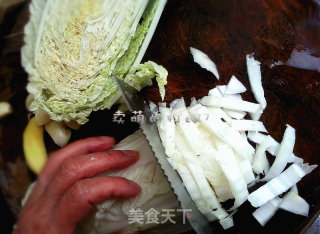
Spread the flat side of half of the Chinese cabbage on the cutting board. Use a knife to cut into long strips about two centimeters wide for use.
5.
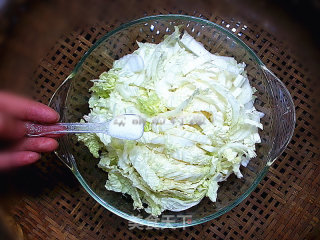
The chopped Chinese cabbage strips are put into a clean special glass container. Add an appropriate amount of salt according to the amount of Chinese cabbage. My glass container is similar to a large soup bowl, and two spoons of salt is enough.
6.
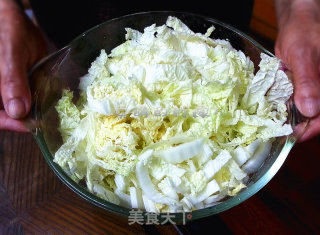
Add salt to the Chinese cabbage, one is to taste, the other is to disinfect with salt, and the third is to make the hard-boiled Chinese cabbage a little softer. After putting the salt in the Chinese cabbage, lift the glass container with both hands and shake it up and down to distribute the salt evenly on the Chinese cabbage.
7.
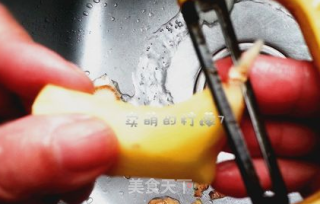
Rinse the ginger and peel off the skin of the ginger. The ginger skin of pickled kimchi is shaved to prevent unhygienic conditions. In fact, the skin of ginger is very nutritious. If you need to keep the ginger skin, soak the ginger in light brine for more than 20 minutes.
8.
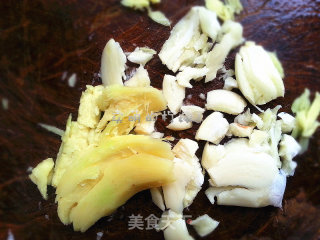
The ginger has been peeled off for use, and the garlic has been peeled for use.
9.
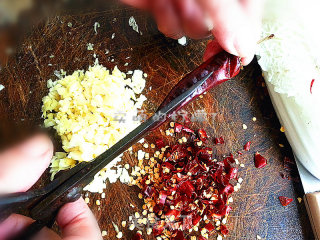
First cut the dried red pepper into sections and set aside, then use a kitchen knife to chop the ginger and garlic into minced pieces, and then chop the dried red chilies into minced chili peppers for later use.
10.
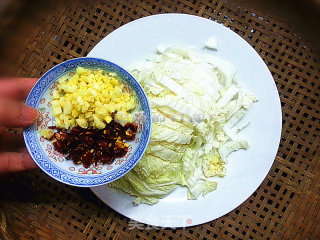
Chinese cabbage and ingredients are all ready.
11.
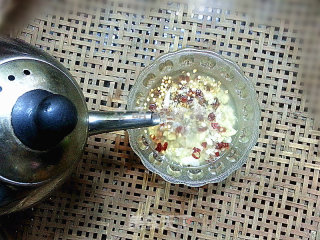
Boil an appropriate amount of purified water with an electric kettle, and quickly pour the boiling purified water into a glass container containing ginger, garlic, and dried red pepper; blanch the juice in the ingredients with boiling water.
12.
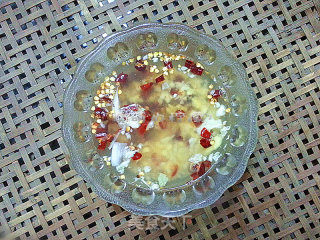
After pouring the boiling water into the ingredients glass container; don't worry; wait a while, you need the boiling water in the ingredients to cool down slowly.
13.
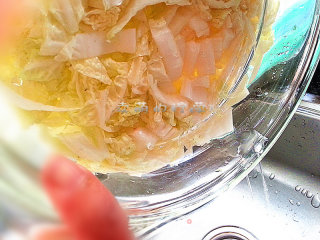
The Chinese cabbage that has been salted for twenty minutes is ready. Press the lid of the glass container in the opposite direction, hold the two handles tightly with both hands, and pour out the excess water that has been marinated.
14.
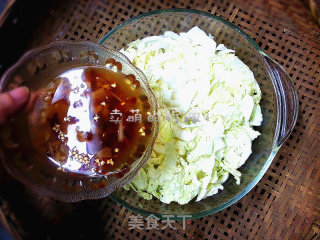
The cooled ingredients juice is slowly poured into the salt and disinfected; the Chinese cabbage has been put into the glass container.
15.
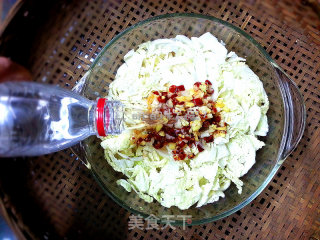
Prepare a bottle of 550ML of purified water, and slowly pour it into a glass container containing Chinese cabbage and ingredients; a bottle of purified water just submerged the Chinese cabbage.
16.
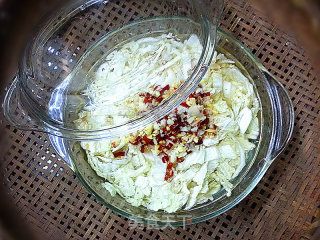
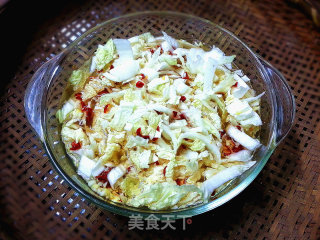
Put the lid of the glass container on and wait for a while.
17.
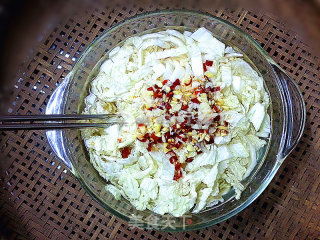
Uncover the lid of the glass container, pour pure water into the Chinese cabbage and leave it for a while, the flavor of the seasoning has penetrated into the Chinese cabbage. Stir the ingredients of Chinese cabbage evenly with special non-oily metal chopsticks.
18.
The well-stirred Chinese cabbage is set aside for a while.
19.
The key to pickling cold kimchi is to have a good sealed environment. If making this cold kimchi has a big advantage in the north, in winter, there is heating in the north and it can be kept at a constant temperature. In the south, only air-conditioning can be used, which can be hot and cold. Holding the stove to eat this cold kimchi in winter is particularly refreshing. However, there is not much difference between the spring and autumn seasons in the north and south, and it is also the best time to make cold kimchi. In the four seasons, the summer is the most difficult to grasp the temperature, especially when the temperature in the south is the highest, it needs to be grasped by experience.

20.
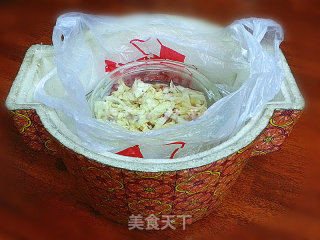
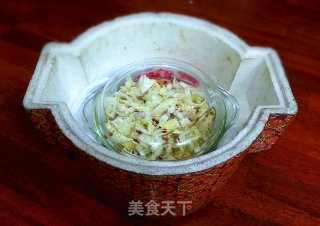
This is a foamed airtight container. If you don't have the same container, it doesn't matter. In the earliest days, remember that the elders used thick cotton quilts to keep the temperature of pickled kimchi. The cold kimchi I make needs a constant temperature environment, and the temperature of the pickled Chinese cabbage must not fluctuate too much, so the Chinese cabbage will "catch a cold" and spoil. Keep it in an environment of 28 to 35 degrees Celsius for fermentation. Put the covered glass container in an ordinary supermarket plastic bag, tie the mouth of the bag tightly, and put it into a foamed airtight container.
21.
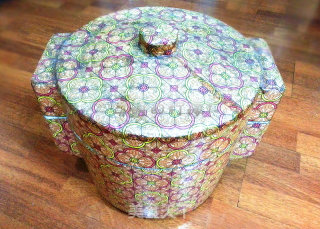
Cover the lid of the foam-sealed container and make cold kimchi. Be sure to wash it well. If it is not cleaned, eating it will cause intestinal infections.
22.
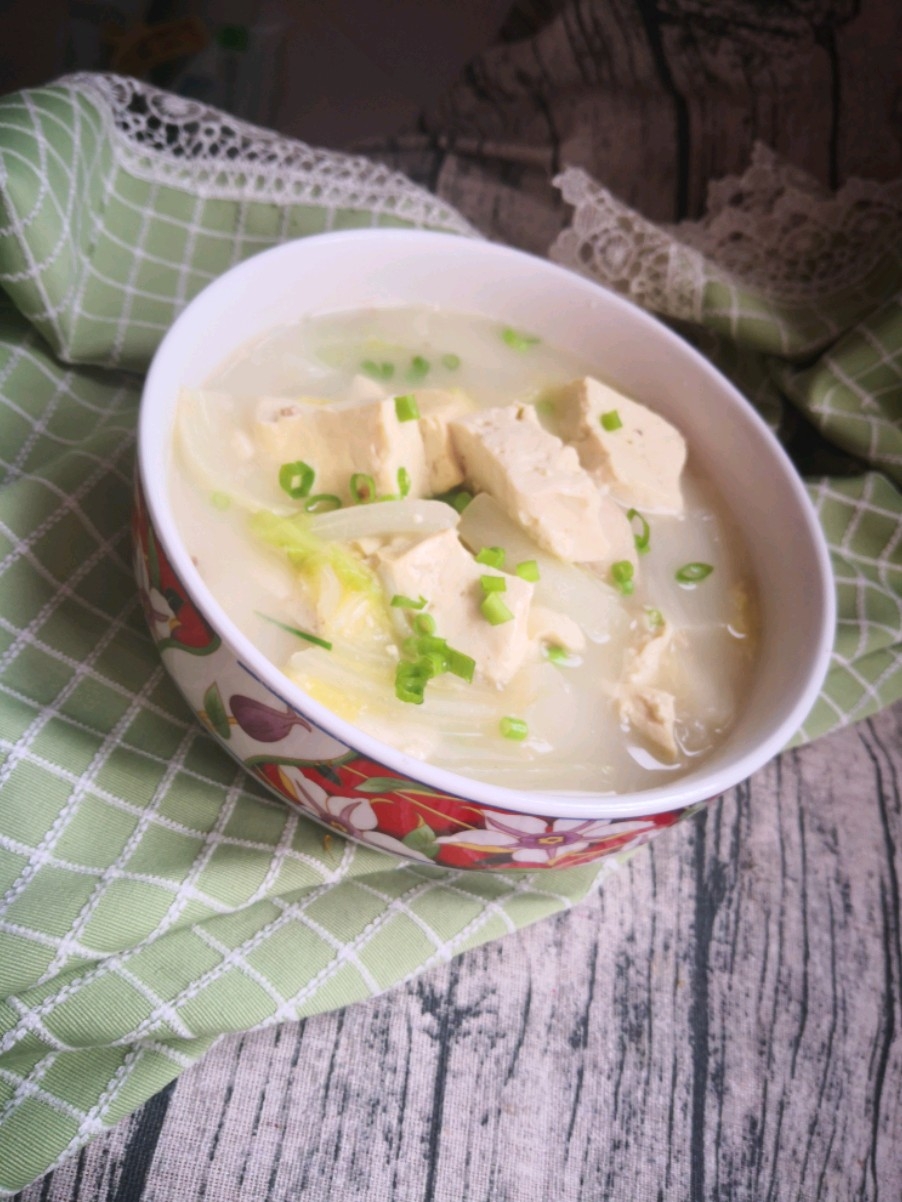
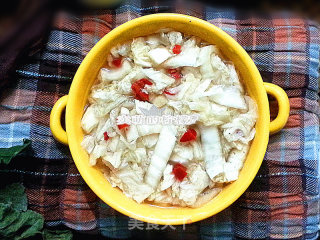
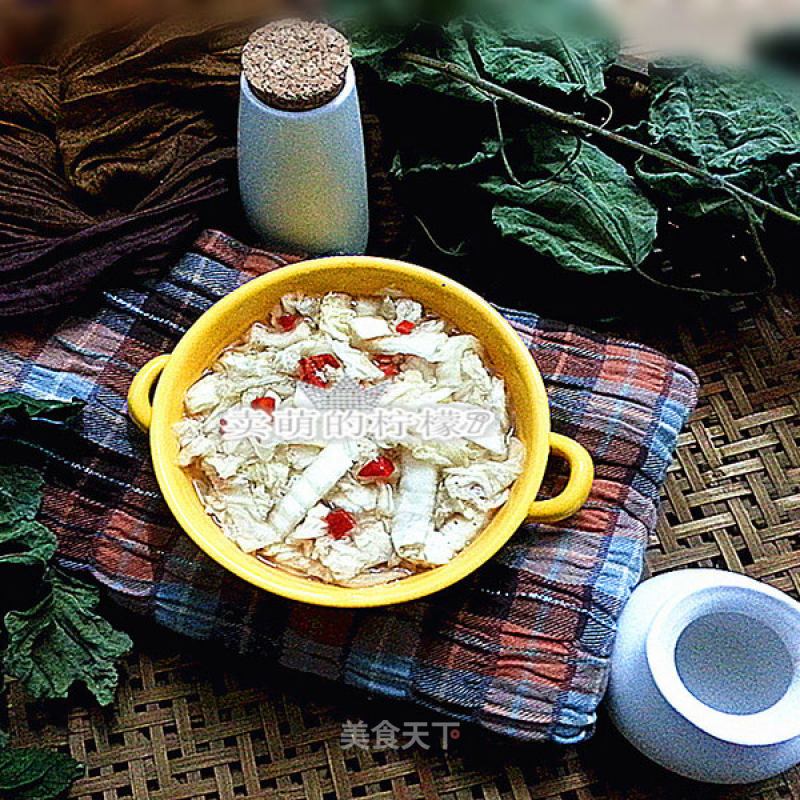
The cold kimchi marinade is finished. This cold kimchi can be made all year round, especially on special days for women, when the mouth is tasteless, it is especially appetizing to eat a little cold kimchi. Except for the cold foods you can't eat these days, you can put cold kimchi in the refrigerator. It will taste crisp and raw with the sweetness of Chinese cabbage itself, which is very tasteful. The iced cold kimchi water is also delicious. Kimchi water and kimchi have the effect of weight loss and weight loss, and can also regulate the body's beneficial flora. Pickled cold kimchi in a glass container; you will not eat it all at once; do not eat it directly with chopsticks, as this will contaminate the whole bowl of Chinese cabbage and make the Chinese cabbage soft and sour. It can be packed in a fresh-keeping box; put it in the refrigerator and take out some of it with special clean chopsticks when eating; be careful not to get raw water in it. Cold kimchi has different periods of acidity in different periods. You must accurately grasp the time. If you can't remember, you can paste the start and end time on the lid to effectively grasp the taste of cold kimchi. Is it not complicated, the materials are easy to find, and the price is cheap. Such a distinctive dish appeared on the table, but an appetizer before the meal! how about it? Don't give it a try, please mention it if you have any questions! Just leave it in the comments, I will answer when I see it~~~
Tips:
[Selling cute lemon 7] Warm reminder:
(1) The container for soaking Chinese cabbage should be placed in a place with a constant temperature; an environment of 28 to 35 degrees Celsius is suitable.
(2) When eating soaked Chinese cabbage, pay attention to keeping it clean and hygienic. It is necessary to prevent the grease and dirt from being mixed into the glass container, which will make the Chinese cabbage smelly.
(3) Do not stain glass containers and chopsticks with oil. It is best to prepare special ones; if stained with oil, flowers will grow, and a serious bowl of Chinese cabbage will rot.
(4) The glass container must be sealed well, and the lid should not be opened midway.
(5) Pure water must be used for the cold kimchi water, because pure water has no precipitation, and our kimchi water can be drunk.
(6) Everyone's hands are different, and the taste of kimchi made is different. Just like my mother said that some people's hands are "stinky hands", as long as the kimchi water in a jar of kimchi is used, the kimchi water is discarded. If this is the case, wear disposable gloves to solve it.

 Buy on JD
 Buy on Amazon