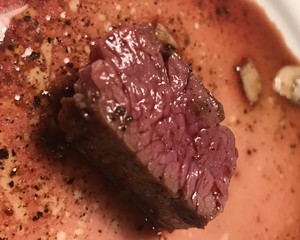
Cooking A Good Steak, Everything You Need to Know
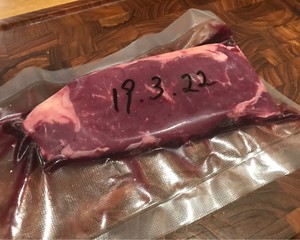
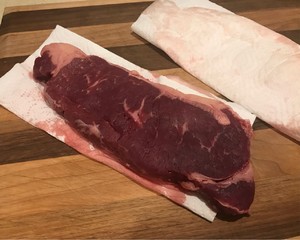
1. Take this grass-fed sirloin steak as an example. Half a month ago, I bought a whole sirloin from the seller. This is a cut of it. After cutting it out, I vacuum packaged it directly and kept it in the refrigerator (note that it was not frozen) for more than half a month. I'm still used to bringing the steak to room temperature before frying it, about 20 minutes, and let it get close to room temperature. Although some people have done experiments, it is said that the rewarming of the steaks taken out of the refrigerator has nothing to do with the final frying effect, but in my experience, it is still easier to control the temperature of the rewarmed steaks during the frying process, while the latter It is the core element of grilling steak, and it is also an important part to be explained in the follow-up of this article. So, if you are not in a hurry, try to rewarm your steak.

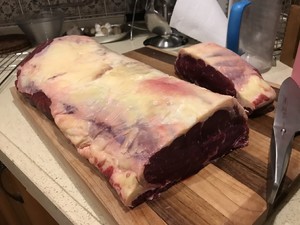
2. This is the whole sirloin at that time. When I brought it, it was frozen. I cut out a few 3cm-thick steaks (most of the rest are cooked and not discussed in this article), sealed in a vacuum bag, and refrigerated in the refrigerator. It has not been frozen again. Therefore, I can think that today’s steak has only been frozen once from slaughter to entrance. It's quite ideal.
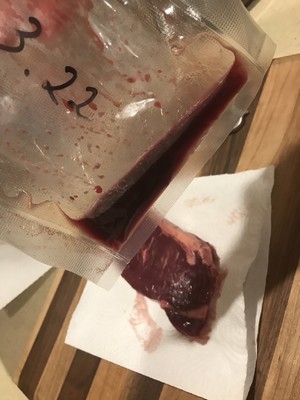
3. Now we cut the bag and take out the steak. It can be seen that after half a month, these red liquids appeared in the bag. It is necessary to talk about this issue. Some people think that this is blood, blood flowing out of the blood vessels of beef, and some even say that blood is not let out when slaughtering livestock abroad, so the blood flows out of the blood vessels after thawing. This is completely wrong. First of all, the blood of any animal will coagulate without the use of anticoagulants, and there is no situation that it will flow out naturally. The red fluid is tissue fluid and myoglobin. For all frozen meat, the water in the tissues will form ice crystals when frozen. These ice crystals will expand when frozen and pierce the muscle cell membrane. Muscle cells contain a large amount of myoglobin, which contains iron, so it is red. After thawing, these ice crystals melt into water again, and the cell fluid and myoglobin in the punctured muscle cells flow out, which is the red liquid we see. Note that steaks are "juicy", which is actually these tissue fluids. So we ask to minimize the loss of these liquids. Try not to freeze the meat, so that the cells retain more moisture. The more frozen the meat, the less tender and juicy. Moreover, the more times of freezing, the more obvious this disadvantage. Therefore, avoid freezing steaks repeatedly. The best is of course cold meat, that is, from slaughter to cooking, it has not been frozen during the period. For the imported steaks eaten in China, most of the imported meat distributors are imported frozen meat, except for individual distributors with large and stable sales that can import cold meat from abroad and sell it as soon as possible. Then the meat has been frozen at least once before it reaches our personal hands. If the distributor has thawed or repeatedly frozen before selling, the loss of meat quality and moisture will be even more serious. Therefore, after we buy steaks, we must minimize the number of freezing times. Generally speaking, the thawed beef is vacuum-packaged and placed in the refrigerator freezer for 2-3 weeks. There is no problem, and this process is actually a "wet maturation" process. In fact, whether it is wet or dry maturing (dry maturing is not within the scope of today's discussion, see my other article), it is the same, the less the number of freezing, the better.
4. Take out the steak from the bag, be sure to wipe off the moisture on the surface of the steak, this step is very important. The attractive color and aroma of the steak is due to the famous Maillard Reaction (Maillard Reaction) that occurs under the action of high temperature on the protein and reducing sugar on the surface of the steak. The most basic reaction condition is high temperature. This temperature needs to reach 100 to 180 degrees. And the temperature rise should be fast, skip the period from room temperature to 100 degrees as soon as possible (the taste and the changes to the meat quality produced in this temperature range are not what we need), and it is the Maillard reaction we want to reach 100 degrees. If there is a lot of water on the surface of the steak, water, as a material with a large heat capacity, will absorb a lot of heat even if it is a little bit (the water will only boil at 100 degrees at an instant), which will increase the oil temperature on the surface of the beef when the steak is fried. Decrease, delay this "room temperature ~ 100 degrees" heating process, affect the generation of Maillard reaction. So, be sure, be sure, wipe off the moisture on the surface of the steak. Be willing to use a lot of kitchen paper.
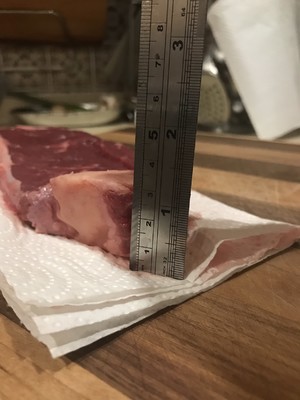
5. Let me talk about the thickness of the steak. In my opinion, steaks smaller than 2.5cm can only be called beef slices. As mentioned earlier, the aroma and color pursued by fried steak come from Maillard reaction. The Maillard reaction fully depends on the temperature and the time of action, that is, it must have a certain temperature and act for a certain time. Therefore, if the steak is too thin, it is easy to make it fully cooked (unless what you want to eat is well done) while ensuring the sufficiency of the Maillard reaction, or to ensure that the steak is half to half cooked. It takes a short time to fry. At this time, the Maillard reaction on the surface of the steak is not sufficient. When it is out of the pan, the surface of the steak is still grayish white (the color of fried pork) instead of browned. In both cases, we do not want to encounter, so we need a certain thickness of steak not just for beauty (zhuang) view (bi). To get a perfect steak, you must have a thick enough steak. I usually divide the steak by 3 to 4 cm. If it is filet (loin), because its width is small, it needs to be thicker according to the average person's food intake. Note, however, that for thick steaks, it is more difficult to control the temperature during cooking, as detailed below.
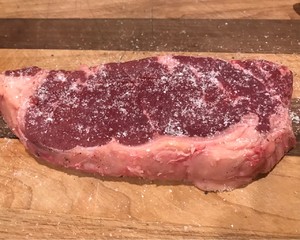
6. Let's talk about the seasoning of the steak. Good beef needs to maintain its original beefy flavor (beefy), so don't try to marinate it. Salt and black pepper are enough. Other flavoring measures, including butter, garlic, and herbs (rosemary and thyme), are personal preferences and are not prepared before frying. Before frying, just sprinkle with salt and black pepper! To what extent is the salt sprinkled? This can’t be said accurately. It depends on the size of the grains of your salt. The larger the grains, the less salty the same volume. I used kosher salt in the picture above. Sprinkle it to this level. It's a bit like the road when it just snowed. In general, the edible salt in domestic supermarkets has finer grains than mine, which is saltier, so it can be sprinkled a little less than mine. Of course, if you use larger grains of salt, you will have more than mine.
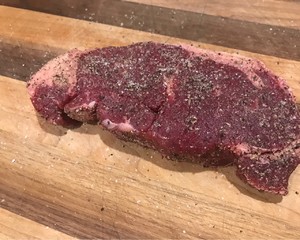
7. Then there is black pepper. Do not use the finished black pepper, it is not fragrant at all. Please use whole black pepper and grind it directly with a grinding bottle. Note that whether it is salt or black pepper mentioned above, it must be sprinkled on both sides, not just one side.
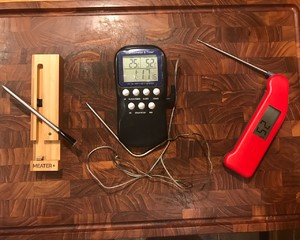
8. For the five maturity of steak: rare, medium rare, medium, medium well, well done. Some people control the frying time by experience, while others rely on the feel (compare the hardness of the thenar muscle of the thumb under different gestures, it looks cool). It cannot be said to be wrong, but the reliability is not good. The only reliable standard is the "core temperature", which is the temperature at the center of the steak. In order to achieve the same inner core temperature, different steak thickness, different oil temperature, different initial steak temperature, and different meat quality, the cooking time is different. Therefore, the only reliable monitoring method is to directly measure the inner core. temperature. This requires a thermometer! A thermometer is a necessary equipment for a steak expert. The picture shows three types of thermometers. Let’s start with the wired real-time thermometer in the middle, which is the cheapest and is suitable for roasting in the oven. Insert the probe into the meat of the oven and connect the wire to the outside. Use the panel to monitor the temperature of the meat’s inner core. The disadvantage is that the temperature detection is slow. , It is only suitable for the situation where the probe is always in the meat, and the wired method also affects the turning when the steak is fried in the pan. The red one on the right is an instantaneous thermometer, which is characterized by fast temperature measurement. The accurate temperature can be measured as soon as the meat is inserted. Therefore, it is suitable for measuring the fried meat in the pan. Hold the thermometer to insert, count, and pull out. The whole process is completed in a few seconds. , Won’t burn your hands, but this one can’t be put in the oven. The one on the far left, the wireless thermometer, is fully inserted into the meat, and the Bluetooth is connected to the mobile phone. Check the temperature on the mobile phone. It can be used in the oven or in the frying pan. Because there is no wire, it will not affect the steak turning. It's very convenient.
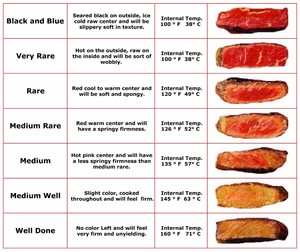
9. This is the core temperature comparison table of various maturity levels for reference.
10. Let's talk about oil. Some people say that butter is used for frying steak, some people say that olive oil is used, and some people say that you don't need to add oil for frying steak. They are not very accurate. First of all, fried steak involves butter, because butter is very fragrant and can increase the aroma of steak. Again, butter makes everything better. But there is a problem with butter, that is, the smoke point (the temperature at which it is burnt) is very low. When the temperature is high, it is easy to emit black smoke or even burnt, which is not only ugly, but also affects the flavor and is unhealthy. Olive oil has a lower smoke point and does not give the steak an extra flavor, so it is not suitable for frying steak. So as for the argument that no oil is used, it is actually hoped to use the fat oozing out of the steak for frying. This method is more suitable for beef with high fat content like Wagyu beef, and if it is grass-fed beef, it is very lean and does not have much fat. If you do this, it will fry due to insufficient oil. So, we can use butter! The smoke point of butter is not much higher than butter, and it is not easy to zoom at high temperatures. In short, for general western-style thick-cut steaks, I still recommend adding a small amount of oil, and I recommend using ordinary stir-frying oil or pure butter.
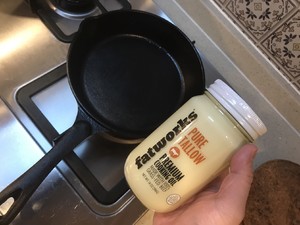
11. Mine is pure butter, 100% grass-fed butter refined, specially used for frying steaks, maintaining the unique beef flavor of grass-fed beef. I use it really well. But it's not necessary, if you can't buy it, you don't have to
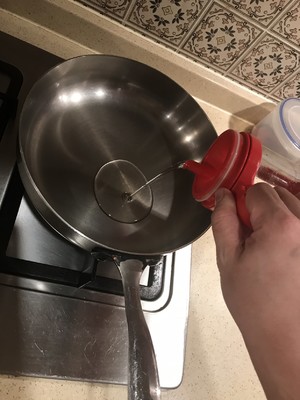
12. Start the pan, add oil, heat, and heat until the oil smokes, and put the steak in. The purpose of this operation is because we require the surface of the steak to quickly heat up to more than 100 degrees to obtain a better Maillard reaction. So before the steak is put in the pot, use a high heat to let the oil reach the smoke point. Adding the steak at this time can make the surface of the steak reach more than 100 degrees in a few seconds, completing the Maillard reaction. But the common situation is that the Maillard reaction has been in place, but the inner core temperature has not yet reached, especially in some thick-cut steaks. If you keep cooking on high heat, when the temperature of the steak's inner core reaches, the surface will be charred. Therefore, when you observe that the surface reaches the perfect Maillard reaction, you can change the low heat to fry and fry slowly, while watching the thermometer and slowly waiting for the inner core temperature to reach the standard. Or for steaks with a thickness of more than 4cm, I would suggest to put the steak and the pot directly into the oven at 180 to 200 degrees at this time (so choose an all-metal steak frying pan without wood or plastic handles) to avoid the high temperature and continue heating directly On the surface of the steak, the even temperature in the oven can slowly heat the steak until the inner core temperature reaches the standard.
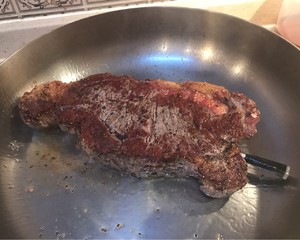
13. Do you need to turn the steak into the pot? This is not so mysterious at all. Turning the steak in the pot can be very casual, not just one turn as some people say. Note, however, that you should allow the fried side to reach a sufficient Maillard response at one time before turning it over for the first time. The same is true for the second side. After reaching the perfect Maillard reaction on both sides, change the low fire as we said above, and you can flip it freely. Frequent turning can make the steak evenly heated in the subsequent time, making it easier to cook evenly. For thick steaks, this is even more necessary. Note that the surrounding façades also need to be fried, so you should use tongs to cook steaks instead of cooking shovel. Clamp the steak with tongs, stand it up and fry the surrounding facades, especially the parts with fatty meat around.
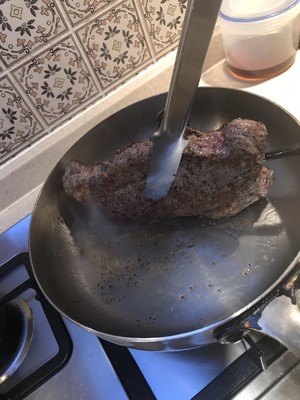
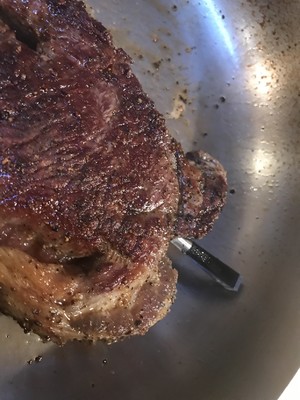
14. At this time, it was almost in the state before being out of the pot, with a perfect surface Maillard reaction. In fact, this is a critical moment, and the timing of the pan is very important. For example, if we need to fry a medium rare steak, the temperature of the inner core should be controlled to be 52-55 degrees. After the steak is out of the pan, although it leaves the heat source, the surface temperature will continue to conduct to the inside, causing the inner core temperature to continue. Increase by 5 to 8 degrees. Therefore, if you want a steak with an inner core temperature of 55 degrees, then it will be out of the pan when the inner core temperature reaches about 48 degrees. If you really wait for it to be out of the pan at 55 degrees, then you are likely to get a piece of inner core 60 in the end. Well done. Therefore, with the use of a thermometer, it can be very standardized and repeatable. However, it still needs some experience to grasp the timing of the pan. This is related to the surface temperature of the steak (that is, the oil temperature) and the volume of the steak at that time. It is difficult to accurately predict how much the inner core of a steak will rise to. Without him, only hands are familiar! Of course, if you want to control the temperature more precisely, it would be sous vide slow-cooking in a low-temperature water bath. Simply put, sous vide is to use the target temperature to go to the water bath steak. The whole steak is fixed at this temperature for a certain period of time to achieve precise control of the maturity of the beef. Finally, the steak is taken out and the surface is treated with high temperature to complete the Maillard reaction. Of course, sous vide itself has other effects on the change of meat quality, so I won't go into details here.
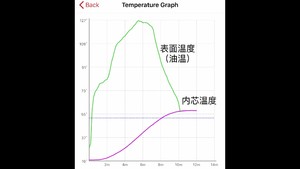
15. This picture was recorded by my wireless thermometer when the steak was frying. It can be seen that the temperature of the inner core is gradually rising. The external surface temperature (basically the oil temperature) rose to over 100 degrees in a short period of time, and the highest was around 130 degrees. The Maillard reaction was completed well, and then the heat was turned to a small fire and heated for a while. The whole process takes about 10 minutes.
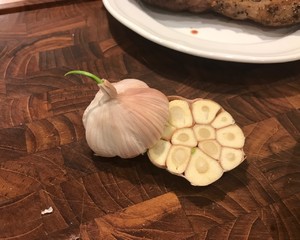
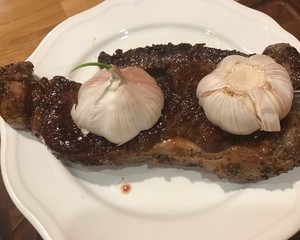
16. Out of the pot does not mean the end of cooking, the following is a very important step: rest. This process has at least three goals. First, a lot of juice ran out of the muscle fiber during the beef frying process. If you cut it as soon as it is out of the pan, a lot of gravy will leak out and the steak will not be juicy. Second, the temperature of the beef inner core will continue to rise at this time. It is best to keep the thermometer inserted so that you can see the change in the inner core temperature. Of course, the steak is out of the heat source at this time. If you are really late, then you can only watch the temperature of the steak soar all the way, exceeding your expectations, and eventually overcooked. Third, this process is a good opportunity for seasoning. Remember the butter and garlic mentioned earlier? Butter is not suitable for frying steaks, because butter is easy to paste, and garlic will denature at high temperatures, not only does the garlic have no fragrance, but also becomes bitter. Therefore, the best time to season these two things is during the rest process. The classic method is to take two small pieces of butter and place them on the steak. Chop the garlic in two and put it on the butter. While the butter is slowly melting, spread the butter over the entire steak with garlic. Let the aroma of garlic and butter penetrate the steak.
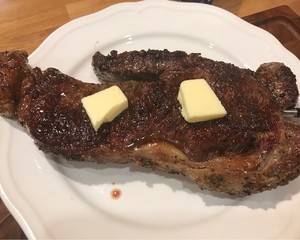
17. This is all two garlic.
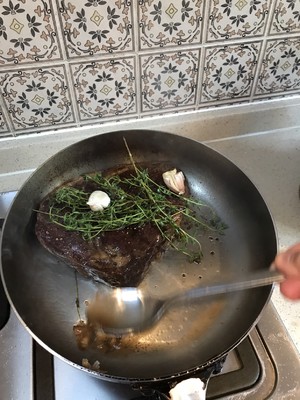
18. Spread the butter with garlic to complete the seasoning process. One thing to add here: As for herbs such as rosemary or thyme, I personally don’t think it is necessary. If you really like the taste of vanilla, the time to add vanilla flavoring should be about 1 minute before the steak is out of the pot, too early. Adding will fry the herbs, and the herbs should be placed on the steak instead of frying in oil. Use a spoon to continuously pour the hot oil in the pan onto the herbs on the steak.
19. That's it. Within 2 minutes before serving, put garlic and herbs on top of the steak and pour it with hot oil. However, I basically don't use this method now, because I don't think there is any special improvement. On the contrary, I tend to lose sight of the other and miss the best time to make the pot.
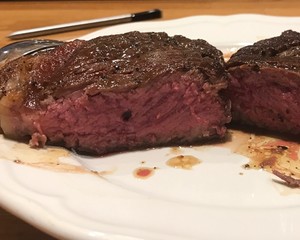
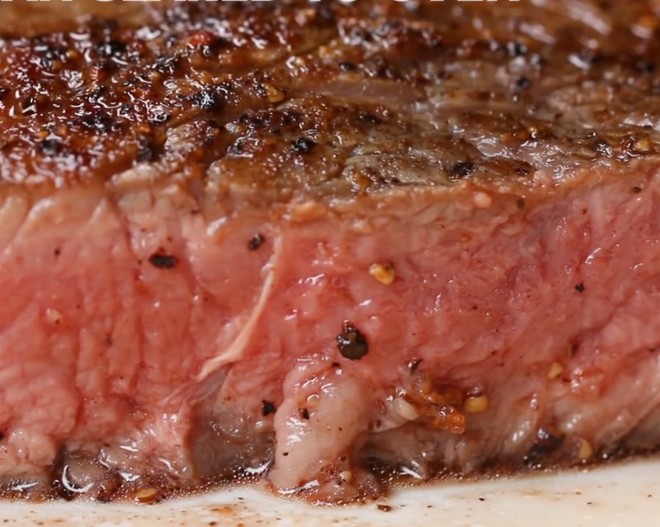
20. This steak rests for about 5 minutes. Then we cut it open. I control it according to the inner core temperature of 57 degrees. Finally, the thermometer showed that the peak temperature was 58 degrees. It should be around medium to medium rare, which is basically considered to be 50% ripe in China. You can see that the surface is browned Maillard reaction, the inside is uniform pink, and there is no juice flowing out, indicating that the rest is very good.
21. Finally, enjoy! I wish you a perfect steak.

 Buy on JD
 Buy on Amazon