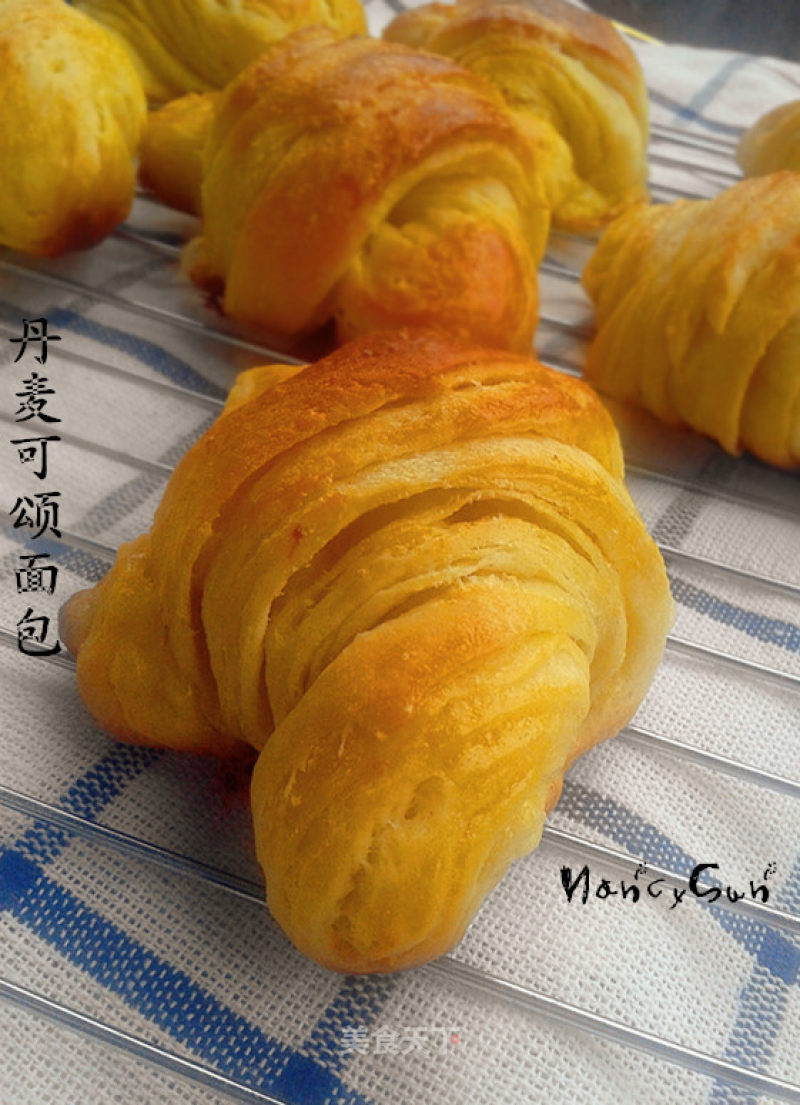
Croissant Bread
1. Knead the dough ingredients into a dough, knead until the dough becomes gluten, and when the dough is stretched, a film will be formed (just barely formed), and there is no need to go to the expansion stage. Ferment at room temperature for one hour (about 25 degrees), and it will grow to twice the size. Use your fingers to stick the flour and press it once and not to rebound.
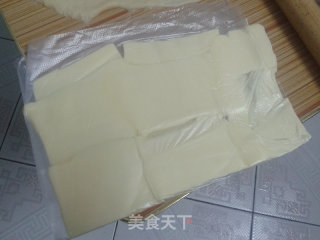
2. Cut the wrapped butter into slices, put it flat in a fresh-keeping bag, and roll it into a whole piece with a rolling pin. If the butter becomes soft during rolling, put it in the refrigerator and refrigerate for a while before rolling. Roll it out and put it in the refrigerator for later use.
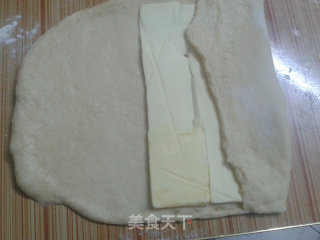
3. The fermented dough is kneaded into bubbles, placed in the refrigerator to relax for 20 minutes, and rolled into a rectangular shape, 2.5 times the length of the butter slice. Spread the butter slices in the middle, and cover the left and right dough slices in the middle.
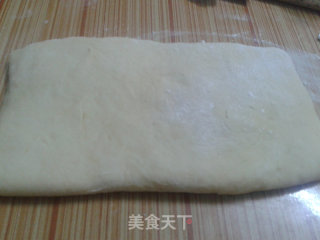
4. After the cap is closed, close the mouth tightly, the same as the upper and lower mouths, carefully discharge the bubbles by hand, and press tightly. Turn the dough over, closing it down. And rotate 90 degrees to put it horizontally.
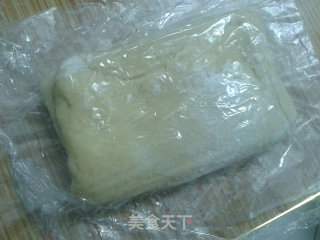
5. Roll it out into a rectangle again, and then divide the whole dough into three parts as before, fold the left and right sides from one third to the middle, and turn it over. This is the first 30% discount. Wrap it in plastic wrap and refrigerate for 20 minutes. Just repeat this step two more times, each time you have to chill and relax for 20 minutes.
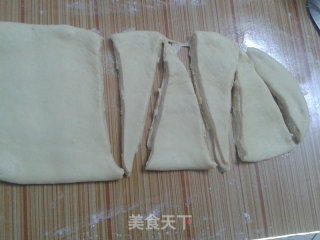
6. After three times, refrigerate it, roll it into a rectangle with a thickness of 0.4cm and a width of 11cm, and cut it into an isosceles triangle with a base of 5cm and a height of 11cm with a knife.
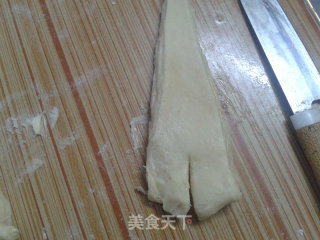
7. Cut a small knife in the middle of the bottom edge of the triangle.
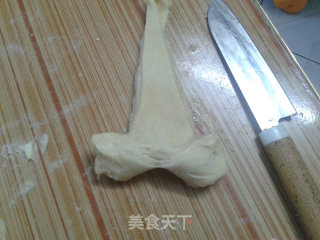
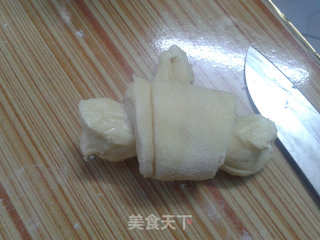
8. Flip up the cut bottom edge and roll it up.
9. When the roll is almost done, brush a layer of egg liquid on the top tip to make it easier to roll up completely.
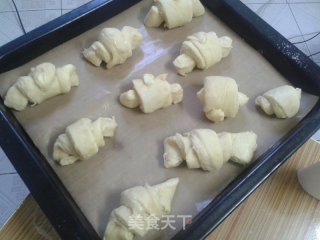
10. Put the rolled dough in the baking tray, leaving a little space between each. Under the conditions of 38 degrees and 85% humidity, the final fermentation will be twice as large (about 40 minutes to 1 hour, the fermentation function of the oven is sufficient), and the surface will be brushed with egg liquid after fermentation.
11. Preheat the oven to 200 degrees, heat the middle layer up and down, bake for about 10 minutes, and the surface is golden.


Tips: 1. The fermentation time varies according to the room temperature.
2. When cutting the dough, use a sharp knife, or the layers of the dough will stick together and not break easily.
3. It is normal for a little butter to flow out when baking bread. If it flows too much, it means that the dough has failed in making the dough, the butter is not covered, the layering is uneven or the layering is thick.
4. When the dough is fermented for the first time, you can also refrigerate and ferment for 6-12 hours without at room temperature, so that the quality of the dough is better. The temperature is 4 degrees.
5. Every 20 minutes of relaxation must be done so that the dough can be rolled out enough. Does not retract.
6. When making noodles, water should not be added at one time, because each type of flour has different water absorption properties.
7. After the dough is fermented, it should not be left unused for a long time, but should be made as soon as possible.

 Buy on JD
 Buy on Amazon