Dragon Fruit Pansy Roll
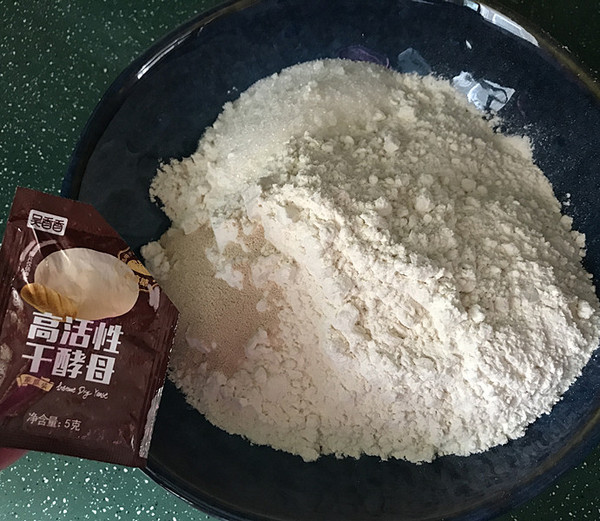
1. Pour flour, sugar and yeast into a bowl, mix well
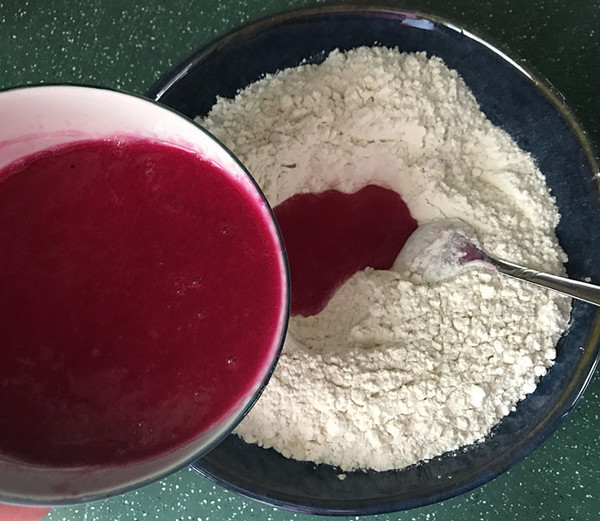
2. Use a knife to remove the outer crust of the red dragon fruit peel and put it in a food processor. Add a little water to make a dragon fruit peel juice; add it to the flour and mix well. Note that the dough should not be too soft, otherwise it will affect the subsequent shaping
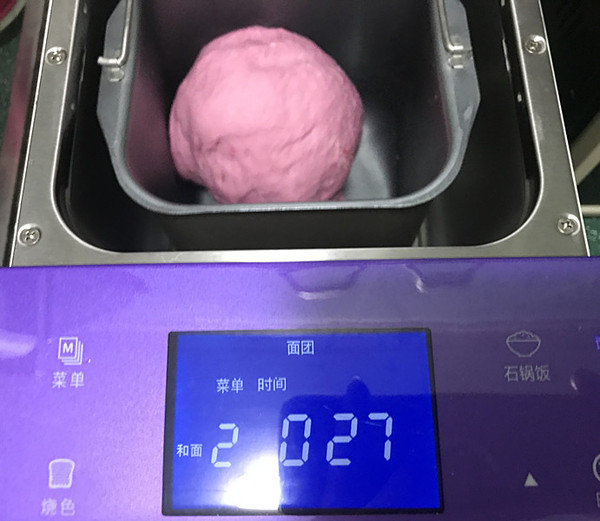
3. Then put it in the bread machine to turn on the dough, knead it and leave it at room temperature naturally; if it's cold, you can use the bread machine's fermentation program to help hair
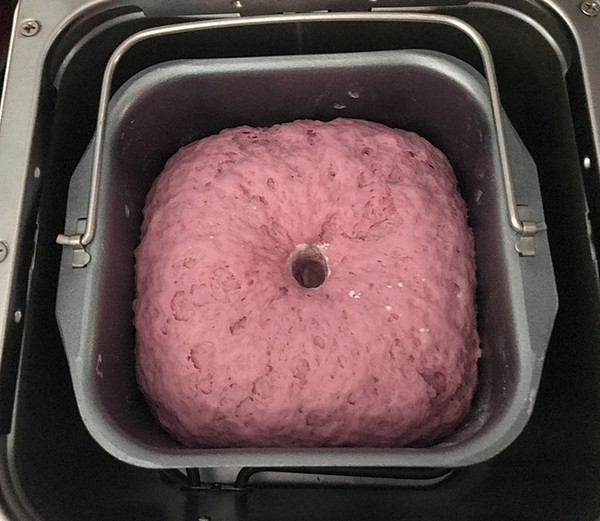
4. When fermented to twice the size, stick some flour with your fingers to poke a hole in the middle of the dough. If it does not quickly shrink and collapse, it means that the fermentation is in place.
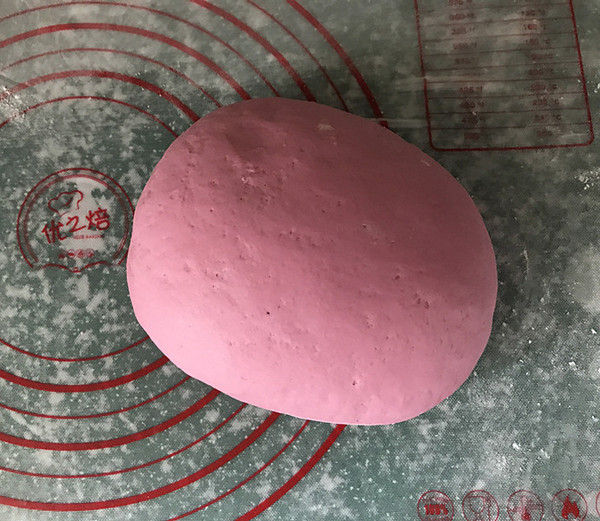
5. Sprinkle a little dry powder on the chopping board and take out the dough, knead repeatedly and then knead until smooth
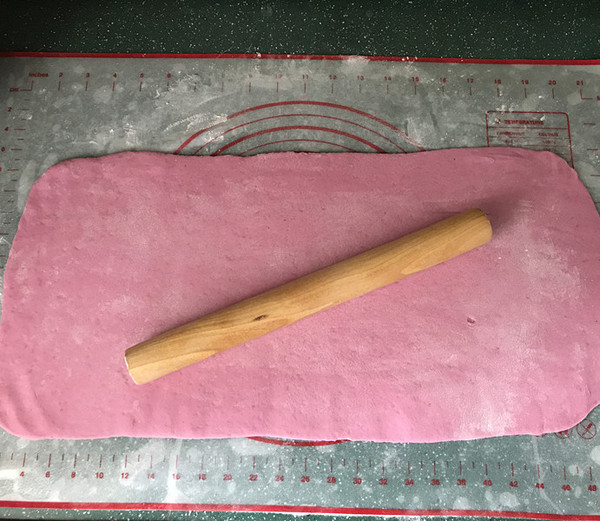
6. Divide into two parts, take one of the small pieces of dough, and roll it with a rolling pin into rectangular pieces of uniform thickness
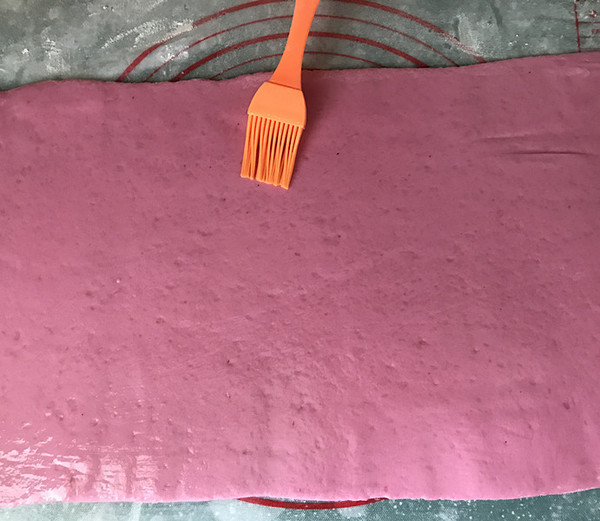
7. Brush the surface with cooking oil, then gently roll the dough into strips from bottom to top
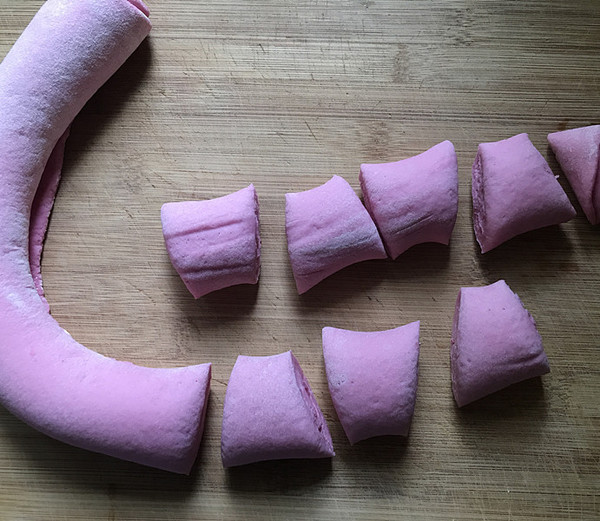
8. Then move it to the chopping board and use a knife to cut the trapezoid dough of even size
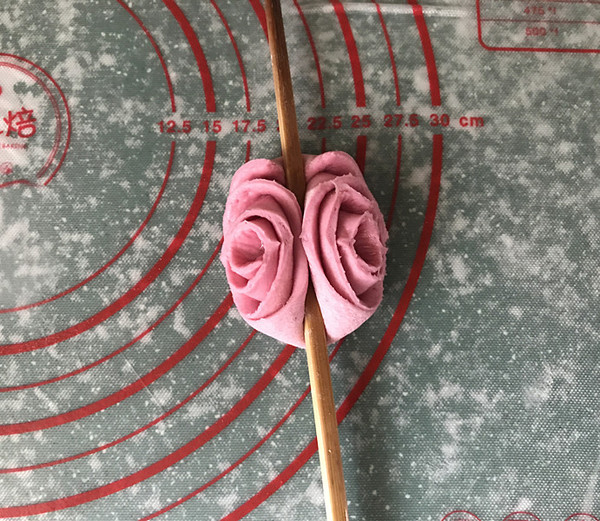
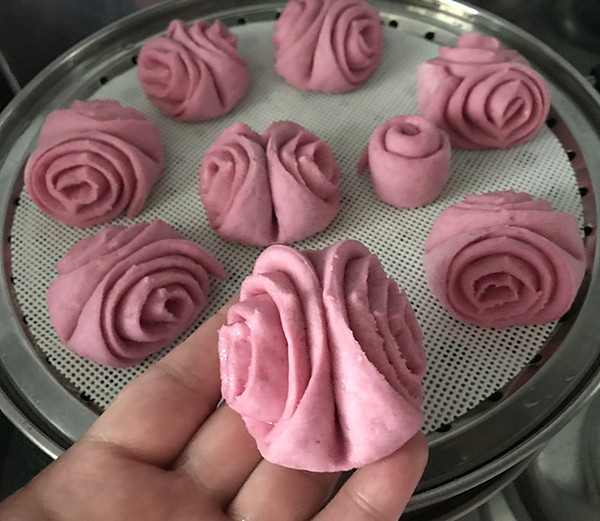
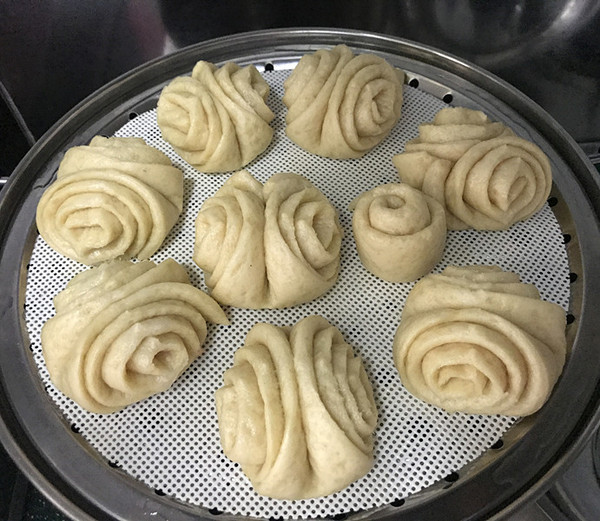
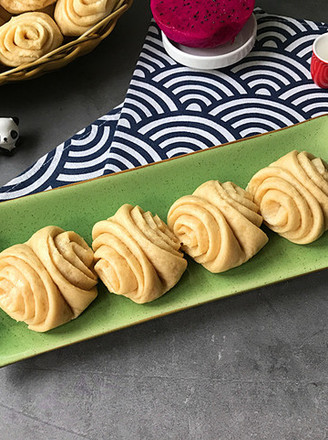
9. Take a small piece of dough and stand it up, with the small end up, press it in the middle with chopsticks, and the shape of a pansy roll is finished. Isn’t it beautiful and simple?
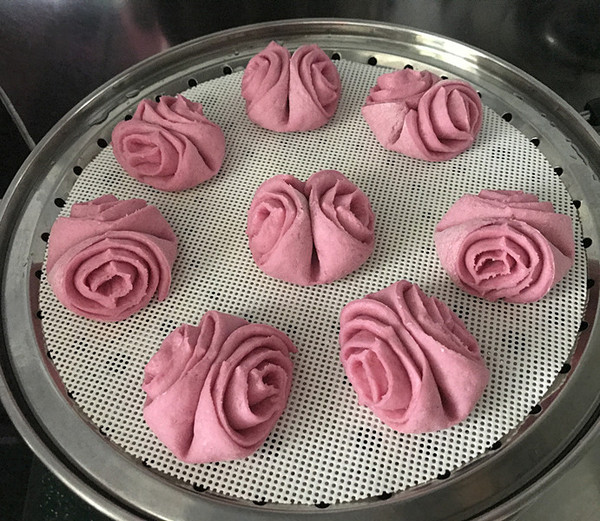
10. Add a suitable amount of cold water to the steamer, put the finished Hanami on the steaming cloth, close the lid and let it rise for about 15-20 minutes; it’s cold, so you need to extend the hairpin
11. When the volume of the Hanamaki is obviously larger, picking up a Hanamaki in the hand feels light and light, it means that the hair is in place.
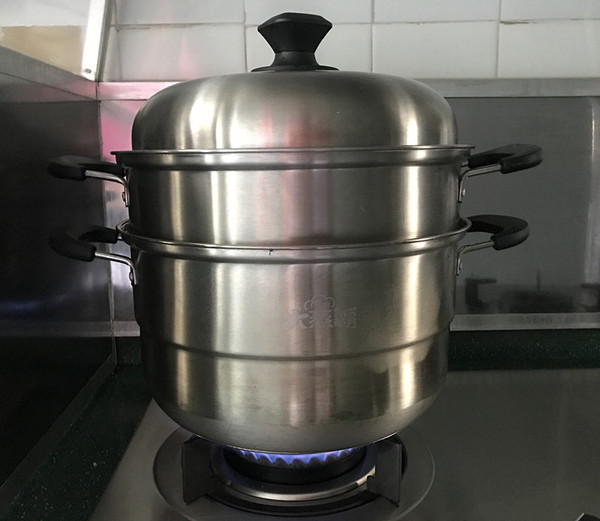
12. Turn on high heat and steam, then steam for about 12~15 minutes after SAIC
13. After turning off the heat, let it simmer for 3 minutes before opening the lid
Tips: 1. You can also directly use dragon fruit pulp to make juice and noodles
2. When mixing the noodles, the liquid should be added in stages, and the dough should not be too soft, otherwise it will affect the subsequent shaping
3. However, the pigment will change color when it encounters high temperature, so it will be purple hanami during shaping, and the steamed product will become yellow hanami.

 Buy on JD
 Buy on Amazon