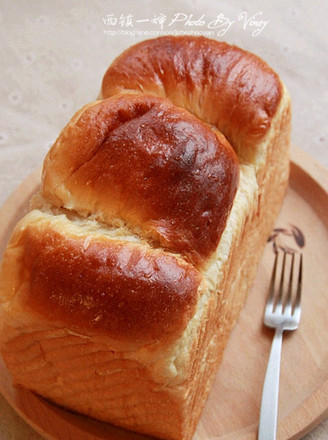
Hokkaido Toast
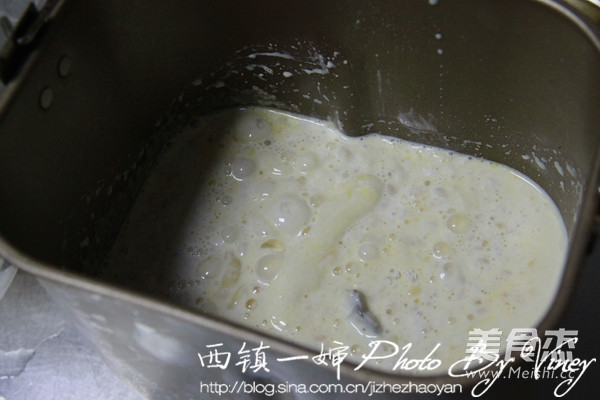
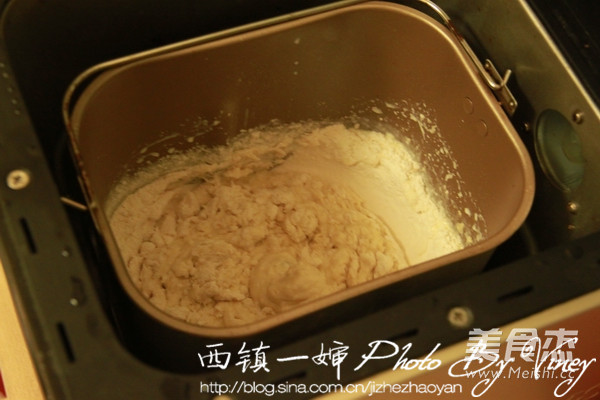
1. After mixing all the materials thoroughly
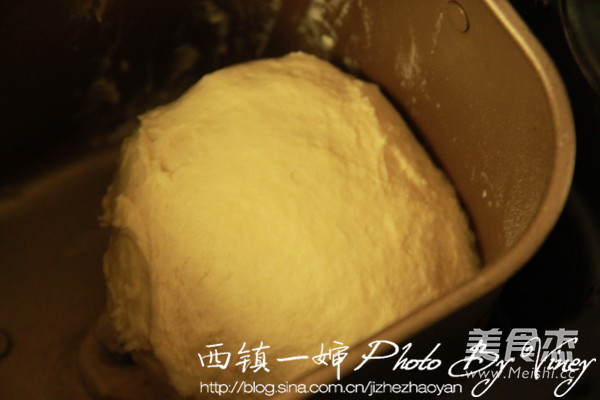
2. Select the kneading program, knead for about 45 minutes
3. Knead the dough to the complete stage, that is, a thin film can be pulled out without breaking
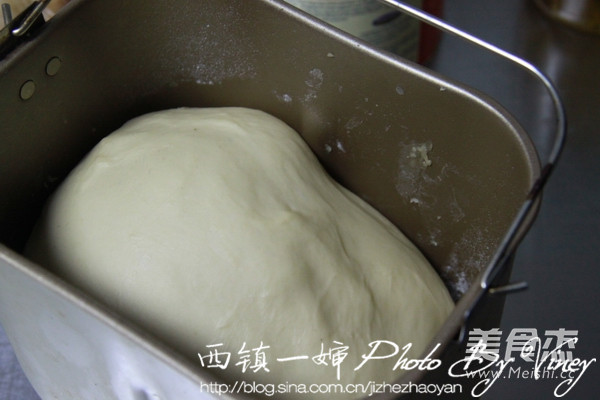
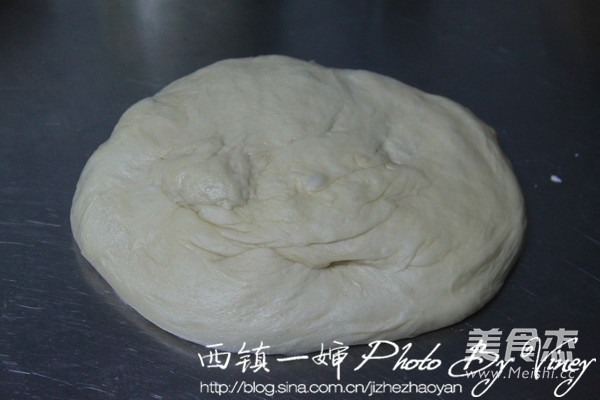
4. Put it in a barrel for basic fermentation, to double the size, I took about two hours
5. Take out the dough to exhaust
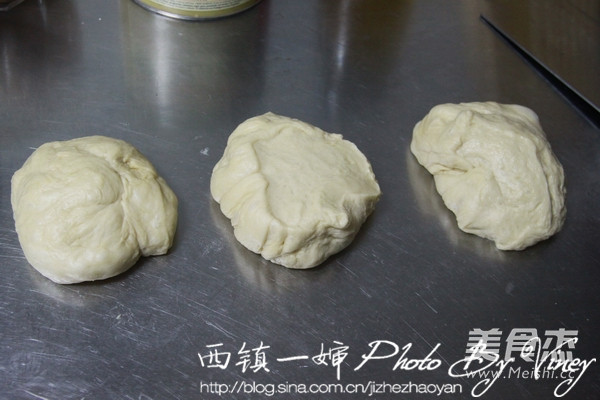
6. Then divide into 3 parts, round and let stand for 10 minutes
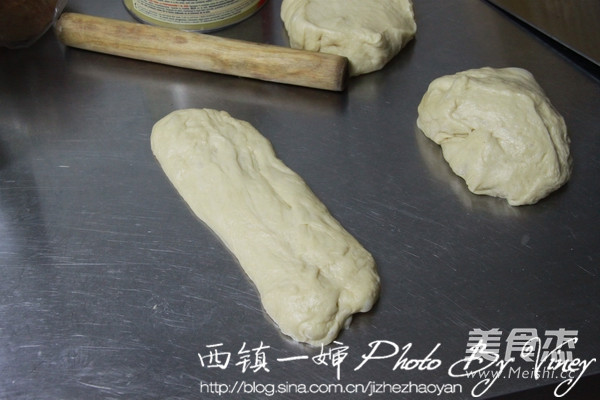
7. Take out a dough and roll it into a flat shape
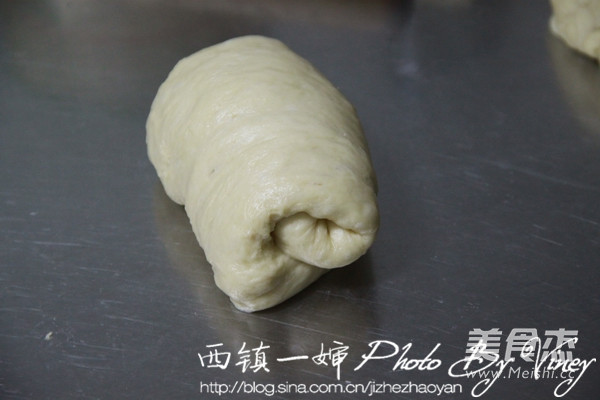
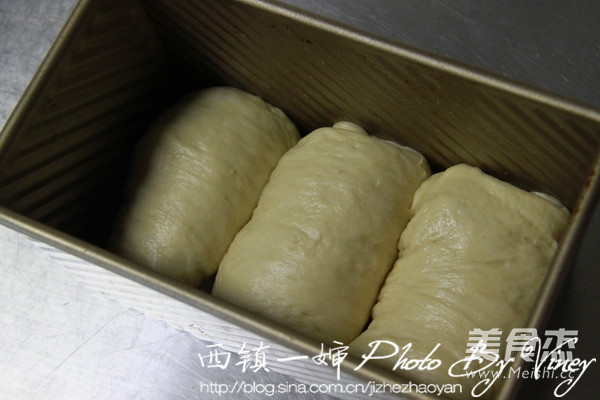
8. Then roll up the dough and put it in a toast mold
9. Perform secondary fermentation
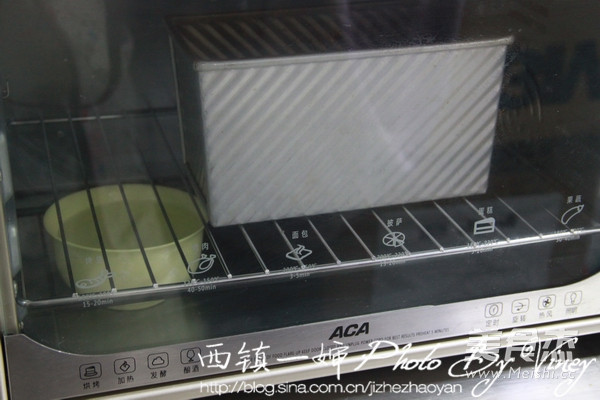
10. I put a bowl of boiling water in the oven, and then closed the oven door. About 40 minutes later, it was 80% full.
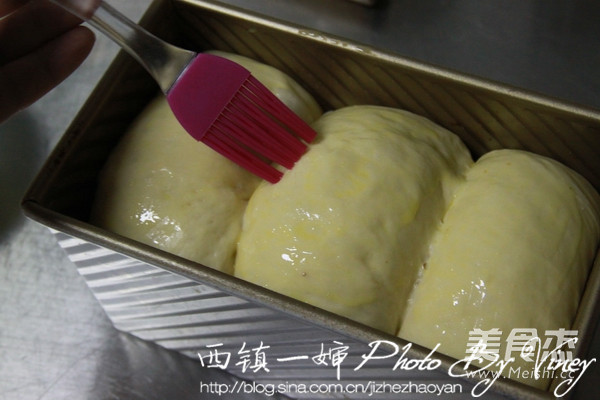
11. Brush a layer of egg liquid on the surface
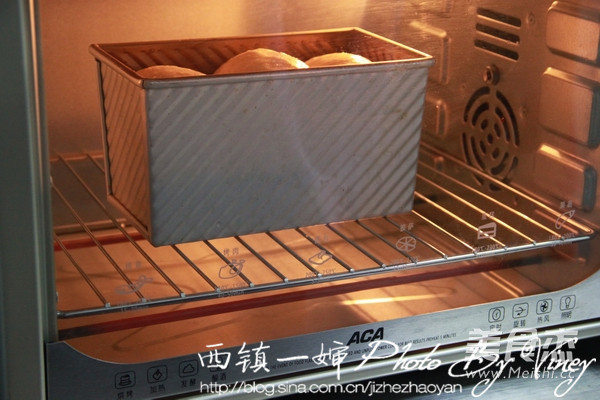
12. Then preheat the oven for 180 degrees, put it on the bottom, and bake for 35 minutes. When the middle is baked for seven or eight minutes, cover with a layer of tin foil after the surface has been colored to prevent the surface from being burnt.

Tips: 1. The freshly baked bread contains carbon dioxide, which is produced during the fermentation and baking process. Ingesting carbon dioxide in the body will easily bloat and affect the digestion of the stomach. Only when the temperature of the bread center drops to about 40 degrees, the enzyme action will stop. At this time, the carbon dioxide in the bread has been discharged, so it is best to eat the bread two hours after it is out of the oven;
2. After the bread is cool, it should be sealed with a plastic bag to prevent moisture loss. The most suitable storage temperature for bread is 21 degrees -35 degrees. Low temperature will accelerate the aging of the bread, make the taste hard, the texture is rough and scum, if the bread needs to be stored for more than a week, it can be sealed and frozen. When eating, use a microwave oven to thaw to room temperature, or spray a small amount of water on the surface and bake it 5 minute;
3. Sometimes there is too much dough to be used up, what should I do? After basic fermentation, put the unused dough in the refrigerator, or put it in the refrigerator after division, to delay the fermentation of the dough. After the dough is taken out, it needs to return to room temperature and continue to round, relax, and then shape, and then bake after the second fermentation. Dough can be stored at about 5 degrees for 12 hours, and minus 20 degrees for 48 hours. It should be noted that dough with lower sugar, oil, and yeast is not suitable for low-temperature storage.

 Buy on JD
 Buy on Amazon