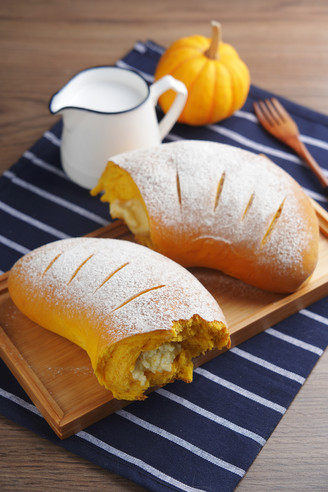
Milky Cannabis Flower
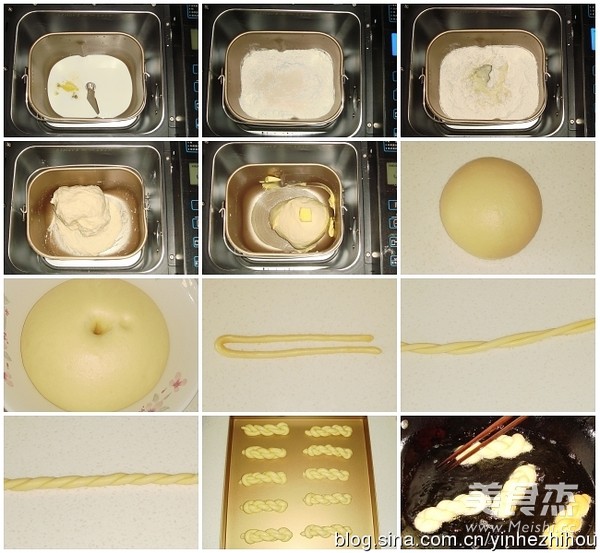
1. Pour all the ingredients except the butter into the bread bucket (pour the liquid first, do not directly contact the yeast and salt, the salt will kill the yeast)
2. Start program 4 and mix with the dough key (knead the dough with your hands like washing clothes when kneading the dough by hand) until the dough has a weak film, add butter into small pieces
3. Continue to start the dough key until the dough is stirred to the expansion stage (use a scraper to cut a piece of dough and pull out the jagged and tough film with your hands)
4. Cover the kneaded dough with plastic wrap and leave it in a warm place to ferment to double its size. Dip the high-gluten flour with your fingers and poke the holes without bounce. About 60 minutes
5. Divide the fermented dough into 20 portions and let relax for 15 minutes
6. Knead the loose dough into a strip with a length of 25 cm in turn, and fold it in half
7. Press the left index finger on the folded end, and rub the right hand outwards until the noodles are up.
8. Lift the kneaded noodles at the same time, because in step 7 the noodles are kneaded to the highest strength. After lifting, they will rotate and twist together, and finally put the right side into the left hole.
9. Twist the noodles into twists in turn, place them in a non-stick baking dish, and place them in the oven for final fermentation (about 40 minutes, put a bowl of boiling water at the bottom of the oven)
10. The twist is fermented to the point where it won’t spring when you touch it with your fingers and it’s still tensioned
11. In a 50% hot oil pan, put the fermented twist into the oil pan with the bottom facing up
12. Slowly fry on low heat until golden on both sides, remove and drain the oil.
Tips: Four considerations when making:
1. Ordinary flour can also be used. It is recommended to make the size smaller when making at home, which will shorten the frying time and save fuel.
2. Such a twisted twisted bread is not suitable for baking in the oven, because it is placed on the baking tray and there will be one side that cannot be expanded, which will affect the plump appearance
3. Don't overheat the oil when frying, otherwise it will be easy to scorch the outside and the inside is not fully fried
4. The fermented twisted bread should be put into the oil pan with the bottom facing up. The hot oil will slowly expand the flattened bottom


 Buy on JD
 Buy on Amazon