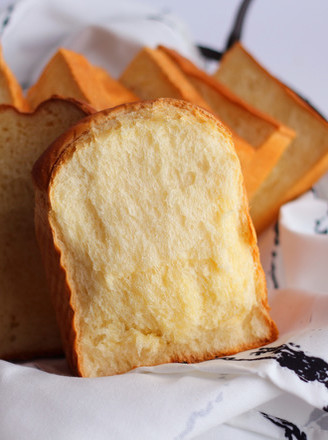
Original Chiffon Cake
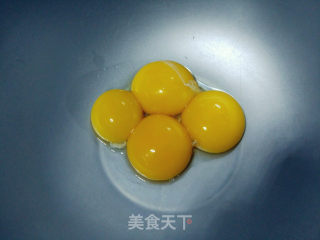
1. The egg white and egg yolk are separated and put into an egg-beating basin without water and oil. At the same time, preheat the oven and heat up and down to 150 degrees for 10 minutes.
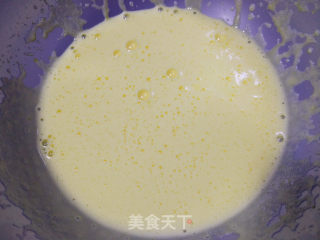
2. Add the water, fine sugar, and corn oil indicated in the main ingredients to the egg yolk, and beat with a whisk until the volume becomes larger and the color becomes lighter and fluffy. The smaller the grease particles, the more even the distribution. It can be done with a manual whisk. It does not matter whether the eggs are refrigerated or at room temperature, as long as they are fresh.
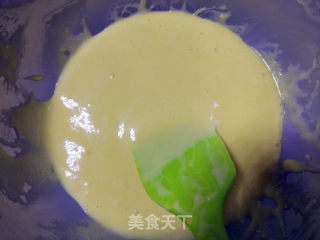
3. Sift in the mixture of low-gluten flour and cornstarch, turn it in a cross from the bottom and stir to form a fine and viscous state, set aside. Don't over-mix to avoid gluten. If you really have lumps, you can pass the batter through a sieve
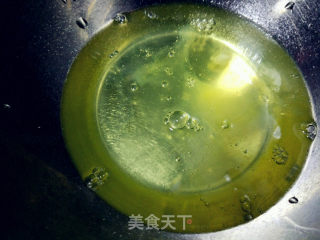
4. Add a little lemon juice or white vinegar to the separated egg whites, and use an electric whisk to beat in a uniform speed in one direction. The egg white is alkaline. Add acidic lemon juice or white vinegar to neutralize it, which is more conducive to passing. It's better to use lemon juice to remove the fishy smell. It's okay to add nothing.
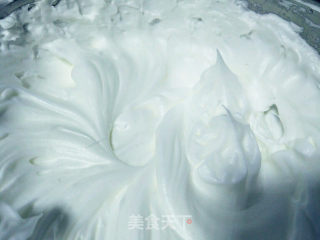
5. Add the fine sugar in the auxiliary materials three times (fish-eye bubbles, obvious patterns, large hooks), and send them to a hard foaming state. As shown in the figure, after stopping the whisk, lift the whisk and the egg whites form a sharp corner. The sharp corner can be short and upright, or it can be slightly taller, with the top bend and not bend, either. If you are a novice, it is difficult to judge, you can make it upright and short sharp corners, so as to avoid insufficient dissemination and defoaming halfway.
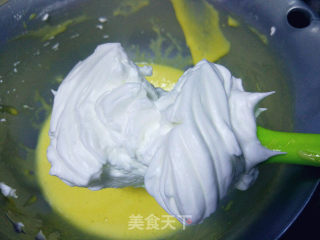
6. Add the whipped egg white to the egg yolk liquid in three times, mix well in a cross pattern from the bottom, and add the next time after each time until all is well mixed.
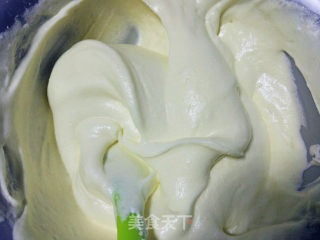
7. The state after mixing is fine and viscous, and the volume is not much different from the whipped egg white before mixing. There are no white clumps of egg white, and there is no residual egg yolk paste at the bottom of the egg-beating bowl. If the volume is significantly reduced after mixing, it is defoaming, which may be caused by insufficient egg whites or over-mixing. You don't have to go into the oven to know that you have failed.
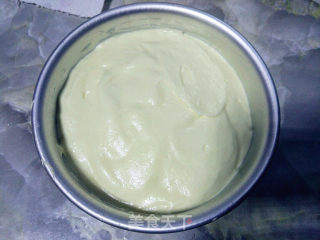
8. Pour the finished cake batter into the mold at one time, do not scrape it into the mold piece by piece with a spatula, so as not to bring in excessive air. Bump a few times to shake out bubbles, and roughly smooth the surface.
9. Put it into the middle and lower level of the preheated oven, and bake for about 40 minutes at 135 degrees. The specific time and temperature should be increased according to different ovens. Generally, I bake the eight-inch ones at 135 degrees for about 70-80 minutes and they can be cooked through. The temperature of this oven is 10 degrees higher and the fire is more urgent. You can refer to it, or use an oven thermometer to help it.
10. After completion, it is buckled upside down on the drying net, and it can be demoulded after cooling down. There are two ways of demolding. One is to scrape a circle along the edge with a demolding knife, and the bottom is up. The second is to pick a circle along the edge directly by hand, the cake structure is very flexible and easy to demould.
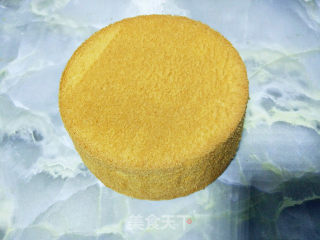

Tips: 1. Sift low-gluten flour and cornstarch, or use low-gluten flour. Corn starch is lower in gluten and lighter in weight, which is conducive to swelling and tissue stability.
2. When whisking the egg whites, the friction of the granulated sugar particles can bring in the air, which is good for whisking. It is best not to use powdered sugar or soft white sugar. The cost of powdered sugar is higher, and the water content of soft white sugar is too high, which is not conducive to the stability of whipped protein.
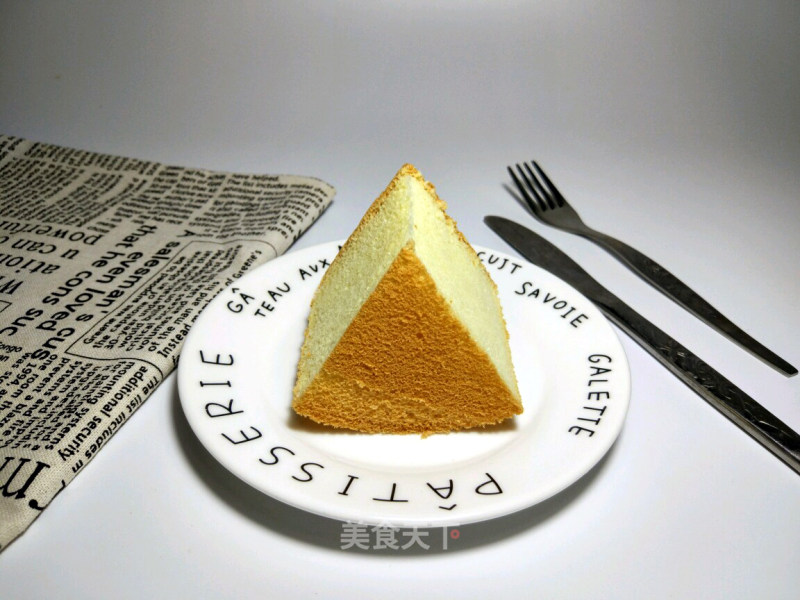
3. When half of the baking time is left, the surface should not be colored much, and the top should be slightly evenly bulged. Towards the end, the top will be slightly lower than halfway, and after the inverted button is released, the top will be basically flat. If the top bulge is very large at the beginning of the roasting, it will basically shrink and collapse and crack severely after being out of the oven.
4. Using the formula of four eggs, it is basically made to be flush with the edge of the 8-inch anode round mold, or a little higher. You can compare it. When you first enter the oven, the height of the cake batter is seven or eighth of the mold's height. Look like. One 8-inch round mold is almost equal to the amount of two six-inch round molds.
5. If the top of the chiffon cracks, it is usually because the heating power is too high, or the humidity of the cake batter is not enough, or the starting temperature is too high, and the top bulges too fast. If the chiffon shrinks and collapses after being out of the oven, it is generally because the egg whites are not enough to pass, or it will be cold if it is not cooked. So it's best not to turn on the oven midway. If the pudding layer is found after cutting, it is wet and sticky, that is, it is not cooked through, the egg whites are not beaten enough, or the mixing method has caused defoaming, or the baking time is not enough. If the bottom is concave, it is because the primer is too high.
6. Regarding how to judge whether it is ripe or not at the time of baking, some people use toothpicks, and some listen to the defoaming sound. If there is no rustling defoaming sound, it is basically roasted, the internal tissue is not soft and moist enough, and the outer skin will be slightly thicker. Use a toothpick to see if there is a way to attach the tissue, it may not be accurate. I patted the center of the top with my hand, and it felt elastic and there was no feeling of liquid flowing. It was fine.
7. The sweetness is moderate, and the amount of sugar can also be appropriately reduced by 10 grams. It is best not to adjust other dosages at will, which will affect the success rate.

 Buy on JD
 Buy on Amazon