Pineapple Oil
1. Pour the milk and eggs in the main bread material table into the bread bucket, then put the sugar and salt on the two opposite corners of the bread bucket, then pour in the milk powder and high-gluten flour, and finally sprinkle the yeast on the flour.
2. Start the kneading function of the bread machine, stop the machine when the dough is kneaded, and knead the dough with your hands. If the dough is soft and only a small amount of wet dough sticks to your hands, it indicates that the dough is soft and hard. Continue the kneading function.
3. After mixing the dough for 15 minutes, add the softened butter and continue mixing the dough. After the dough-making program is finished, another dough-making program (My bread machine uses the imix program. The default is 20 minutes for a program, which means a total of 40 doughs. minute).
4. After the two kneading procedures are over, take a small piece of dough, pinch it with both hands and slowly stretch it out, and you can pull out a large piece of unbreakable film.
5. Knead the dough again and round it up and put it in the bread bucket.
6. Cover a piece of baking grease paper, and flick some drops of water on the paper with your hands.
7. Then cover a damp towel, cover the lid of the bread machine and wait for the dough to rise.
8. Now start to prepare the pineapple skin. The butter is softened in advance to the point where you can easily poke a hole with your fingers.
9. Add icing sugar and beat with a whisk at low speed until fluffy like feathers. Add honey and continue to beat well.
10. After beating, add egg liquid and continue beating.
11. After beating, sift in low powder, milk powder and baking soda, add salt (that is, add all the remaining ingredients in the pineapple skin material table) and stir into a dough with a spatula.
12. Wrap it in plastic wrap and form a long strip, and put it in the refrigerator.
13. When the dough is 2~2.5 times larger, use your fingers to dip dry flour or water to poke a hole in the dough. The hole does not change, that is, it does not collapse or rebound, indicating that the degree of dough fermentation is appropriate.
14. Take out the dough, press and vent, divide into 6 equal parts, round, and cover with plastic wrap.
15. Take the pineapple skin dough out of the refrigerator, divide it into 6 equal parts, wrap it with plastic wrap and roll it into a thin skin (the wrap is to prevent sticking).
16. Cover the pineapple peel on the bread dough, wrap two-thirds of the dough, place it on the baking tray, and then use a scraper (a pineapple peel mold is better for operation) to cut the pineapple peel out of lines.
17. Wait for the dough to rise again to double its size.
18. Beat 1 egg yolk.
19. Brush to the surface of the dough with a brush.
20. Put it into the lower and middle layer of the oven preheated at 180 degrees, and bake at 170 degrees for about 20 minutes.
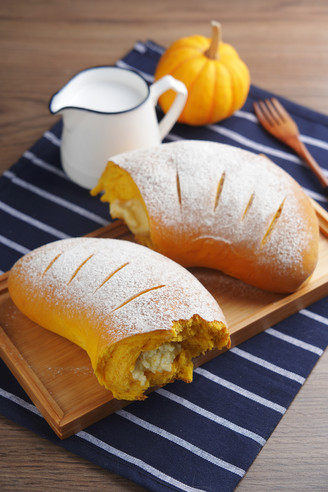
21. Put a piece of chilled salty butter on the oven while it is hot, and melt the cold butter with the heat of the pineapple bun. This indispensable delicacy is a classic delicacy in Hong Kong-style tea restaurants.
22. Another delicious way to eat is to wrap the pineapple bun with cranberry cheese filling: first soften the cream cheese with insulated water and stir until it is smooth.
23. Add dried cranberries and mix well.
24. Press the bread dough into the crust, put the cranberry cheese filling and wrap it tightly.
25. It is rounded down with the mouth, covered with pineapple skin and fermented again, and then baked. This stuffed pineapple bun is also delicious!
Tips: 1. The time required for fermentation will be affected by temperature, so we must look at the state of dough fermentation and cannot judge based on time.
2. The baking temperature and time are for reference only, and must be adjusted according to your own oven.


 Buy on JD
 Buy on Amazon