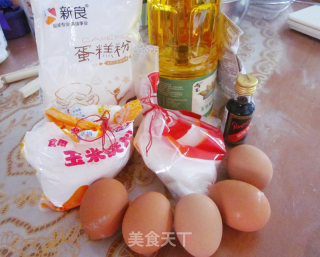
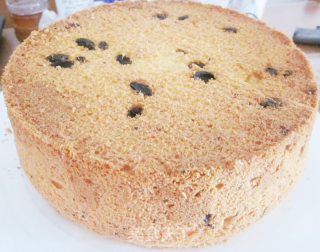
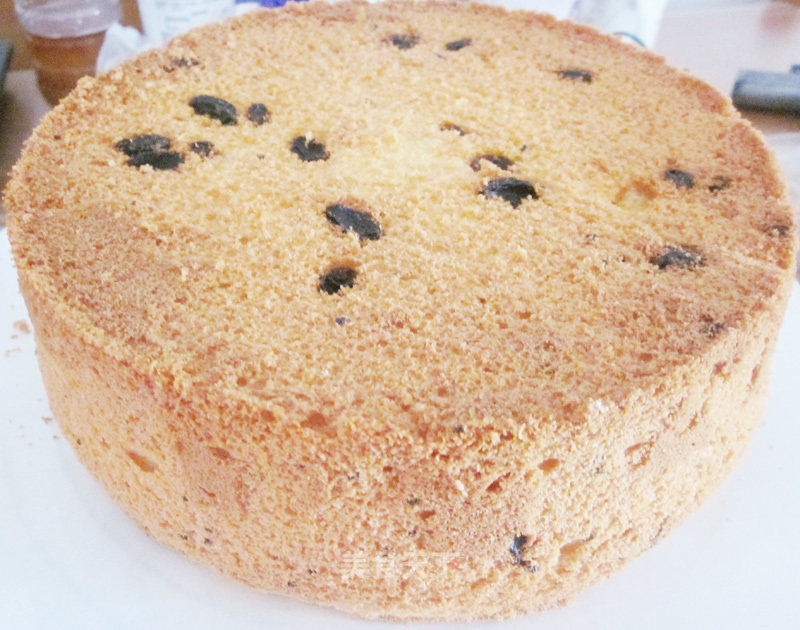
Raisin Sesame Eight Inch Chiffon Cake
1. Line up, don't jump in the line for the eggs, see where the milk makes you squeeze? Say "happy" together.
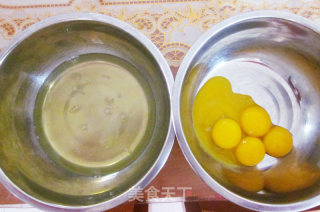
2. Separate egg white and egg yolk. Note that these two basins must be oil-free and water-free. (You can use the eggshell to separate the eggs, if you are unskilled, you can use the egg separator)
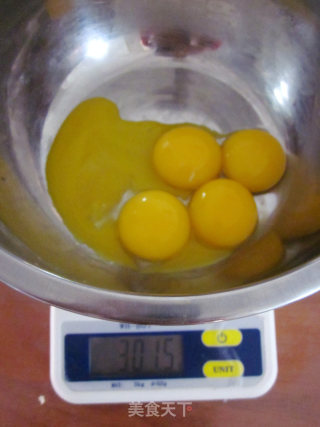
3. did you see it? The difference between fresh eggs and stale eggs. The yolk is dripping. (Put the pot and the egg yolk on the scale together, look at the numbers, and add the corresponding weight of the raw materials on this basis. It is not necessary to put each raw material in the container, which will increase the burden of cleaning.)
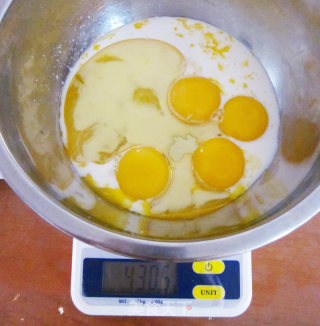
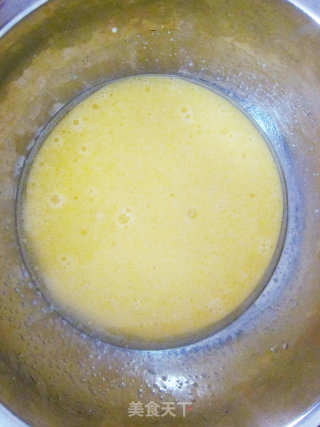
4. Add milk and corn oil to the egg yolk and mix well. The lecithin contained in the egg yolk has the effect of emulsification, so that the milk and oil that would not have been mixed perfectly blend together. (Are there any magic tricks?)
5. Put it aside, put it aside first. (Don't put in low-gluten flour yet)
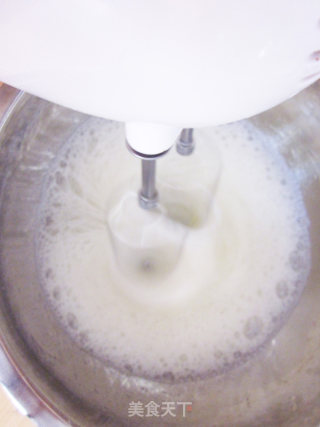
6. Use an electric whisk to beat the egg whites to a fish-eye bubble shape at a low level, add one-third of the sugar, and beat until the sugar is completely melted.
7. Add another third of the sugar and use a high-end blend. It has been sent until the egg beater is lifted, and there is a small hook.
8. Add cornstarch and the last third of the sugar, and continue to beat.
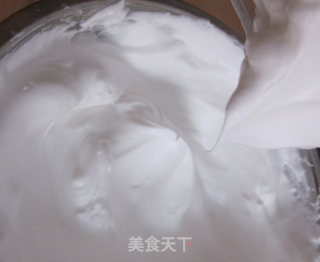
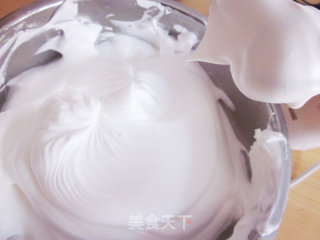
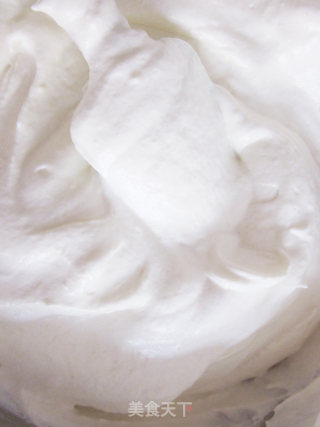
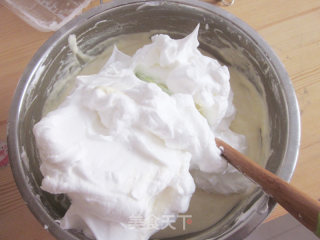
9. Dispatch until lifted with a pointed hook. While hitting, stop and check the status. After the small pointed hook appears, switch to a low-to-medium grade and let it go for a while to make the meringue more delicate. (Pick it open with a spatula, you can see that the small bubbles are evenly distributed and stable)
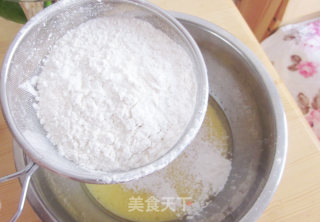
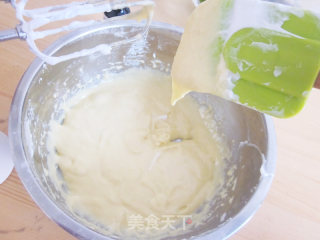
10. Add the sifted flour to the egg yolk paste and beat it evenly with the egg beater that just made the meringue. (It's okay to have some protein)
11. After whipping for a while, check the status. Don't over-spend, otherwise the batter will cause the final cake to shrink. (It is smooth to lift, not sticky like steamed buns)
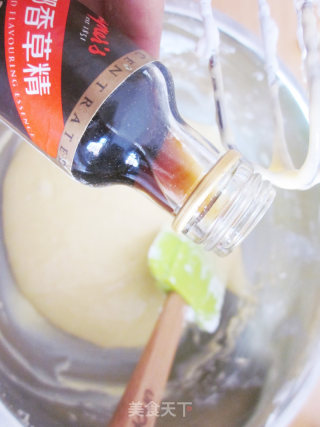
12. Add two drops of vanilla extract. (Removing the eggy smell, of course, those who admire zero addition can not add it. The same sweetness.)
13. After the egg yolk paste is mixed, check the stability of the meringue. If it is slightly soaked as in the picture (it looks a bit rough), use a manual whisk (no water, no oil, clean) to quickly beat it a few times, and it will immediately become fine.
14. After the egg yolk paste is mixed, check the stability of the meringue. If it is slightly soaked as in the picture (it looks a bit rough), use a manual whisk (no water, no oil, clean) to quickly beat it a few times, and it will immediately become fine.
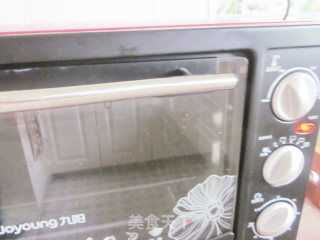
15. Preheat the oven. Preheat for 10 minutes at 150 degrees. (How to calculate the preheating? The heating tube changes from the original color to red, and then restores to the original color, and it is preheated)
16. Preheat the oven. Preheat for 10 minutes at 150 degrees. (How to calculate the preheating? The heating tube changes from the original color to red, and then restores to the original color, and it is preheated)
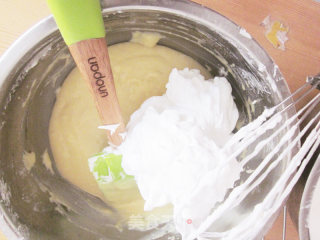
17. Mix the egg yolk paste and egg white paste. First take one-third of the meringue and pour it into the egg yolk paste.
18. Mix the egg yolk paste and egg white paste. First take one-third of the meringue and pour it into the egg yolk paste.
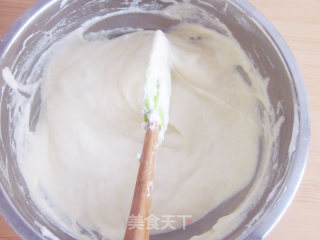
19. Mix well. Be careful not to make a circle, insert a spatula from the middle of the basin, and stir from bottom to top.
20. After mixing well, add the remaining meringue.
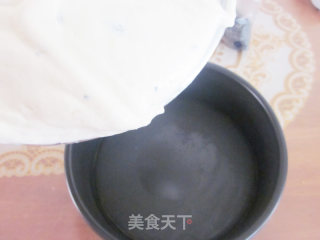
21. Stir the batter and pour it into the movable bottom mold. Pour it about 20cm away from the movable bottom mold, you will find that many bubbles will burst.
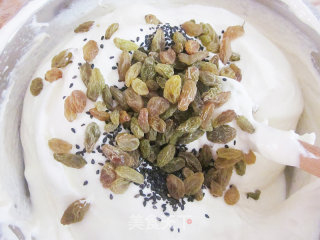
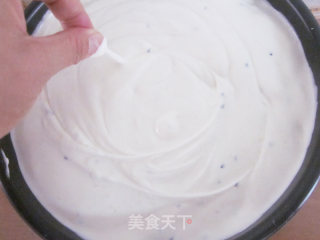
22. Pour a part of the batter into the mold first, then add the raisins and sesame seeds to the remaining batter and mix well, then pour it into the mold together after mixing. (If you pour all the batter into the batter, the raisins will sink to the bottom of the mold and will batter and become bitter after baking.)
23. It is usually poured until the mold is eighth full. Falling: Lift the mold to about 15 cm away from the table and fall down (be careful not to spill the batter). Scratch: Use a toothpick to quickly make a few circles on the batter (some large bubbles can be punctured, and the surface of the batter can also be smoother)
24. At this time, the oven is also preheated. 150 degrees, up and down fire for about 50 minutes. (The fire in the household oven is very urgent, and the surface is easy to crack when the temperature is high. Take your time, dear.)
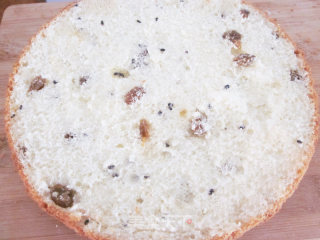
25. Cut it open and see, well, the internal tissue bubbles are uniform and delicate. It succeeded.

Tips: sweet Nothing:
1. The dispensation of meringue is very important and directly affects the success or failure of Chiffon. Pay attention to a few issues:
(1) When separating the egg whites and the yolks, they must be separated thoroughly. There should be no egg yolk in the egg white, otherwise it will affect the passing.
(2) The bowl containing the egg white and egg yolk must be water-free and oil-free, otherwise it will affect the flow.
(3) Adding starch will make the meringue more stable. The meringue must be beaten to dry foaming in the form of small sharp hooks. (The lift is a small hook, it is wet foaming) This process takes about 10 minutes, so be patient!
(4) When mixing with egg yolk paste, check the meringue. If it defoams a bit, use a clean manual whisk to re-beat finely.
2. Don't have gnocchi in the egg yolk paste. It must be even and not too much mixing (it will become gluten). It is fine without dry flour.
3. Raw materials: 100g white granulated sugar can be replaced with 80g white granulated sugar + 20g fine granulated sugar.
100g low-gluten flour can be replaced with 80g low-gluten flour + 20g all-purpose flour. This will be more economical.
4. Utensils: Sanneng molds are recommended, especially the scrapers from Sanneng Wunuo, which are really easy to use.

 Buy on JD
 Buy on Amazon