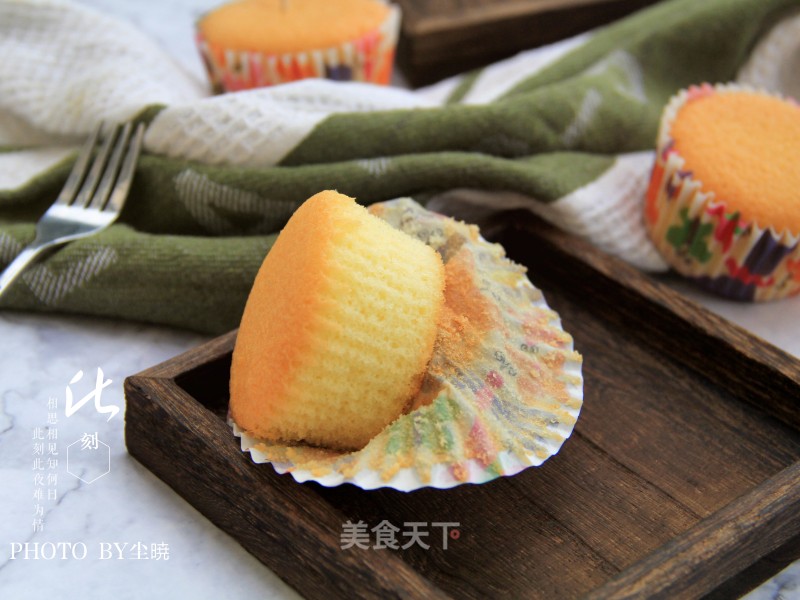
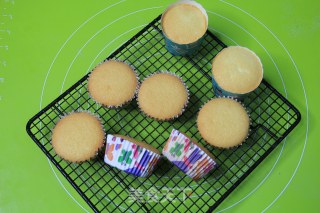
Whole Egg Sponge Cup
1.
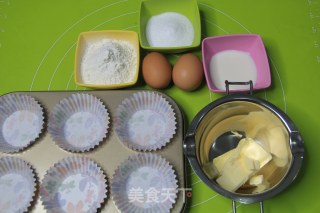
Prepare the ingredients, it is best to use room temperature eggs.
2.
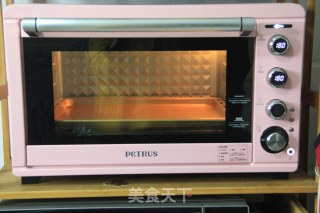
Preheat the oven 180 degrees up and down in advance. Be sure to warm up enough time.
3.
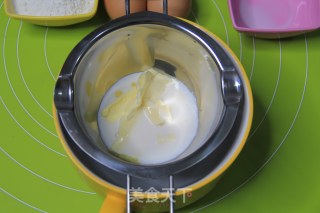
Cut the butter directly into the bowl and pour the milk. In addition, prepare a pot with a small half pot of hot water, and then put the bowl with butter and milk in it, do not take it out, keep it warm, and after a few minutes, wait for the butter to melt and beat it with an egg.
4.
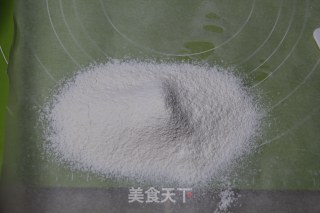
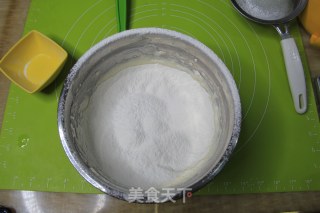
Sift the low flour for later use.
5.
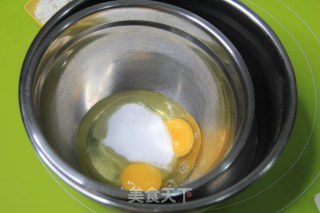
Two eggs at room temperature of about 55-60 grams, wash and dry with kitchen paper towels, put them into a clean basin with a slightly wider bottom, and take a water bath underneath. Prepare another basin as shown in the picture and put it in a half basin and heat it at about 50 degrees. Water, take a water bath. Keep the egg liquid warm while it is beaten.
6.
Add all the fine sugar in one go. Use an electric whisk to break up at low speed. Start to pass.
7.
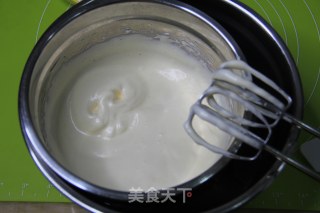
The custard is in a warm state, and at the beginning, the bubbles are relatively large and the color is slightly darker. After a few minutes, the egg batter swells and the egg liquid becomes lighter in color.
8.
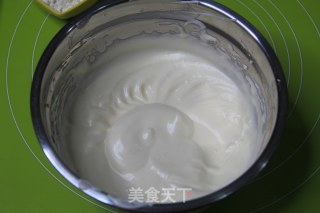
When the egg batter is beaten to the point where the egg beater is lifted, the egg liquid can drip in a ribbon shape, and the dripped egg liquid can accumulate and will not disappear immediately. The egg batter on the side of the basin can be scraped off with a spatula, and all must be beaten. Hit at high speed throughout the process, and finally at low speed for a while to sort out the big bubbles.
9.
Evenly pour in the low flour that has been sifted in advance. Never pour the flour in one place. If it is too heavy, it will defoam the batter. It must be evenly spread over the entire surface of the batter.
10.
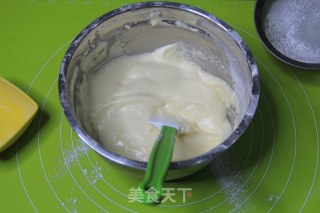
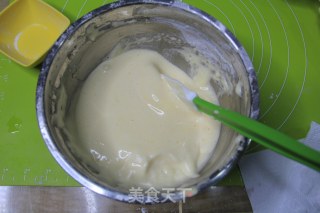
Use a spatula to cut in from the center point, quickly go down, draw from the bottom to the edge of the basin, turn up, and turn the basin with your left hand to quickly stir evenly. If there is flour that is not easy to stir, tap it on the side of the basin and continue to stir. Until it is mixed well, the dry powder is not visible and the batter is smooth. The speed must be fast.
11.
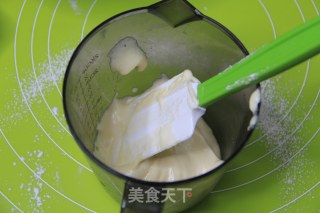
Take another cup and pour a little bit of the mixed batter.
12.
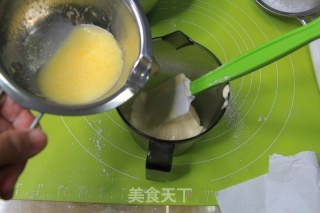
Take it with a spatula, and pour the kept warm butter and milk mixture into the batter. Quickly stir and mix evenly. This step will defoam slightly, which is normal.
13.
Gently pour the mixed batter back into the remaining batter. Do not pour in the same place, pour in evenly. In the same way, mix the batter evenly. The spatula scoops up the batter and drops it in a streamer shape. The dripping will not disappear immediately, and it will not be very thin. Very thin and very thin indicates serious defoaming.
14.
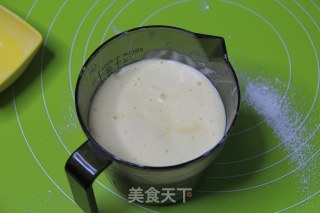
Then put it into a piping bag or into a cup with a diversion port.
15.
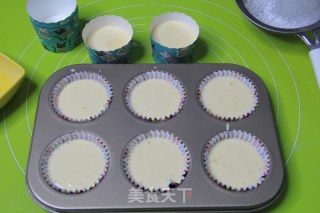
Please put the paper cup in the continuous mold in advance, pour the batter, and make it 8 minutes full. If there are large bubbles on the surface, pick them out with a toothpick.
16.
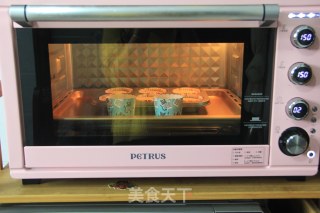
Put it in the preheated oven, middle and lower level, turn 150-160 up and down, and bake for 25 minutes. The specific temperature can be based on your own oven. If the color is too dark, it can be covered with tin foil.
17.
The cake rises to its highest point and falls back slightly for a few minutes. Can be baked.
18.
Take it out of the oven and transfer it to the cooling rack, and let it cool down. Do not leave it cold in the mold. It can be sealed at room temperature in winter and refrigerated in summer. The organization is still very delicate.
Tips:
1. The whole egg should be beaten with warm water, which is easier to beat. Keep the butter and milk warm.
2. If the cracking is serious, it means that the temperature is too high. You can lower the temperature and bake it next time. Please adjust the baking temperature according to your own oven!
3. Sift in the flour, be sure to evenly, not sprinkle in one place. Remember to stir and stir, not in one direction.