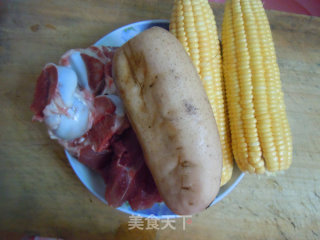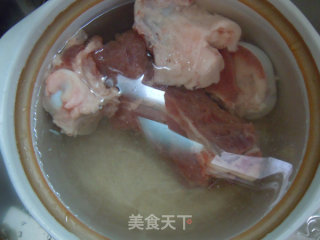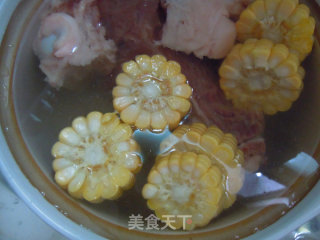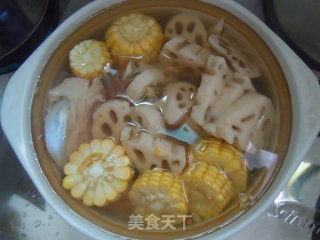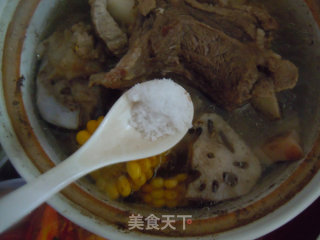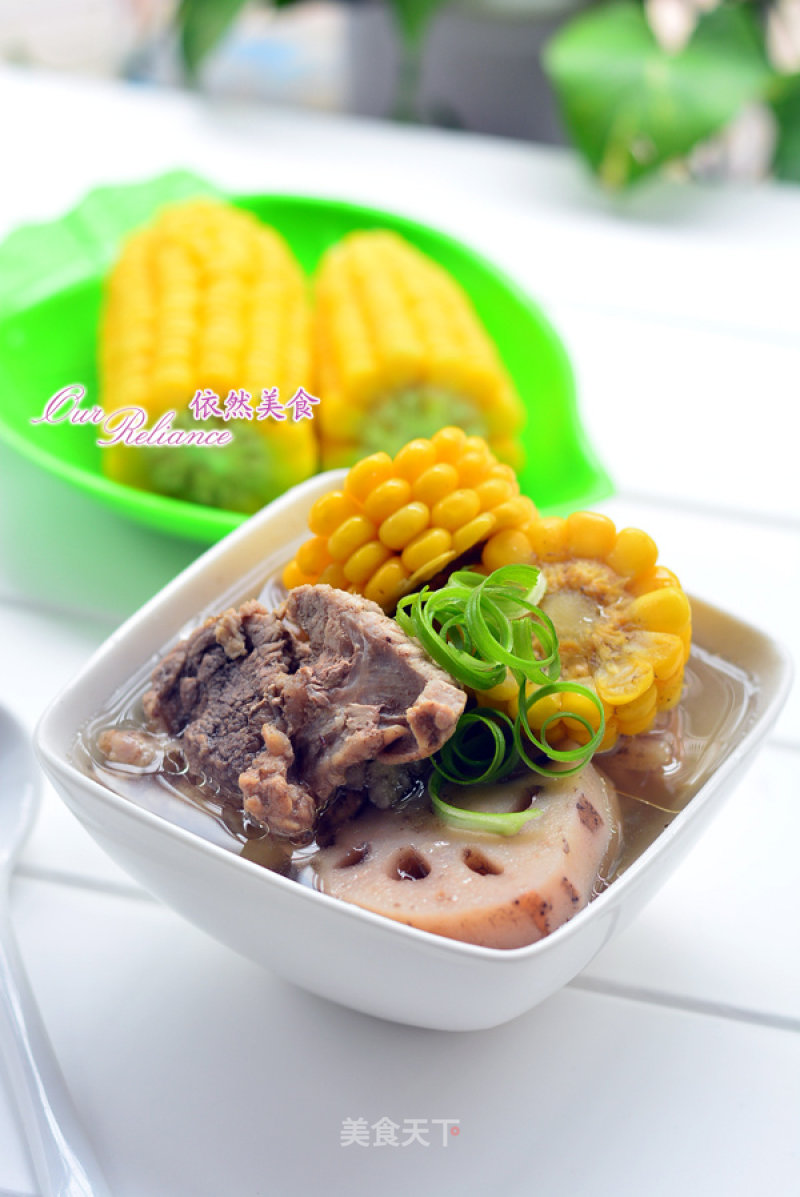

Autumn Anti-dryness Decoction-big Bone Lotus Root and Corn Soup
by Still good food
Favorite
Difficulty
Normal
Time
1h
Serving
2
Lotus root to clear heat and cool blood: lotus root is used for cold in nature, has the effect of clearing heat and cooling blood, and can be used to treat fever diseases; lotus root is sweet and rich in liquid, which is especially beneficial to people with fever and thirst, hemoptysis, hemoptysis, and blood. 2. Laxative and antidiarrheal, invigorate the spleen and appetite: lotus root contains mucus protein and dietary fiber, which can combine with the body's bile acid salts, cholesterol and triglycerides in food, and excrete it from the stool, thereby reducing lipids. absorb. The lotus root exudes a unique fragrance, and also contains tannins. It has the effect of invigorating the spleen and stopping diarrhea. It can increase appetite, promote digestion, appetite and invigorate, and is beneficial to those with poor appetite and loss of appetite to restore their health. 3. Replenishing blood and promoting muscle: lotus root has high nutritional value, rich in iron, calcium and other trace elements. It is also rich in plant protein, vitamins and starch. It can replenish qi and blood and enhance human immunity. Therefore, Chinese medicine calls it: "The main body nourishes the middle and nourishes the mind and strengthens the vitality." 4. To stop bleeding and dissipate blood stasis: lotus root contains a lot of tannins, which has the effect of constricting blood vessels and can be used to stop bleeding. Lotus root can also cool the blood and disperse blood. Chinese medicine believes that it can stop bleeding without leaving blood stasis. It is a good food therapy for febremia.
Lotus root is a low-fat food with high nutritional value. It can be eaten raw, steamed, fried, and stewed. The lotus root should be the one with white skin, thick and stubby lotus root knots, and it is best to have a delicate smell. The first section at the top of the lotus root is called the lotus head. It has the best taste and is suitable for eating raw, with high vitamin content and low fiber content. Raw lotus root has a moisturizing effect, especially suitable for people with hot body or acne. The second and third sections of lotus root are older and are best used for stewing. The other sections are too thick and are only suitable for soup. The cooked lotus root is rich in iron, which can be eaten by people who are weak and anemia. Many people will scrape off the lotus root skin, but this is actually a waste. The lotus root skin is rich in cellulose, if it is not moldy, rotten, or black, you don't need to throw it away. The lotus root will turn black after heating, because it is rich in reducing substances such as vitamin C and iron, which will oxidize when heated, and the color will become darker. To stew lotus roots for a long time, it is best to use ceramic or stainless steel utensils, avoid using iron or aluminum pots, and try not to use iron knives to cut lotus roots to reduce oxidation. Lotus root is rich in vitamin C and crude fiber, which can not only help digestion and prevent constipation, but also supply carbohydrates and trace elements needed by the human body, prevent arteriosclerosis, improve blood circulation, and be beneficial to health. It is generally recommended to eat lotus root 3 times a week. Dinner is the best. A soup of lotus root and ribs can improve sleep quality after consumption. Lotus root can invigorate the spleen and stomach, and if pregnant women eat more lotus root, it can clear the congestion accumulated in the abdomen and promote the secretion of milk. The lotus root soup has the effect of relieving cough. Drinking the juice squeezed from the skin lotus root directly can treat severe coughs. However, patients with low digestive function of the spleen and stomach, stomach and duodenal ulcers should not eat lotus root. People with loose stools should not eat raw. "
Lotus root is a low-fat food with high nutritional value. It can be eaten raw, steamed, fried, and stewed. The lotus root should be the one with white skin, thick and stubby lotus root knots, and it is best to have a delicate smell. The first section at the top of the lotus root is called the lotus head. It has the best taste and is suitable for eating raw, with high vitamin content and low fiber content. Raw lotus root has a moisturizing effect, especially suitable for people with hot body or acne. The second and third sections of lotus root are older and are best used for stewing. The other sections are too thick and are only suitable for soup. The cooked lotus root is rich in iron, which can be eaten by people who are weak and anemia. Many people will scrape off the lotus root skin, but this is actually a waste. The lotus root skin is rich in cellulose, if it is not moldy, rotten, or black, you don't need to throw it away. The lotus root will turn black after heating, because it is rich in reducing substances such as vitamin C and iron, which will oxidize when heated, and the color will become darker. To stew lotus roots for a long time, it is best to use ceramic or stainless steel utensils, avoid using iron or aluminum pots, and try not to use iron knives to cut lotus roots to reduce oxidation. Lotus root is rich in vitamin C and crude fiber, which can not only help digestion and prevent constipation, but also supply carbohydrates and trace elements needed by the human body, prevent arteriosclerosis, improve blood circulation, and be beneficial to health. It is generally recommended to eat lotus root 3 times a week. Dinner is the best. A soup of lotus root and ribs can improve sleep quality after consumption. Lotus root can invigorate the spleen and stomach, and if pregnant women eat more lotus root, it can clear the congestion accumulated in the abdomen and promote the secretion of milk. The lotus root soup has the effect of relieving cough. Drinking the juice squeezed from the skin lotus root directly can treat severe coughs. However, patients with low digestive function of the spleen and stomach, stomach and duodenal ulcers should not eat lotus root. People with loose stools should not eat raw. "
 Buy on JD
 Buy on Amazon