

Chive Ham Bread Roll
by Wandering stars
Favorite
Difficulty
Easy
Time
30m
Serving
3
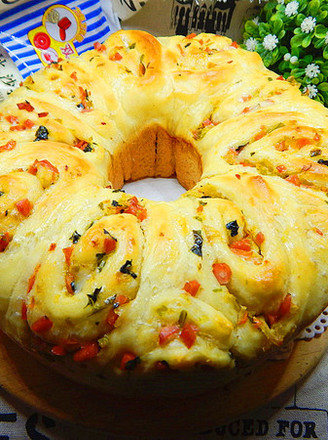
Scallion ham rolls are fluffy, soft, savory and delicious. The method is simple and detailed steps are shared. Breakfast is greedy and full.
1. Put 140g of high-gluten flour and 6g of milk powder into the bread bucket, put 2g of fine salt and 20g of fine sugar in the diagonal corner, and put 3g of dry yeast powder in the middle of the dough. Yeast powder should not be in direct contact with sugar and salt, so as not to affect the activity of yeast.


2. Put 80g of water, 10g of egg liquid and 15g of salad oil into the bread bucket.


3. Start the bread machine and start kneading the dough, knead all the materials until the transparent film can be pulled out. Then cover with plastic wrap for the first fermentation.


4. The dough rises to twice its size. Dip your fingers in flour and insert it into the dough so that the dough does not collapse or shrink.


5. The fermented dough is poured out and vented under light pressure, and then divided into six equal parts. Cover with plastic wrap and let it rest for 15 minutes.


6. Clean the shallots and chop them into chopped green onions, and cut the ham sausage into fine pieces with a knife.


7. After the dough is relaxed, take one portion of the dough and roll it into a square slice with a rolling pin.


8. Sprinkle some chopped green onions and minced ham evenly on the dough.


9. Thin the bottom edge, roll up the dough sheet from top to bottom, and roll it tighter.


10. Move the rolled dough onto the cutting board and cut it from the middle with a knife, being careful not to cut the ends.


11. Wind both ends inward to form a roll shape as shown in the figure.


12. Prepare all the dough in turn, and place them in a non-stick baking pan, leaving some gaps in the middle.


13. Put the baking tray in the oven, put a pot of hot water at the bottom, create a suitable temperature and humidity in a closed space, and ferment the dough for the second time.


14. The fermented dough is gently pressed to rebound slowly. Brush the surface of the dough with a thin layer of whole egg liquid.


15. The oven is preheated in advance. After the preheating is completed, put the baking pan into the lower layer of the oven, set the upper and lower fire temperature to 180 degrees, and the time is 15-20 minutes. After the time has elapsed, take out the baking pan, let it dry until it is not hot, and seal it for storage.


Tips:1. The amount of liquid should be adjusted according to the hygroscopicity of the flour and the humidity of the environment. You can reserve about 10G of liquid in advance, and finally decide whether to add it according to the state of the dough.
2. The temperature and time of baking should be adjusted appropriately according to the performance of your own oven.






 Buy on JD
 Buy on Amazon