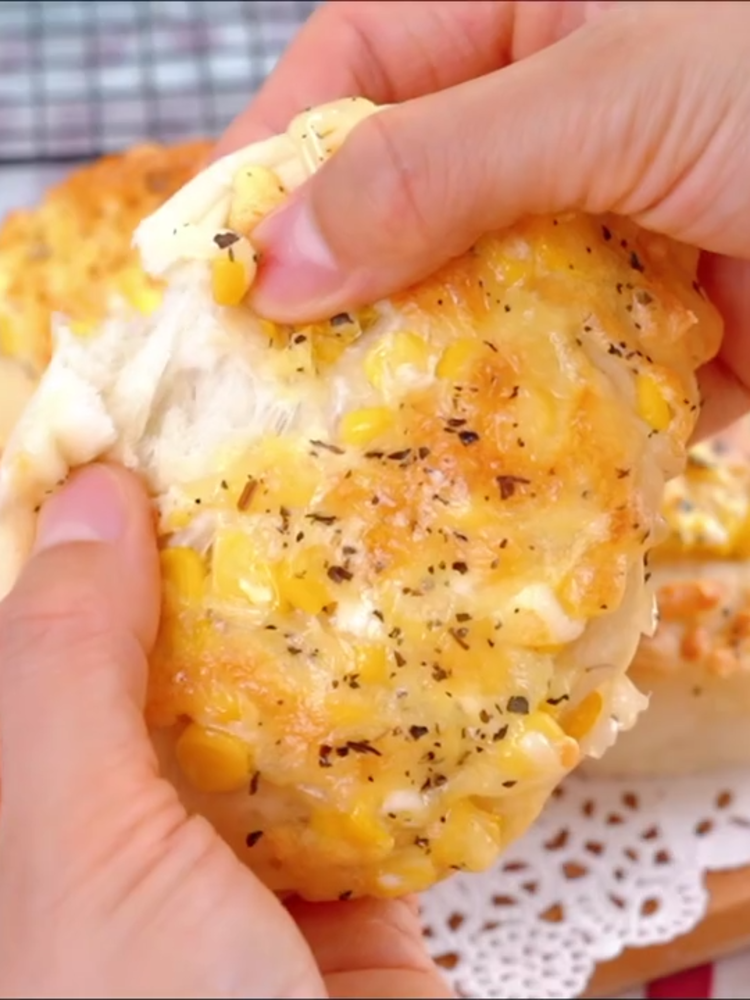
Colorful Pastoral Pizza
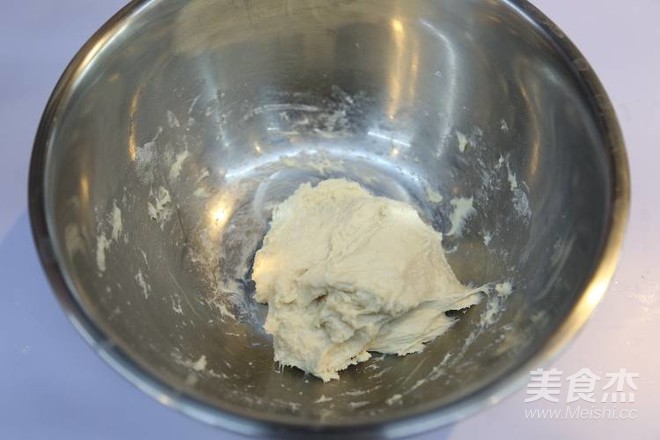
1. Mix the high-gluten flour and low-gluten flour together, add salt, sugar, milk powder, water and yeast, and mix well.
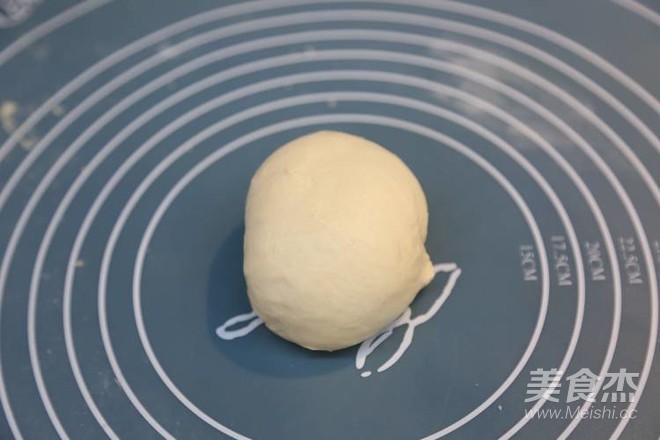
2. Put the well-mixed dough on the silicone mat and knead it into a smooth dough.
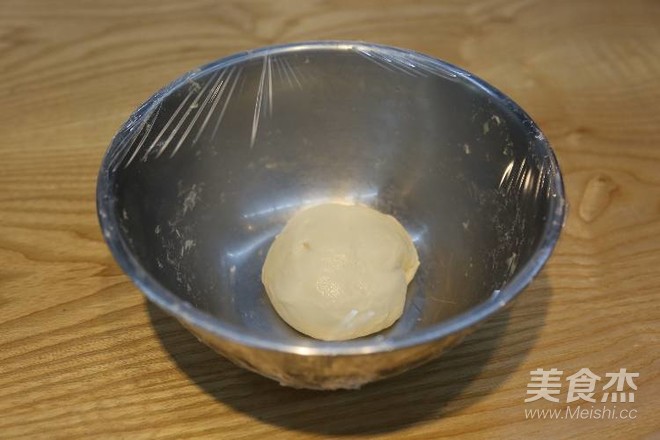
3. Cover with plastic wrap and ferment at room temperature for about 40 minutes. The dough is fermented to about 2-2.5 times as big, take it out and poke a hole to see if it ferments well.
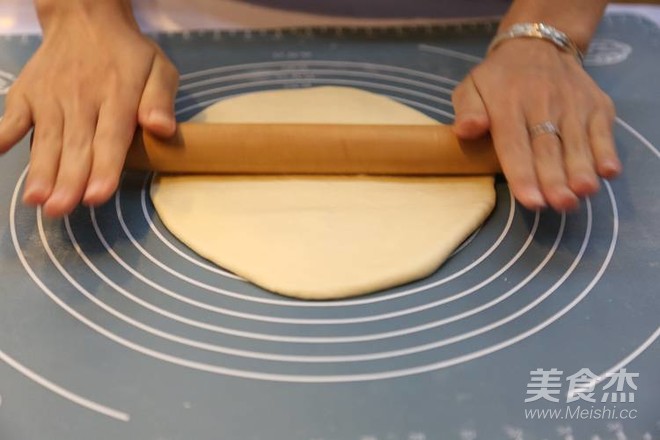
4. Flatten the fermented dough to exhaust.
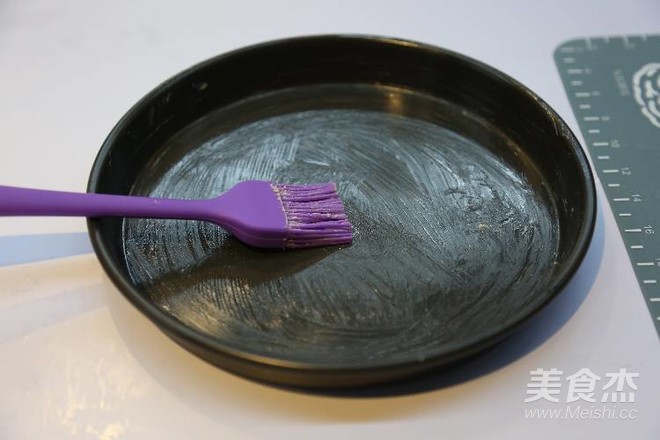
5. Spread a little softened butter on the pizza pan.
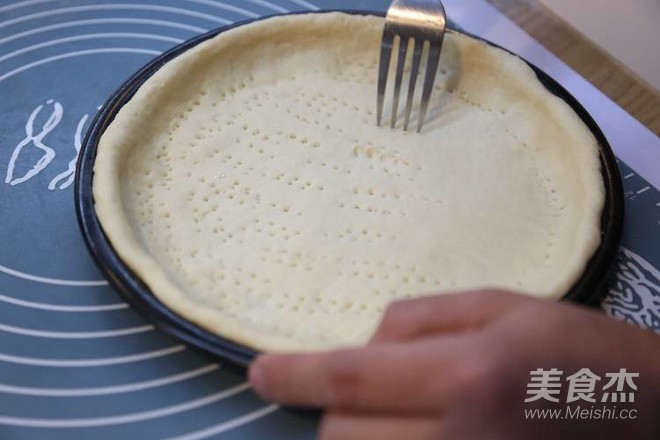
6. Spread the entire pizza tray, and slowly push the dough from the middle to the side with the tip of your palm, so that you can gradually push out a smooth and thick circle of pizza. After the fork is pierced in the bottom of the cake, put it in the refrigerator for half an hour.
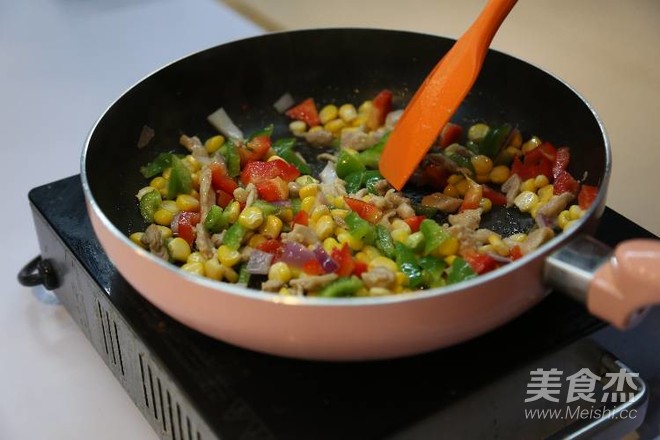
7. Cut the onions, green peppers, red peppers, corn kernels, and chicken thighs into a non-stick pan and blanch them in a bowl.
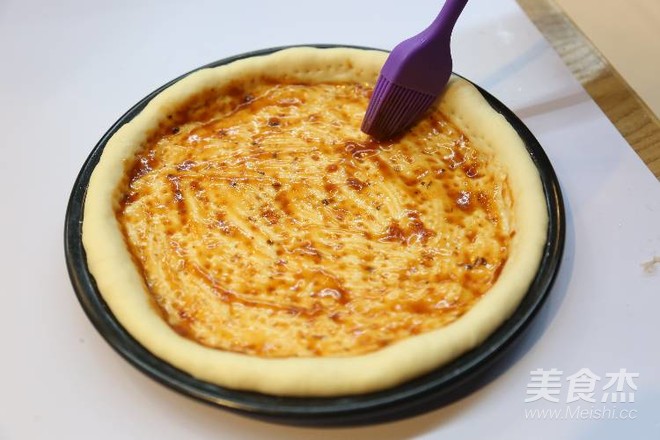
8. Put a layer of salad oil on the base of the pizza that has been poked, and then a layer of pizza sauce.
9. Sprinkle a layer of cheese first, then spread the various dices, and then spread the cheese on top.
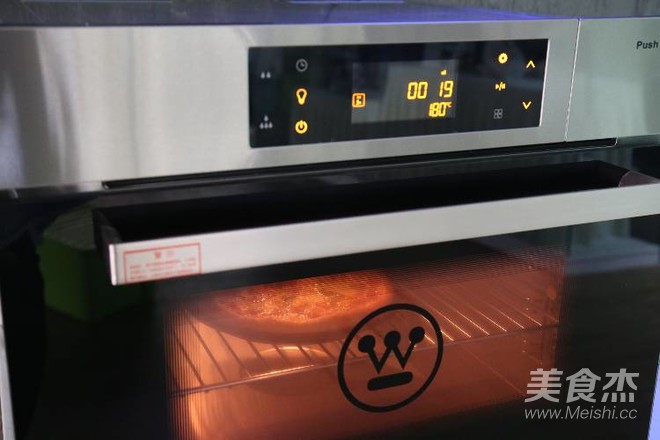
10. Put it in the oven and heat up and down at 190 degrees for 20 minutes. When the cheese is melted, it is a bit yellow.

11. Tips: 1. In addition to the room temperature fermentation dough, it can also be fermented in the oven. 2. How to judge that the dough has been fermented: The best way to check the degree of fermentation is to insert a finger into the dough. After the fingers are pulled out of the dough, if the fingerprints appear and quickly recover, it means that the fermentation time is not enough; if the dough around the fingerprints does not rebound If the dough does not sag, it means that the dough is just properly fermented; if the dough around the fingerprints sags quickly, it means that it is over-fermented. You can add baking powder and knead it to save it. 3. The dining fork poke holes in the bottom of the cake to avoid expansion of the bottom of the cake during the baking process. 4. Before putting the dough into the pizza pan, spread a little softened butter on the pizza pan to make it easier to demould. (You can also put on salad oil, so that the bottom of the baked pizza is golden, which is more beautiful)

Tips: Tips: 1. In addition to the room temperature fermentation dough, it can also be fermented in the oven. 2. How to judge that the dough has been fermented: The best way to check the degree of fermentation is to insert a finger into the dough. After the fingers are pulled out of the dough, if the fingerprints appear and quickly recover, it means that the fermentation time is not enough; if the dough around the fingerprints does not rebound If the dough does not sag, it means that the dough is just properly fermented; if the dough around the fingerprints sags quickly, it means that it is over-fermented. You can add baking powder and knead it to save it. 3. The dining fork poke holes in the bottom of the cake to avoid expansion of the bottom of the cake during the baking process. 4. Before putting the dough into the pizza pan, spread a little softened butter on the pizza pan to make it easier to demould. (You can also put on salad oil, so that the bottom of the baked pizza is golden, which is more beautiful)


 Buy on JD
 Buy on Amazon