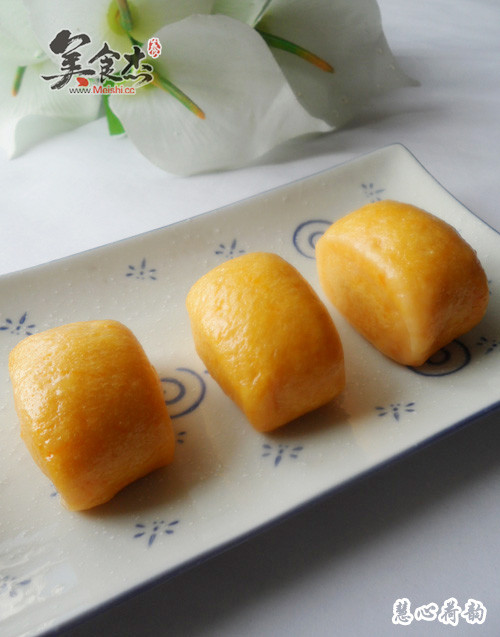
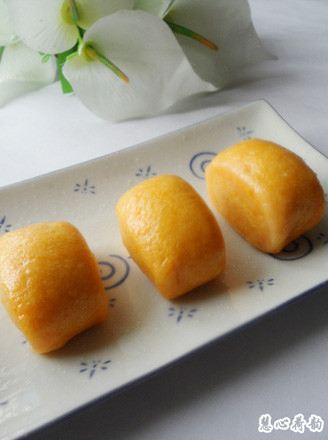
Creamy Pumpkin Knife Cuts Small Buns
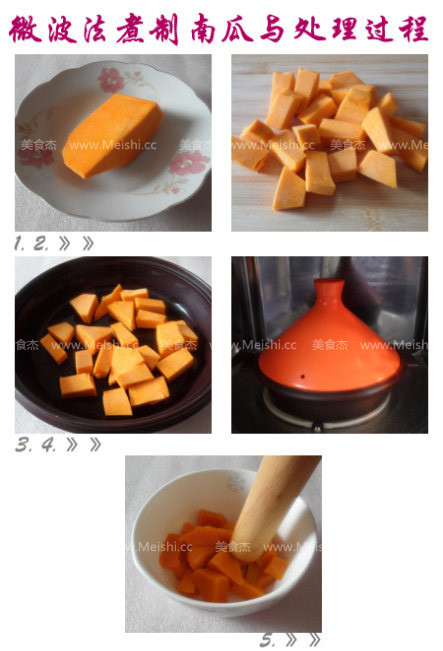
1. Prepare a piece of 150g pumpkin, wash and peel with water
2. Peeled pumpkin cut into small pieces with a knife
3. The diced pumpkin is placed in a microwave-suitable tagine pan or container
4. Cover the pot, put it in the microwave and heat it on high heat for 3 minutes, until the pumpkin is cooked and soft
5. The cooked pumpkin is placed in a bowl and mashed with a rolling pin to form a puree
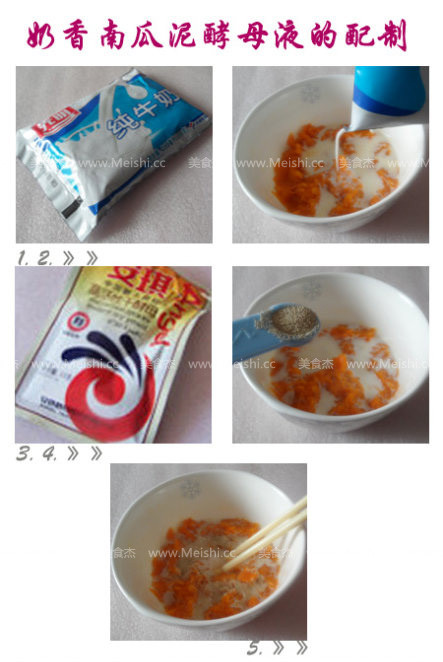
6. Prepare 20 grams of milk (Huixin’s thoughtful reminder: the mashed pumpkin puree contains water, and the amount of milk depends on how much water the pumpkin puree contains)
7. Pour the prepared milk into the pumpkin puree
8. Prepare 1/4 teaspoon yeast
9. The prepared yeast is placed in the pumpkin puree milk
10. Stir evenly with chopsticks, set aside to stand for 5 minutes to make the yeast develop its fermentative properties
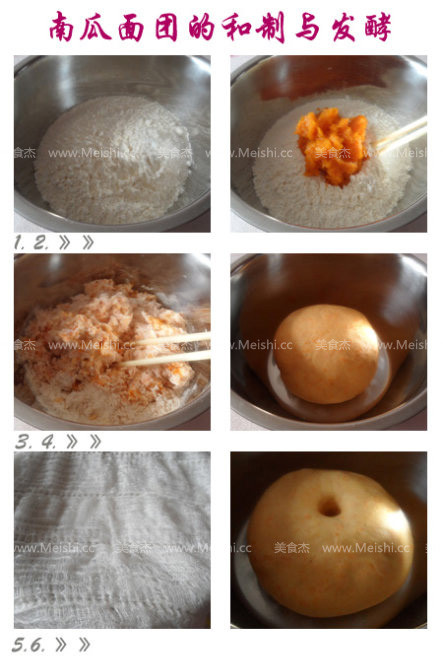
11. Prepare 250 grams of flour and put it in the basin
12. Put the prepared milk-flavored pumpkin yeast liquid in the flour in batches (wisdom reminder: when putting pumpkin puree in the flour, it is best to put it in batches to avoid excessive pumpkin puree and the good dough is too soft)
13. Use chopsticks to mix the milk-flavored pumpkin yeast liquid and dry flour evenly to form a dough with a small amount of dry powder
14. Knead all the noodles together by hand, and knead repeatedly to form a smooth "Sanguang" dough
15. Cover the kneaded dough with a clean damp kitchen cloth and set it aside for fermentation
16. After the dough has risen to twice its original size, make a small hole in the dough with your hands. The dough will not rebound or shrink, and it will be fermented.
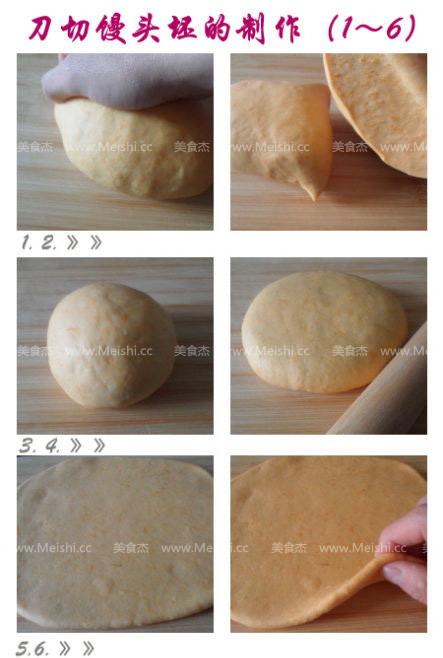
17. Put the finished dough on the chopping board and knead it by hand for 3 to 5 minutes to expel the air in the dough
18. The kneaded dough is cut into a small piece with a knife. There is no obvious big cavity in the cut surface, indicating that the dough is kneaded.
19. The cut dough is kneaded again to make the surface smooth
20. Use the palm of your hand to flatten the dough into a round cake, and use a rolling pin to roll the dough on the cake.
21. Roll out the dough
22. The thickness of the noodle is about 0.5cm, hold one end of the noodle with your hand, lift it up and roll it back to the middle
23. Roll up to the other end of the dough, pinch the edge part tightly with your hands, the dough will form a closed long cylindrical dough roll
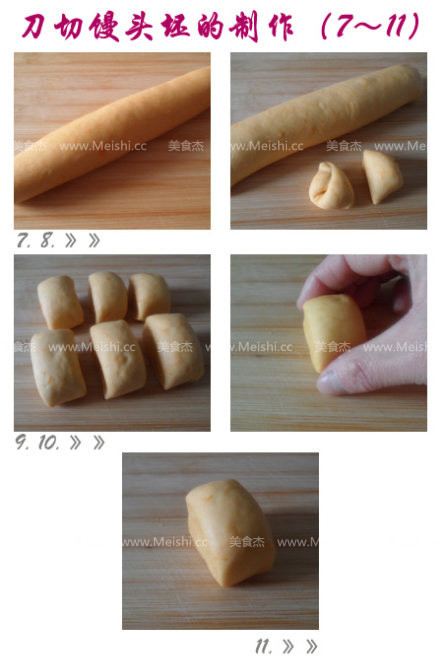
24. Use a knife to cut off the irregularities at both ends of the noodle roll
25. Use a knife to divide the noodle roll into equal-sized noodles
26. Gently pinch the four corners of the noodles with your fingers, and do a slight reshaping
27. Make the four corners of the face agent rounded and smooth
28. Put an appropriate amount of cold water in the pot and support the steaming rack
29. Spread a piece of non-stick paper on the surface of the steaming rack, or brush a layer of cooking oil evenly on the surface of the steaming rack
30. Take out the frozen steamed buns and place them on the steaming rack at intervals
31. Cover the pot and turn on high heat
32. The surface of the pot cover has a place where gas can escape. Cover it with a damp kitchen cloth to prevent the gas in the pot from escaping during the steaming process.
33. Steam for 15-20 minutes until the steamed buns are cooked, turn off the heat without opening the lid, let the steamed buns steam in the pot for 1 to 2 minutes, open the lid and take out the steamed buns

 Buy on JD
 Buy on Amazon