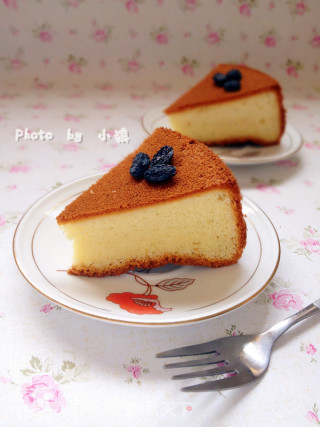
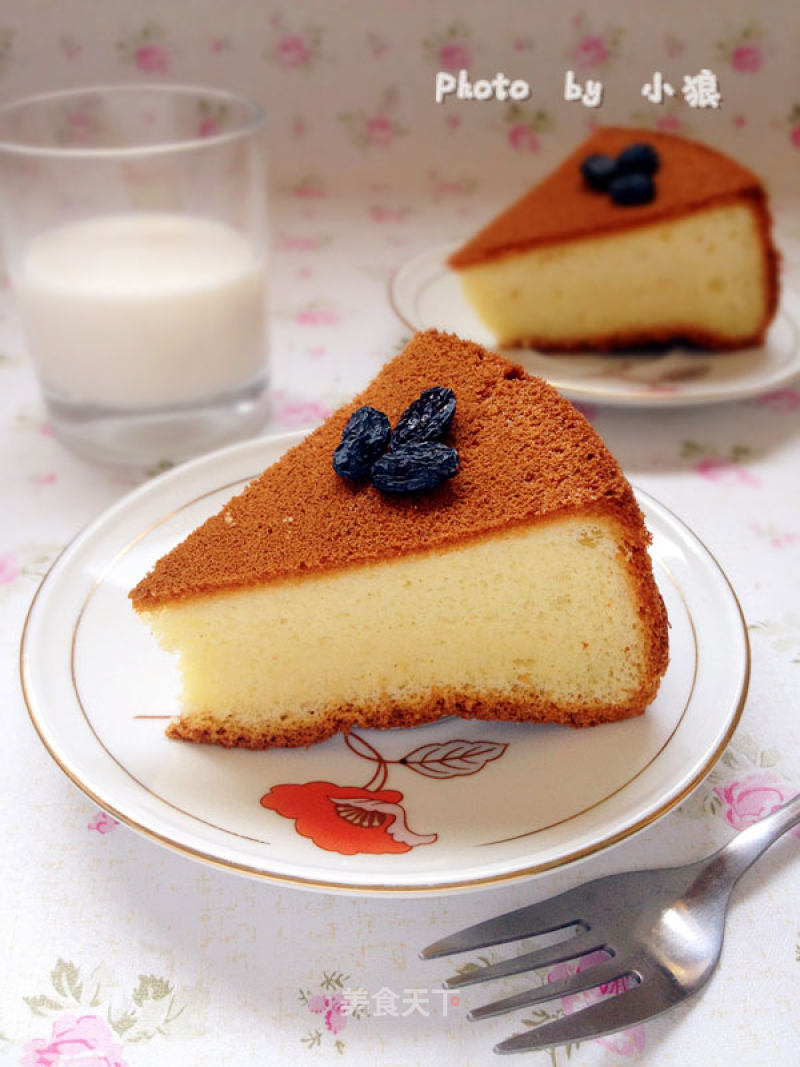
First Experience of Chiffon-8-inch Chiffon Cake
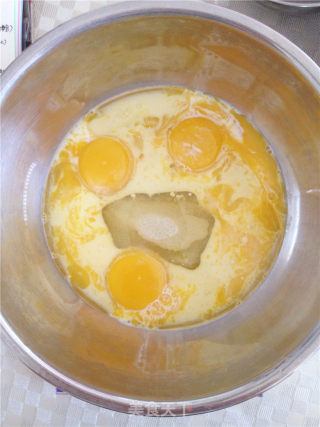
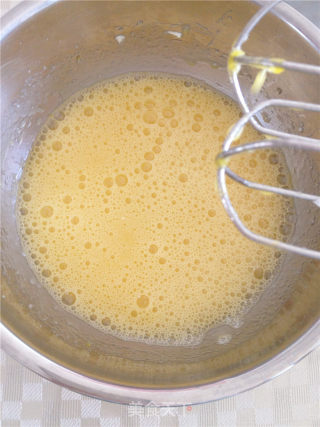
1. Separate egg yolk and egg whites. Mix the egg yolk with milk, 20 grams of sugar, corn oil and salt.
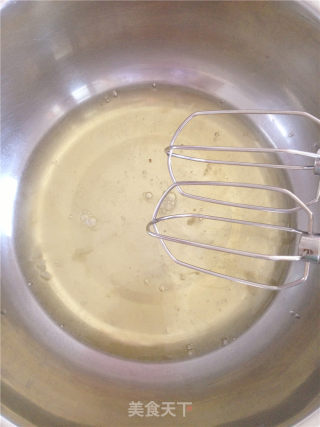
2. The container for the egg whites should be water-free and oil-free.
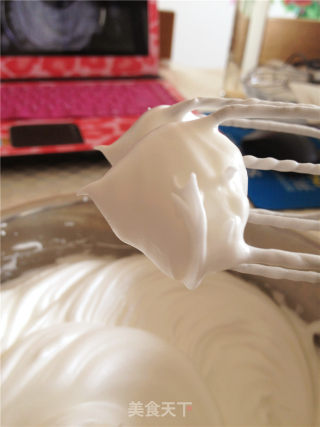
3. Add 50 grams of white sugar to the egg whites in batches. Use an electric whisk from low speed to high speed until hard foaming. The sagging corners of the egg whites in the picture cannot be used to make chiffon cakes.
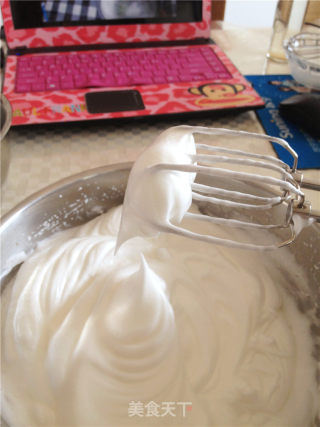
4. About 5 minutes after beating, the fine lines of the egg whites are very obvious, and the hands feel heavy during whipping. The sharp corners of the egg whites are short and straight, that is, it has reached a very rigid foaming degree. It is not easy for such egg whites to be placed in a round mold. Cracked.
5. Use a whisk at low speed to beat the egg yolk mixture evenly. (At this time, turn the oven to 150 degrees to preheat)
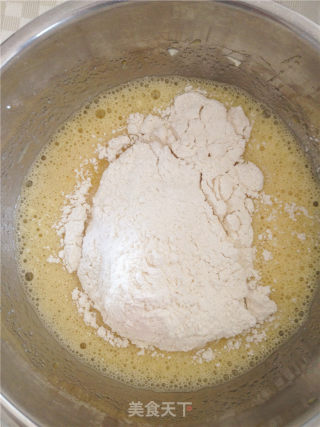
6. Pour in the sieved low powder, and use a manual whisk to beat evenly until there are no particles.
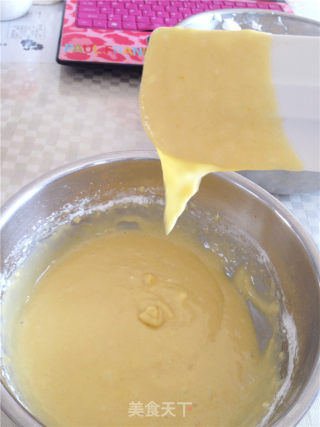
7. The stirred egg yolk paste is very delicate and fluid.
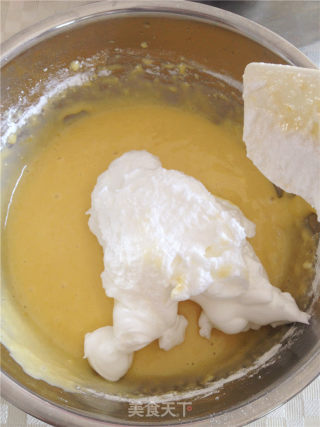
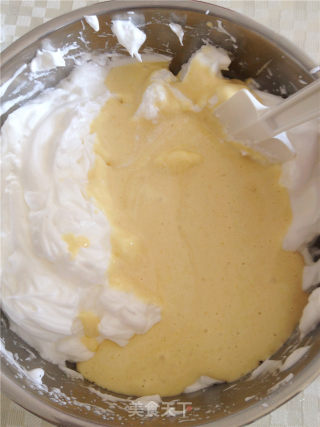
8. Add 1∕3 meringue to the egg yolk batter and stir evenly.
9. Pour the 2∕3 meringue and stir evenly.
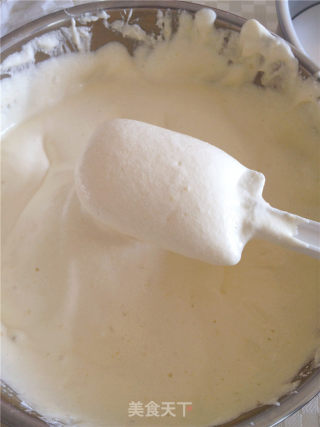
10. This step is very important. Be sure to mix the meringue and egg yolk paste evenly. The final state is delicate and smooth and looks very comfortable. The mixing time is almost the same as the time to beat the egg whites. (As long as the egg whites are in place, don't be afraid of defoaming.)
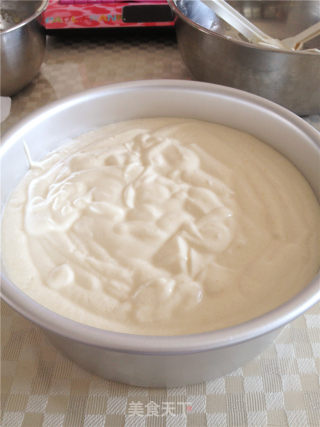
11. Pour the cake batter into the mold and shake it up and down a few times to shake off the large bubbles.
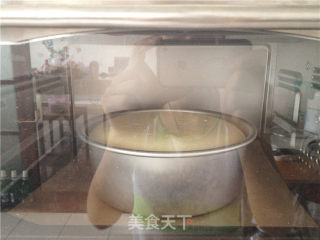
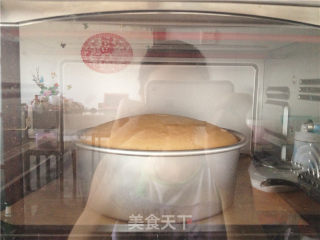
12. Bake in the oven at a low temperature of 150 degrees for 30 minutes. At this time, the surface of the cake is very white.
13. Turn to 170 degrees and bake at high temperature for 30 minutes. After baking, take it out of the oven, smash it up and down, and immediately invert it for 30 minutes. After cooling the cake, remove the edge of the cake from the mold by hand, and remove the bottom of the cake with a spatula.
14. The cut tissue is delicate, soft and elastic.

Tips: Discussion on the Reasons and Solutions of Chiffon Cake Retraction and Low Puff
1. There is too much oil and water in the formula, and if you don't add the right amount of baking powder, it will be crushed by its own weight just like if it is not inverted in time. The solution: adjust the formula.
2. The batter develops tendons and shrinks after cooling. Solution: Use low-gluten flour, or use 80% all-purpose flour and 20% cornstarch. Note during operation: Do not stir the batter before adding the egg yolk. Use the egg to tumble 6 to 7 times. It does not matter if it is uneven. Stir the egg yolk for a while until it is evenly thin. When mixing egg yolk paste and egg white paste, also pay attention to mixing gently, turning up and down, rather than mixing in circles.
3. Protein defoaming: insufficiently beaten, or beaten after being interrupted for a period of time, or beaten the egg for too long, the timing of adding sugar is wrong...it is not easy to achieve dry foaming, so that the protein foam is unstable and easy to disappear Bubbles and pores are reduced, so that the volume of the cake batter is reduced, and the cooked cake body will shrink when it cools. The egg liquid after defoaming is easy to settle and becomes a pudding layer during baking, which is also the possible reason for the cake shrinkage. Solution: a. The egg beating head and bowl should be clean, without water and oil, it is best to use copper, stainless steel egg beating bowl, b. The eggs should be fresh, but after refrigerating, the egg white and egg yolk should be clean in the egg white. Don't leave a trace of egg yolk. c. Adding sugar, white vinegar (tartar powder) and corn starch can help to smooth the foam and stabilize the foam. d. Start to beat at a low speed-add 1/3 of the sugar, white vinegar (tartar powder) and corn starch after coarse soaking, and beat at a medium speed.
4. The egg yolk paste is not evenly stirred, the fat is not fully emulsified, or the egg yolk paste and the egg white paste 2 are not mixed evenly, and the aforementioned protein paste defoams. These conditions will sink due to the high specific ingredients, and after baking The pudding layer is formed, and the cake will not rise. Solution: Master the essentials of mixing well, move lightly and fast, but it must be mixed well.
5. The mold wall of the mold used is anti-sticking, or oil is applied to the mold wall, or the inner wall of the mold is not cleaned, there is an oil layer,... will cause insufficient adhesion, and the cake paste cannot climb up and grow during baking. The cake never grows up. The solution: reject the anti-stick mold and ensure that the inner wall of the mold is oil-free.
6. If the primer is too large, it is easy to cause the bottom to shrink. When the undercut is taken out, it is found that the bottom is concave, forming an inverted crater-shaped hole. This problem may also occur when the bottom of the mold is greased? The solution: lower the lower fire, or put the baking mold on the upper compartment of the oven, or change the baking mold on the baking tray, or lower the upper and lower fire at the same time....
7. Stop baking if it is not fully cooked. Submature is also a common cause of cake shrinkage. The solution: fully cooked, if you are afraid of scorching the surface. You can lower the baking temperature, extend the baking time, or cover the upper surface with tin foil (but don't seal it to avoid stuffy baking). The commonly used inspection method is toothpicks** to see if there is any cake sticking out. Experienced people can pat the surface of the cake with their hands, there is no obvious rustle, the rebound is good, and no fingerprints are left.
8. The temperature has been reduced during the baking process

 Buy on JD
 Buy on Amazon