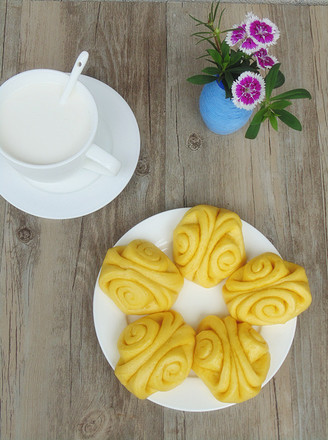
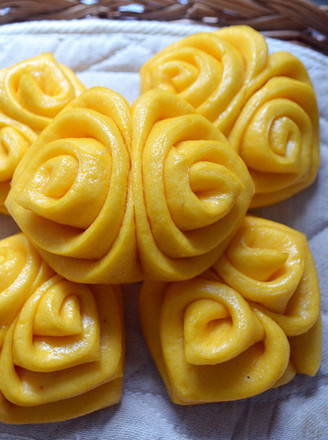
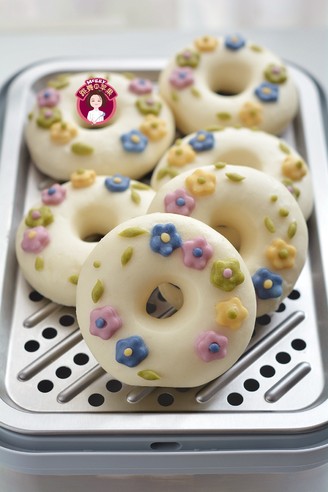
Flower Donut Buns
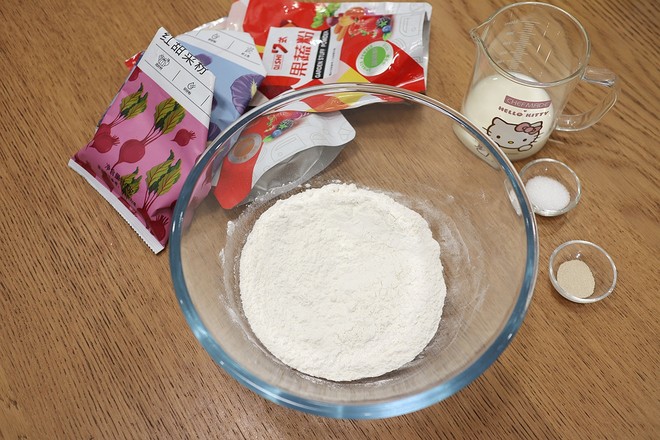
1. All-purpose flour, sugar, dry yeast, milk, natural fruit and vegetable powder are ready;
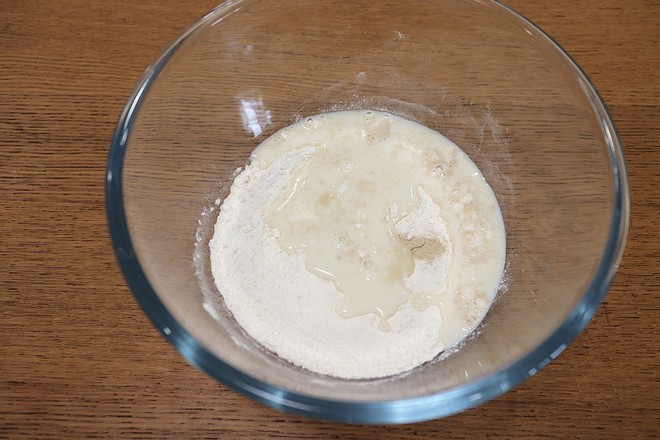
2. Sugar, dry yeast, and milk are all added to flour. The water absorption rate of flour and the consistency of milk are different. You can add milk gradually, and adjust the amount according to the state of the dough;
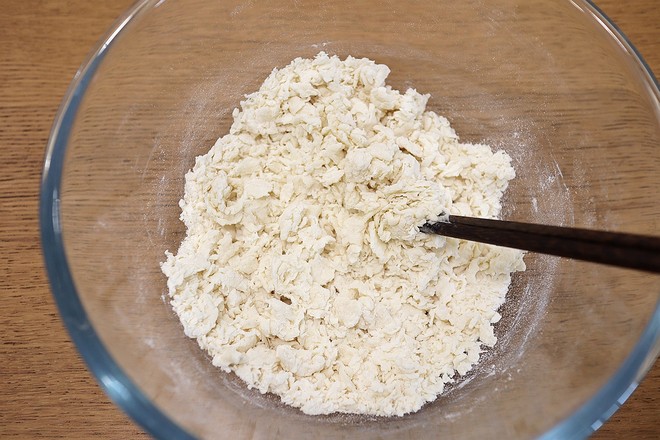
3. Stir it with chopsticks into a flocculent shape without dry powder;
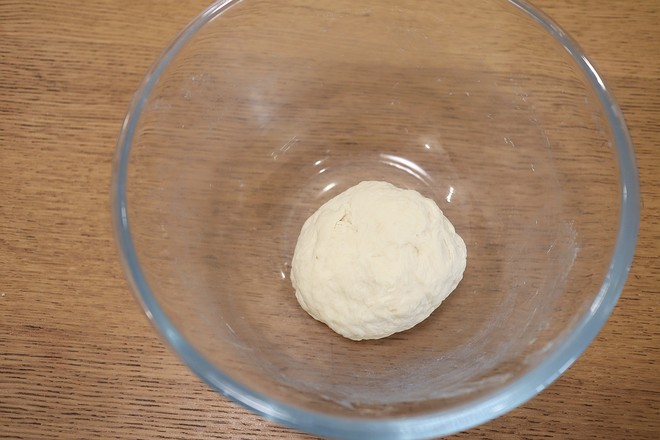
4. Knead the dough by hand, it doesn't matter if the surface is rough, cover it with plastic wrap for 5 minutes;
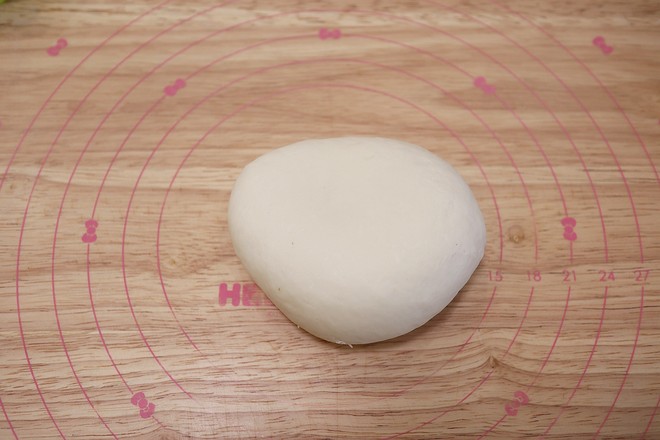
5. The dough after re-kneading is soft, smooth and delicate;
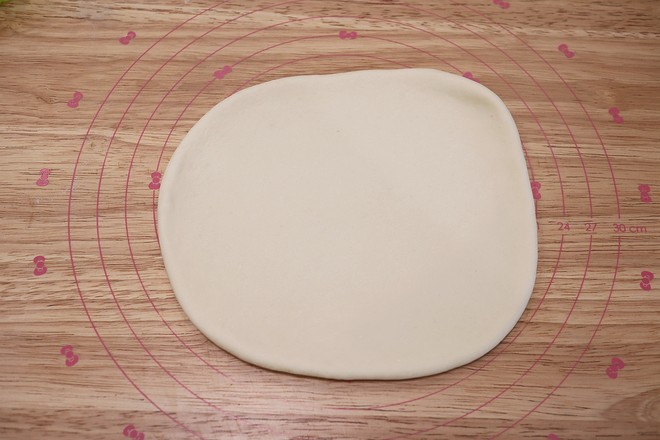
6. Roll out into a dough piece with a thickness of about 5 mm;
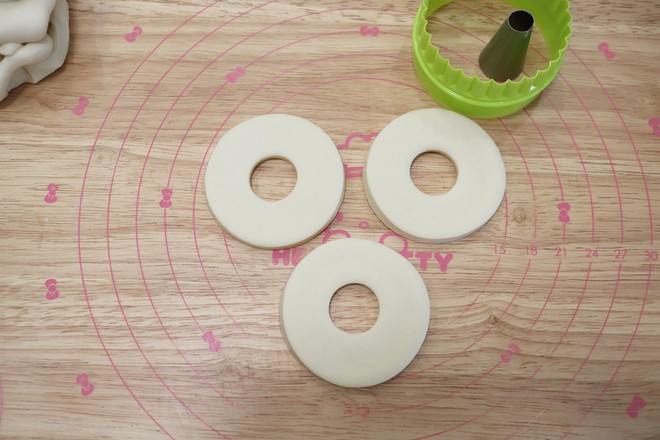
7. Use a mold to carve out a doughnut-shaped green body; knead the remaining dough smoothly, roll it flat, and engrave it;
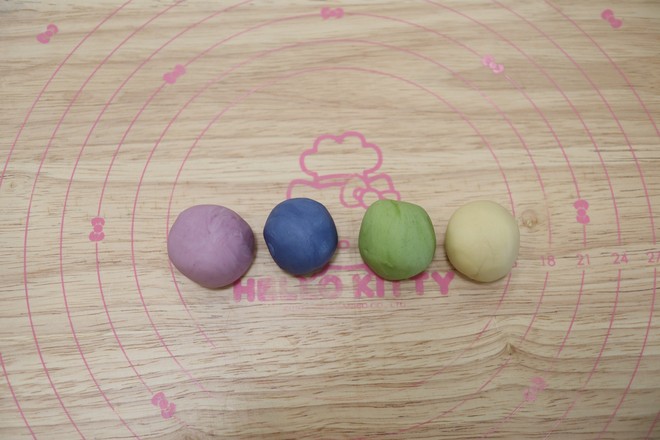
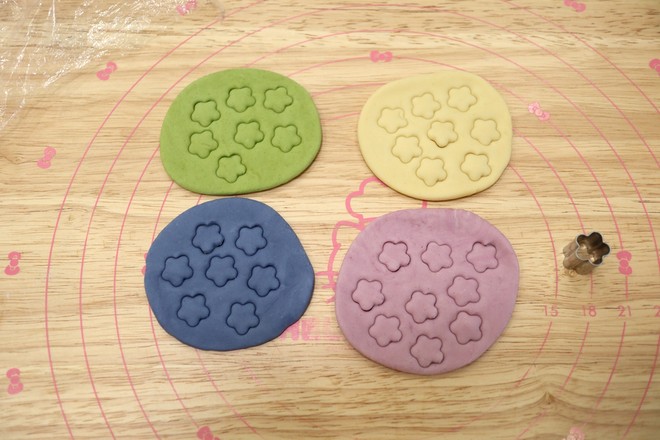
8. Divide the remaining small dough into 4 portions, add appropriate amount of fruit and vegetable powder to knead into colorful dough, from left to right are purple sweet potato dough, butterfly peas dough, spinach dough, pumpkin dough;
9. Roll out the colored dough into 2 mm thick dough pieces, and use a flower mold to carve out the patterns;
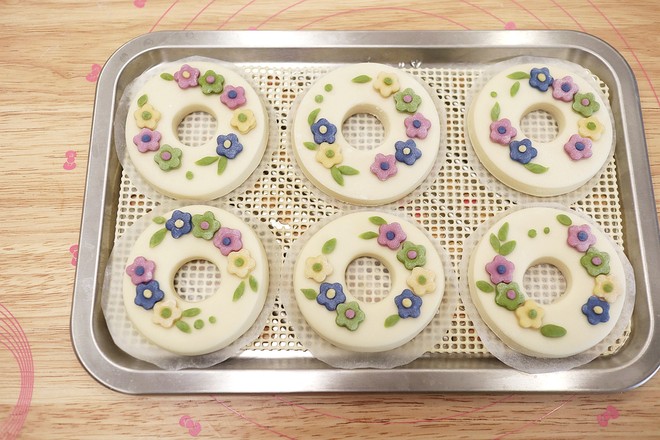
10. Spread a little water or milk on the back of the flower and stick it on the surface of the raw steamed bun. The shape can be designed as you like; press a small hole in the middle of the flower with the tip of a chopstick, wipe a little water, and then press the dough the size of a millet grain on it. It is the flower core; the leaves are made by rolling the dough into small strips and then adjusting the leaf shape;
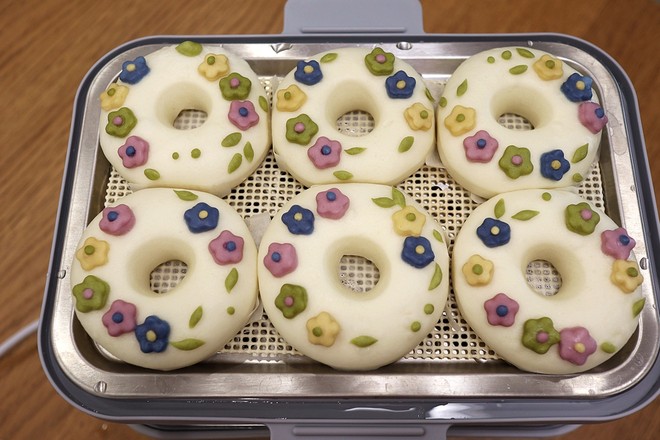
11. The dough is fermented in a warm and humid place for about 15 minutes, which is 1.5 times its original size and can be steamed in the pot; steamed for 15 minutes, simmered for 3 minutes, and out of the pot.
Tips: 1. The dough does not need to be fermented twice, and it is directly rolled into pieces and shaped after kneading it smoothly;
2. In order to prevent the dough from fermenting and the surface becoming dry, the whole process should be covered with plastic wrap to prevent evaporation, or put it in the refrigerator to delay the fermentation, and then put it in a warm and humid place for fermentation;
3. If you want the shape not to be deformed, the dough can be steamed when it is 1.5 times larger; if you want a softer taste, you can steam it when it is twice as large.

 Buy on JD
 Buy on Amazon