#柏翠大赛#german Lye Bread
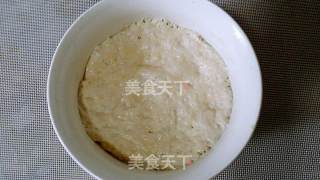
1. Mix the starter ingredients, cover and ferment at room temperature for 12 to 16 hours until it swells and begins to collapse.
2. Mix all the ingredients except yeast and butter into a dough and let stand for 20 minutes. Add salt and yeast, knead to the expansion stage, add butter softened at room temperature, and continue to knead until fully expanded.
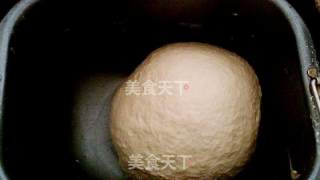
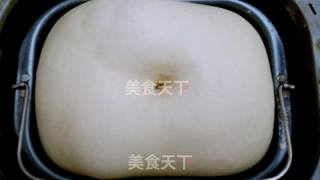
3. Put it in a container and ferment at room temperature for about 2 hours, and press it with your fingers without rebounding.
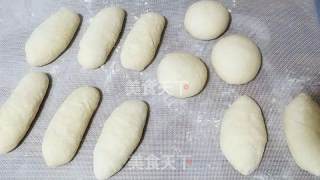
4. Take out the dough and divide it into 11-12 portions, each 85-90 grams. Roll each portion out and roll it into a tube shape and let it rest for about 10 minutes.
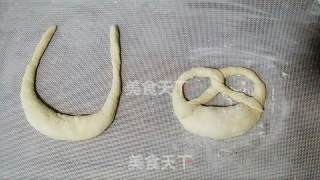
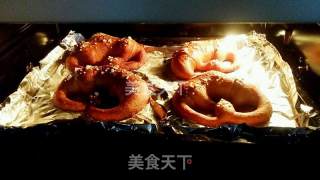
5. First make a few pre-knots, and make a long strip with a thick middle and thin ends. Cross the two ends twice, and then shape them into the shape shown in the figure.
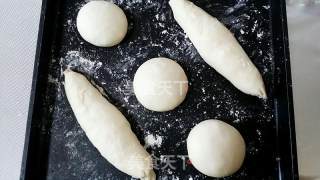
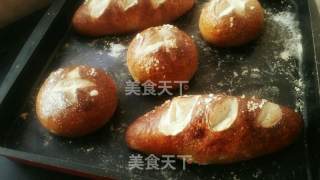
6. Make two more olive-shaped and cute little circles.
7. Cover and ferment at room temperature to 70%, about 30 to 45 minutes, and then refrigerate for 30 minutes without the plastic wrap to harden the surface. Or ferment for 20 minutes and then refrigerate overnight.
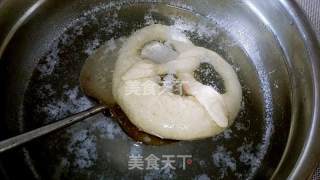
8. Dissolve the edible alkali in water, stir to dissolve completely, and let it stand for 10 minutes (pay attention to wearing gloves and protective glasses). Soak each dough in the alkali solution for about 30 seconds.
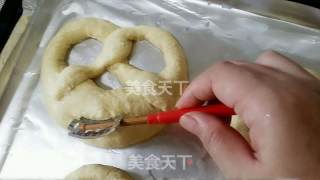
9. Sprinkle a little coarse sea salt on the surface and cut the bread in the thickest position. Because the surface becomes hard after soaking and the expansion in the oven is limited, so cut the bag so that the dough can expand.
10. Put it into the preheated oven at 220-230°C and bake it for about 15 minutes until it turns brownish red.
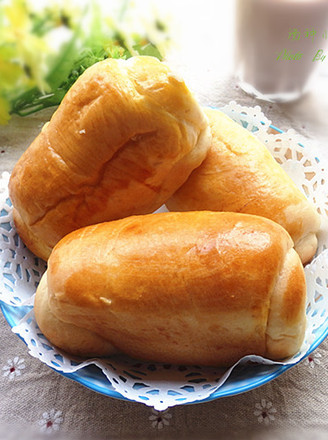
11. These are pretty cute too, and the cut of the small round bag is longer and beautiful. After the alkaline water bath, the taste is particularly fragrant. The surface is hard and brittle, and the inside is soft and fragrant. Coarse sea salt is absolutely indispensable.
Tips: Baking alkali is also called concentrated alkali (NaOH), and its pH value is higher than that of edible soda noodles (Na3CO3) and baking soda (NaHCO3) used for steamed buns. The appearance is also different. The concentrated alkali is granular, and the latter two are powdered.


 Buy on JD
 Buy on Amazon