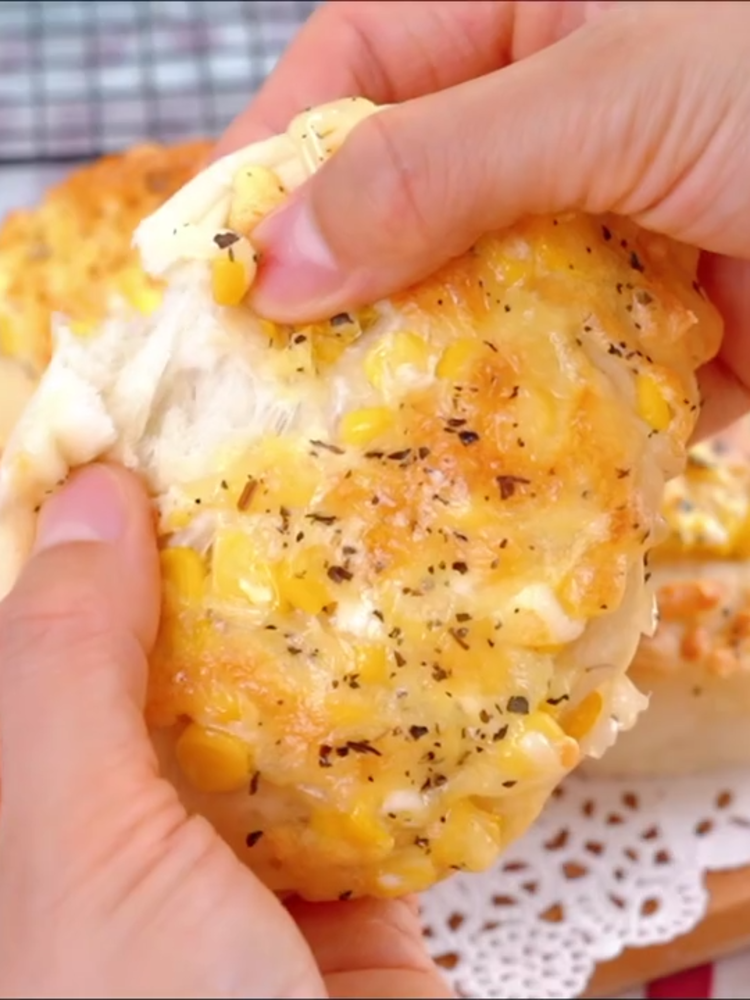
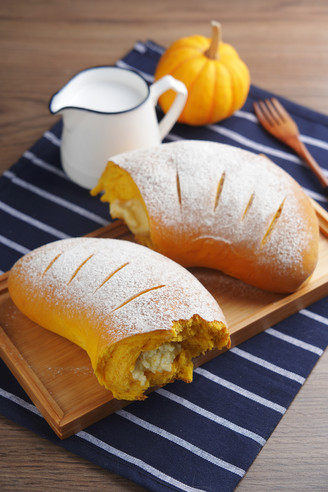
Hand Kneaded Bean Paste Flower Bread
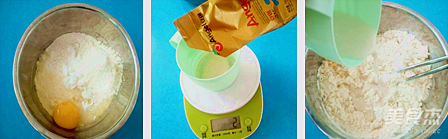
1. Weigh the high-gluten flour, milk powder, salt, sugar, etc. to the corresponding number of grams, put them in a larger basin, knock in an egg, and mix well; add 2 grams of yeast powder to 50 grams of water to fully dissolve and then slowly pour it in Inside the flour bowl.
2. Stir it with chopsticks until there is no dry powder and form a cotton wool, then knead it with your hands, cover it with plastic wrap, and let it sit for half an hour, so that the flour can fully absorb water and become very moisturizing, which can greatly shorten the kneading time. In summer, the temperature is high, so put it in the refrigerator to prevent yeast from fermenting. After half an hour, put the dough on the stone countertop, ready to start kneading.
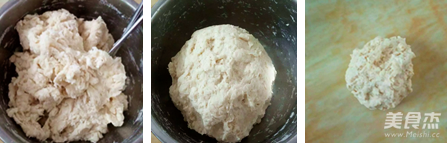

3. Whether the bread is delicious or not depends on whether the kneading is in place. The main action of kneading is-rub, rub it out with the strength of your wrist, retract it to fold it, rub it out again, repeat this action until you can pull out the thick film (if you say that the amount of liquid you just added is not enough at the beginning, feel the dough It is very dry. At this time, it is necessary to replenish water in time. Method of replenishing water: Take a bowl of water and pat on the dough with your hands. Do not pour water directly on the dough. You can dip your hands in water several times to add moisture. If the dough is too dry, It is not easy to pull out the membrane).
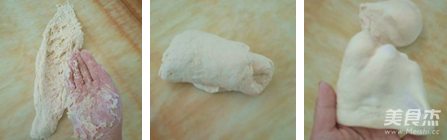
4. After kneading the dough into a thick film, you can add softened butter. The dough after adding butter will be very slippery when it starts to knead, and the dough will become wet and sticky again, just like a pile of broken cotton wool. It looks terrible. Knead 5 In about a minute or so, the butter has been fully kneaded into the dough, start rubbing it out again to take it back, rub it out and take it back again
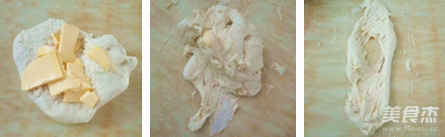
5. Continue to knead the dough. The kneaded dough will not stick to your hands or stick to the countertop easily. Lift the dough from the countertop and leave the countertop easily and completely. The palms and fingers are very clean. The whole process takes about half an hour. Take a piece of dough. Check the condition of the film. Use the four fingers other than the little finger to pinch a handful of the top of the dough, and then slowly pull it up, while pulling it while holding the dough with two fingers and pulling it left and right (you can easily pull out the glove film , And it is not easy to break, and it is very tough, which means the dough is kneaded in place (the dough breaks all at once, indicating that it still needs to knead)
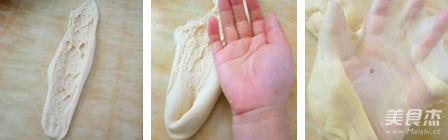
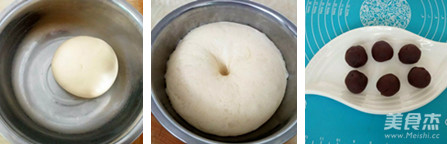
6. Knead the dough again and put it in a basin, cover it with plastic wrap or a damp towel and leave it in a warm place to ferment to 2.5 times its original volume. It feels very light to hold. Stick a little flour on your fingers. Press the dough lightly, the fingerprints will not recover immediately. , It will not collapse slowly like a frustrated ball, which means that the fermentation is just right). During the dough fermentation process, the bean paste filling can be prepared, divided into 6 equal parts, 30 grams each
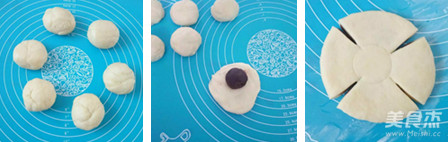
7. Divide the dough into 6 equal parts, cover with plastic wrap and let it stand for ten minutes. Take one portion, press flat, put red bean paste on it, and wrap it. The dough is closed down, flatten it gently, and roll it into a thick bun (do not roll it too thin, otherwise it will be easy to reveal the filling), use a round bottle cap to gently press the center of the dough to make a round mark, and use scissors to enclose Cut the round seal into 4 equal parts
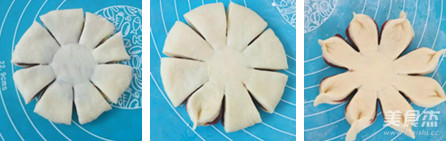
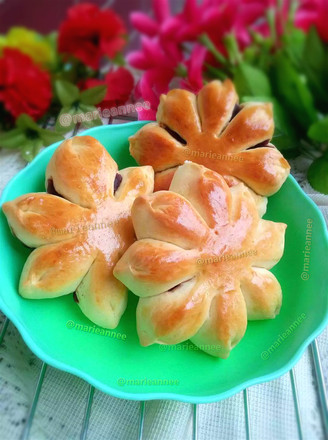
8. Divide each equal part into 2 equal parts, so that a bread dough becomes 8 equal parts. Then knead the two corners of each equal part to form a petal. Pinch out the other petals in the same way. All 6 doughs are made into flowers.
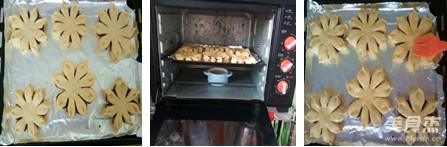
9. The finished flower bread dough is placed in a baking tray covered with tin foil, and a bowl of water is placed on the bottom of the oven, and the baking tray is moved into the oven for secondary fermentation. When fermented to 1.5 times the original size, take out the raw bread embryo and brush with egg liquid
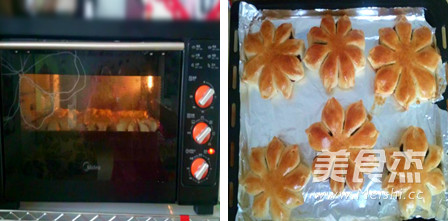
10. Put it in the middle layer of the preheated 180 degree oven, fire up and down, and it will be out of the oven in about 15 minutes. Take out the baking tray and let it cool before serving.
Tips: 1. The oven time is for reference only
2. The size of eggs and the water absorption of flour are also different, so the amount of water should be controlled well. If the amount of liquid you just added is not enough at the beginning, and the dough feels dry, you should add water in time at this time. The method of replenishing water is to take a bowl of water and pat it on the dough with your hands. Do not pour water directly on the top of the dough. Replenish moisture with water by hand.

 Buy on JD
 Buy on Amazon