Microwave Roasted Sugar Chestnuts
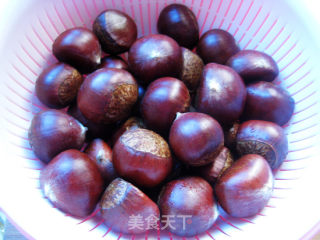
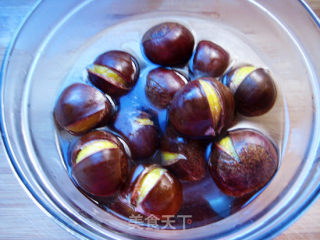
1. The chestnut is washed to remove the white fluff on the surface, and the moisture is wiped off with a kitchen cloth.
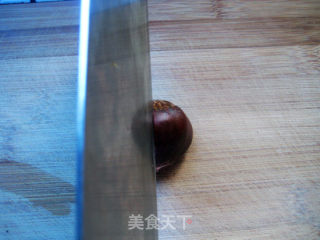
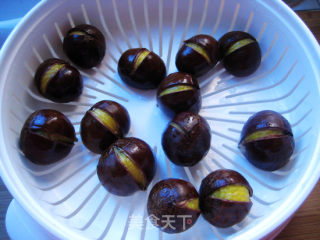
2. Put the flat side of the chestnut on the chopping board and use a knife to make a cut on it.
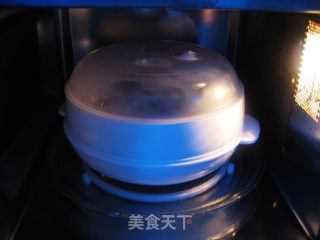
3. Put the chestnuts in a microwave steamer and roast on high heat for 3 minutes (the container can be used in a microwave oven).
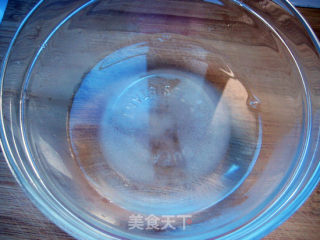
4. Pour the sugar into warm water and dissolve it for later use.
5. Pour the roasted chestnuts into sugar water and soak for 10-20 minutes (more flavor can extend the soaking time).
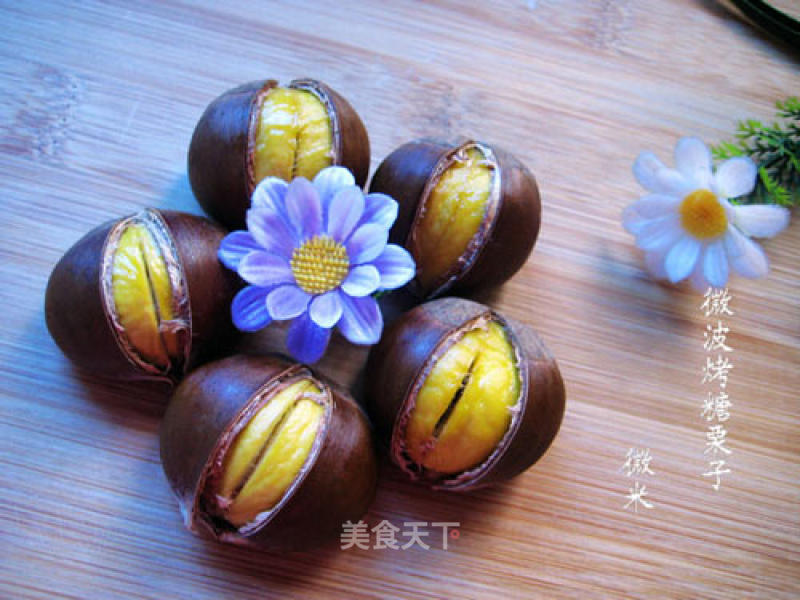
6. Pick up the chestnuts, put them in the microwave steamer again, and roast them on high heat for 3 minutes.

Tips: How to choose good chestnuts?
Take a look at the color. Some raw chestnuts look bright on the surface and dark in color like chocolate. Do not buy such chestnuts. They are aged. New chestnuts are those that are lighter in color (like coffee with more mate), and the surface is covered with a thin layer of powder and not too shiny.
Second, look at the fluff. Everyone knows that there are a lot of fluff on the tail of chestnuts, the surface is bright, and the hair on aged chestnuts is generally less, only a little on the tip of the tail. The tails of new chestnuts generally have more fluff.
Third, there are no bug holes on the surface.
Look around. There is a Japanese chestnut, which is very large and very gratifying, but this chestnut has a large water content, low sweetness, high yield, and tastes not as sweet as the domestic variety of noodles. The second is a common medium-sized common variety, which differs in taste depending on the place of production. The third type is not very common, and it is very small, but this type is generally mountain chestnut, a real green food, with a sweet taste.
Five look at the shape. Common chestnuts are roughly divided into two shapes, the first one is round on one side and the other is flat; the second one is flat on both sides. When choosing the sweet one, choose the first one, or choose the second one if it’s not sweet. The reason is simple, analyze from the growth state of chestnuts: several chestnuts on the tree are surrounded by green thorny shells, chestnuts near the shells have round sides, and the ones caught in the middle are of course flattened. The sides of the chestnut are flat, and the chestnuts closer to the shell are more susceptible to sunlight. The sugar content of many fruits also has a lot to do with the sunshine time. This is why chestnuts on the outer layer are sweeter than those on the inner layer.
If you don’t want to eat the raw chestnuts you bought back, it’s best to put them in a mesh bag or sieve in a cool, ventilated place.

 Buy on JD
 Buy on Amazon