Mixed Lotus Root Slices
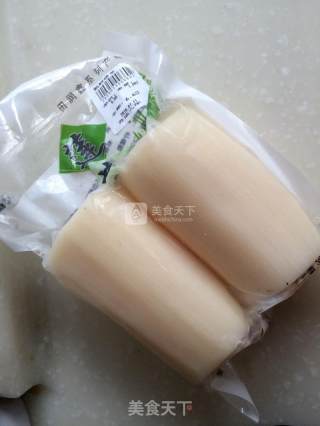
1. A bag of lotus root
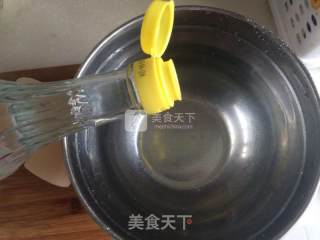
2. Take a deep basin, add an appropriate amount of water, and pour a little white vinegar. White vinegar can prevent the lotus root slices from oxidizing and turning black
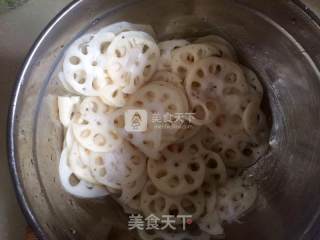
3. Slice the lotus root as thinly as possible. When cutting the lotus root slices, soak the sliced lotus root first in water added with white vinegar to avoid oxidation and blackening. After the lotus root slices are cut, rinse them twice more with water and drain the water for later use
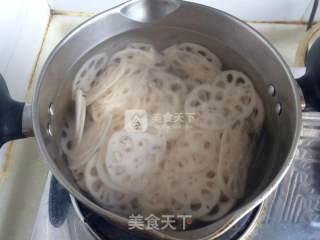
4. Boil water in a pot, boil, add lotus root slices and boil for one minute, remove. For cooking lotus root, it is best not to use a stainless steel pot. The lotus root slices will turn purple and black. I only have this in my spare pot today. I can only cook it once. Fortunately, the lotus root slices have not turned black during the hot time.
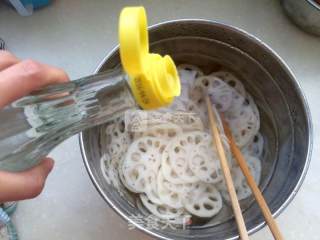
5. Rinse the hot lotus root slices with cold water, put them in a basin, add in cold water, a little more salt, a little sugar, and some white vinegar, mix well and marinate for half an hour
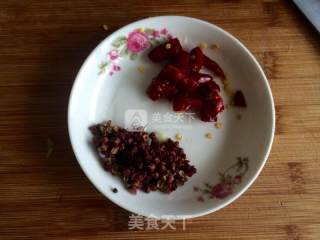
6. Wash the peppercorns, wash and cut the dried peppers, and set aside
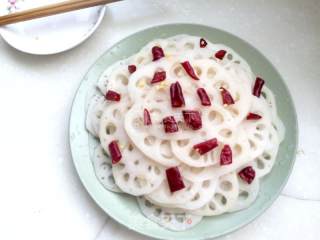
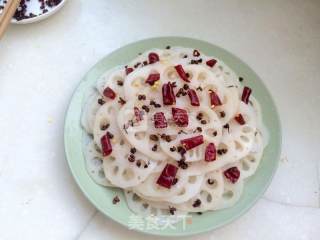
7. Take out the marinated lotus root slices, place them on a plate, wash and cut the dried chilies, and sprinkle them on
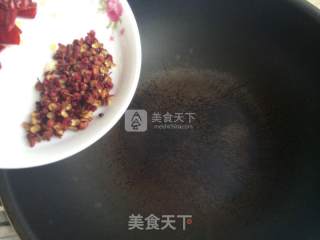
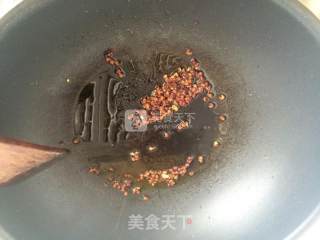
8. Wash the peppercorns, do not put oil after heating the pan, put the peppercorns in first, and stir dry the water
9. Add the pepper oil, stir fragrant pepper, the fire should be low so as not to paste the pepper. Scoop out the peppercorns
10. Sprinkle some of the fragrant pepper on the lotus root slices. I like to eat the peppercorns, or not on the lotus root slices. This is up to my personal preference.
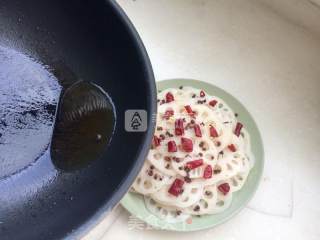
11. Take out the pepper oil, heat it on medium heat until the oil is 80% hot, cracks and blue smoke appear, turn off the heat, wait five seconds for the oil to cool slightly, and pour it on the lotus root slices.
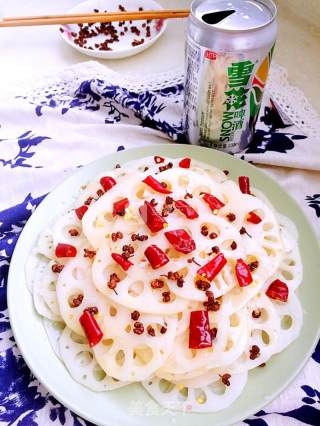
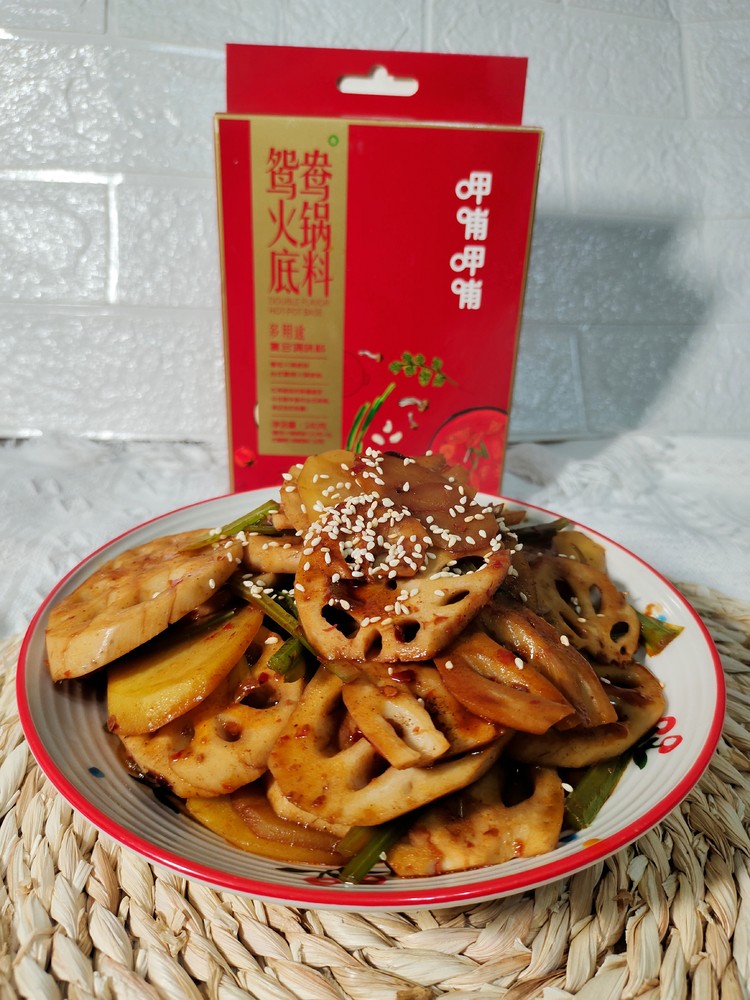
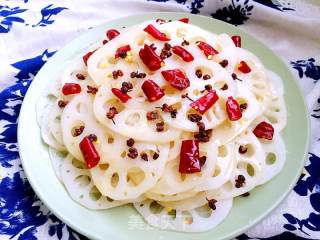
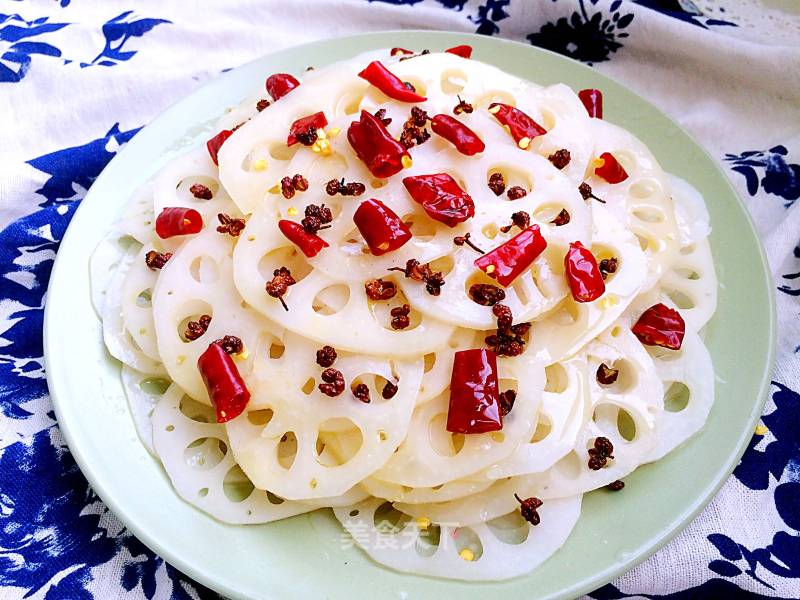
12. Finished product
13. The finished product, this dish of mixed lotus root slices, is very simple to make, with a refreshing taste, slightly numb and salty, and very refreshing and appetizing.

Tips: Lotus root has a high vitamin C content (40-50 mg per 100 grams), polyphenol compounds and peroxidase, which can clean up the "garbage" in the human body.
Lotus root contains relatively rich high-quality protein (about 2%), its amino acid composition is close to human body needs, and its biological value is high. In addition, lotus root is also rich in dietary fiber (about 2%), and the content of calcium and phosphorus is also high (89 mg of calcium and 285 mg of phosphorus).
Lotus root contains high iron content, and regular consumption can prevent iron deficiency anemia.
Rich in vitamin C and dietary fiber, it is beneficial for liver disease, constipation, diabetes and other debilitating diseases.
The tannins contained in it have the effect of constricting blood vessels and stopping bleeding, and are very suitable for congestion, vomiting, hematuria, hematuria, hematochezia, and puerpera and hemophilia patients.
It can relieve heat and clear away heat, and is a good food for dispelling heat. .
1. It can be eaten by the general population.
2. It is very beneficial for people with debilitating diseases such as liver disease, constipation, diabetes, etc.
3. It is very suitable for people with congestion, vomiting blood, hematuria, hematuria, hematochezia, and pregnant women.
4. Due to the cool lotus root, it is not advisable for parturients to eat it too early. Generally, eating lotus root after 1-2 weeks after childbirth can eliminate silt.
Avoid using iron pans when cooking lotus roots to avoid iron utensils from causing food to turn black, but aluminum alloy products can be used.

 Buy on JD
 Buy on Amazon