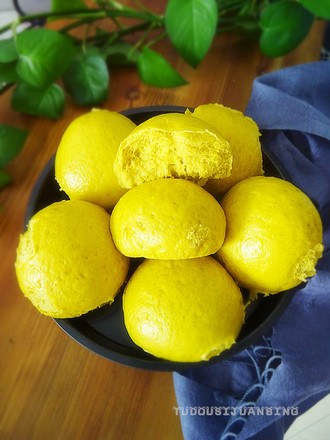
No-knead Pumpkin Buns
1.
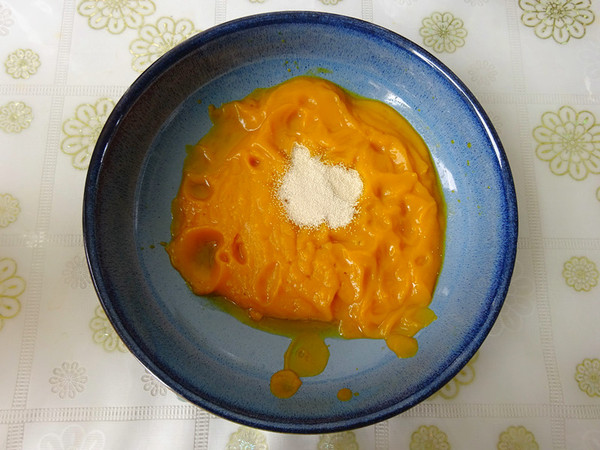
2. Then put in the flour, and then add pumpkin puree appropriately. Combine the flour and pumpkin puree into a dough that is moderately soft and hard. The steamed bun dough is slightly softer than the dumpling dough. Because the water content of the pumpkin used by everyone is different, so you can only rely on your own hand to control the amount
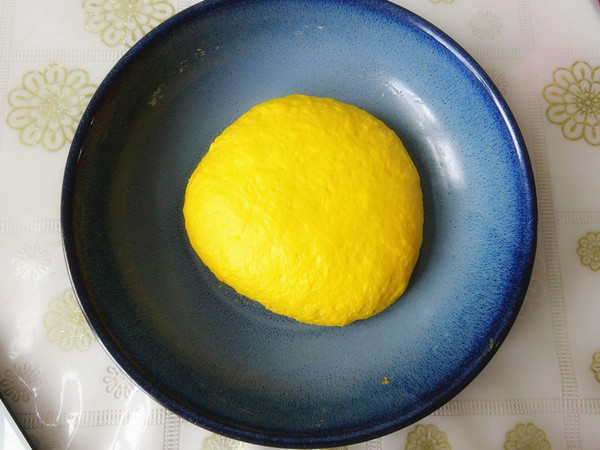
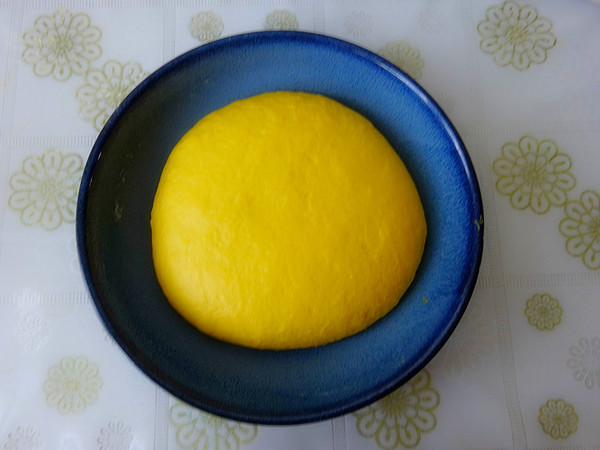
3. Prove the dough in a warm place to 2 times its size. It’s summer, and the room temperature is high. The fermentation is completed in about 40 minutes at room temperature.
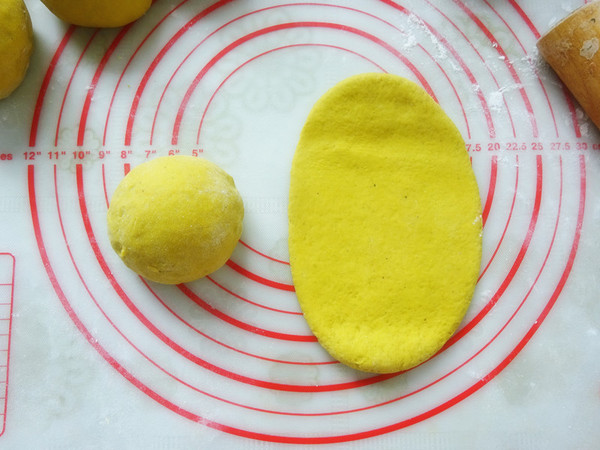
4. Take out the dough and simply vent it and divide it into equal small portions. Each small portion is simply reunited. First take a dough paste and roll it into an oval shape
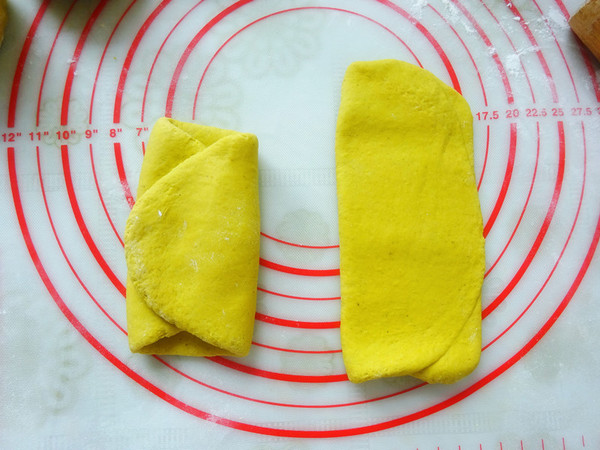
5. Then fold it left and right, turn the direction and roll it out into a rectangle. The width is about 6 cm. The length is as long as possible.
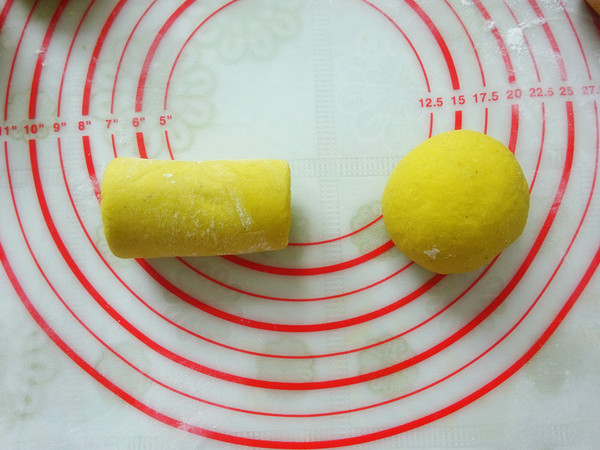
6. Then roll it up, fold it in half and arrange it into a round form, so that the raw embryo of the steamed bun is ready.
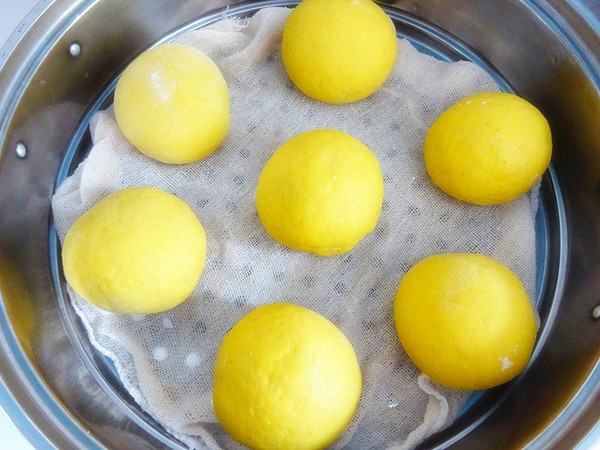
7. Put the prepared raw steamed buns into the steamer, and heat the water in the steamer to warm and cut off the fire. 20 minutes for the second haircut
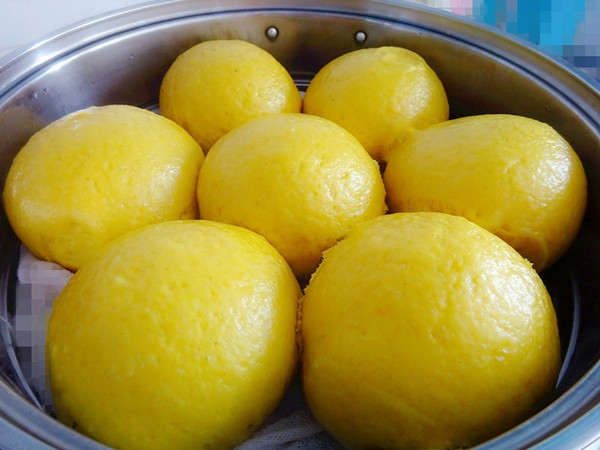
8. Finally, the steamed buns are about 2 times the size of the jelly and steamed. Steam on high heat for 20 minutes, turn off the heat and simmer for 5 minutes before boiling. Each is round and bulging, and it’s so delicious.
Tips: Today I used pumpkin to make steamed buns, which can be done directly with flour. This is more gluten than hand-kneaded dough. Steamed buns have a layered texture and are delicious.
Many people make steamed buns with a harder dough than dumplings, but I prefer softer ones. Generally, the ratio of flour to water for making dumpling dough is 2:1, and for the steamed buns and I, add 10 grams of water a little bit more.
If the flour you use is high-gluten flour, because high-gluten flour absorbs more water, you need to put a little more water, otherwise the dough will be hard. The low-gluten flour has a weak water absorption capacity, so you can't put too much water.

 Buy on JD
 Buy on Amazon