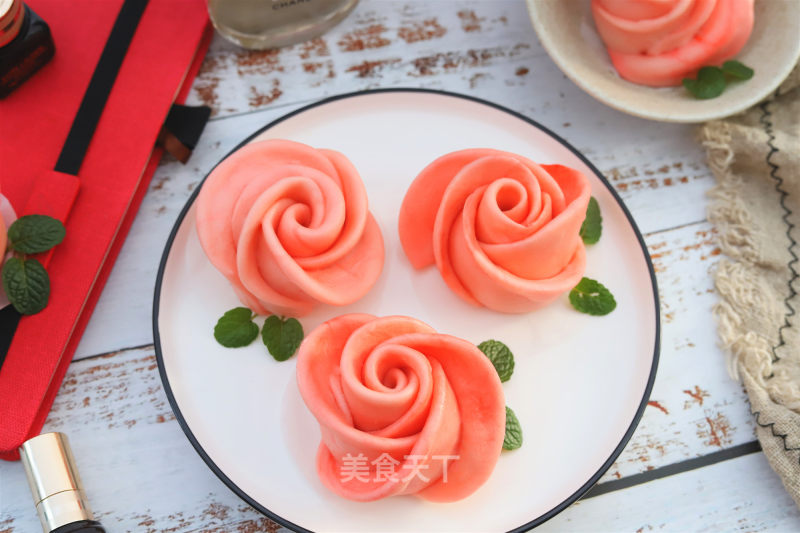
Rose Buns
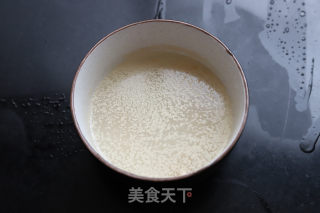
1. Prepare 100 grams of warm water, add yeast powder, stir evenly with chopsticks, and let stand for two minutes.
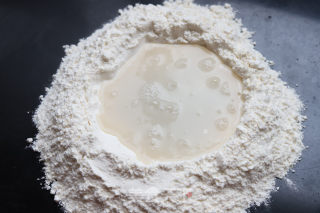
2. Weigh out 200 grams of flour, ordinary all-purpose flour, pour it on the countertop, open a nest in the center, add yeast water, sugar, corn oil, and aluminum-free baking powder.
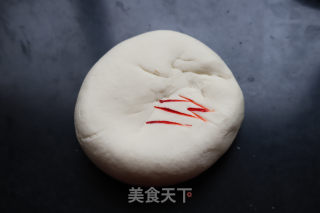
3. Knead into a uniform dough, then use a toothpick to dip an appropriate amount of red pigment on the dough, knead it, I did not directly add the red pigment to warm water, mainly because the imported pigments are very good in color, and a little bit of pigment can make the dough For dyeing red, it is easy to control the dosage when added to the water, so it is not easy to grasp the color of the finished product. I want pink roses. Add the coloring bit by bit to the extent I like.
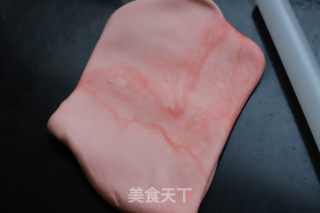
4. After adding the pigment, fold the dough, press repeatedly with a rolling pin, and fold it to spread the color evenly. It does not matter if there is a slight uneven color at the end. The color of the rose produced by this is natural, but it is too uniform and has no characteristics.
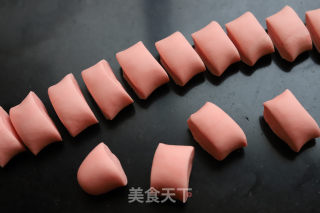
5. Finally, knead the dough with your hands until it is very smooth and delicate. Use a knife to cut the dough. The section is smooth and there are no pores. In this state, it will be fluffy and delicious when used to make steamed buns. Knead the kneaded dough into a strip. Cut the knife into even small doses.
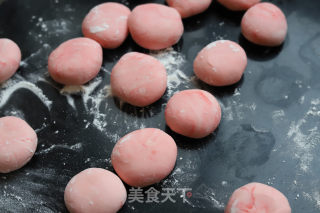
6. Use your fingers to knead the small agent into a round shape and squash it with your palm. If the dough is slightly sticky, you can sprinkle a little dry flour.
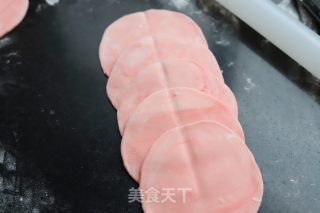
7. Take five or six small doses and roll them into round slices, about a little thicker than the dumpling skin, and then stack them together as shown in the picture. Use chopsticks to make a mark in the middle. The round edge is the rose The petals of the flowers will thicken after fermentation, so if you want the roses to be true, don't roll the dough too thick. I used five sheets. If you like more rose petals, you can fold seven or eight sheets.
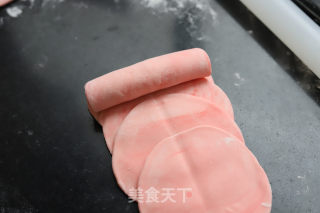
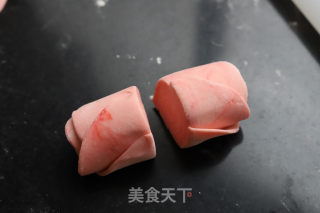
8. According to the direction from top to bottom, roll up the dough snugly. Don't be anxious when you roll it. Take your time. Don't have too much dry flour on each piece of dough, otherwise the roses will easily fall apart.
9. Cut the dough along the crease. This is the prototype of the two roses, which is very simple.
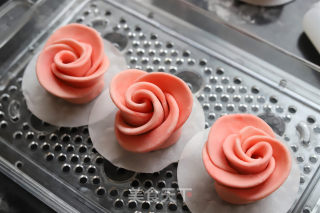
10. Put the rose upright and arrange the petals with your hands. If you pinch the edges thinly with your hands, the visual effect will be better. If possible, it will be more realistic to wrap a piece of yellow dough in the middle of the rose to make the stamens. The arranged roses are placed in a steamer. Put it on and leave it in a warm place for 30 minutes.
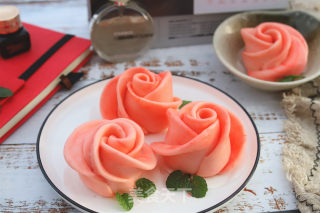
11. The soaked rose embryos are steamed in a pot in cold water. After the water is boiled, steam for eight minutes. As long as the dough is kneaded in place, the bun will not collapse when you open the lid at any time. Add a few mint leaves to decorate, and it looks more like Up.
Tips: The flour for making steamed buns is generally medium-gluten flour. The better the quality of the flour, the higher the success rate;
Now the weather is relatively cold, melting the yeast with warm water can make the yeast's activity better and the fermentation will be more fluffy;
The corn oil added when making steamed buns has better effect if it is replaced with lard. The steamed buns made from lard are more delicate and white, with good gloss. Of course, the pink steamed buns will not be white.

 Buy on JD
 Buy on Amazon