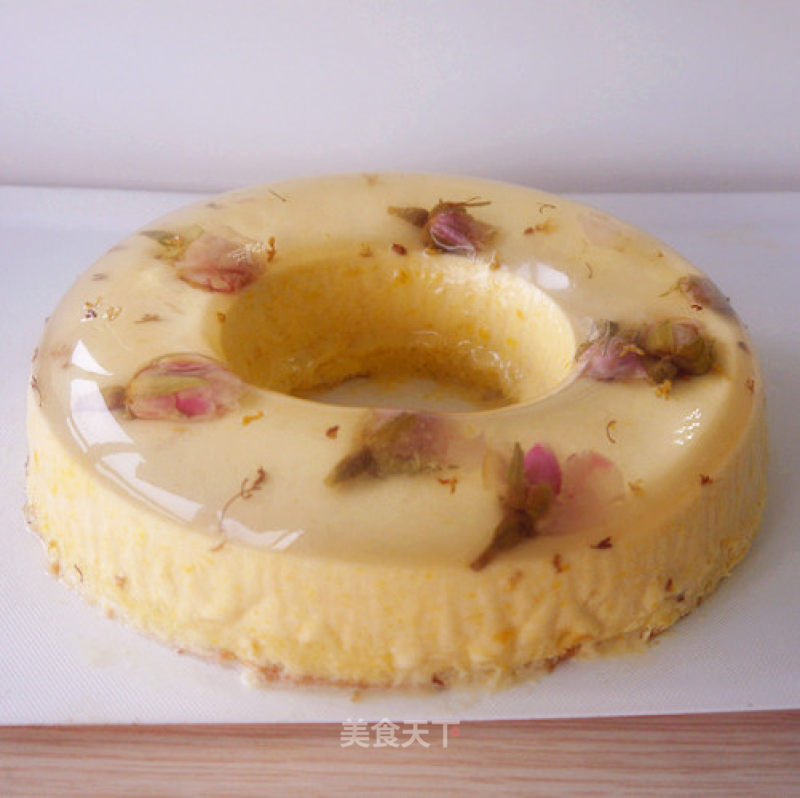

Rose Yogurt Mango Mousse
by Yang Guo
Favorite
Difficulty
Easy
Time
2h
Serving
2
Is the three-layer sandwich a jelly or a cake? Actually, it's really not difficult or complicated. "
1. 1. Soak the rose with clean water a few hours in advance to spread the petals.


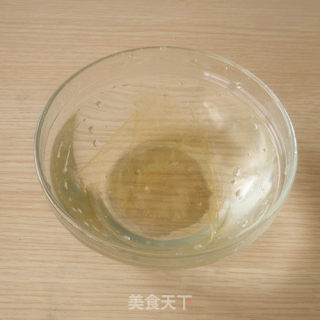
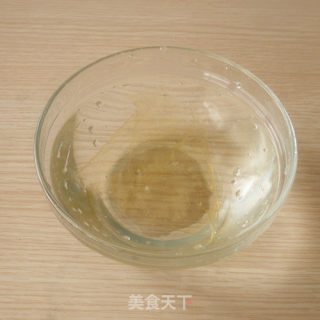
2. 2. Soak the gelatin sheet in ice water to soften it. Sprite slightly heat it, add the soaked gelatin sheet and stir until it melts completely, then pour it into the angel mold.

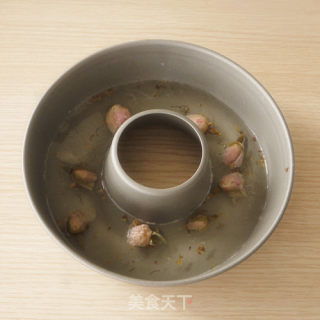
3. 3. Carefully put the soaked roses in the Sprite, and put them in the refrigerator for about 3 hours.

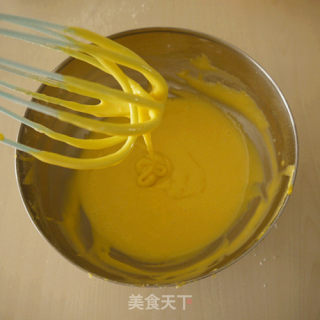
4. 1. Add the egg yolk to the fine sugar and beat well, add vegetable oil and milk separately and beat well, add the sieved low-gluten flour, cut and mix evenly with a spatula.

5. 2. Add a few drops of lemon juice to the egg white liquid, beat it until it is thickly foamed, add fine sugar in three times and beat it until wet foaming (lift the egg beater into a hooked state and will not fall).
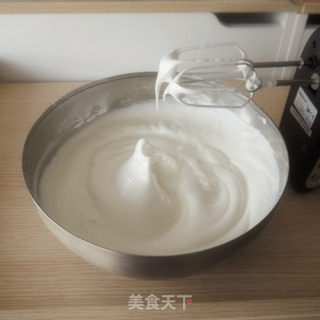

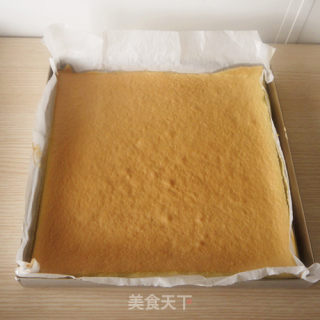
6. 3. Dig one third of the egg white paste into the egg yolk paste and cut and mix evenly, then add another third and mix well, and finally pour directly into the remaining egg whites, cut and mix evenly, and pour it into a baking pan with greased paper. Drop the bakeware a few times to shake out bubbles. Preheat the oven at 170° and bake the middle layer for 15 minutes. After baking, let it cool down.
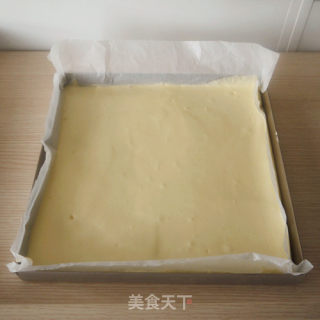

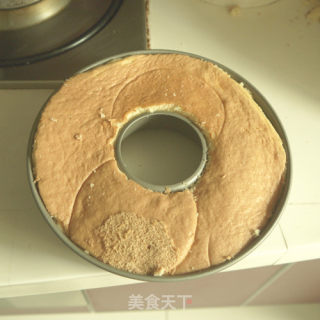
7. 7. After letting cool, tear off the grease paper, and cut out cake slices according to the diameter of the mold.

8. 1. Soak the gelatin tablets in ice water to soften them.

9. 2. The mango is pitted and peeled, then add milk and puree it with a food processor.


10. 3. Add 15 grams of fine sugar to the beaten mango puree and cook until the sugar melts. Add soft gelatine slices and stir until completely melted.
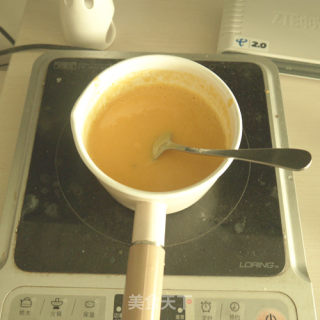

11. 4. Add 30 grams of sugar and whipped cream to 6.7 minutes (it can flow slowly)
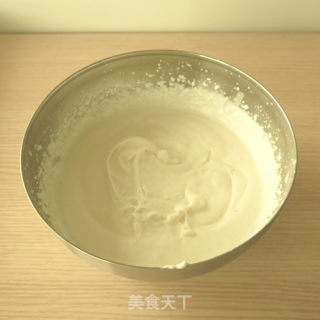

12. 5. After the mango puree has cooled slightly, add yogurt and rum and mix well. Pour the whipped cream into the mango puree, mix well and serve as a mousse liquid. Take out the frozen jelly layer and pour into the mousse.
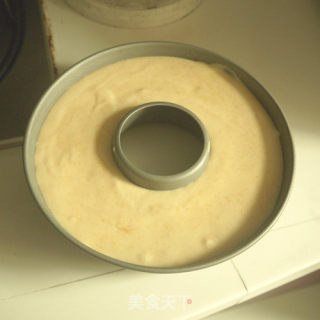

13. 6. Put on the sliced cake again, put it in the refrigerator for more than 4 hours, and blow it with a hair dryer for several tens of seconds to demould.

Tips:There are three layers in this model, and Step 1-3 is the first layer. Steps 1-7 are the second level. Steps 1-6 are the third layer.


 Buy on JD
 Buy on Amazon