
Stewed Radish
by meggy dancing apple
Favorite
6
Difficulty
Normal
Time
2h
Serving
2
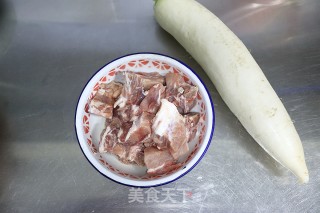
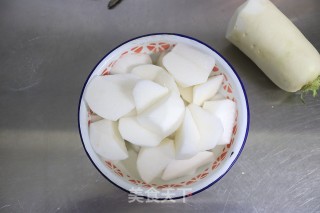
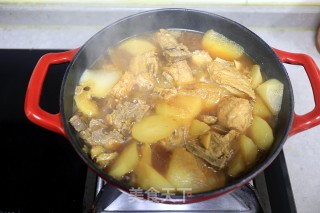
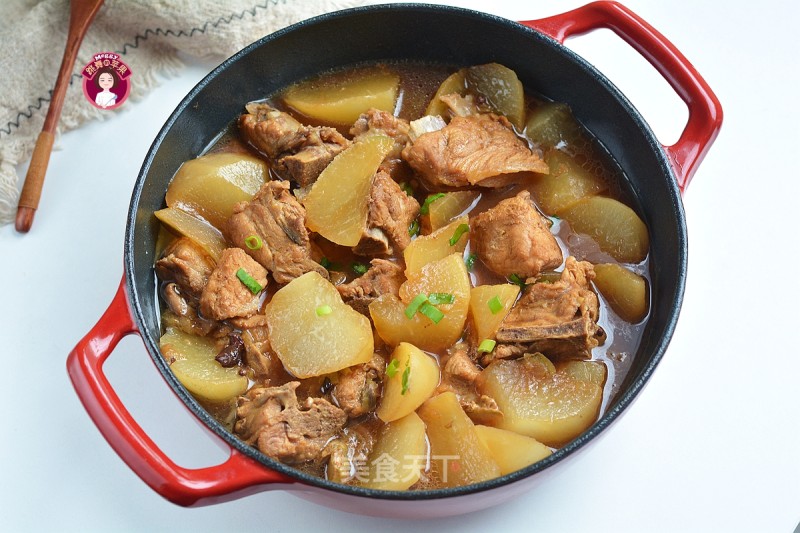
Three generations live in the same house, how can the whole family have a unified taste in diet while being able to get what they need? Stew is actually a good choice. For example, today’s stewed radish in this pot of cavity bone, there are meat and vegetables, satisfying the preferences of the whole family. Young people eat meat and radishes. Old mothers prefer a vegetarian diet. The meat-flavored radishes are also more delicious. Eating a few more slices of appetizer will not increase the gastrointestinal burden of the elderly.
The coeliac, also known as the spine of pigs, is also called coeliac in our locality because of the spinal cavity. The meat is thick and tender with a little more bones, which is very suitable for braised and stewed. White radish is rich in vitamin C, calcium, iron and other nutrients, and has a refreshing taste. The two are stewed at the same time, borrowing the taste from each other. Today, we used the method of braising with thin salt and very fresh special soy sauce. The color is soft, the taste is delicious, the fragrance is juicy, and the soup can also be used for rice. It is a favorite for the whole family. delicious.
Although it has started summer, but the sky is dry and the food is dry, eat more radishes, moisturize and smooth the air to prevent dryness, good quality and cheap. "
 Buy on JD
 Buy on Amazon