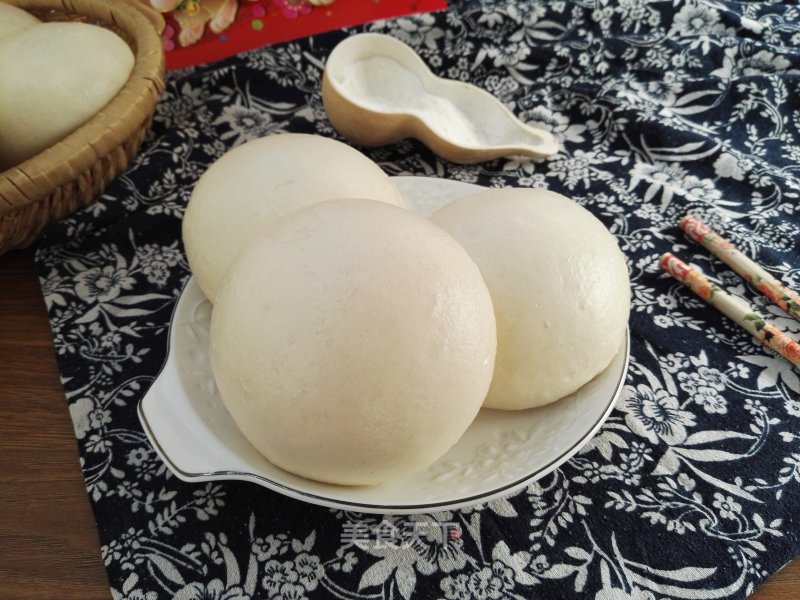
White Flour Buns
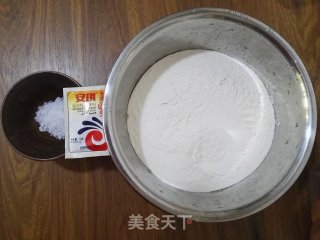
1. Prepare flour, yeast powder and white sugar. Soft white sugar is enough. The purpose of adding sugar is to make the dough rise faster.
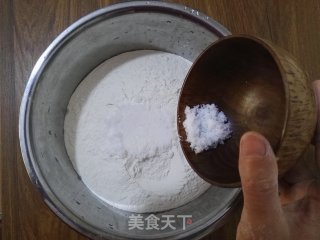
2. Mix the sugar and flour together and mix well.
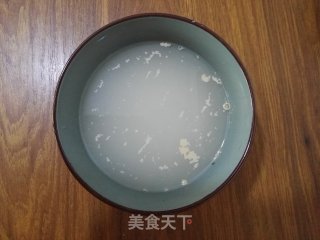
3. Mix the yeast powder with warm water and let it stand for a few minutes. You can also add the sugar from the previous step to the warm water and mix with the yeast powder.
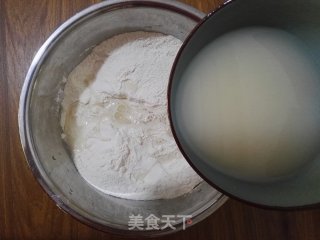
4. Pour the yeast water into the flour two to three times.
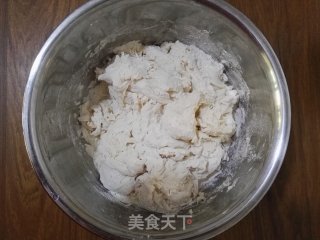
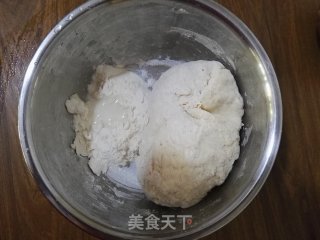
5. Stir the flour and water with chopsticks, then mix the noodles into a dough with your hands.
6. At this time, you can determine the hardness of the dough, and decide whether to add water according to the hardness of the dough. I thought the dough was a bit hard, so I added a little more water and continued to make the dough.
7. Because we are making steamed buns, we need a slightly harder dough to make the dough smooth.
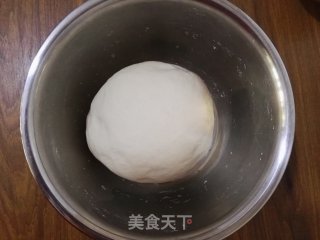
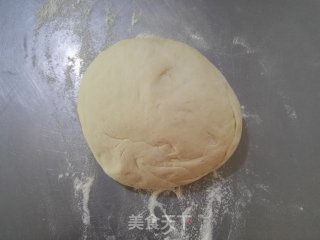
8. It is winter. The dough can be fermented in a warm place for 30 minutes. The waking up dough will expand. When you poke the dough away, you can see the wire drawing inside the dough.
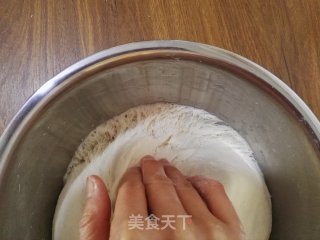
9. Place the dough on the panel and knead the dough vigorously. When it feels sticky, you can sprinkle some thin surface to expel the air in the dough.
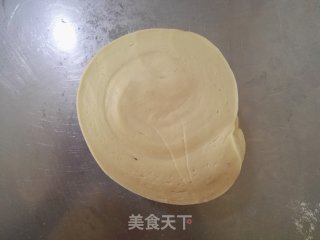
10. Cut the dough, you can see that there are no big air pockets inside and it is very smooth, and there are layers of texture. After these layers of texture are steamed, you will see layers after layers of steamed buns. , The kind of chewy steamed buns that can be eaten by tearing with your hands, even if the dough is kneaded at this time.
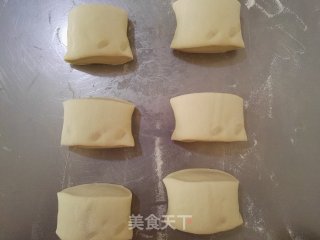
11. The dough is kneaded into long strips and cut into equal-sized noodles.
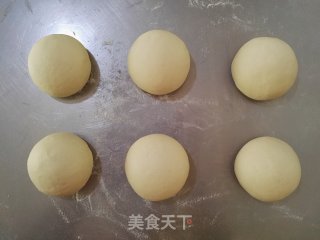
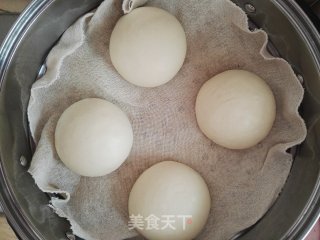
12. Dump the dough into a circle with your hands, cover it with a damp cloth, and continue proofing for 15 to 20 minutes.
13. The raw steamed buns swell up gradually and can be quickly rebounded when pressed by hand, and can be steamed in the pot for 20 minutes. Some people are wondering whether to steam with cold water or hot water. I think cold water or warm water is better. Raw steamed buns in a cold water pot will not form a dead dough due to sudden heating. The second is that cold water can also make the dough feel during the heating process. A proofing process, if the room temperature is low at home, you can put the steamed buns in the pot with warm water to help proofing.
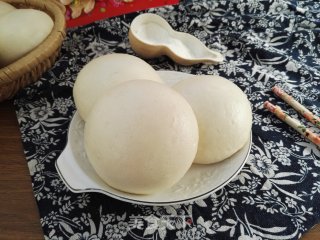
14. The soft, delicious and wheat-flavored steamed buns are on the table.
Tips: 1. Adding sugar can shorten the proofing time of the dough.
2. The temperature of the warm water is about 30 degrees, not too high, otherwise the yeast will be scalded to death.
3. When kneading the dough, don't add too much flour, and only sprinkle a little thin surface when it is sticky.
4. Be sure to exhaust the air in the dough, otherwise the steamed bun will be sunken.
5. After the steamed buns are shaped, there must be a process of fermentation again.

 Buy on JD
 Buy on Amazon