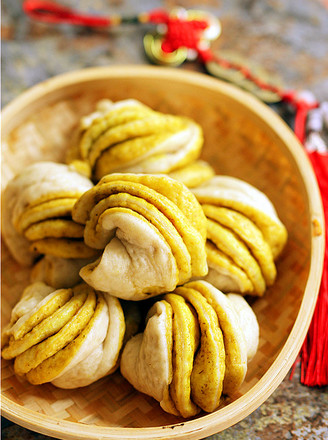
Delicious Homemade Big Meat Buns
1. You can make it without aspic~
Let's talk about the tools first:
1 three-layer steamer, 1 kneading container (preferably with a lid, save the plastic wrap at the back)
Cutting board, kitchen knives, 2 pairs of chopsticks, 1 spoon, 2 bowls (1 large bit for stirring meat, 1 small bit for green onion and ginger water), oil paper (for baking)
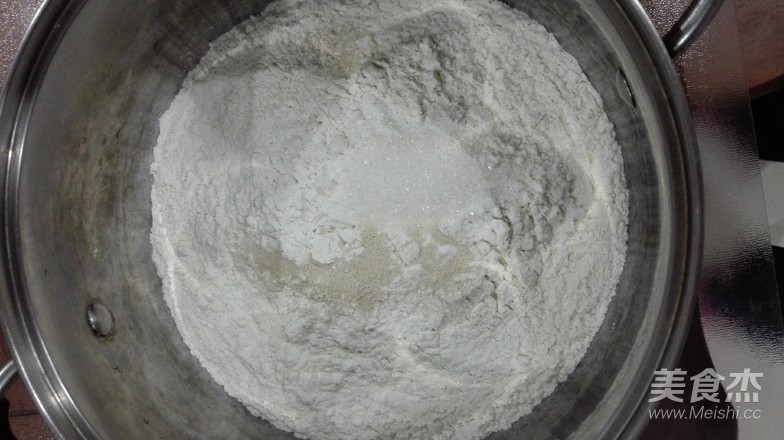
2. In the kneading container (I use a small steamer that I don’t usually use, with a lid), add 500 grams of flour, 10 grams of sugar, and 3 grams of yeast (I use Angel high-active dry yeast, general grain and oil store Retail price is 1 yuan/bag, 1 bag is 12g).
Note: After the yeast is disassembled and used, it needs to be placed in the refrigerator to keep the yeast active.
Sugar is added to promote fermentation.
3. Mix the flour, sugar and yeast in 2. While stirring, add water (tap water can be used in summer, and warm water not exceeding 37°C in winter), the flour gradually becomes cotton-like. The water should be added slowly to prevent adding too much water at one time, causing the flour to be too thin.
I use Chen Keming flour. 500g of flour is kneaded with a total of 308 grams of water; different brands of flour have different drafts, so you must add water slowly when adding water!
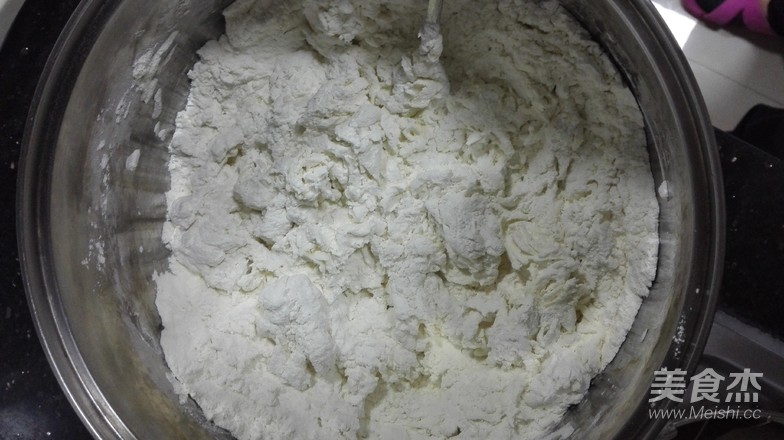

4. Start kneading the dough. The flour will appear as shown in the picture at first. Don't worry about the yeast being kneaded to death, the flour will become stronger as you knead, so let's knead as much as you like!
The criterion for judging whether the flour is too thin is the "three light", that is, hand light, surface light, and pot light. There is no flour left on the hands and the pot, and the surface of the dough is smooth and clean. If the hand is sticky, it is too thin, and a small amount of flour can be added; if the dough is hard and difficult to knead, it is basically too dry, you can gradually add a small amount of water to continue kneading. Too hard dough will cause the finished buns to be very dry. The dough is too thin, and the buns are not easy to shape, and the taste is not chewy.
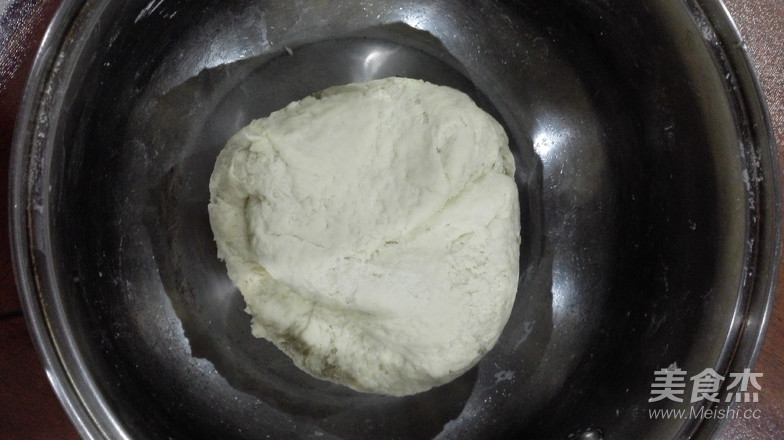
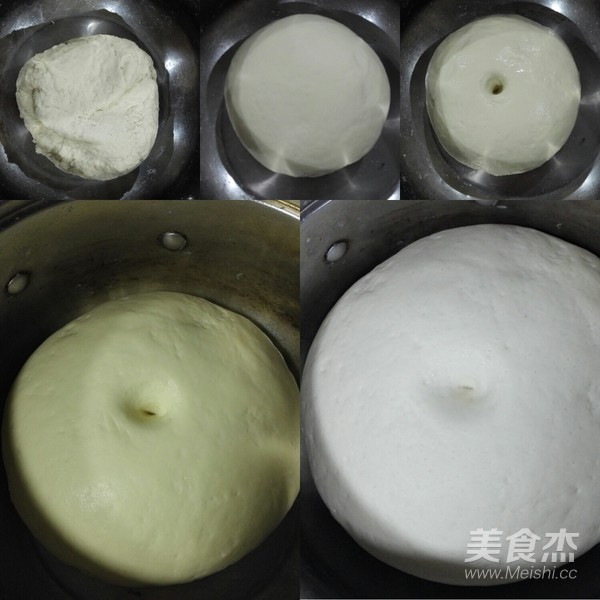
5. After the dough is kneaded, the surface is smooth (as shown in the middle small picture in the upper row), and the kneading is soft and easy to knead. Then poke a hole in the middle with your finger, soak it with water and wipe it on the surface of the dough. Cover the lid (or use plastic wrap) and keep it sealed; then cover the lid (or plastic wrap) with a wet towel. Put the dough on the side.
I leave the dough for a total of 1 hour and 40 minutes. In summer, it takes less time and longer in winter. In order to speed up fermentation in winter, you can put this kneading container in the oven "fermentation" mode or expose it to the sun or put it in warm water. Above. The left picture in the bottom row is the dough that has started to grow, and the right picture in the bottom row is the dough that has been developed. It can be clearly seen that the hole in the middle is basically gone, and the dough has expanded to twice its original size. They are all the same dough, but the color is different because of the light.
6. Prepare meat filling and green onion ginger water during the dough. (In this step, you need to calculate the time by yourself. Generally, soak the green onion and ginger in advance, and the meat can be chopped after the dough has risen)
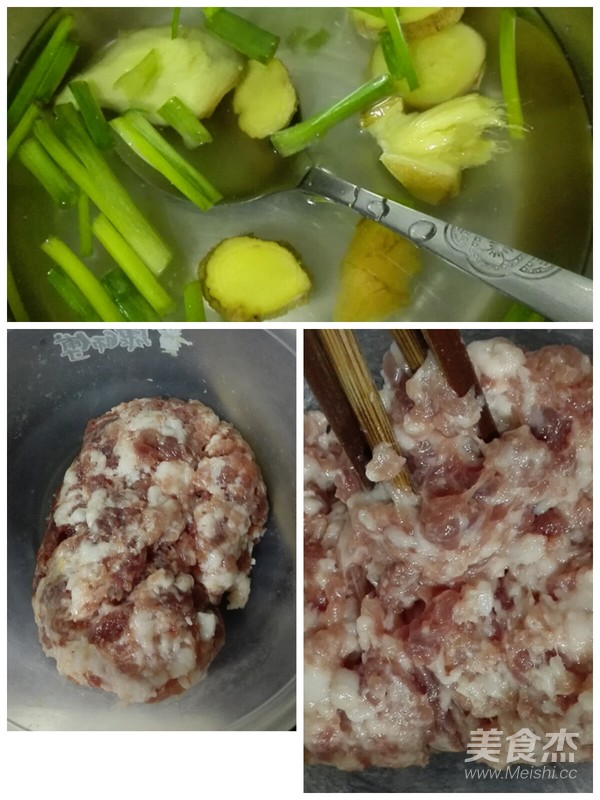
Scallion and ginger water: After washing the shallots (scallions), take the white onion and cut into small sections; wash and slice the ginger; put the white onion and ginger slices in a small bowl, add 62 grams of water (you can make a little more onion and ginger I used 62 grams, so fill in this amount).
Prepare the meat filling: take 160 grams of lean pork front leg (peeled), remove the tendons (to avoid the tendons in the taste); take 70 grams of fat pork belly (peeled); wash and cut into small pieces on the cutting board Then start to chop the meat. It does not need to be chopped very finely, because it does not taste too fine and does not taste good. After the minced meat is chopped, put it into a bowl with a higher mouth.
Add a small amount of the mixed green onion and ginger water to the minced meat. Use 2 pairs of chopsticks to stir the minced meat in circular motions in the same direction to make the minced meat absorb water. Add water slowly, add a little green onion and ginger water, stir in a circular motion in the same direction, and repeat after the meat is absorbed in all the green onion and ginger water, until the meat has absorbed enough water, and the surface looks flooded.
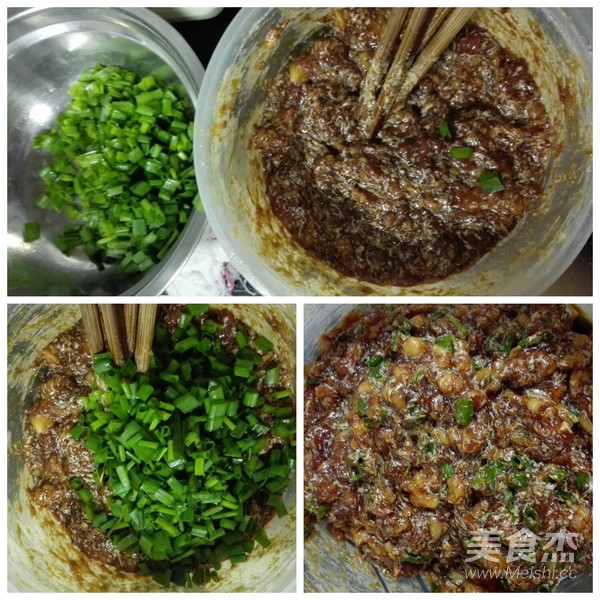
7. Put cooking wine, light soy sauce (extract fresh), dark soy sauce (color), 2 grams of chicken essence, 5 grams of sugar, and 2 grams of Shisanxiang in the meat filling in 6. , And stir the minced meat in circular motions in the same direction as in step 6 and mix well. You can dip it with your fingers to taste if the taste is enough, the taste is as salty as usual or a little bit salty.
Chop the remaining shallots (small shallots), add to the seasoned meat filling, and mix well.
At this point, if the dough is ready, you can directly prepare the buns. If the dough is not good, please cover the meat with a lid or plastic wrap and put it in the refrigerator. When the dough is good, take it out. If there is water out of the meat, you need to stir the meat again in the same direction in 6 to make the meat absorb water .
8. Prepare buns.
Take out the dough, knead the dough, and exhaust the air. If you cut the dough at this time, you can find a lot of pores inside the dough, commonly known as "honeycomb".
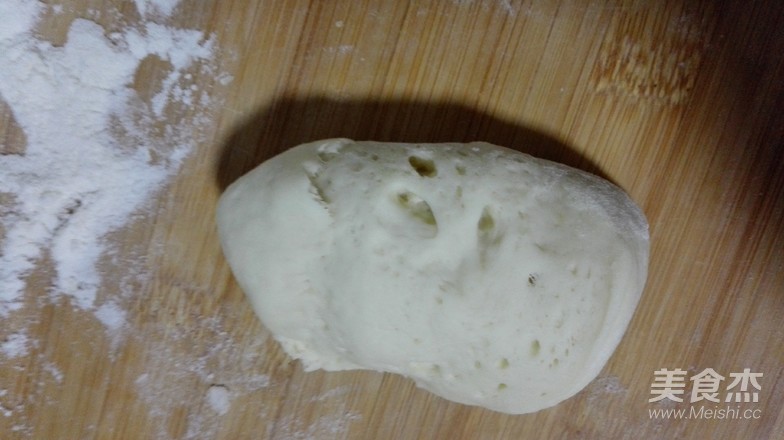
9. Roll the dough in 8 into strips and cut into small doughs (agents) of basically the same size. Sprinkle dry flour on the countertop (I use another chopping board), use a rolling pin to roll into a thin dough in the middle, add 7 medium minced meat, and knead it into a bun shape.
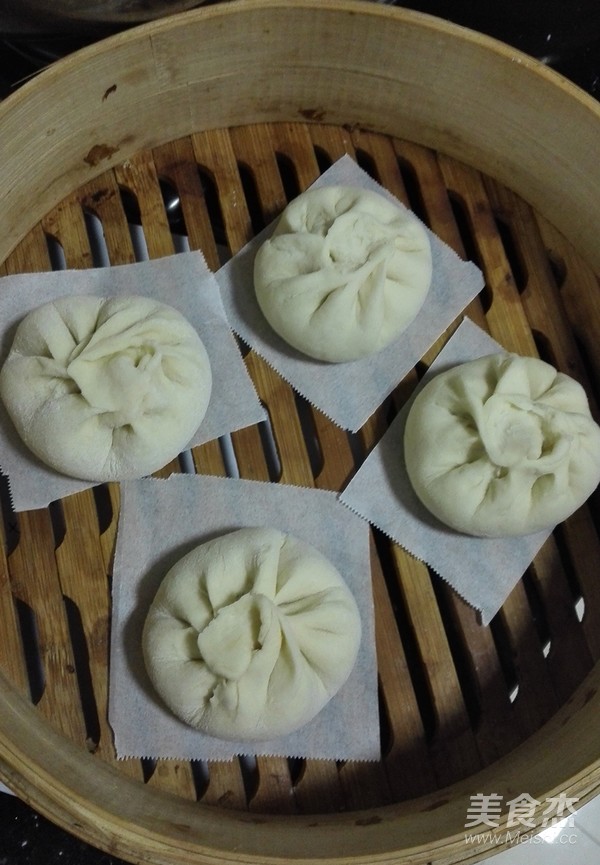
The kneaded buns should be sealed carefully to prevent the gravy from overflowing during the steaming process. Then put it on the special greased paper for baking (pre-cut into small pieces). Note that the size of the greased paper needs to be larger than the steamed buns because the steamed buns will expand during steaming.
My dough is about 60 grams and contains 26 grams of minced meat. If you make it for the first time, you can pack a little less meat so that you won't be able to hug it. If you want to put more meat, you can roll the dough thinly (it is recommended that the thickness of the surrounding dough should not be less than 3 mm, otherwise the steamed bun will be thin like a small cage and the soup will easily overflow).
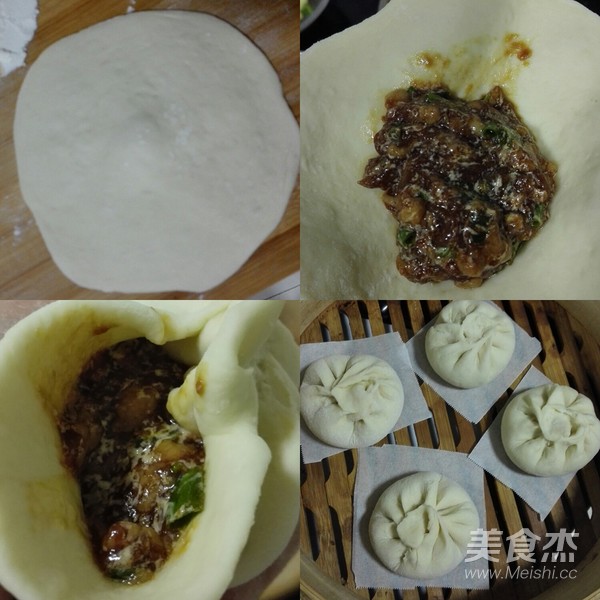
10. Put the wrapped buns in the steamer one by one, leaving a space between the buns and the buns. The wrapped buns are subjected to secondary fermentation, and the fermentation time is 20-25 minutes.
Be careful to make one and put a lid on it, so as not to dry the skin of the bun.
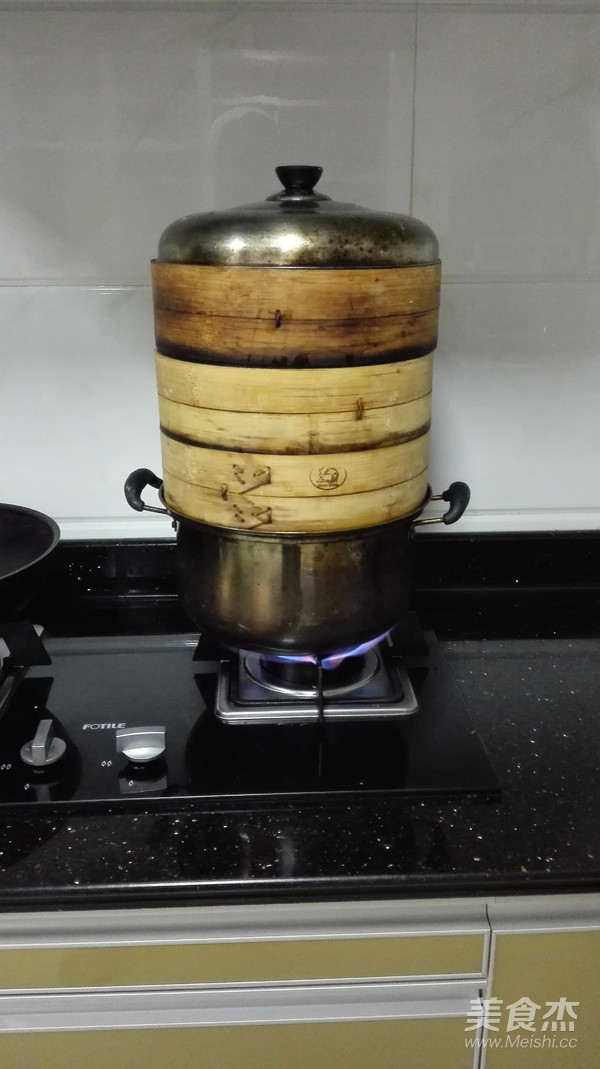
11. Put enough cold water in the steamer (there must be cold water), and place the steamer on the steaming rack.
After the second fermentation of the buns, sprinkle cold water on the surface of the buns to keep the skin moist.
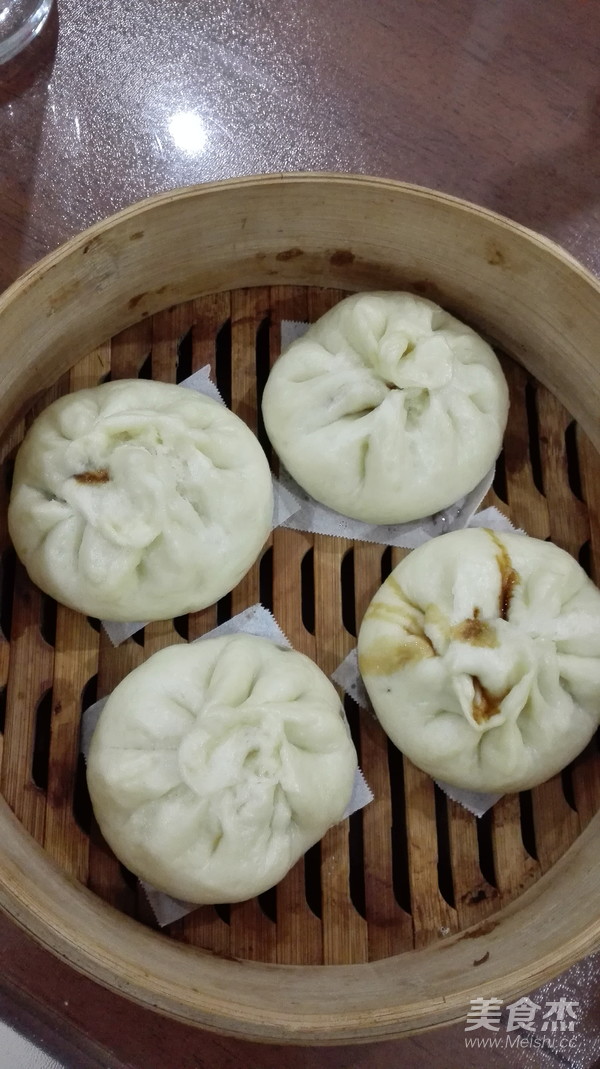
Then turn on high heat and steam for 15 minutes, then turn to low heat for 5 minutes, then turn off the heat for 5 minutes and then you can boil the pot to eat.
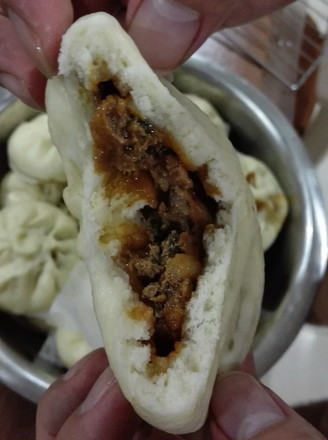
Tips: I made 12 of slightly different sizes this time, enough for breakfast for several days~
Points to note:
1. If you have time, you can knead and knead the dough more, the more intense it is;
2. Pay more attention to the dough after 1 hour to prevent the dough from becoming sour. If it is really sour, you can use a small amount of alkaline water to synthesize the sour taste, but the taste will be different;
3. Be sure to put some fat when chopping the meat, otherwise the meat is too tight and without moisture; if the above method still feels a bit dry, add the fat (the fat of the pork belly is better, not greasy and fragrant, and the meat on the legs Fatty Zou Baba, not easy to chew). Be sure to one direction when stirring the minced meat in circular motions.
4. The steamed buns should be taken out in time to prevent the steam from condensing in the pot and cause the skin of the buns to soak; if they are put in the basin, the basin should be clean and water-free, and the basin should be placed on a mat to prevent the steamed bun from cooling down. The water vapor in the buns is soaked in water after condensing.
5. After it is cold, put it in a fresh-keeping bag and put it in the refrigerator; if it is too much, it can also be frozen, but the taste will be affected.

 Buy on JD
 Buy on Amazon