
Fujian Water Fried Buns
by Caoxi pig
Favorite
3
Difficulty
Normal
Time
30m
Serving
3
Shuijianbao, for me, is not simply a kind of food. It is more of a childhood memory. Remember, when I was a child, I accompanied my mother to class. There were two roads leading to school. Cone ice cream, a road with fried buns and ice cream is not very common. Whenever I pass by, my mother always covers my eyes on the bicycle with her palm and tells me that the ice cream is sold out and there is water. On the way of fried buns, every time I pass by, my mother always buys a few stuffed buns for me. So, as long as I think of fried buns, my memory can immediately go back to that age, that road, and that fried bun shop. . .
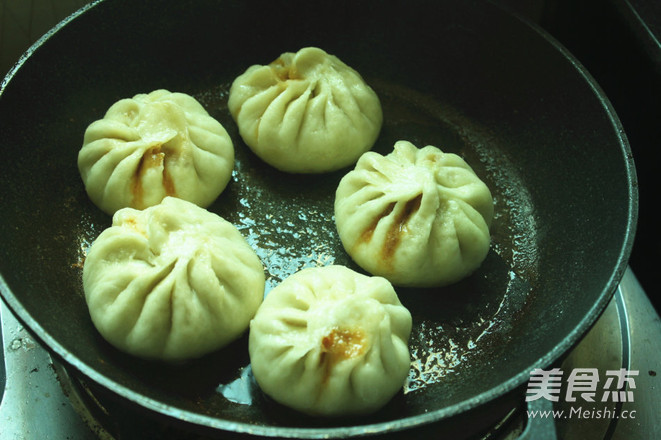
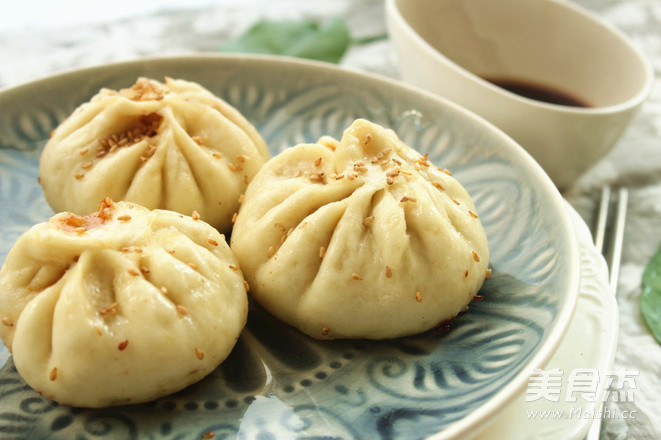
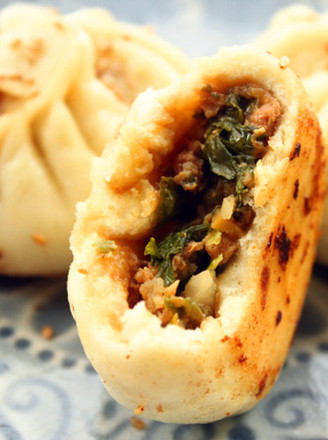
Fujian’s simmered buns are different from Shanghai’s simmered buns in terms of method and materials. In fact, I don’t like Shanghai simmered buns. The skin is thin and juicy, and the meat filling is only meat. I feel greasy after eating too much. I prefer Fujian's fried buns. The bottom of the fried buns is thick and crispy to bite. The fermented skin is soft and the meat is salty. Moreover, the fried golden and crispy bottom of the fried bun is light. Hearing the clicking sound of biting down is enough to make people feel satisfied
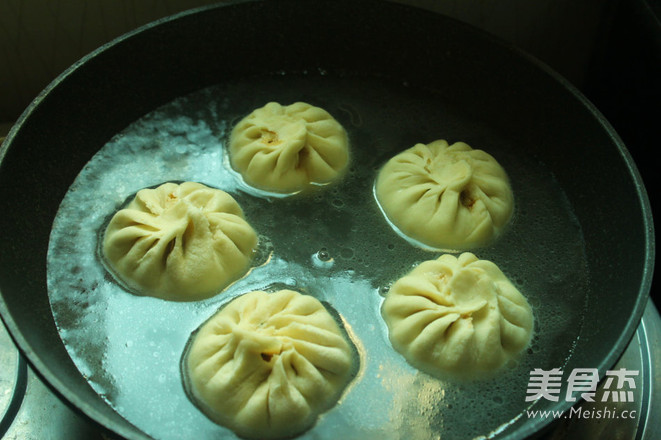
In fact, the fried buns bought on the street are not like buns. Most of them look like big dumplings. The reason why they have the word bun is that they are made through fermentation as well as buns. The only difference is that the final maturation method is different. One is steamed and the other is deep-fried in water. I always like to make fried buns into buns. I always feel that buns must be like buns. Don't always use dumplings to act as buns. You can change the final maturation method. You can also make delicious fried buns at home.
Fujian’s simmered buns are different from Shanghai’s simmered buns in terms of method and materials. In fact, I don’t like Shanghai simmered buns. The skin is thin and juicy, and the meat filling is only meat. I feel greasy after eating too much. I prefer Fujian's fried buns. The bottom of the fried buns is thick and crispy to bite. The fermented skin is soft and the meat is salty. Moreover, the fried golden and crispy bottom of the fried bun is light. Hearing the clicking sound of biting down is enough to make people feel satisfied
In fact, the fried buns bought on the street are not like buns. Most of them look like big dumplings. The reason why they have the word bun is that they are made through fermentation as well as buns. The only difference is that the final maturation method is different. One is steamed and the other is deep-fried in water. I always like to make fried buns into buns. I always feel that buns must be like buns. Don't always use dumplings to act as buns. You can change the final maturation method. You can also make delicious fried buns at home.
 Buy on JD
 Buy on Amazon