Liangpi
1.
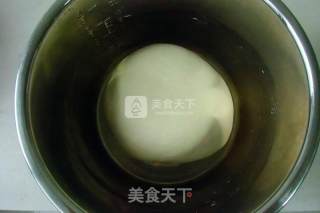
Regular flour and water according to the ratio of 2:1, add a little salt, slowly live into a dough, let it stand for 15 minutes, and then knead it into a smooth dough.
2.
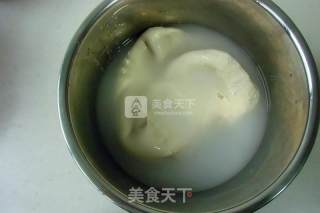
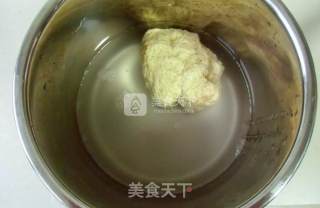
Pour an appropriate amount of water into the bowl where the dough is placed, knead it with boiling water, and wash the dough.
3.
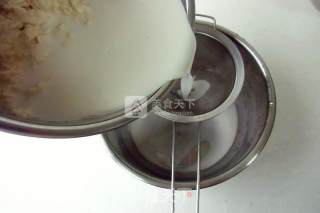
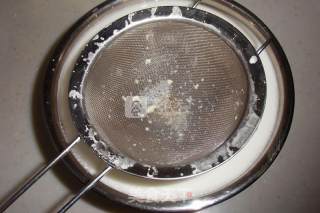
Sift the washed starch water and pour it into another clean basin.
4.
Wash until the water is almost clear.
5.
The slurry is sieved 1-2 times again, and it settles for about 5 hours. It can be stored in the refrigerator and settled overnight.
6.
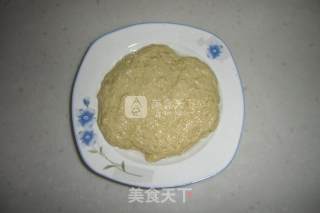
Spread the washed gluten flat on a plate and steam it in a steamer for about 15 minutes.
7.
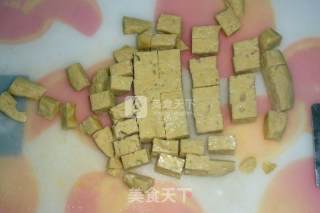
Cut the steamed gluten into small pieces.
8.
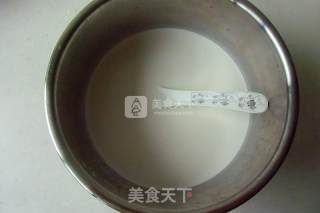
Pour out the clear water on the upper layer of the settled slurry, and stir the remaining slurry evenly.
9.
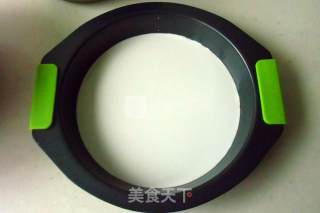
Take a pizza pan, brush it with a little oil, pour in an appropriate amount of powder paste, and turn around to spread the powder paste evenly on the plate.
10.
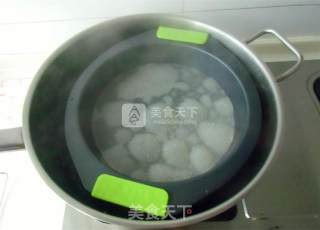
Add water to the pot, and after boiling, put the pizza pan in the water. Cover and steam for 1 minute on medium heat, and the cold skin will be cooked when it puffs up.
11.
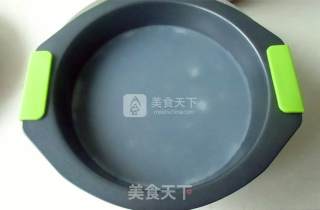
Soak the steamed liangpi in cold water for a while, and slowly peel off the liangpi when it is not hot.
12.
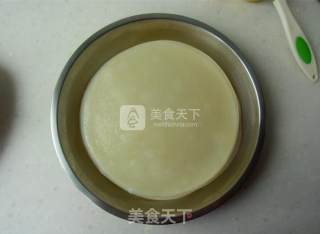
Put the steamed cold skin yards, and apply oil to each piece to prevent it from sticking together. Steam all the flour paste.
13.
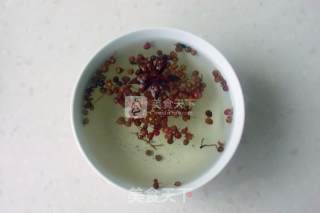
Put about 3 grams of Chinese pepper and 1 star anise in a bowl, add boiling water to soak the flavor, let cool and set aside.
14.
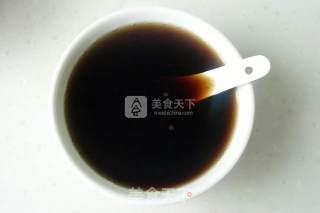
Mix the balsamic vinegar and water according to 1:3.
15.
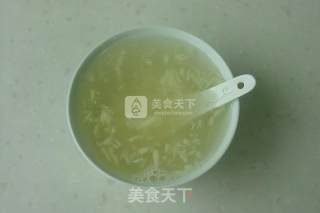
Pour garlic into a puree, add an appropriate amount of cold water and stir evenly.
16.
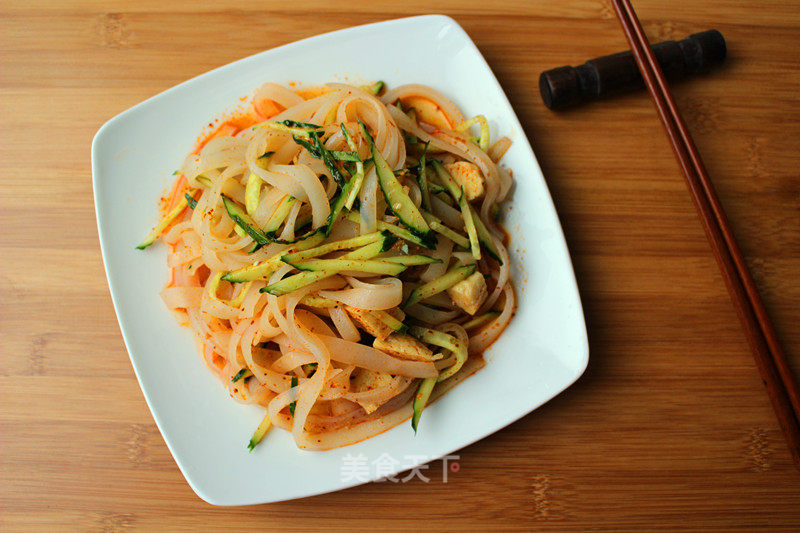
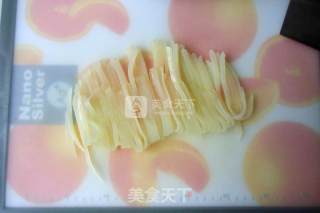
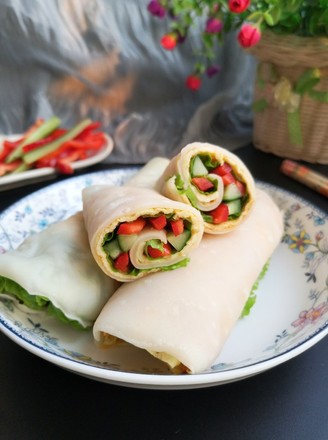
Take an appropriate amount of Liangpi and cut into thin strips.
17.
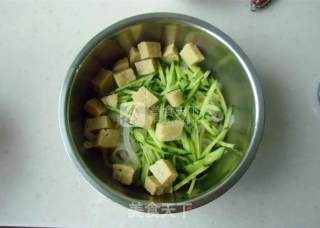
Add cucumber shreds, gluten, salt, and some seasoning water.
18.
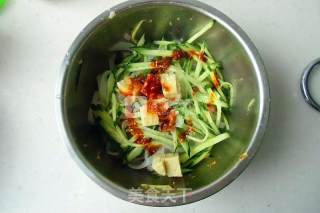
Add chili oil.
19.
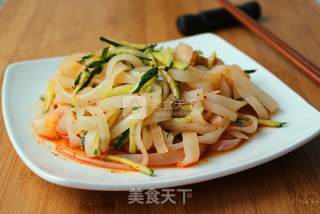
Stir evenly and put in the dish.
Tips:
The flour paste must be stirred and steamed before each steaming.
You can also add mung bean sprouts, but the mung bean sprouts I bought outside really didn’t dare to eat it, so I didn’t put it.