

Lime Sweet and Sour Braised Pork Ribs
by Mama Hao
Favorite
Difficulty
Normal
Time
1h
Serving
2
1. Buy pork ribs and wash them with clean water, and then soak them in clean water for about 10 minutes.
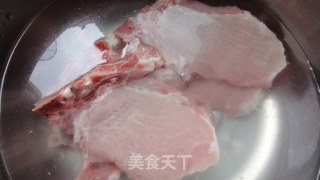

2. Drain the water and set aside. (The pork chop needs to be beaten on both sides with a meat hammer. When I bought it, I asked the stall owner to beat it for me by the way.)
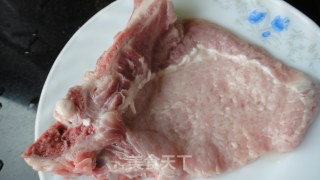

3. Shred the ginger, tie a part of the green onions and set aside.
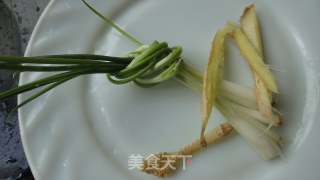

4. Seasoning used: Japanese white wine, lemon.


5. One egg.


6. Put the pigs in a large clean container, add shredded ginger, green onion knots, white wine, black pepper, 1 tablespoon of olive oil, 1 tablespoon and a half of salt, add 2 slices of lemon, and finally beat in the eggs.
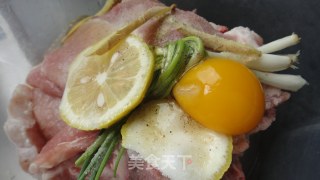

7. After all the seasonings are mixed well, put them in the refrigerator to marinate for half an hour to taste.


8. Prepare cornstarch, and pat the marinated pork chops with cornstarch for later use.
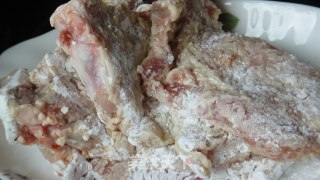

9. Heat the pan and fill it with oil. When the blue smoke is coming out, put it in a large drain pan and fry it until golden on both sides.
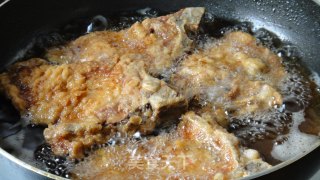

10. Drain the oil and set aside.
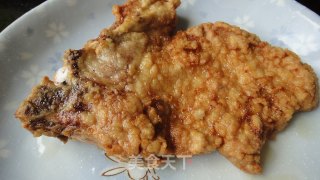

11. In a separate pot, put 1 tablespoon of oil, add green onion knots, minced ginger, and star anise until fragrant.
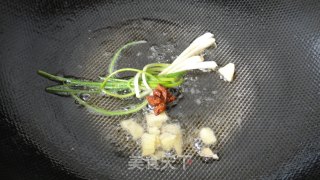

12. Turn off the heat and pour in the dark soy sauce, rock sugar, light soy sauce, white wine and 2 slices of lemon. Then add the marinade for the marinated pork chops and pour into the pot. (Just use half a lemon.)
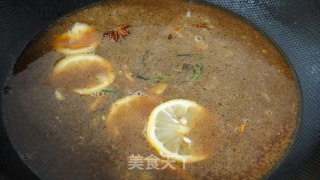

13. Add the fried pork chops one by one.
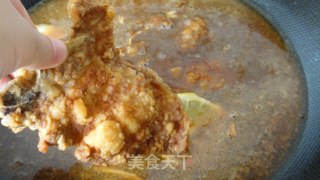

14. Put all into the lid and bring to a boil.
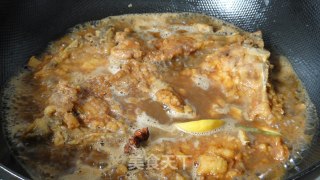

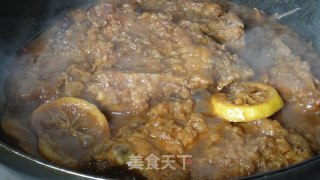
15. Turn to medium heat and simmer for about 20 minutes, and finally collect the juice and sprinkle with chopped green onion.

Tips:1. When marinating the large ribs, give enough salt at one time, and don't put salt in the later cooking!
2. Put lemon's natural fruity aroma and natural sour taste. I have 6 large rows of half a lemon and the acidity is just right. If you like very sour, you can put more!
3. Rock candy is also put according to personal preference! Hehe, my sweet and sour taste just fits my taste!
4. No white wine can be replaced with cooking wine.
4. The large row must be beaten with a meat hammer, so that the meat of the large row is more tender; the same can be used for the back of the knife if there is no meat hammer.


 Buy on JD
 Buy on Amazon