White Toast
1. Weigh the required materials, the egg is about 60 grams in shell, and the butter must be softened at room temperature before using it.
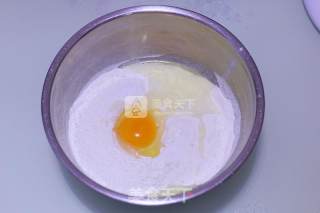
2. I knead by hand this time, pour the flour into a large basin, add salt and sugar, add eggs, and then pour milk while stirring
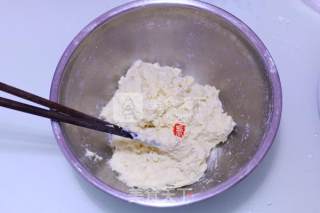
3. After mixing until there is no dry powder, cover it with plastic wrap and keep it in the refrigerator for at least half an hour. I mixed it in the evening and refrigerated it overnight. The refrigerated dough will be easier to knead.
4. Take out the refrigerated dough, add yeast, and then keep kneading, kneading
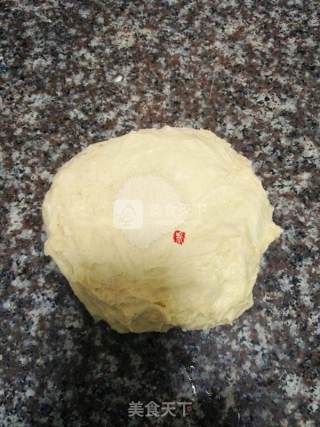
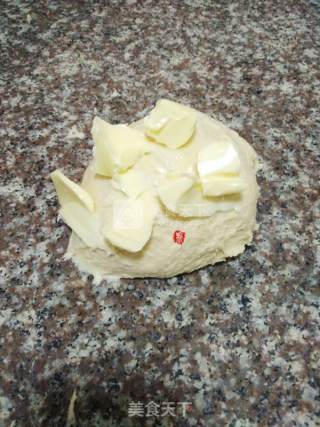
5. Knead until smooth, add softened butter during the expansion stage, continue to knead, knead, and smash
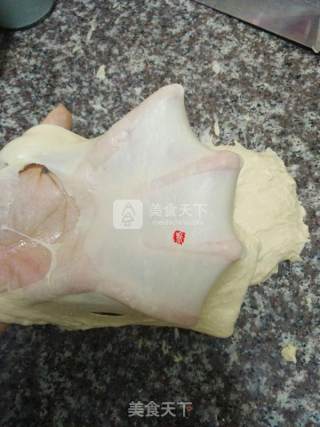
6. Knead to the complete stage, you can pull out a thin and tough glove film
7. Round the dough and cover it with plastic wrap to ferment. It can be fermented in the oven, on the balcony, and in the quilt. The higher the ambient temperature, the faster the fermentation, and vice versa, the lower it is, but not more than 50 degrees.
8. After the dough has been fermented to twice its size, use your fingers to dip your fingers in the flour and poke a hole in the dough. The hole does not shrink. The dough will be fermented if it does not collapse.
9. Take out the dough, flatten it out, and then round it
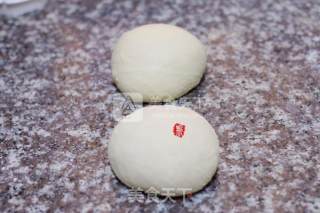
10. Divide into 2 equal parts, roll round, cover with plastic wrap and relax for 15 minutes
11. Take a piece of dough, pat a little flour and roll it into a tongue shape with a rolling pin
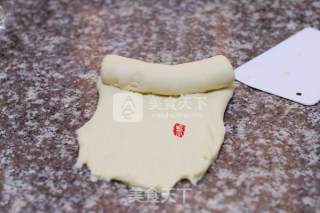
12. Turn the dough over, thin the bottom edge, roll it up from top to bottom, and relax for another 5 minutes
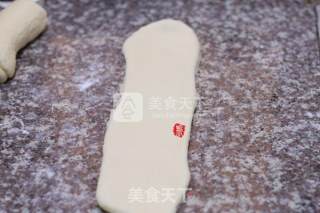
13. After loosening the dough, pat a little flour, close it down, and roll it into a rectangular shape as much as possible
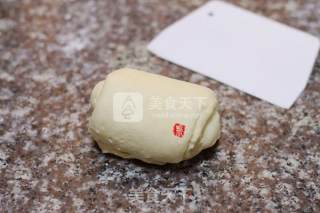
14. Turn it over, thin the bottom edge, and roll it up from top to bottom
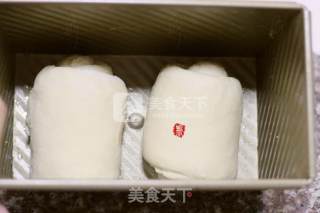
15. Put it into the mold with the mouth down
16. Fermented until the mold is eighty full (I put hot water in the lower layer of the oven, and the oven has the fermentation function. After more than two hours of fermentation, the second shot will be slower)
17. Cover the fermented toast embryo with a lid, or brush the egg liquid on the surface without the lid, and send it to a preheated oven at 180 degrees, and bake the middle layer at 180 degrees for 35 minutes.
18. The baked toast will be released from the mold immediately, and it can be sliced and eaten after cooling on its side


Tips: 1: The longer the refrigerated and standing time, the more gluten the dough will be, which can reduce the kneading time, but the longer you don’t need to knead it;
2: The low temperature of the refrigerated dough can inhibit the yeast from pre-fermenting during the kneading process;
3: Toast is different from small bread, it needs enough gluten to form to wrap and support the fermentation gas, so it must be kneaded to the complete stage, that is, it can pull out (slowly stretch around) a very thin glove film, poke The edge of the hole is smooth after the film is broken;
4: The humidity required for the second heating will be higher, so hot water (not boiled water) will be added to increase the humidity. The second heating of the dough will indeed be slower, because the sugar is less and the salt is more, so the fermentation function of the oven will be faster. , But don’t post it
5: The baked toast bread should be immediately out of the oven and demoulded while it is hot, standing on its side to cool


 Buy on JD
 Buy on Amazon