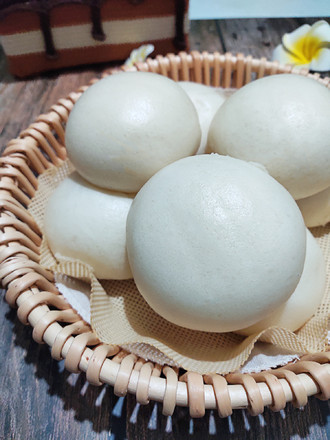
Yifa Mantou
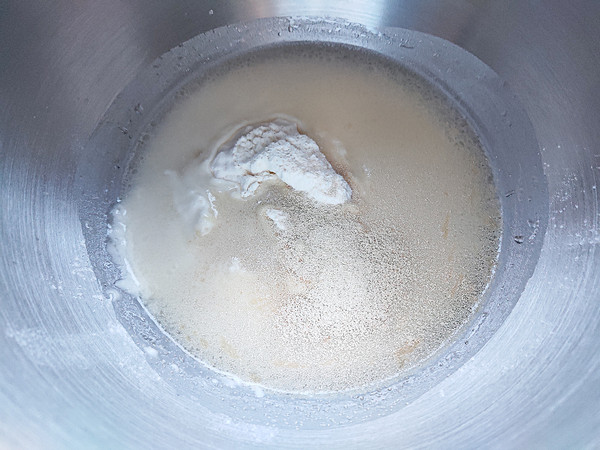
1. Knead all the ingredients into a smooth dough. Sugar helps fermentation, so you can leave it alone. Oil can make steamed buns smoother. Different brands of flour have different water absorption rates, so the amount of water is not absolute. As long as the dough is not sticky, smooth and soft.
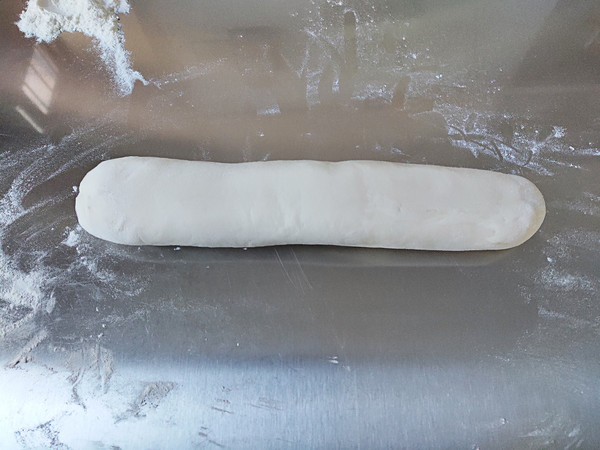
2. Sprinkle a little bit of dry powder on the chopping board, pick the kneaded dough on the chopping board, and knead it into a long strip.
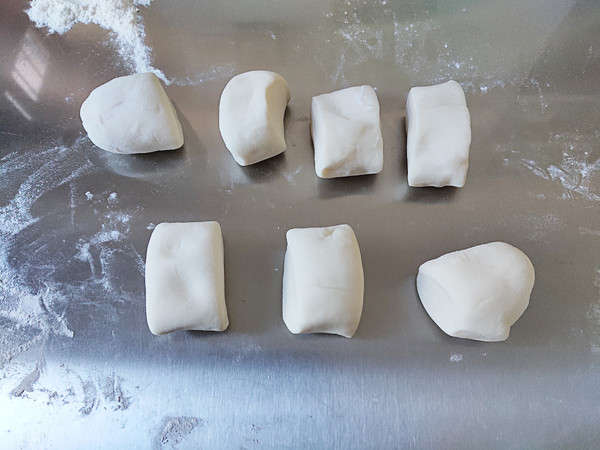
3. Divide the dough into as many portions as possible. My steamer has a diameter of 26 cm, which is about the same as steaming 7 steamed buns at a time, so I usually make 7 steamed buns.
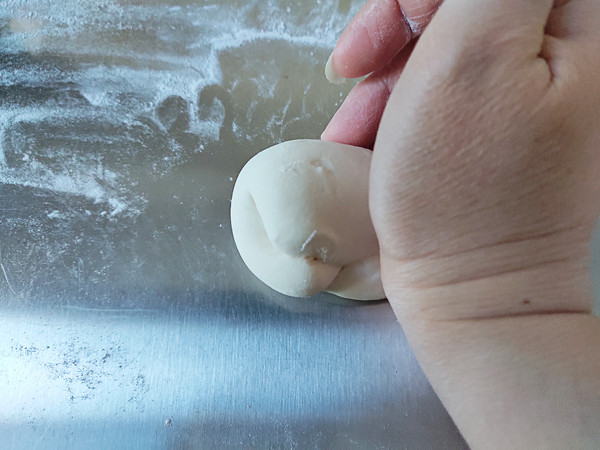
4. Take a small dough, fold it and knead it with the base of your palm. Here I did an experiment to verify my previous ideas. I kneaded three doughs 100 times, two doughs only rubbed 50 or 60 times, and the remaining two doughs were rounded without kneading.
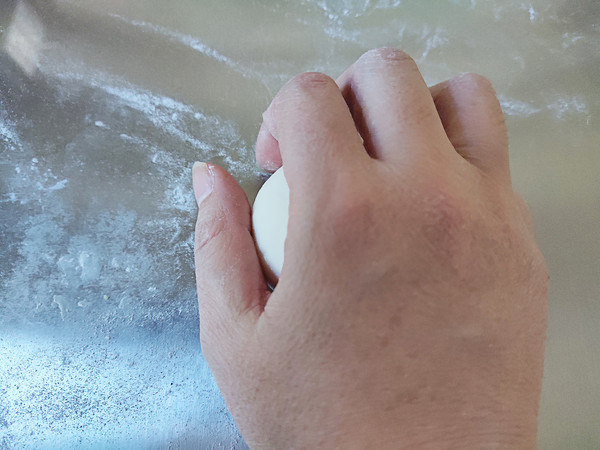
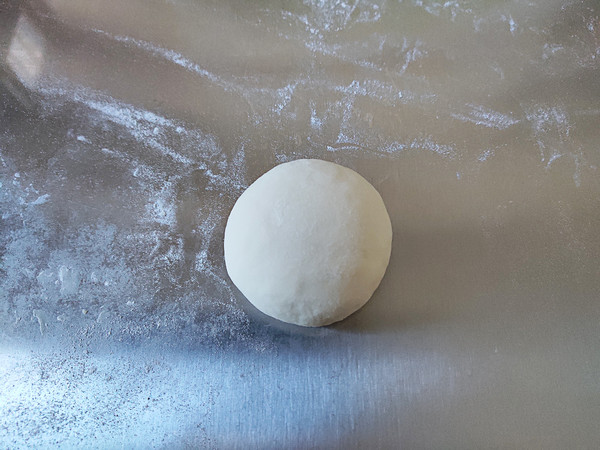
5. Hold the kneaded dough with the palm of your hand, and round it like baking bread.
6. Then rub it lightly with both hands a few times to get a reshaping.
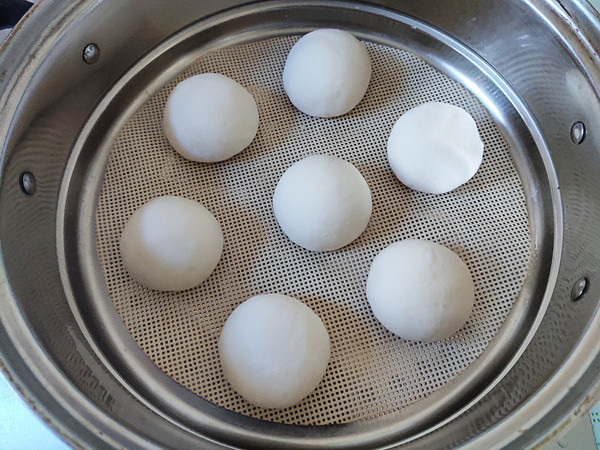
7. Round all the dough, put it in a steamer, and leave it in a warm place to ferment. Don't forget to cover it to prevent the surface from drying out.
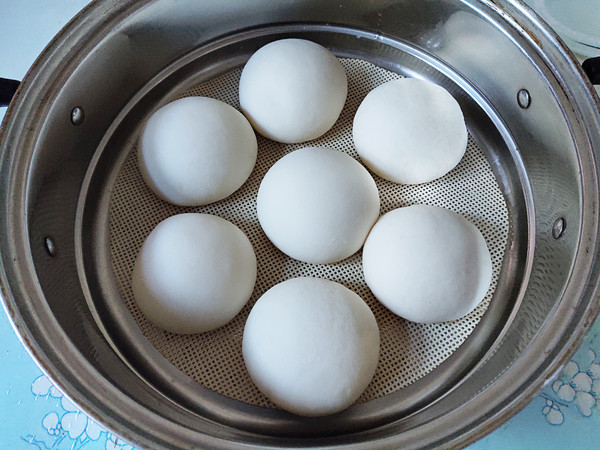
8. When the steamed bun embryo fermented to 1.5 times its size, start to boil water. The fermentation time should not be too long, try to control it to about one hour, and not more than one and a half hours at most.
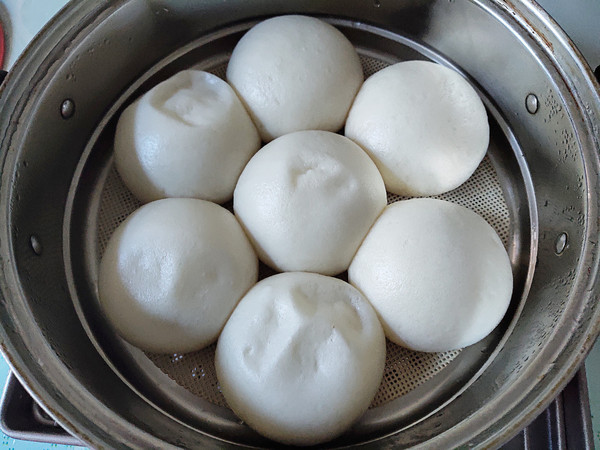
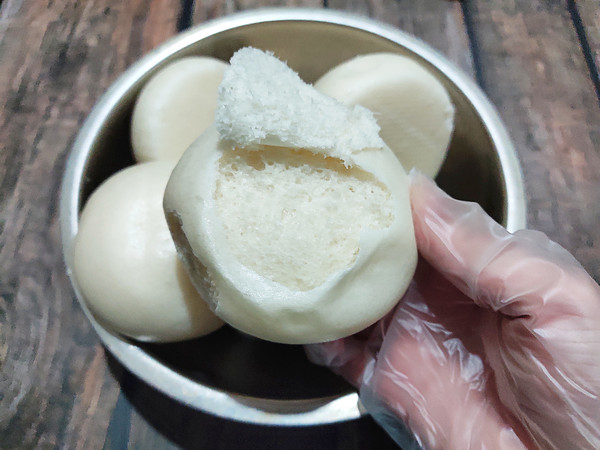
9. After the water boils, steam the pot for about 15 minutes, then turn off the heat and simmer for two to three minutes. Carefully remove the lid, and do not let the water droplets on the lid of the pot drip onto the steamed buns. The final result was exactly the same as I guessed. A few have smooth surfaces, and a large bubble will appear on the remaining ones that are not kneaded in place.
10. Tear open a bubbled steamed bun. That's it. The steamed bun is organized normally, but the underside of the epidermis is empty, like a big bubble.

Tips: 1. I used to make twice-fermented steamed buns. No shaping is needed for the first time. All the materials can be kneaded into a smooth dough, and then the first fermentation will be about 2-2.5 times as big as a honeycomb. Then vent, knead the dough until there are no pores, then shape it, and then ferment it for the second time to 1.5 times its size and steam it in the pot, and finally it will be smooth buns. However, the one-time fermented steamed buns made now are still the same as before. The dough is shaped directly after kneading it smoothly, without continuing to knead, so the structure of the steamed buns is uneven, and large holes are prone to appear when the steamer is fermented. This time a few rubbed 100 times, and there were no holes. 100 times is not necessary, but at least 50 or 60 times, that is, the dough must be kneaded in place. The dough that is kneaded in place is not sticky, but has elasticity; the dough that is not kneaded is soft but does not have the elasticity. If you feel a little sticky during the kneading process, you can stick some dry powder on your hands.
2. Why do you use the root of your palm when kneading noodles? Because the bones here are so hard, you can try other places, it's not easy to rub.

 Buy on JD
 Buy on Amazon