Yuxiang Pork
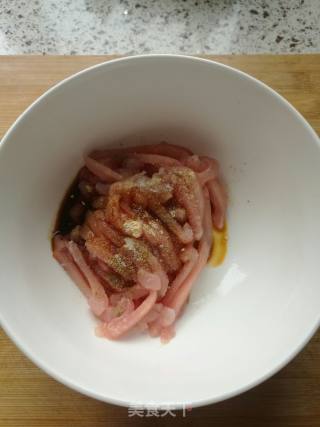
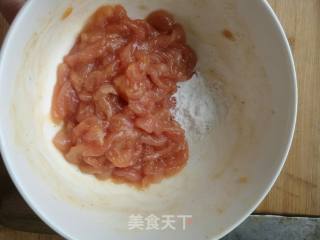
1. Shred the tenderloin, add pepper powder, ginger powder, pepper, cooking wine, light soy sauce, a little salt and set aside.
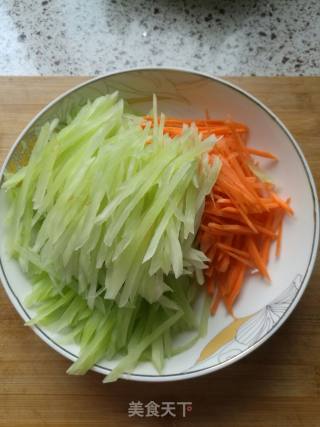
2. Shred carrots and lettuce for later use.
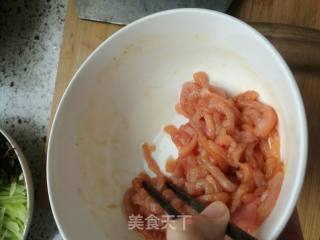
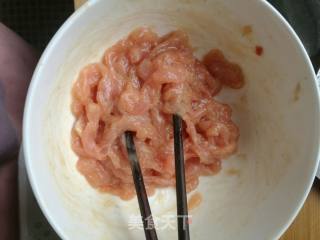
3. Add a little water to the meat and stir in one direction. Let the water enter the meat, the shredded meat will be fried out, and the taste will be tender and smooth. Apply a small amount several times until the shredded pork looks plump and shiny.
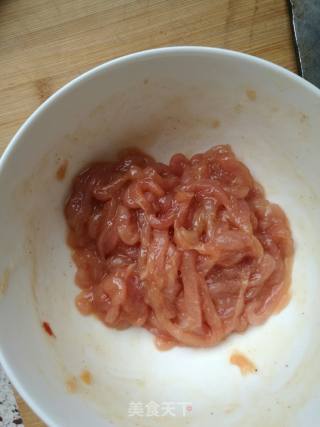
4. This is the state of shredded pork after adding water several times in a small amount.
5. Add a little starch and sizing.
6. After sizing, add a little oil to the shredded pork, stir evenly, and set aside. The purpose is to not stick the pan during frying.
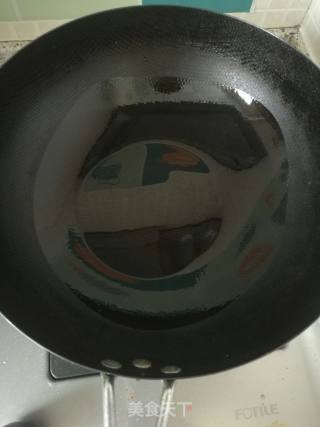
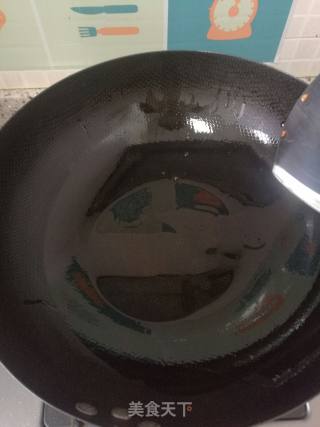
7. First lubricate the pot with oil. The purpose is also to not stick the pan.
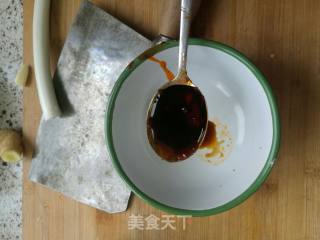
8. A spoonful of light soy sauce, two spoons of vinegar
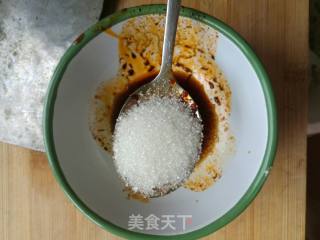
9. A spoonful and a half of sugar.
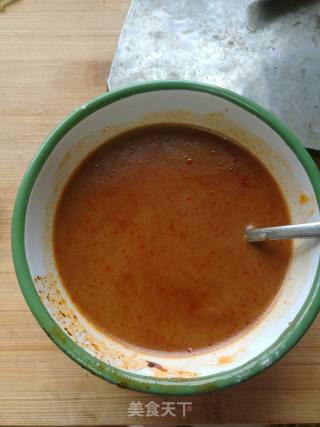
10. Add the right amount of starch, which is almost a spoonful. Finally add an appropriate amount of water. If you like the soup a little bit more juice, add a little more starch and water. Bibimbap is best eaten like this.
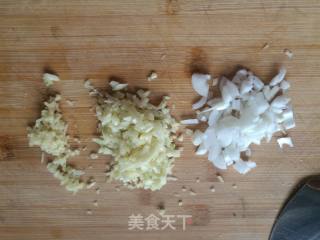
11. Prepare the onion, ginger and garlic froth.
12. Heat the pan with cold oil.
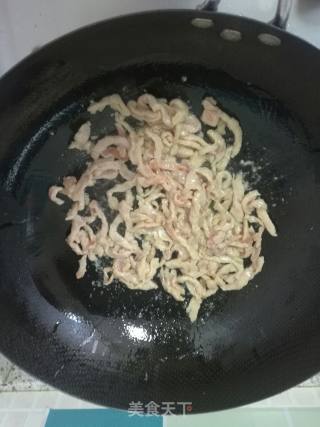
13. Add the shredded pork when the oil is 40% hot. Stir-fry at low temperature and slow fire.
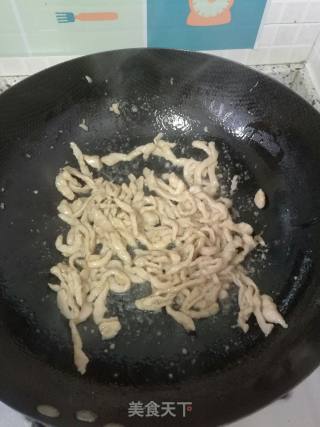
14. Stir-fried pork shreds change color.
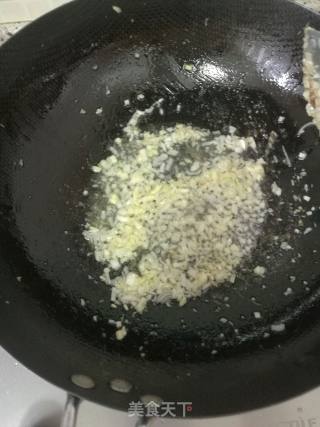
15. Add a little oil and add the minced green onion, ginger and garlic. When frying shredded pork, there may be a little stickiness in the pan. It doesn't matter. Don't turn on the heat too much, just avoid mashing the pan. The scallion, ginger, and garlic are fragrant.
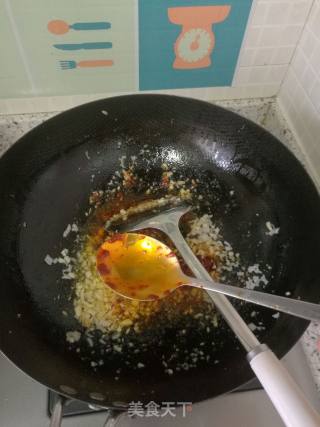
16. Add a spoonful of bean paste. You can put more if you like spicy. My son doesn't like spicy food very much, so I just put a spoonful.
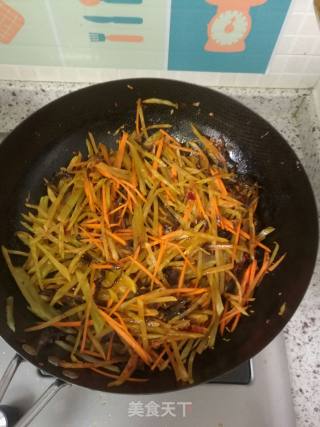
17. After the bean paste has been sautéed with red oil, turn on high heat, pour in lettuce, carrots, fungus, and stir fry. At this time, the fire must be high, pour a little water, and stir fry all the side dishes. The water should also be poured in little by little. If you add too much water at once, the temperature in the pot will drop instantaneously, and the fried dishes will not taste fragrant.
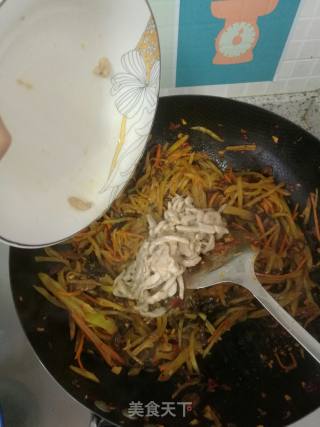
18. Add the fried pork.
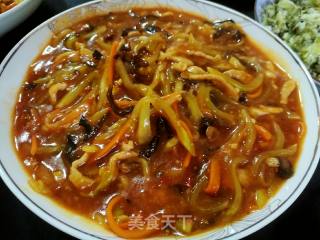
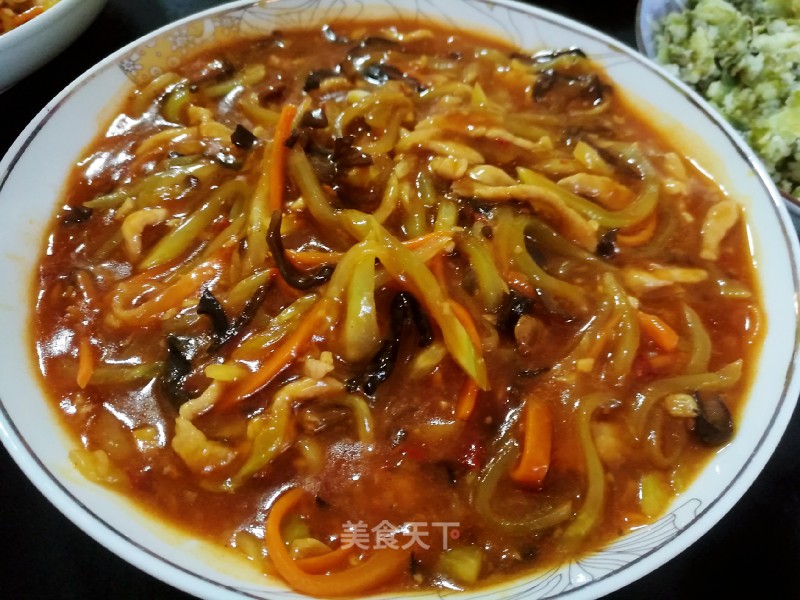
19. Pour in the mixed juice. At this time, there are two situations that novices may face. ①With less starch, the soup is watery. It’s okay, turn off the heat, quickly put a little starch in a small bowl, add a little less water, and add it to the pot. ②If there is too much starch, the dishes are all together. This situation is simpler, add water directly. But don't add too much at once. Add little by little until as shown in the picture. It's done! Enjoy it!

Tips: 1. Add a little water to the meat and stir in one direction. Let the water enter the meat, the shredded meat will be fried out, and the taste will be tender and smooth. Apply a small amount several times until the shredded pork looks plump and shiny. Add a little more starch and oil.
2. Add a little more starch and water to the soup that likes a little more juice. Bibimbap is best eaten like this.
3. Insert bamboo chopsticks into the oil pan. If there are more oil splashes around the chopsticks, the higher the oil temperature.
① If it is fried peanuts or some other fried snacks, pour the oil into the pan and wait for half a minute. The pan is still very calm. Putting your hands on the top of the pan will feel warm. This kind of oil temperature is very suitable. The oil temperature is 20% hot.
②When there is no obvious change in the oil pan, there will be bubbles around the chopsticks. The oil temperature is about 30 or 40%, also called warm oil, which is about 90°C~130°C, and the oil surface is calm. There is no smoke and sound. After the raw materials are put into the pot, there are a small amount of bubbles accompanied by a rustling sound, and the oil temperature will drop rapidly. It is suitable for dry, fried, minced meat, and oil to make softer dishes.
③If the oil in the pot is bursting and there is a sound, the oil in the pot at this time is 50% or 60% of the oil temperature, also known as hot oil, about 140°C~180°C, and the oil level fluctuates around. Turn it over, and a little green smoke will rise. This oil temperature is most suitable for frying, soft frying, etc. When the raw materials are put into the pot, there are more bubbles and a beating sound. When it is 50% hot, the surface of the oil begins to change significantly. When you put it in the oil with chopsticks, you can see that there are tiny bubbles floating. Soft fried shrimp, fried toon, fried pepper leaves, etc., use this kind of oil temperature is more suitable.

 Buy on JD
 Buy on Amazon