Braised Noodles with Beans
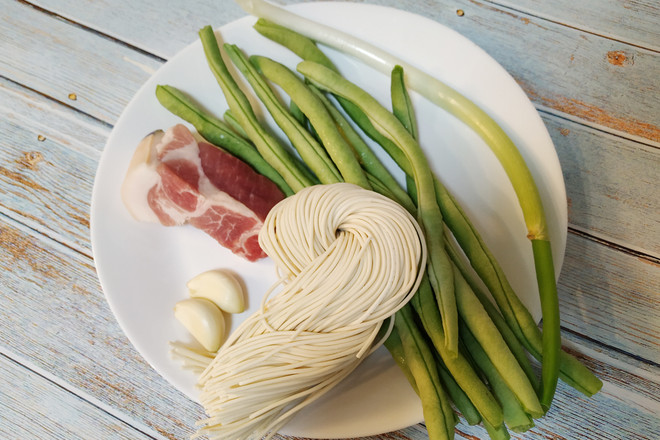
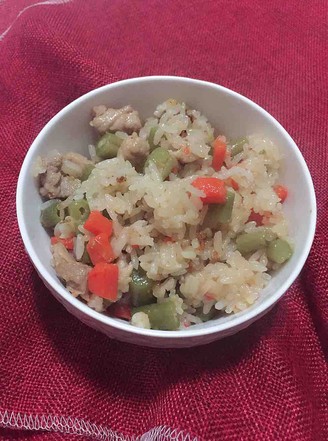
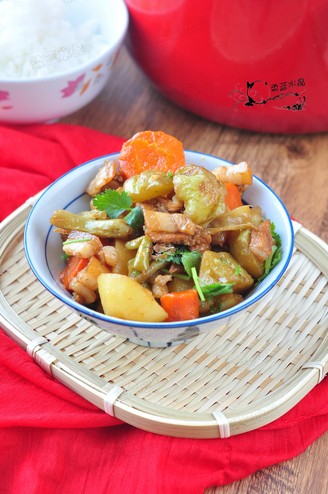
1. All the ingredients are ready, and the fragrant bean stew noodles are made.
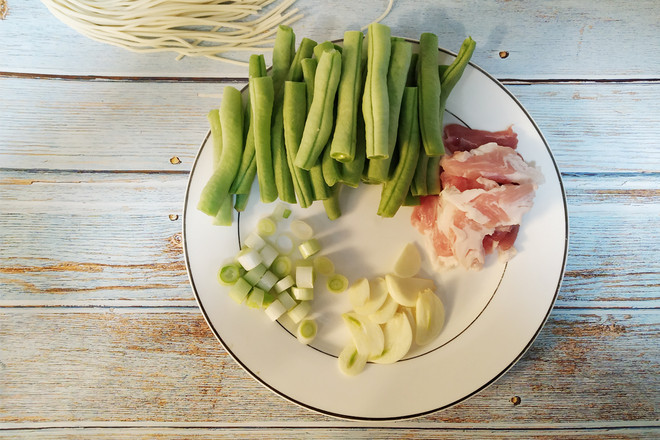
2. Cut the pork belly into thin slices; after washing the beans, tear off the stems at both ends and cut into 4-5 cm long sections; peel the garlic and slice it; cut the shallots into chopped green onions for later use.
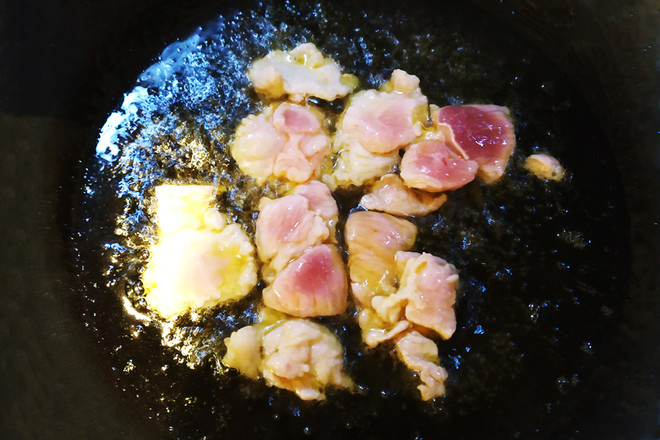
3. Add an appropriate amount of peanut oil to the pot and heat until 70% hot, add the pork belly and stir-fry on low heat to drain the excess oil.
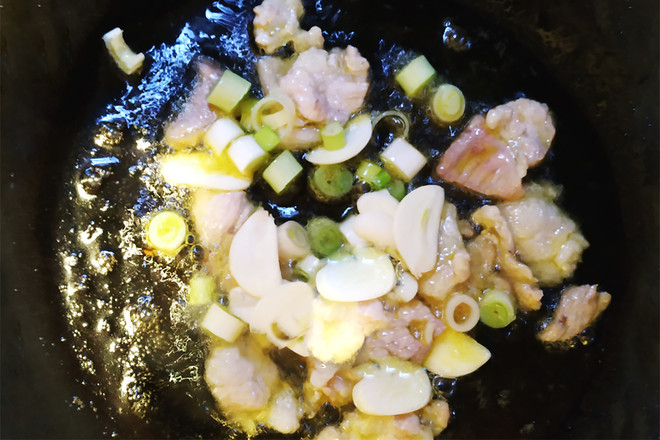
4. Leave a proper amount of oil in the pot, add chopped green onion and garlic slices until fragrant, then stir fry with pork belly.
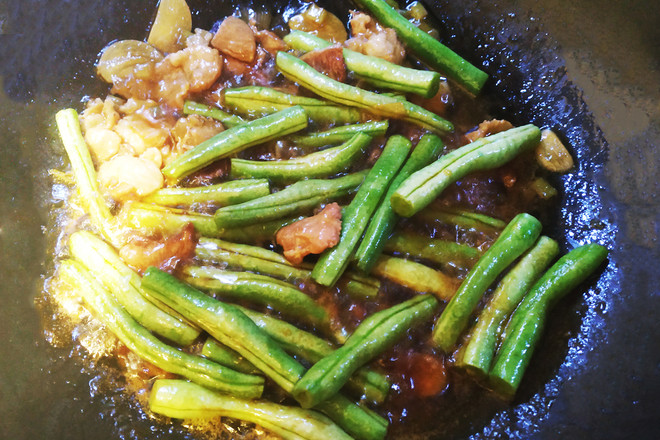
5. After frying the garlic flavor, pour in the cut beans and stir-fry until the skin of the beans is wrinkled. Add a little light soy sauce, dark soy sauce and half a spoon of sugar, salt and pepper, and stir-fry evenly.
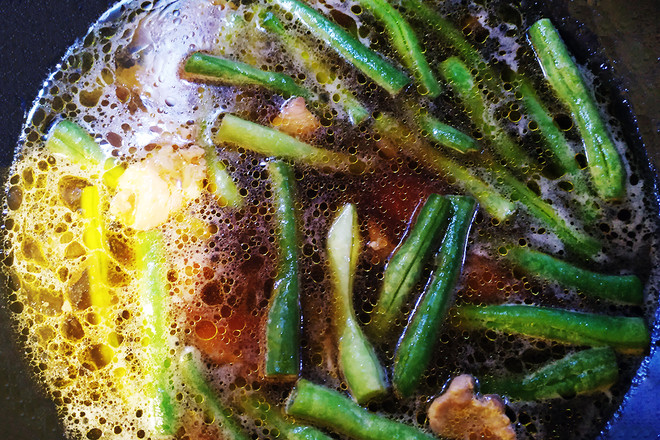
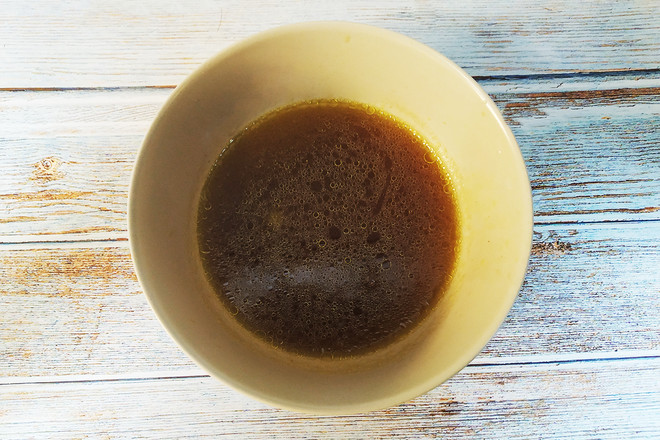
6. Pour in water until it reaches the surface of the beans. After the high heat is brought to a boil, simmer on low heat for 3-5 minutes, and pour out half of the soup for use.
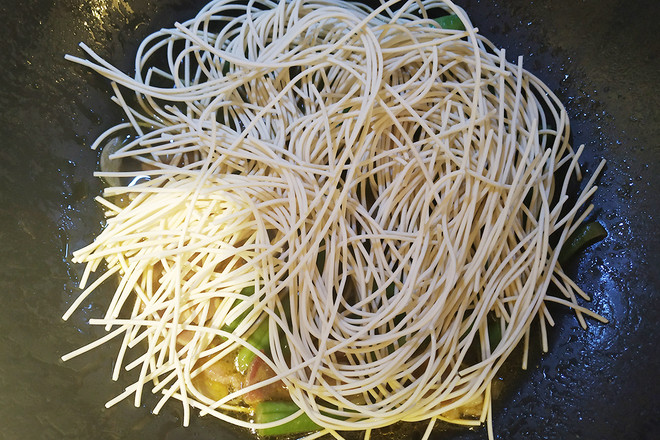
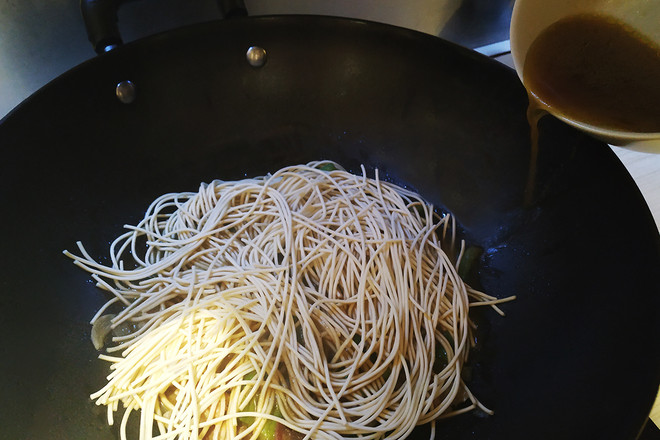
7. Spread the fresh noodles evenly on the beans. Keep the fresh noodles away from water. This step is very important. Cover the pot and simmer on low heat.
8. Next, half of the soup poured out in step 6 will be used, please look down.
9. Simmer on low heat for five minutes. When the soup in the pot is almost dry, pour the reserved soup along the edge of the pot, not on the noodles. This step is also very important, then low heat Cover the pot and continue to simmer, repeating several times until the noodles are cooked through.
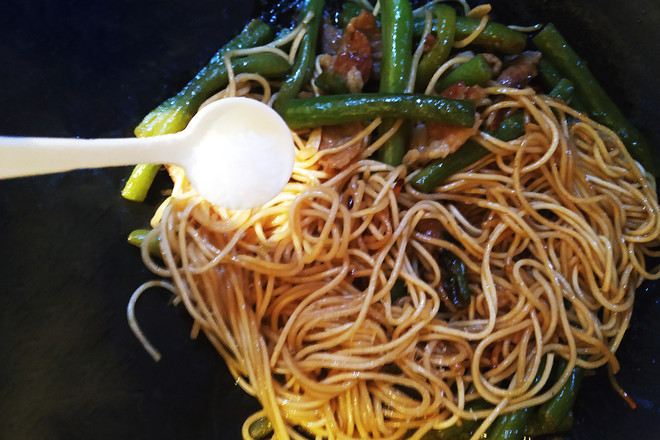
10. When the noodles are cooked, collect the juice, stir-fry the noodles and beans, add a little MSG, and just take it out of the pan.
Tips: 1. Bean stew noodles mainly use the steam principle to simmer the beans and noodles. During the production process, the beans and noodles must be simmered slowly. Pay attention to the remaining amount of soup in the pot to prevent it from drying out or mashing the pot.
2. The soup of the stew must be half of it, and then pour it along the side of the pot according to step 9, not directly on the noodles.
3. During the production process, keep an eye on the inside of the pot, and use chopsticks to move the bottom bar from time to time to prevent the bottom of the pot from sticking.

 Buy on JD
 Buy on Amazon