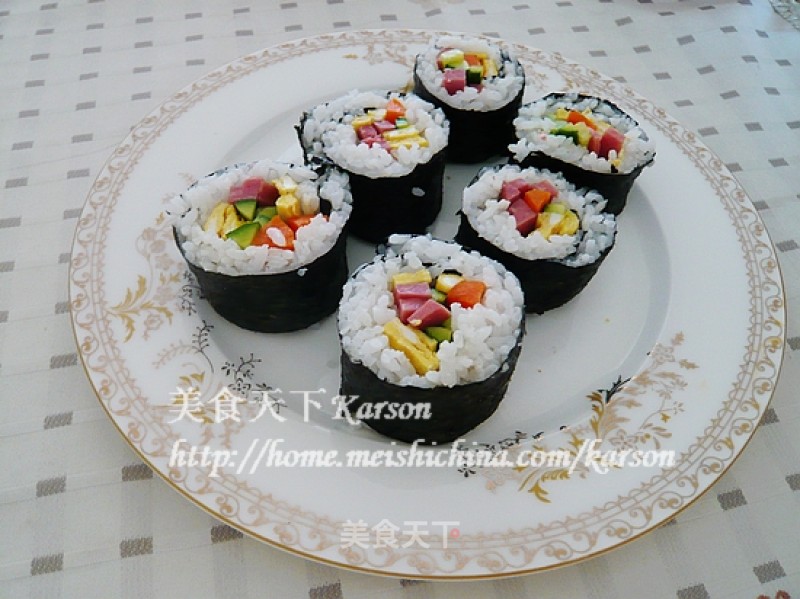

Colorful Sushi
by Karson
Favorite
Difficulty
Normal
Time
20m
Serving
2
I accidentally bought sushi rolls and sushi seaweed when I was visiting the supermarket, so do it yourself~~"
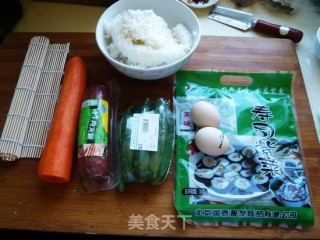
1. Basic materials.

2. Put the white vinegar in a clean container and prepare it according to the ratio of a small bowl of rice to a spoonful.

3. Add a small spoonful of salt and one and a half spoonfuls of sugar, stir well and pour it into a container that can be used directly on the stove. Turn on a low heat and keep stirring until you can't see the particles inside. (It takes about 30 seconds.)

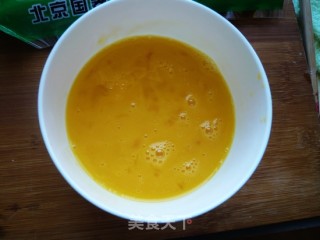
4. Beat the eggs into a bowl, add a little salt, and mix well.

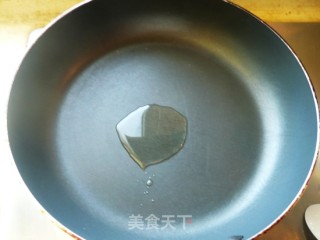
5. Pour a little oil into the pot, and the amount is as shown in the picture.

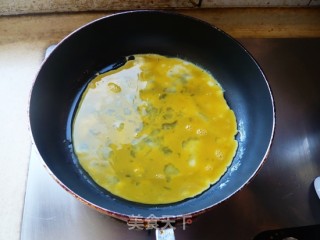
6. Turn on a low heat, pour in the egg liquid evenly, and shake well.

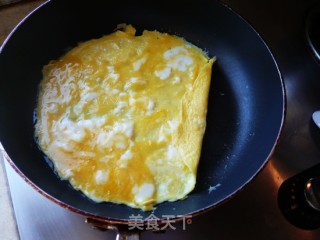
7. When the egg solution on the surface is basically solidified, use a spatula to gently turn it over from the side and fry the other side. Fry it for a while and it will be ready for use.

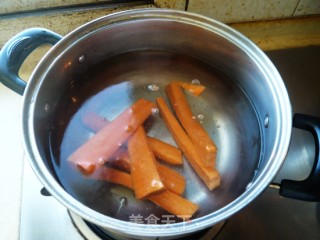
8. Cut the carrots into strips and blanch them in boiling water.

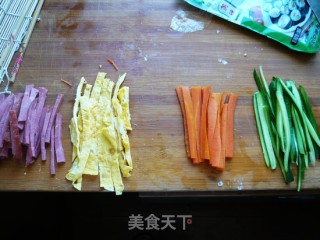
9. Cut the carrot, bacon (or sausage), cucumber, and egg skin into strips.

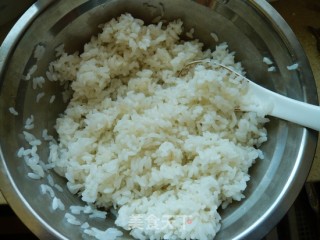
10. Pour the cooled white vinegar solution into the rice and stir well.

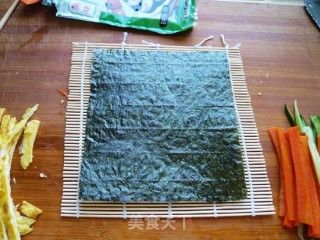
11. Open the sushi roll curtain (if not, you can use a normal bamboo curtain instead.), and spread a piece of sushi seaweed.

12. Spread the rice evenly on the seaweed and tap lightly with a spoon. Then dip your hands in clean water and pat a few times.
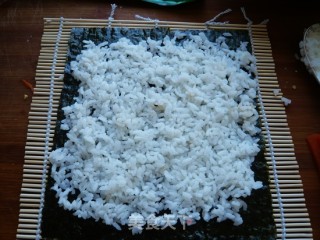

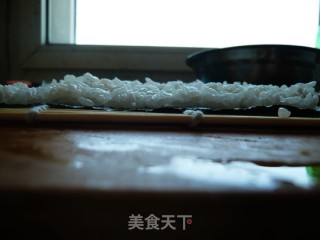
13. The rice layer is better to be thinner, otherwise it will easily break the seaweed.

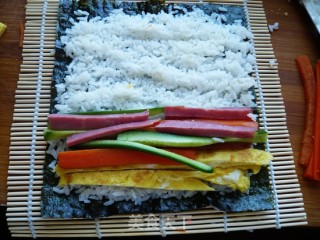
14. Throw the ingredients just prepared on the rice. (Materials with insufficient length should be spliced together, otherwise the filling will be uneven in the end.)

15. First roll up the seaweed with your hands, applying a little force.
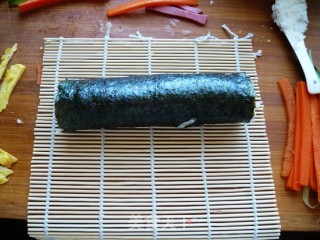

16. Roll the rolled sushi rolls with bamboo blinds a few more times to help set the shape.
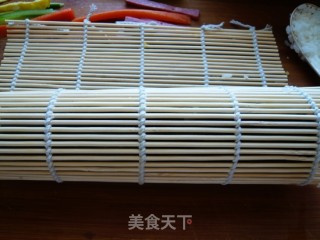

17. Use a knife to slightly make a cut, and then cut into small sections with the knife. Plate.
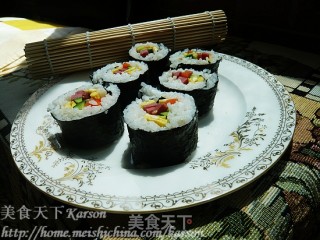

18. That's it!
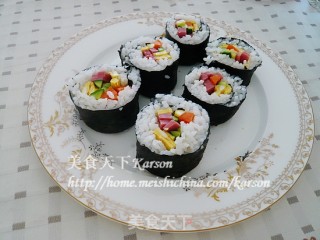

Tips:1. The vinegar tastes a little choking when it is hot, so just don't smell it.
2. Spread the rice thinly for easy operation.
3. There is a little air flow at the upper and lower ends of the laver, because this is the last interface.
4. After spreading the rice, dip it with clean water and pat it a few times to increase its viscosity and prevent it from spreading.
5. When cutting at the end, put the interface below and cut from the top, so that it is not easy to disperse.
 Buy on JD
 Buy on Amazon