Fried Mushroom and Cabbage Pork Bun
1.
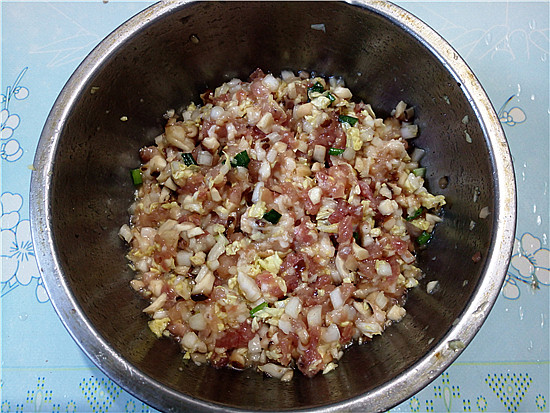
Wash and chop the pork belly, wash the fresh shiitake mushrooms and baby cabbage, let it dry, and chop it. Add a little bit of crushed ginger, then add about 10 grams of salt, 2 tablespoons of light soy sauce, seasoning spoon and half a spoon of steamed dumpling seasoning powder, 2 tablespoons of oil, you can add a little water in the palm of your hand several times, with a little soup filling Taste better. Stir in one direction until thick. Note that the filling should not be too moist or not easy to pack, and the added water should be stirred into the meat to form glue.
2.
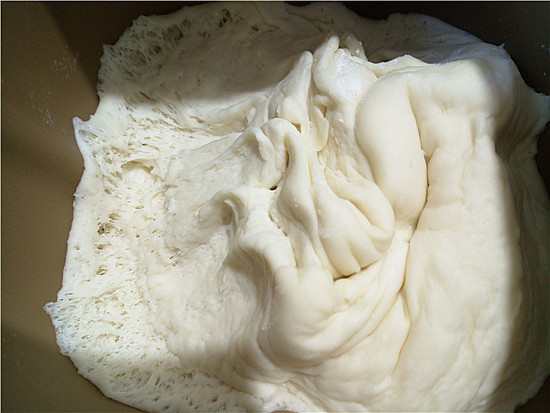
300 grams of flour, 15 grams of oil, 15 grams of sugar, 3 grams of yeast, about 170 grams of water (different brands of flour have different water absorption properties, so don’t pour them all at once), and the dough is almost as soft as the earlobe. Put it warm The place fermented to about 2.5 times the size, that is, there is loose cellulite.
3.
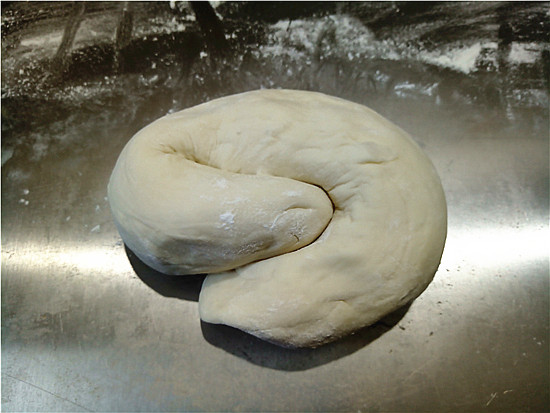
Spread a thin layer of dry powder on the chopping board, pat the fermented dough flat, fold it up and down and left and right two or three times, and then knead it into a long strip. Fold it left and right and knead again two or three times. If your hands are sticky, you can also pat dry powder on your hands.
4.
Cut a ball of noodles and look at it. There are no obvious pores, and the noodles are ready to knead. If you want steamed buns to be delicious, you have to knead them like this.
5.
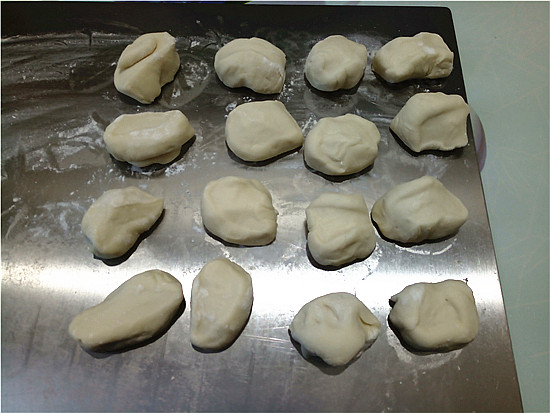
Divide into several small parts, I divided into 16 parts.
6.
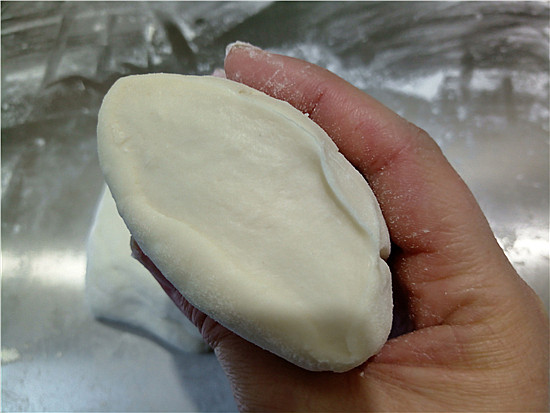
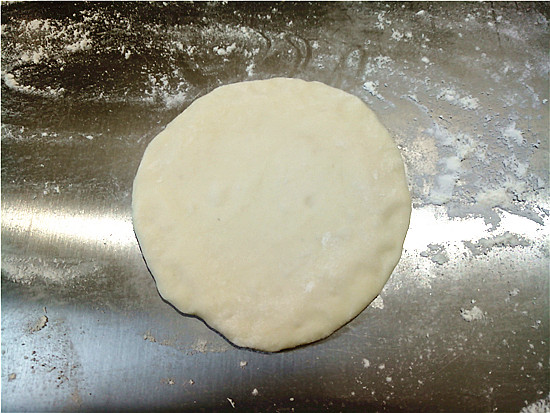
Take a small dose and roll it out a little bigger than the dumpling skin, thick in the middle and thinner on the edges.
7.
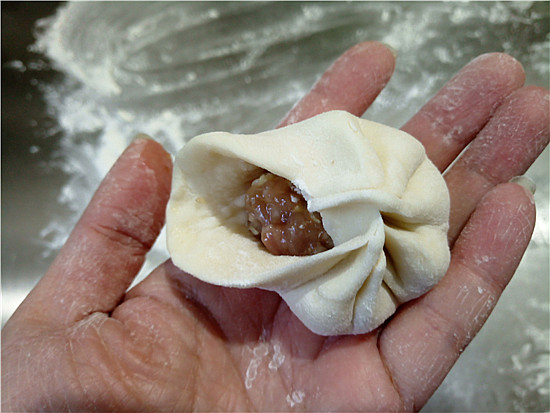
Put a ball of stuffing on it and knead it together.
8.
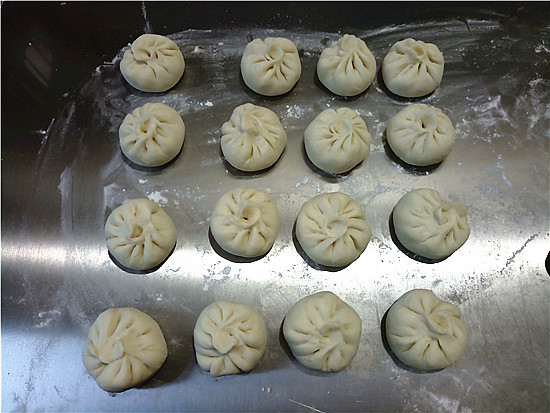
Complete all the buns one by one and let them stand for 10 minutes. The cold weather can be extended for a few minutes.
9.
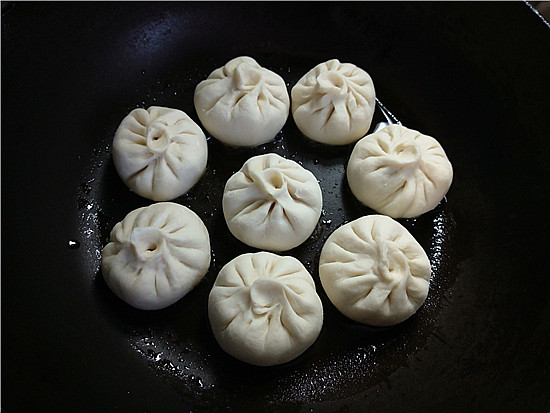
Pour a small amount of oil in a non-stick pan, put the steamed buns in the pan, and fry. Small fire throughout.
10.
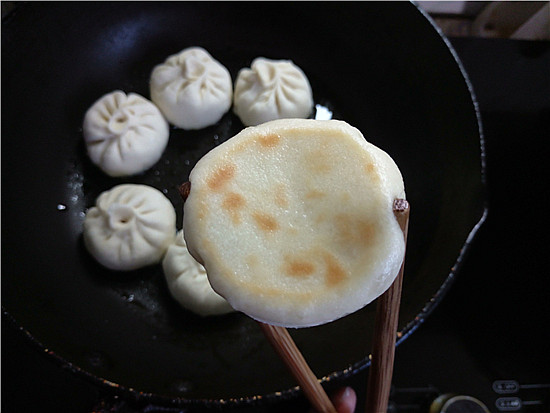
Just fry it so slightly yellow.
11.
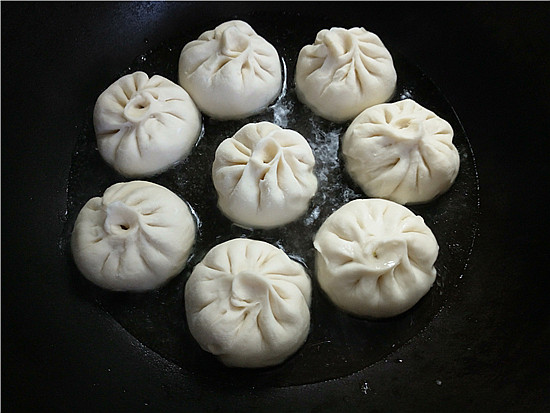
Pour half a bowl of warm water along the side of the pot, about one-third the height of the bun, then cover and start to simmer. After the water is boiled dry, pour the water again and simmer again. Note that the water should not be poured directly on the buns. It is better to lower the fire when frying in water, that is, when the outer ring of the gas stove will not be extinguished.
12.
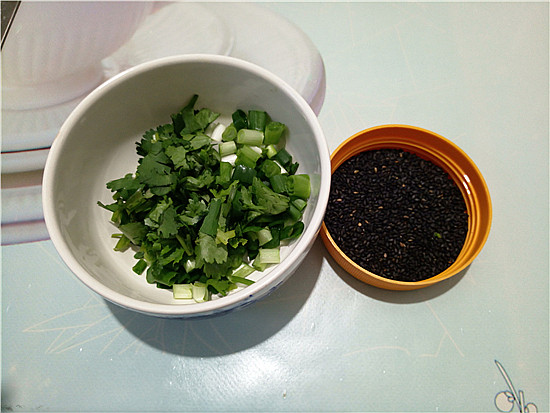
Prepare some chopped green onion, coriander, and cooked black sesame seeds.
13.
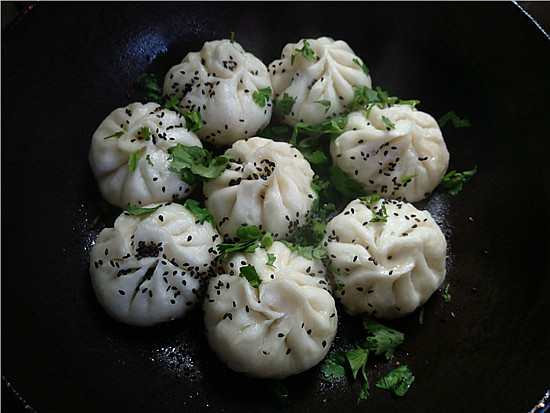
When the water is almost dry for the second time, when there is still a little bit left, open the lid and sprinkle a little sesame and green onion, then cover and continue to simmer for a minute, then open the lid and fry until the water is dry.

Tips:
1. When mixing minced meat, the ingredients are as you like. Add some water or soup to taste better, but it should not be too wet. Adding oil is to lock the water and stir in one direction to get the glue. The state of the meat filling is soft, but it can form a ball, and the wet filling is not easy to pack.
2. If the dough is as soft as earlobes, the steamed buns will be more delicious, and the fermented appearance will have obvious cellular structure. After fermentation, the air must be fully exhausted, and the kneaded dough has no obvious pores, so that the surface of the final steamed bun will be smooth.
3. The yellowish buns at the front are fine, because the steamed buns will be fried later. The fried buns will be burnt at this time, and the fried buns will be too burnt at the back. As for why the warm water is used instead of cold water, it is for the protection of the non-stick pan, because adding cold water to the hot pan will damage the non-stick coating a little, so just add some hot water and it does not need to be very hot.


 Buy on JD
 Buy on Amazon