Liangpi
1. Knead the flour with a little salt and an appropriate amount of water and let it stand for a while.
2. Start washing the face, add water, and keep squeezing the dough with your hands. The water will turn into viscous starch water.
3. Find a thin and tall container, filter the washed starch water into the container, continue to repeat the washing process, filter out the starch water.
4. Change the water about three or four times, the water will become almost clear, and the remaining sticky mass is gluten. The gluten is fermented with a little yeast for more than 30 minutes, and then steamed in a steamer for later use.
5. The filtered starch water, let it stand for more than 4 hours, you will see the starch and moisture layer, pour out the clear water on top, leaving only the starch paste below, and stir well.
6. Looking for a non-stick flat pan, I used a pizza pan, scooped in the right amount of batter, and turned the pan to spread the batter all over the pan.
7. After adding water to the steamer to boil, put in a pizza plate, cover and steam for 2 minutes.
8. The steamed is the cold skin, you can see the big bubbles.
9. Rinse under the running water, peel off the cool skin, revealing a thin light. Repeat the above process to make all the Liangpi.
10. Cut the prepared cold skin into thin strips to the width you like.
11. The cut cold skin is placed on a plate.
12. The cucumber is also shredded, and the leeks are cut into sections and cooked in cold water.
13. Add a small amount of sesame sauce to cold boiled water several times to make a smooth sauce.
14. Press the garlic into minced garlic, add light soy sauce, vinegar, salt, sesame oil and Zhongjing's small red oil to make a sauce.
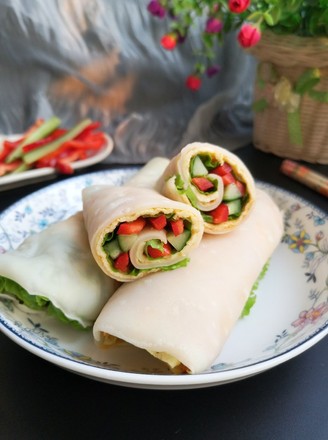
15. Add cucumber shreds and leek segments to the cold skin, add sesame paste and sauce to make the most delicious cold skin.
Tips: 1. Adjust the sauce according to your own taste.
2. The cold skin must be steamed. The steamed cold skin is very flexible and strong. If it is easy to crack, it means that the starch paste is not too thick, and it is not steamed, and it does not form a piece. It means that the batter is too thin and needs to continue to settle and pour out the excess water. .
3. Mung bean sprouts are also very suitable for collocation.


 Buy on JD
 Buy on Amazon