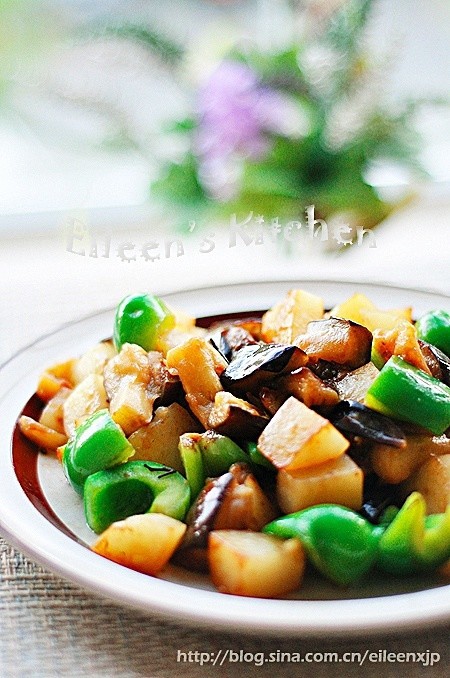
Oil-saving Version of The Three Fresh
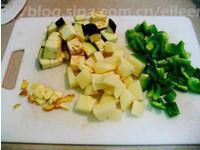
1. Prepare the ingredients, peel the potatoes and cut them into 2~2.5cm chunks. Cut the eggplant and green peppers into similar pieces, and slice the ginger and garlic.
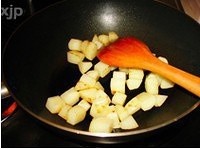
2. Pour two spoons of oil (10~15ml) in a wok, heat to 50% heat, add potatoes, turn to medium heat and fry until the potato pieces are slightly transparent and the surface is slightly yellow.
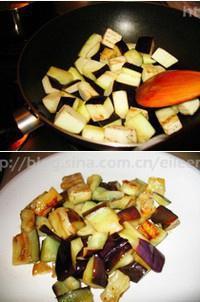
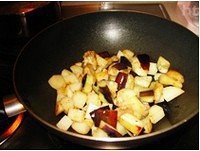
3. Pour two spoons of oil into the wok, add the eggplants when the heat is slightly hot, and stir-fry quickly to make each piece of eggplant evenly coated with oil. Stir-fry for a while and then turn to medium heat. Cover the pot and simmer for a while. During this time, stir-fry and continue simmering to avoid burning the eggplant. After simmering, use a spatula to press down on the eggplant block to simmer out the moisture in the eggplant. The simmered eggplant is easier to simmer. You will find that the moisture will come out and the eggplant will also become soft and slightly Transparent state. Repeat this operation to make each piece of eggplant soft. Put the simmered eggplant out, and the eggplant pieces will become soft and slightly transparent.
4. Re-heat a little oil in the wok, add pepper, ginger, and garlic. After the aroma is cooked, add potatoes and eggplant and stir-fry evenly.
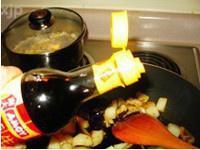
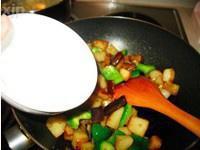
5. Add sugar, stir well, then add light soy sauce, salt, and stir well.
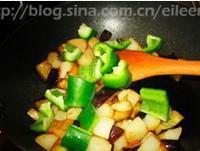
6. Add the green peppers and stir fry for a while.
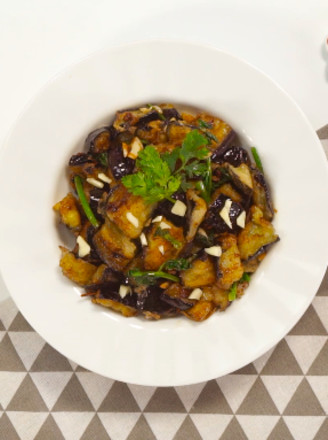
7. Add water starch and stir fry in one direction to thicken. Finally, pour in a few drops of sesame oil and mix well to get out of the pot.

Tips: 1. When frying potatoes, be careful to fry them after a while to heat them evenly. Some students mentioned the problem that potatoes are not easy to cook. It must be fried until the potato pieces become slightly transparent, so that they are almost cooked, and they will be just right after returning to the pan. I use a non-stick pan that does not transfer heat so quickly. The potatoes are fried until they are transparent, and the browning on the surface is just right. If the heat transfers in the pot too fast and the surface of the potatoes will not be charred until the potatoes are cooked, there are two alternatives, one is to turn the heat down a little bit (this may be more time-consuming); the other is to cut the potatoes thinner. Or just don't block them, just cut them into thick slices. In short, we can adjust our meals according to the situation without affecting anything.
2. Eggplant is very oil-absorbing. If you wait until the oil is completely heated before putting the eggplant, then the oil will be absorbed by the eggplant at the bottom of the pan without waiting. So put the eggplant when the oil is slightly hot, then stir-fry it evenly, and then bring it to medium heat. Due to the relatively small amount of oil, if the eggplant does not produce water, the surface will scorch before it can be softened. At this time, the eggplant is pressed with the help of external force to stir out a part of the water, so that the eggplant becomes soft as soon as possible, which reduces the cooking time and the amount of oil used. It is easier to simmer the eggplant once, and it can be simmered without simmering, but the eggplant is harder at first and it will be more laborious, but the later the eggplant is heated for a long time, the easier it is to simmer. You don't want to put a lot of oil in the frying eggplant. This method is universal. You can make braised eggplant or fish-flavored eggplant. I use a non-stick pan, which conducts heat evenly and not so quickly, which makes it ideal for cooking eggplants. Those who don’t think it’s easy to master can put the sliced eggplant in clear water for 5 minutes, remove the water and put it in a frying pan, and fry it in the same way. Because the eggplant has a lot of moisture, it’s not so easy to scorch on the outside but it’s still inside. abrupt.
3. Because potatoes and eggplants have been fried in oil, when cooking pepper, ginger and garlic, you only need to add a little oil to cook the spices. Overall, the amount of oil used in this dish is similar to that of ordinary dishes.

 Buy on JD
 Buy on Amazon