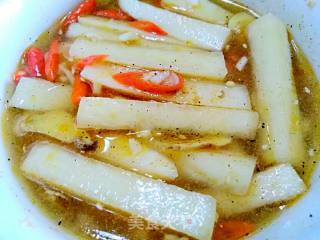
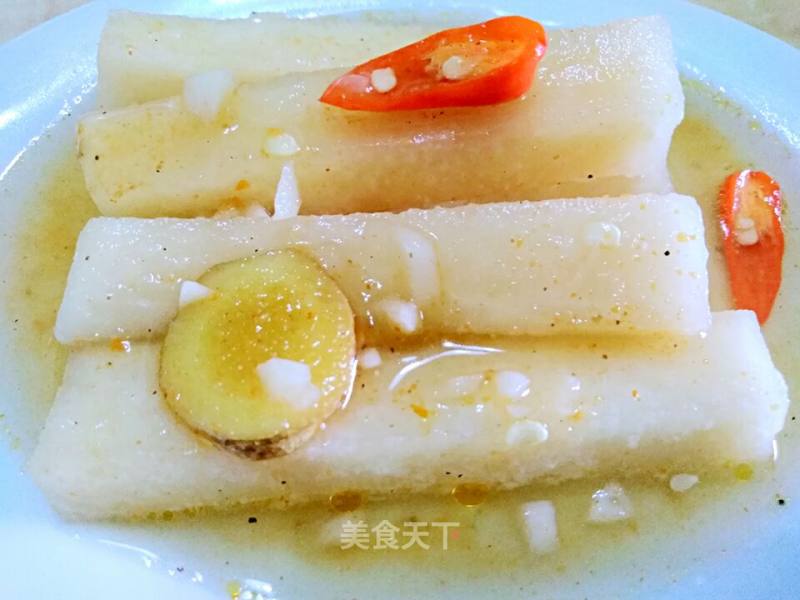
White Radish Kimchi
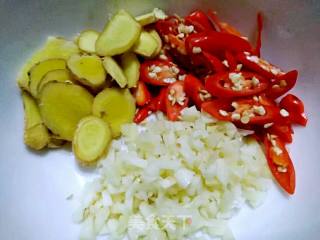
1. Slice ginger, slice Thai pepper into circles, chop garlic and set aside. For those who are afraid of spicy food, these ingredients can be reduced appropriately.
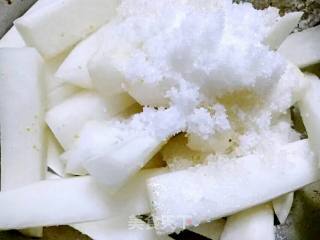
2. Turn the white radish into thick strips, add salt and sugar, and stir until the salt and sugar are completely dissolved, and the radish will become soft after the water flows out.
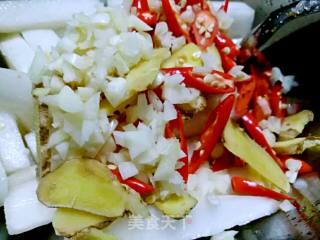
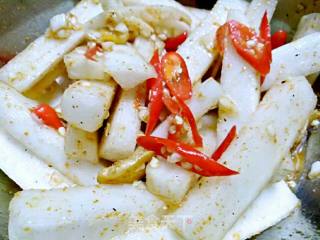
3. Add Thai pepper, ginger slices, and minced garlic and stir well.
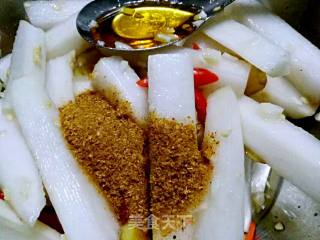
4. Add chili powder and chili oil and stir well.
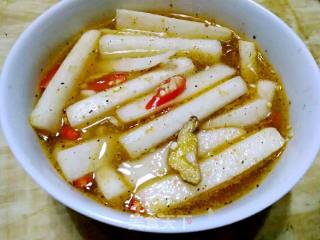
5. At this time, the stirred radish has already produced a lot of water and is very soft. If there is a large bottle, it can be bottled directly.
6. Sister Xin didn't have an empty big bottle, so she used a big soup bowl, poured the mixed radishes into it, and flattened it, and then poured in cold water that could pickle the radish sticks.
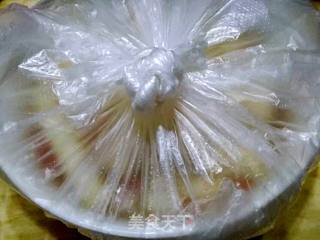
7. Use two layers of fresh-keeping bags to seal them. Check the bags for holes before loading, and try not to leak air.
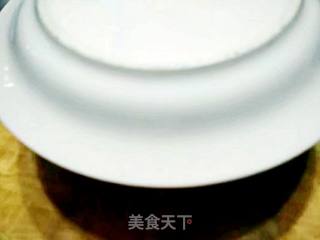
8. After sealing the bag, find a plate that can just cover the soup bowl and cover it. If you have a large bottle, you don't need to be so troublesome.
9. Sister Xin was made on May 30. Originally, it could be marinated for 24 hours. But after trying it, Sister Xin felt that it would be better to eat after two days of marinating. After three days, it would be more flavorful, and it was crunchy in June. Before the publication on the 4th, there is still no change.
Tips: Dear friends, do not pour out the water that comes out when you stir and pickle the white radish. The amount of salt includes the concentration after adding water. If you pour it, it will not reach the required concentration. The Thai pepper written in Sister Xin’s recipe is also one of the varieties of Tianjiao. It is sold in supermarkets. The Thai peppers are thick and spicy. They are more suitable for Cantonese than the thin and spicy varieties. If you like to eat, just use that.

 Buy on JD
 Buy on Amazon