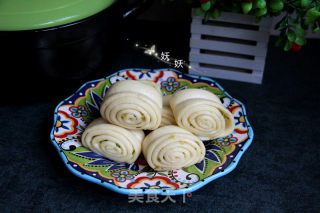
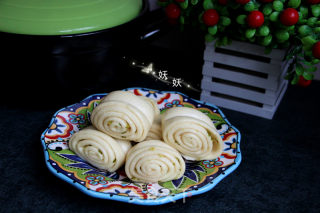
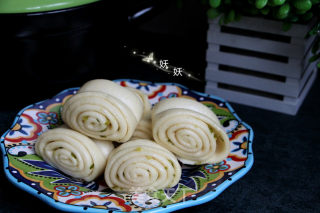
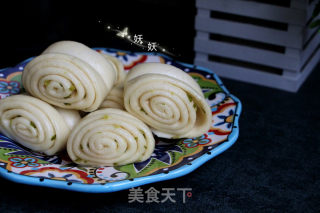
Chive Flower Roll
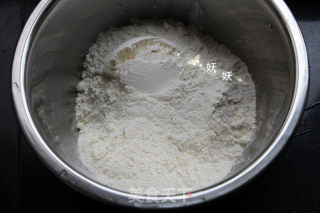
1. Flour is put into a clean container, ordinary, common flour is fine, no need to deliberately pursue high-gluten flour and low-gluten flour.
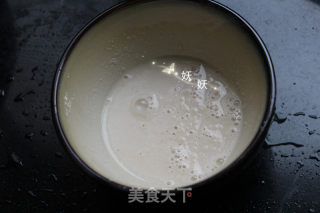
2. Take a small amount of warm water, add yeast powder, stir and let the two parts melt fully. The water temperature should not be too hot. If it is not hot to the touch, just slightly warm it, otherwise it will kill the activity of the yeast and the noodles will not rise.
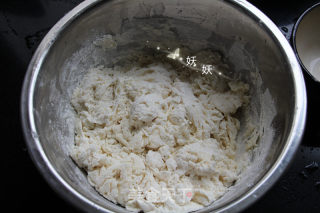
3. Slowly pour yeast water and warm water into the flour, and mix it with your hands to form a dough.
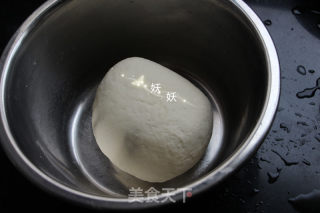
4. Knead the dough into a uniform dough with both hands. In fact, it is as smooth as possible. This step does not require time-consuming and laborious kneading, as shown in the figure.
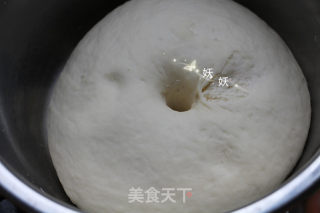
5. Cover with plastic wrap and ferment to double its size in a warm place. Dip it in with the flour without shrinking.
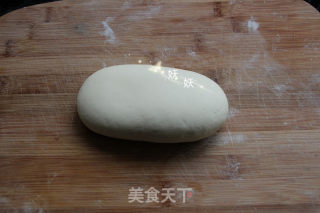
6. Sprinkle more dry flour on the cutting board, pour the fermented dough on the dry flour, and knead it into a uniform and smooth state. Whether this step is done well or not will directly affect the final product.
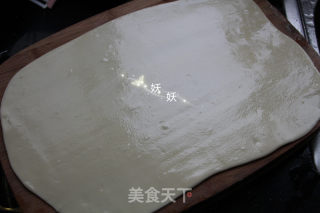
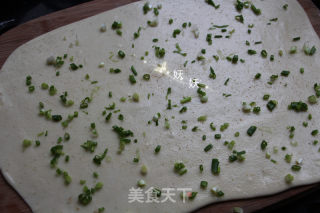
7. Roll out the dough into a rectangular shape, just thin it out, and you can master the state by doing a few more times. Spread a thin layer of oil on the surface.
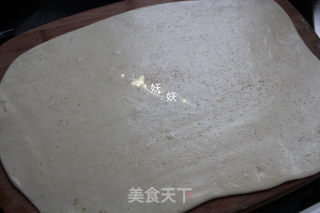
8. Sprinkle a layer of salt, thirteen incense, and spread evenly.
9. Then sprinkle a layer of chopped chives.
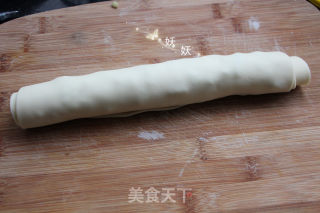
10. Roll it up to one end and roll it in one direction.
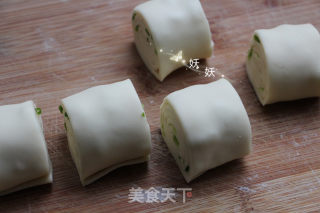
11. Use a sharp knife to cut into small pieces.
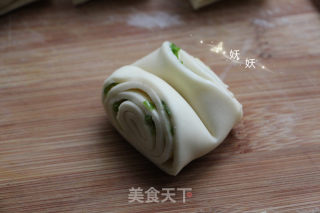
12. Use the back of the knife to gently press it in the middle, and that's it. Isn't it simple?
13. Put it in a steamer for a second fermentation for half an hour, and then steam it directly on high heat for about 10 minutes, depending on the size of the Hanamaki. After steaming, wait one minute before opening the lid, and the beautiful Hanamaki can be out of the pot.
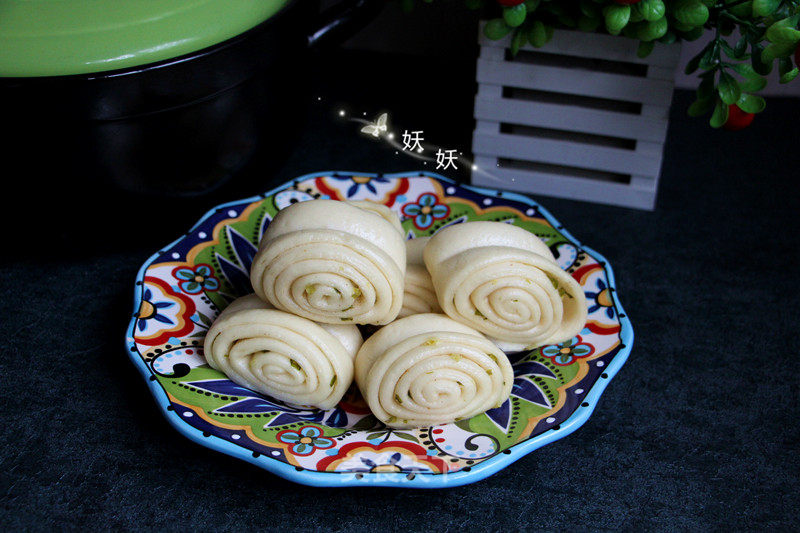
14. Finished product
15. Finished product
16. Finished product

 Buy on JD
 Buy on Amazon